
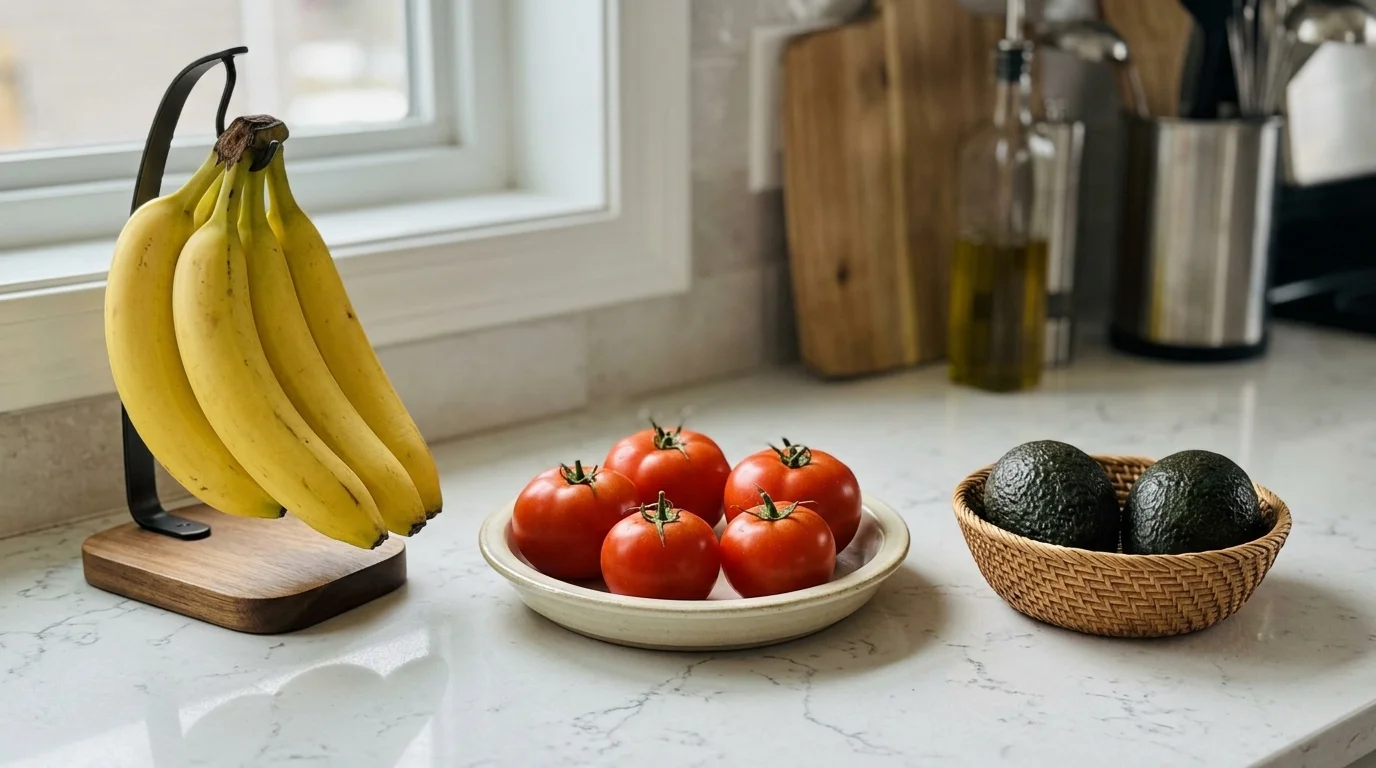
Practical Steps and Actionable Advice
Establish a Dedicated Ripening Zone: Designate a specific, well-ventilated area on your kitchen counter exclusively for ripening fruits. Keep this area away from direct sunlight, as excessive heat from the sun can essentially cook the fruit, causing it to rot rather than ripen evenly. A simple wire or wooden bowl allows for excellent air circulation, which prevents moisture from accumulating at the base of the fruits.
Master the Paper Bag Technique: If you purchase rock-hard avocados or peaches and need them to ripen quickly for a specific meal, place them in a loosely closed brown paper bag. The paper bag traps the natural ethylene gas the fruit emits, creating a concentrated micro-environment that speeds up the softening process. Do not use plastic bags, as they trap moisture and encourage rapid mold growth.
Manage Ethylene Producers Wisely: Bananas are notorious for producing massive amounts of ethylene gas. If you place a bunch of bananas next to a pile of fresh peaches, the peaches will ripen—and potentially rot—much faster than you anticipate. If you want to slow down the ripening of your other fruits, keep your bananas isolated on a different counter or hang them from a standalone banana hook.
Wash Only Before Eating: It is a common habit to wash all groceries immediately upon returning home, but you should avoid doing this with countertop fruits. Washing adds unnecessary moisture to the skin of the fruit, which provides a perfect breeding ground for bacteria and mold. Leave the fruits unwashed in their natural state on the counter, and rinse them thoroughly under running water only in the moments right before you plan to slice and eat them.
Transition to the Fridge Strategically: Countertop storage is only meant for the ripening phase. Once an avocado yields to gentle pressure, a peach smells incredibly sweet, or a mango feels soft, the ripening process is complete. If you are not ready to eat the fruit that exact day, you should move it into the refrigerator. At this stage, the fruit is already ripe, so the cold will not cause chilling injury; instead, it will act as a pause button, extending the life of the perfectly ripe fruit for another few days.




Please remove my email from all your messages and advertisements. Thank you
If my bananas get too ripe on the counter, I peel them, put them in a produce bag (plastic bag) and put them in the freezer. You can eat them like ice cream.