Hearing aid costs have fallen sharply in recent years, yet many older adults still overpay or delay care. Today, smart shoppers can find reliable hearing aid deals starting under $250 over the counter or around $1,600 for prescription pairs.
You no longer have to spend $5,000 at a traditional clinic to hear conversations clearly. Warehouse clubs, retail pharmacies, federal programs, and Medicare Advantage plans now offer substantial discounts on proven devices.
Knowing where to shop—and which traps to avoid—helps you protect both your retirement budget and your long-term brain health.
Why Hearing Aid Costs Are Dropping—and Why Waiting Hurts Your Brain
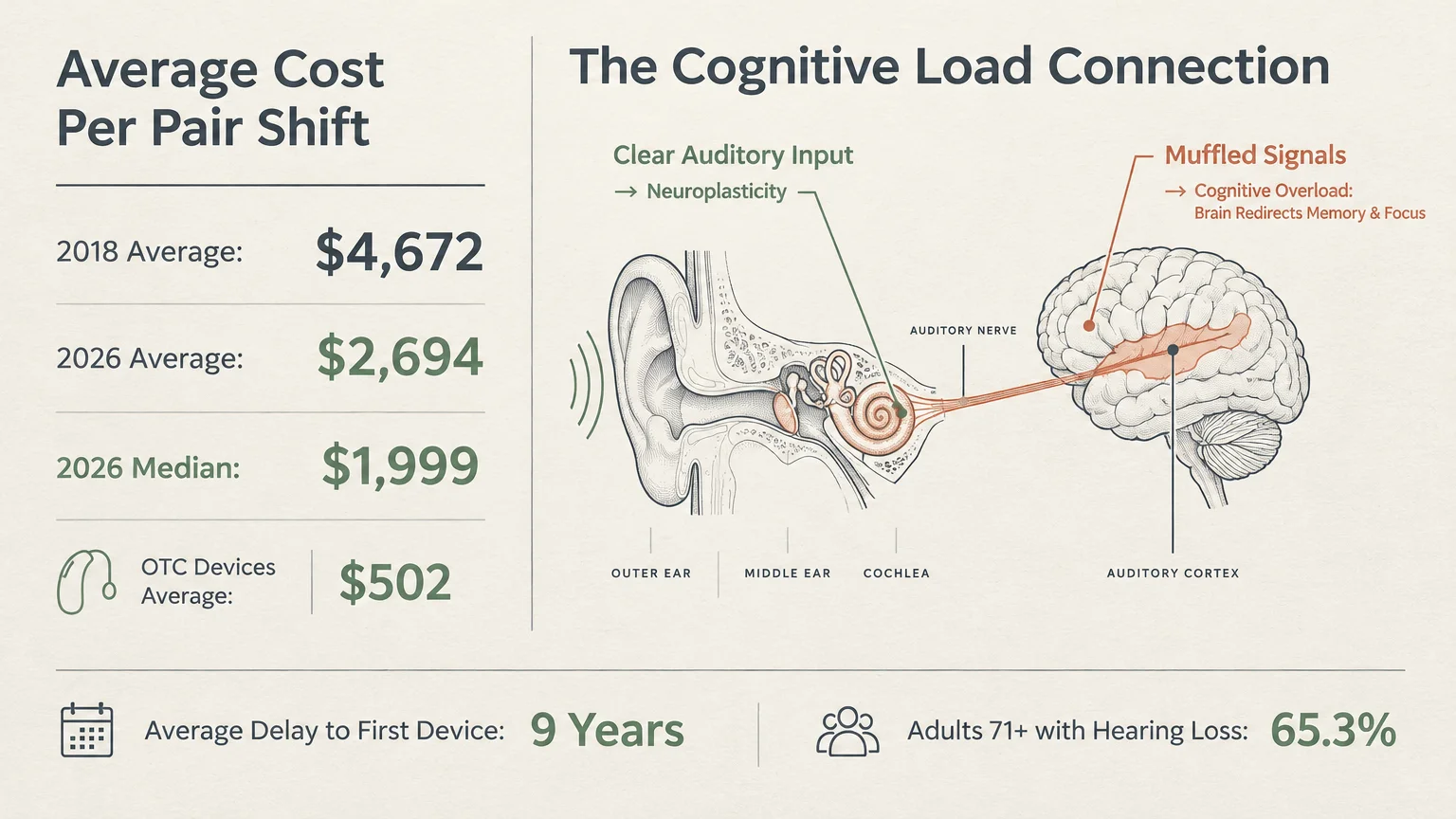
Buying hearing technology looks very different in 2026 than it did less than a decade ago. Across all retail channels, buyers paid an average of $2,694 per pair in 2026—with a median of $1,999—down from $4,672 in 2018, according to HearingTracker.
That dramatic shift stems from federal rules opening the over-the-counter market and fierce competition from warehouse clubs. Still, wide price gaps remain depending on where you walk in the door.
HearingTracker data shows private-pay prescription aids average $3,432 per pair, while over-the-counter devices average $502. At traditional clinics without insurance, buyers pay an average of $4,727 per pair, compared with $2,567 when using insurance coverage.
Cost remains a major barrier that keeps older adults from treating hearing loss early. According to the National Institute on Deafness and Other Communication Disorders (NIDCD), disabling hearing loss affects 22% of adults aged 65 to 74 and 55% of those 75 and older.
Separate NHATS data cited by the Hearing Loss Association of America (HLAA) indicates 65.3% of Americans aged 71 and older—roughly 21.5 million people—live with hearing loss. Yet a November 2026 NHATS analysis reported by Epocrates found only 30.9% of adults 71 and older with measurable loss actually use hearing aids.
Adoption drops even lower among certain groups, reaching 14% for mild loss and just 11.3% to 14.9% among Black, Hispanic, low-income, and Medicaid-covered seniors. Overall, the HLAA notes that people wait an average of nine years after diagnosis before getting their first device.
Waiting nearly a decade to act does more than strain family dinners. It forces your brain to work overtime through what neuroscientists call cognitive load.
Think of cognitive load like running a computer with dozens of heavy programs open at once. When your ears send muffled sound signals, your brain redirects precious processing power just to guess missing syllables, leaving less mental energy for memory and focus.
Your brain also relies on neuroplasticity—its ability to maintain and rewire neural pathways based on daily stimulation. Just as muscles weaken without exercise, auditory pathways grow sluggish when starved of clear sound for years.
Both the World Health Organization (WHO) and brain-health advocates such as the Alzheimer’s Association emphasize protecting sensory health as part of healthy aging. Securing an affordable deal today keeps your auditory system engaged while saving thousands of dollars.
Costco and Sam’s Club: The Best Deals on Prescription Hearing Aids
If you want full-service prescription technology without boutique clinic markups, warehouse clubs remain the strongest value in the country. You pay a modest annual membership fee, yet you save thousands on top-tier hardware and ongoing clinical support.
Costco Hearing Aid Center Pricing and Perks
Costco consistently leads national surveys for prescription savings. HearingTracker reports Costco buyers paid an average of $1,674 per pair—a median of $1,600—saving roughly 65% compared with over $5,225 for comparable top-tier technology at traditional clinics.
As of late 2026, Costco lists four prescription models sold in pairs with a charger, with final prices varying slightly by state and custom earmolds costing extra. Three models start at $1,599.99: the Philips HearLink 9060 miniRITE, Rexton Reach RIC, and Sennheiser Sonite Rise.
The fourth prescription option, the Jabra Enhance Pro 30 Micro RIE, runs $1,699.99 per pair. Costco also stocks a $249.99 over-the-counter option for members with milder needs.
Price tells only half the story, because Costco bundles services that private clinics often bill separately. According to Costco and The Senior List, members aged 18 and older receive free hearing tests along with free follow-up appointments and cleanings.
Costco also gives buyers a generous 180-day trial period, far exceeding the 30-to-45-day industry standard. Every prescription pair includes two years of free loss and damage replacement with no deductible, plus up to a three-year manufacturer’s warranty depending on the model.
What Sam’s Club Offers in 2026
Sam’s Club remains another warehouse option, though its hearing center lineup shifted significantly in 2026. Early in the year, Sam’s Club removed all Lucid Hearing prescription models from its stores, according to HearingTracker.
Today, select Sam’s Club locations offer prescription devices such as the Bernafon Encanta miniRITE through managed care insurance plans. If you hold a qualifying health plan, you can ask a store specialist to check your exact network copay.
For direct retail shoppers, Sam’s Club focuses heavily on over-the-counter brands like Jabra Enhance Select and Lexie H1 Hearing Buds. Adults aged 19 and older can also book free hearing exams at participating Sam’s Club optical and hearing centers.
Before buying a warehouse membership solely for hearing care, call your nearest location first. Confirm whether an on-site hearing specialist works there full time and verify which models remain in stock.
Top Over-the-Counter (OTC) Hearing Aid Deals for Mild to Moderate Loss
Not every senior needs a $1,600 prescription fitting. Under the U.S. Food and Drug Administration (FDA) rule that took effect in October 2022, adults aged 18 and older with perceived mild to moderate hearing loss can buy over-the-counter hearing aids directly.
You do not need a medical exam, a prescription, or an in-person audiologist visit to buy an FDA-regulated OTC pair. That direct-to-consumer model explains why OTC buyers paid an average of $502 per pair in 2026.
Apple AirPods Pro 2 and 3 as Affordable OTC Devices
One of the biggest bargains in senior hearing care hides inside standard consumer electronics. On September 12, 2024, the FDA cleared Apple’s Hearing Aid Feature as the first FDA-authorized over-the-counter hearing aid software for adults 18 and older.
Available at a street price of $199 to $249 per pair, both AirPods Pro 2—with firmware 7B19 or newer—and AirPods Pro 3, released in 2025, include this feature at no extra charge. You simply pair them with a compatible Apple device running iOS 18, iPadOS 18, or macOS Sequoia or later.
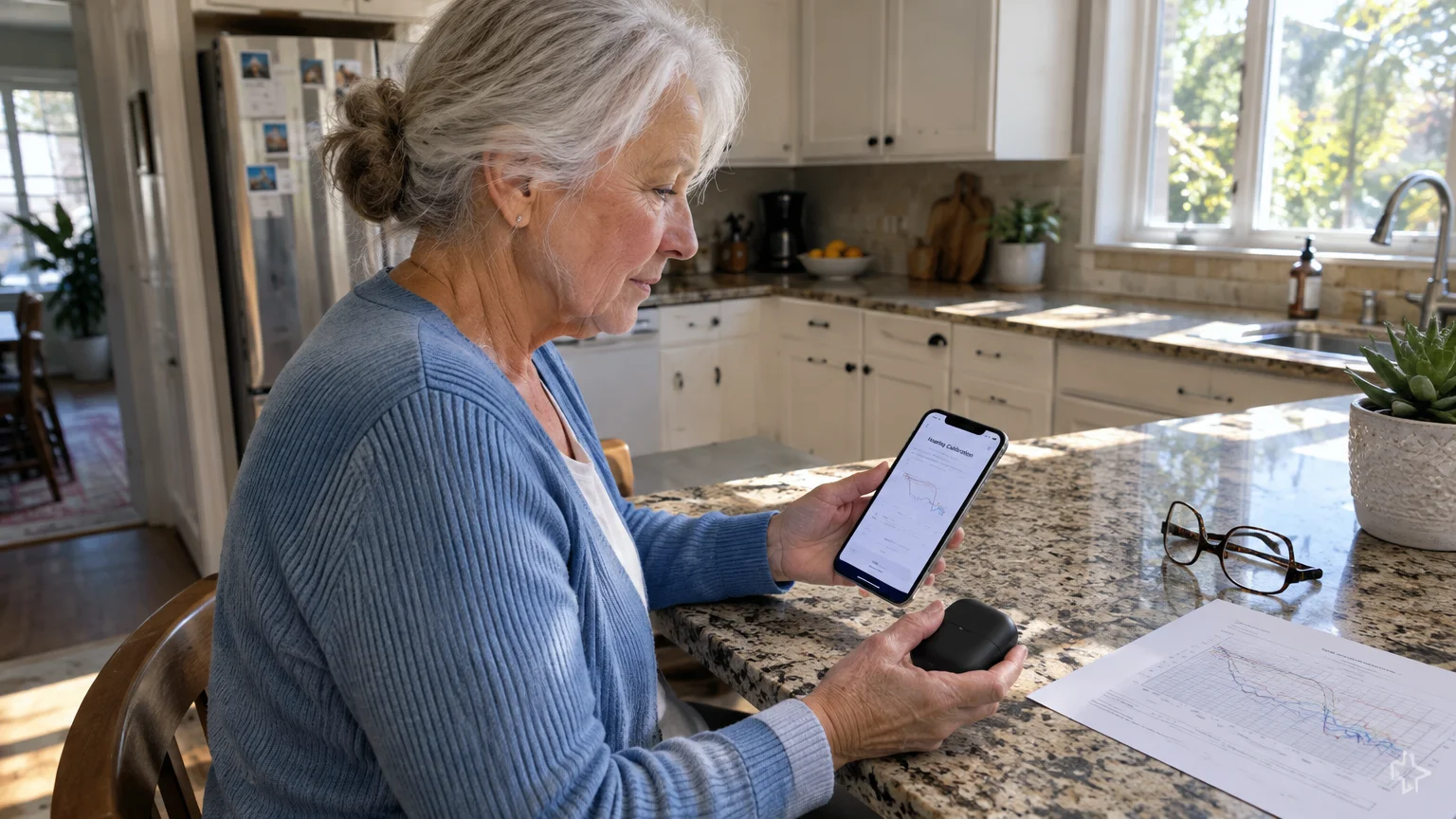
Using your iPhone or iPad, you take a quick built-in hearing test that tunes the earbuds directly to your ear profile. Because they look like everyday wireless earbuds, many hesitant first-time users feel far more comfortable wearing them in public.
Know the practical limits before relying on AirPods all day, however. Single-charge battery life lasts roughly six hours on AirPods Pro 2 and up to 10 hours on AirPods Pro 3, and they only suit mild to moderate hearing loss.
Budget Big-Box and Online Cheap Hearing Aids
Retailers like Walmart and Best Buy now carry legitimate cheap hearing aids that cost a fraction of clinic hardware. At Walmart, entry-level pairs include the Equate Rechargeable OTC at $74.88 and the Audien Atom One at $98.
Shoppers seeking slightly more refined sound and comfort can step up to the Audien Atom Air at $149, which comes with a 45-day trial. Best Buy stocks the LINNER Mercury at $169.99 and the Eara Explore Pro at $319.
Online direct-to-consumer brands bridge the gap between ultra-budget models and clinic care. The MDHearing VOLT MAX 2, for instance, typically sells for $497 to $597 per pair and targets seniors who want simple behind-the-ear controls.
Keep realistic expectations when shopping under $300. Lower-cost OTC models generally offer basic volume presets rather than fine-tuned frequency programming, so they work best in quiet rooms rather than noisy restaurants.
Premium OTC With Remote Audiology Support
If you want the convenience of online shopping paired with professional fine-tuning, premium OTC brands deliver a middle ground. Jabra Enhance Select offers its M1, M2, and M3 series from $1,195 to $1,995 per pair, according to SeniorLiving.org, The Senior List, and Soundly.
For example, the M2 model sells for $1,695, while the M3 Aureon runs $1,995. Every purchase includes a 100-day risk-free trial and three years of remote follow-up care from audiology specialists.
Using a smartphone app, a specialist adjusts your amplification remotely while you sit in your living room. That model works especially well for older adults living in rural counties far from brick-and-mortar clinics.
Critical Warning: Avoid Unregulated PSAPs
While hunting for cheap hearing aids online, watch out for personal sound amplification products, often called PSAPs. These lookalike gadgets cost very little, yet FDA guidance notes they are not regulated hearing aids and are not intended to treat hearing loss.
PSAPs boost all surrounding noise equally, which makes background clatter louder alongside human speech. Always check the product box or listing for clear FDA-regulated OTC hearing aid labeling before you buy.

Navigating Hearing Aids, Medicare, and Insurance Coverage
Many older adults put off shopping because they assume Medicare automatically covers hearing devices at age 65. Understanding exactly what each part of Medicare pays—and ignores—saves you from costly surprises at checkout.
What Original Medicare and Medigap Actually Cover
Original Medicare Parts A and B, Part D prescription drug plans, and Medigap supplemental policies do not cover hearing aids. According to Medicare.gov and Understood Care, this exclusion also blocks coverage for fitting exams, batteries, and repairs.
This rule stems from a 1965 federal law that the Centers for Medicare & Medicaid Services (CMS) reaffirmed in its 2026 fee schedule. While lawmakers introduced H.R. 500 to change that rule, it has not become law.
Advocates continue pushing for reform in Washington. In October 2026, HearingHealthMatters reported that Representative Mike Thompson was tapped to lead a reintroduced Medicare Dental, Vision, and Hearing Benefit Act for the next Congress.
Original Medicare still helps in one crucial area: diagnosing underlying medical issues. Part B covers doctor-ordered diagnostic hearing and balance exams when you experience sudden changes, dizziness, or ear pain.
Even better, a rule effective since January 1, 2023 lets Part B beneficiaries see an audiologist once every 12 months without a physician’s order for certain non-acute diagnostic tests. In 2026, you pay 20% coinsurance after meeting the $283 Part B deductible.
For seniors with severe to profound hearing loss who gain little benefit from standard devices, Part B also covers medically necessary cochlear implants. Outpatient settings typically cover 80% of approved implant costs after you meet your annual deductible.
How Medicare Advantage (Part C) Lowers Out-of-Pocket Costs
Private Medicare Advantage plans fill much of the coverage gap left by Original Medicare. According to KFF, at least 98% of individual Medicare Advantage plans—covering 95% of enrollees—offer hearing exams or hearing aid benefits in 2026.
Specific copays vary widely by insurer and county, so read your plan’s Evidence of Coverage carefully. Sample 2026 UnitedHealthcare plans, for instance, list $0 exam copays alongside $199 to $829 copays per OTC aid and $1,249 per prescription aid, up to two aids per year.
Most Part C hearing benefits require you to order through a contracted third-party network rather than any neighborhood clinic. Even with coverage, KFF notes that Medicare Advantage enrollees still spent an average of $212 out of pocket on hearing services.
If your current plan offers weak hearing coverage, mark your calendar for Medicare Open Enrollment from October 15 through December 7, 2026. Comparing Part C hearing tiers before locking in 2027 coverage can save you money.
Traditional Clinic Discounts With Insurance
Private retiree health plans, union benefits, and commercial insurance often partner with managed hearing networks. Remember that traditional clinic buyers with insurance paid an average of $2,567 per pair in 2026—a median of $2,000—compared with $4,727 without insurance.
That coverage translates to average savings of 32%, or $1,694, on premium prescription models and 51% on mid-tier models, according to HearingTracker. Always ask your insurer’s member line for in-network audiology benefits before scheduling an initial fitting.
Veterans Affairs, Medicaid, AARP, and Assistance Programs
Beyond commercial insurance and warehouse stores, several federal, state, and nonprofit programs provide steep discounts or completely free care. Checking your eligibility takes just a few phone calls and could eliminate your out-of-pocket costs entirely.
Free and Low-Cost Care Through the VA
If you served in the U.S. military, check your eligibility with the Department of Veterans Affairs (VA) before spending a dime elsewhere. The VA purchases roughly one in five—about 20%—of all hearing aids sold across the United States.
According to VA 2026 health care benefits guidance and ConsumerAffairs, enrolled veterans with qualifying conditions receive comprehensive care at zero cost. That covers hearing exams, high-end prescription aids such as Phonak devices, repairs, batteries, and accessories.
Zero-cost eligibility applies if you have a compensable service-connected disability, an overall disability rating of 10% or higher, a Purple Heart, or former prisoner-of-war status. Veterans whose severe hearing loss interferes with daily living or medical care also qualify for free devices.
Enrolled veterans who fall outside those exempt categories may still receive VA hearing care for a small income-based copay. Contact your local VA medical center to verify your enrollment priority group and schedule an audiology evaluation.
State Medicaid Rules, AARP Discounts, and Charitable Aid
Medicaid rules depend heavily on your age and your state of residence. While federal law requires all states to cover hearing aids for enrollees under age 21, adult Medicaid benefits are optional and vary widely.
For example, Hearing Buddy and Understood Care note that California’s Medi-Cal covers up to $1,510 per ear per year for adults. By contrast, states like Virginia provide no adult Medicaid hearing aid benefit at all.
If you belong to AARP, you gain automatic access to negotiated discounts with zero insurance required. As of September 2026, members save on OTC and prescription hearing aids through AARP Hearing Care by Soundly and AARP Hearing Solutions by UnitedHealthcare Hearing.
AARP membership also includes one free remote hearing test per year to help you monitor subtle changes. That simple perk makes it easy to check your hearing from home before committing to a purchase.
Seniors facing severe financial hardship can apply to the Miracle-Ear Foundation for donated devices. According to SeniorLiving.org, adults at or below 200% of federal poverty guidelines who have exhausted other options and been denied financing pay just a $200 application fee for fitted aids.
Finally, do not overlook tax-advantaged savings accounts when budgeting for your devices. Qualifying prescription and OTC hearing aids are eligible medical expenses for both Health Savings Accounts (HSAs) and Flexible Spending Accounts (FSAs).
Using pre-tax dollars effectively trims your net cost depending on your tax bracket. Just remember that once you enroll in Medicare, federal rules prohibit making new contributions to an HSA, though you can still spend existing funds.
How to Choose the Right Hearing Aid Deal Without Compromising Your Health
Finding the lowest sticker price fails if the devices sit untouched inside your nightstand drawer. Use a clear, step-by-step buying process to match the right deal to your ears and daily routine.
Step 1: Get an Objective Baseline Test
Start with an accurate hearing check before pulling out a credit card. You can book a free test at Costco or select Sam’s Club stores, use your annual AARP remote test, or use your annual Part B direct-access audiologist visit.
Seek prompt medical evaluation rather than an OTC device if you notice red flags. Sudden hearing loss in one ear, ear pain, fluid drainage, or ringing paired with dizziness always calls for a physician exam first.
Step 2: Match Technology to Your Actual Loss
Be honest about how much help your ears need in noisy spaces. If your test shows mild to moderate loss and you mainly struggle in quiet rooms or on phone calls, AirPods Pro 2 or 3 or mid-priced OTC aids often work well.
If your test shows moderate to severe loss—or you frequently dine in loud restaurants—step up to prescription devices. Costco, VA clinics, or insurance-backed clinics give you custom earmolds and directional microphones that budget OTC models simply cannot match.
Step 3: Demand Long Trials and Clear Return Rules
Your brain needs weeks of steady daily wear to relearn how to filter crisp consonants and background noise. Because of neuroplasticity, hearing aids often sound tinny or overly sharp during the first two weeks before feeling natural.
Never buy a device without at least a 45-day money-back trial, and look for 100-day to 180-day windows like those at Jabra Enhance Select and Costco. Check whether restocking fees apply and confirm who pays for return shipping.
Step 4: Commit to Consistent Daily Wear
Once you bring your devices home, wear them during all waking hours rather than only for special outings. Steady stimulation keeps your auditory cortex active, reduces daily cognitive load, and protects your confidence in social circles.
Frequently Asked Questions About Senior Hearing Aid Deals
Does Original Medicare pay for hearing aids in 2026?
No, Original Medicare Parts A and B, Part D, and Medigap do not cover hearing aids, fitting exams, batteries, or repairs. Part B only helps cover diagnostic medical exams and medically necessary cochlear implants, while Medicare Advantage plans commonly include hearing aid benefits.
Are cheap hearing aids under $100 from Walmart or online stores worth buying?
Entry-level OTC pairs like Walmart’s $74.88 Equate Rechargeable OTC or $98 Audien Atom One can help adults with mild loss on a strict budget. However, they offer limited sound customization, and buyers must avoid unregulated PSAPs that amplify background noise indiscriminately.
Why are Costco hearing aids so much cheaper than private clinics?
Costco leverages massive retail buying volume and operates without the steep overhead markups of independent clinics. Members pay $1,599.99 to $1,699.99 for top-tier prescription pairs—roughly 65% less than comparable clinic models—while still receiving free tests, follow-ups, and a 180-day trial.
Can I really use Apple AirPods Pro as everyday hearing aids?
Yes, AirPods Pro 2 and AirPods Pro 3 include an FDA-cleared OTC Hearing Aid Feature when paired with compatible Apple devices. They cost $199 to $249 and suit mild to moderate loss, though single-charge battery life tops out around six to 10 hours.
How long should a hearing aid trial period last?
Look for a minimum 45-day trial period so your brain has time to adapt to restored frequencies. Premium options offer even stronger protection, including Jabra Enhance Select’s 100-day trial and Costco’s industry-leading 180-day return window.
Taking the Next Step Toward Affordable Hearing
High clinic prices no longer need to stand between you and effortless conversations with the people you love. Whether you qualify for free VA care, unlock a Medicare Advantage copay, visit Costco, or start with FDA-cleared OTC earbuds, strong deals exist at every budget.
Schedule a baseline hearing test this month so you know your exact degree of loss before you shop. Acting today saves you thousands of dollars while keeping your brain sharp, engaged, and connected for years ahead.
This article is for informational purposes only and is not a substitute for professional medical advice, diagnosis, or treatment.