
Subtle bodily signals often reveal critical nutritional gaps long before routine blood tests flag a clinical disorder. Recognizing these early signs empowers you to restore cellular energy and protect your long-term vitality.
Everyday inconveniences—like brittle nails, eyelid twitches, or sluggish morning focus—are rarely just inevitable consequences of aging. Instead, your tissues are signaling an unmet physiological demand for essential vitamins and minerals.
By identifying these micronutrient shortfalls early, you can take deliberate dietary steps to safeguard your cognitive health and physical independence. Here is what your everyday physical symptoms are telling you.

Understanding Age-Related Nutrient Absorption
Aging alters the internal architecture of your digestive tract in fundamental ways. Even if your diet remains unchanged, your body extracts fewer micronutrients from every meal you consume.
A primary driver of this shift is hypochlorhydria, a natural reduction in gastric acid secretion. Stomach acid separates vital minerals from dietary protein complexes so your intestinal lining can absorb them.
Without sufficient gastric acid, essential minerals pass through your digestive system unabsorbed. This digestive environment particularly compromises the bio-accessibility of iron, calcium, and zinc.
Simultaneously, the stomach produces less intrinsic factor, a specialized glycoprotein required to absorb cobalamin. This physiological decline explains why so many older adults struggle to maintain optimal B-vitamin concentrations.
Common medications also alter this delicate internal ecosystem. Long-term use of acid blockers and blood-sugar medications significantly suppresses micronutrient bioavailability over time.
Intestinal blood flow gradually declines with age as well. Slower circulation reduces the rate at which transport proteins shuttle absorbed nutrients into systemic circulation.
Understanding the Biology of Cellular Depletion
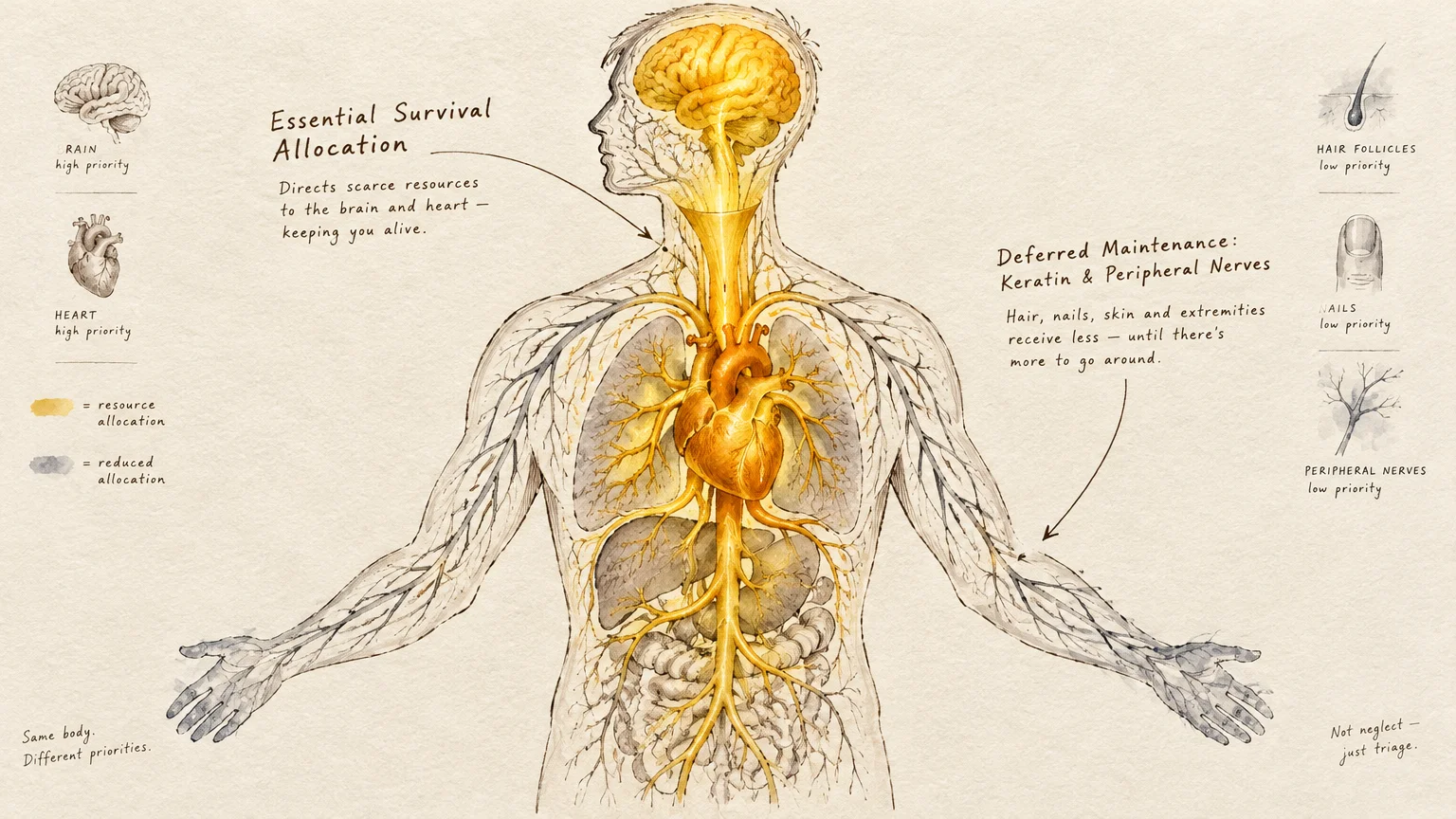
Your cells operate on a sophisticated system of metabolic prioritization known as triage theory. When micronutrient supplies decline, your body directs remaining resources toward functions essential for immediate survival.
Enzymes that protect basic cellular energy production receive first access to scarce vitamins. Meanwhile, repair pathways that preserve DNA fidelity and maintain connective tissues go without.
Routine serum blood tests often obscure this hidden cellular famine. Your body extracts stored minerals from bone matrix and soft tissues to maintain stable bloodstream concentrations.
A standard lab panel can report normal serum numbers even when your internal organs experience severe micronutrient starvation. True cellular depletion occurs long before standard reference ranges sound an alarm.
This biological triage explains why the earliest warnings appear in non-vital structures. Your body sacrifices nail strength, hair follicles, and peripheral nerve speed to preserve core cardiac and neurological functions.
The 10 Subtle Symptoms and Their Hidden Causes
Carefully examining daily physical changes helps you spot common nutrient deficiency signs before they escalate into chronic health challenges. Here are ten small symptoms that warrant your immediate attention.
1. Brittle, Ridged Nails or Spooning
Healthy fingernails display a smooth, slightly curved surface with uniform pink nail beds. When your nails become thin, develop vertical ridges, or split easily, your cellular matrix is under stress.
A pronounced concave depression, known clinically as koilonychia or spoon nails, represents one of the classic signs of low iron. Iron-dependent enzymes synthesize keratin proteins, and inadequate iron starves the growing nail bed of oxygen.
Current guidelines from the National Institutes of Health establish the adult iron Recommended Dietary Allowance at 8 mg per day for adult men and postmenopausal women. Premenopausal women require 18 mg per day, while pregnant women require 27 mg per day.
A biomarker analysis from the National Health and Nutrition Examination Survey revealed that iron deficiency in American women of reproductive age reached 17.4 percent. When iron drops, low ferritin levels impair the cellular turnover needed to build strong nails.
Persistent vertical splitting can also point toward a shortfall in sulfur-containing amino acids and B-complex vitamins. Addressing low iron stores frequently restores smooth nail architecture within several months.
2. Unexplained Muscle Twitches and Cramping
Sudden eyelid flutterings or painful calf cramps during the night represent frustrating disruptions to your daily routine. These involuntary contractions typically indicate an underlying electrolyte imbalance at the neuromuscular junction.
Persistent cramping serves as a hallmark indicator of magnesium deficiency. Magnesium acts as a physiological calcium blocker, allowing muscle fibers to relax fully after motor neuron stimulation.
Without sufficient intracellular magnesium, calcium floods nerve endings unchecked. This excess calcium produces hyper-excitable muscle membranes that spasm without warning.
Clinical data published in medical reviews indicate that approximately 60 percent of American adults do not meet the dietary intake target for magnesium. Furthermore, roughly 45 percent of the population is clinically magnesium deficient.
Adult women need 310 to 320 mg per day of magnesium, while adult men require 400 to 420 mg per day. Restoring your magnesium balance calms hyperactive muscle fibers and eases involuntary spasms.
3. Cracks at the Corners of Your Mouth
Painful, inflamed fissures at the corners of your lips—known clinically as angular cheilitis—are often mistaken for simple chapped lips. However, topical lip balms rarely heal these persistent lesions.
These fissures represent classic vitamin deficiency symptoms related to the B-complex family, particularly riboflavin and pyridoxine. Riboflavin supports epithelial cell turnover and accelerates skin repair along mucosal borders.
When riboflavin concentrations drop, structural proteins at the oral commissures break down under mechanical stress. Secondary bacterial or fungal overgrowth frequently colonizes the cracked skin, worsening local inflammation.
A concurrent lack of bioavailable iron compounds this epithelial vulnerability. Iron deficiency diminishes mucosal immunity, impairing your skin’s natural defense against superficial oral pathogens.
Targeting these micronutrient shortfalls with whole foods rapidly accelerates tissue repair. Restoring adequate B-vitamin status allows the delicate oral corners to heal cleanly.
4. Persistent Fatigue and Subtle Brain Fog
Waking up exhausted after a full night of sleep signals a breakdown in cellular respiration. When subtle brain fog accompanies physical lethargy, your nerve cells are struggling to generate energy.
This specific combination frequently points to an undiagnosed vitamin b12 deficiency. Vitamin B12 acts as an indispensable coenzyme in the synthesis of red blood cells and the maintenance of cognitive function.
The standard adult Recommended Dietary Allowance for vitamin B12 is 2.4 mcg per day. Needs rise slightly to 2.6 mcg per day during pregnancy and 2.8 mcg per day during lactation.
Between 10 percent and 30 percent of adults over age 50 malabsorb food-bound vitamin B12 due to declining stomach acidity. This age-related barrier prevents your digestive tract from extracting the vitamin from meat and dairy products.
Standard laboratory testing defines subnormal serum vitamin B12 as levels falling below 200 or 250 pg/mL. Clinicians investigate borderline values between 150 and 399 pg/mL by screening for elevated methylmalonic acid above 0.271 micromol/L.
Elevated methylmalonic acid confirms true cellular starvation within your tissues. Correcting this deficit restores cellular mitochondrial efficiency and clears mental lethargy.
5. Bleeding or Swollen Gums
Noticing pink foam when you brush your teeth is an unsettling experience that many adults dismiss as aggressive brushing. While poor oral hygiene contributes to gingivitis, microvascular fragility often stems from nutritional deficits.
Spontaneous gingival bleeding serves as an early indicator of inadequate vitamin C intake. Ascorbic acid serves as an indispensable enzymatic cofactor for hydroxylating proline and lysine during collagen synthesis.
Without sufficient vitamin C, your body synthesizes unstable collagen fibers with weak tensile strength. The fragile capillaries within your periodontal tissues rupture under minimal mechanical pressure.
Collagen also anchors tooth roots within the alveolar bone sockets. Low ascorbic acid concentrations impair local gum repair and leave oral tissues vulnerable to chronic microbial inflammation.
Consuming citrus fruits, bell peppers, and leafy greens restores capillary integrity. Strong collagen networks protect your gums from mechanical damage during routine daily brushing.
6. Restless Legs and Cold Extremities
An irresistible urge to move your legs in the evening can severely compromise your sleep quality. When this creeping sensation accompanies persistently cold fingers and toes, your circulatory system is underperforming.
These paired physical complaints represent prominent signs of low iron within your central nervous and cardiovascular systems. Iron acts as a structural component of hemoglobin, which binds oxygen for systemic transport.
When hemoglobin levels decline, peripheral blood vessels constrict to redirect warm, oxygenated blood to core organs. This survival mechanism leaves your hands and feet feeling cold and clammy.
Inside the brain, iron functions as a mandatory cofactor for tyrosine hydroxylase, the enzyme regulating dopamine synthesis. Low iron stores in the basal ganglia disrupt dopamine pathways, triggering the restless sensations that disturb your rest.
Evaluating your serum ferritin reveals whether depleted iron stores are driving these symptoms. Normalizing your iron stores eliminates peripheral chill and calms restless motor reflexes.
7. Tingling Sensations in Your Hands and Feet
Waking up with a prickling, “pins and needles” sensation in your extremities suggests compromised peripheral nerve conduction. When this numbness persists throughout the day, your myelin sheaths are losing structural integrity.
Paresthesia represents a progressive neurological symptom of vitamin b12 deficiency. Vitamin B12 coordinates the enzymatic reactions that synthesize and preserve the protective myelin sheathing around your nerves.
Depleted cobalamin stores destabilize myelin sheaths, leaving delicate nerve axons unprotected. Without intervention, peripheral sensory signals misfire, creating phantom tingling and sensory loss.
Folate insufficiency interacts directly with this biochemical pathway. National Health and Nutrition Examination Survey data revealed that folate insufficiency rose from 15.7 percent to 21.4 percent among tracked participants.
High folate intake can mask B12-induced anemia while allowing irreversible neurological damage to advance quietly. Comprehensive testing identifies these overlapping B-vitamin shortfalls before permanent nerve injury occurs.
8. Sluggish Night Vision and Dry Eyes
Struggling to navigate a dimly lit room or experiencing prolonged glare while driving at night indicates visual pigment depletion. Accompanying gritty eye dryness signals that your tear film has lost vital structural protection.
These functional vision changes are well-documented nutrient deficiency signs tied to vitamin A depletion. Vitamin A combines with the protein opsin inside the retina to form rhodopsin, the primary light-absorbing pigment for low-light vision.
When retinal vitamin A stores run low, your rod photoreceptors regenerate rhodopsin very slowly. This biochemical delay creates night blindness, leaving you temporarily disoriented when transitioning from light to dark.
The World Health Organization notes that deficiencies in iron, vitamin A, and iodine remain the most prevalent micronutrient crises worldwide. Lack of iron, folate, and vitamins B12 and A are leading causes of anemia, which affects 42 percent of children under age five and 40 percent of pregnant women globally.
Vitamin A also preserves the mucin-secreting goblet cells of the ocular conjunctiva. Adequate dietary retinol maintains a healthy tear film and protects your cornea from chronic oxidative irritation.
9. Diffuse Hair Thinning and Texture Changes
Finding excess hair strands in your shower drain often prompts worries about genetic aging. However, sudden diffuse shedding, known as telogen effluvium, frequently reflects metabolic distress within your hair follicles.
Hair matrix cells are among the fastest-dividing cells in the human body. Because of this high metabolic rate, your follicles are exceptionally sensitive to nutrient deprivation.
Depleted ferritin stores force active anagen hair follicles into a premature resting phase. Inadequate cellular iron limits the oxygen available for protein synthesis, resulting in brittle hair shafts and diffuse thinning.
Zinc shortfalls produce similar disruptions in follicular protein construction. Zinc acts as an essential cofactor for RNA and DNA polymerases, orchestrating the rapid cellular replication required for hair development.
Correcting these underlying deficiencies reactivates dormant follicles over several hair growth cycles. Consistent nutritional support restores diameter and tensile strength to developing strands.
10. Unexplained Mood Fluctuations and Irritability
Sudden bouts of uncharacteristic irritability, anxiety, or low emotional resilience are not merely emotional reactions to daily stress. Your brain requires an uninterrupted supply of micronutrients to synthesize stabilizing neurotransmitters.
Fluctuating emotional states often trace back to subclinical magnesium deficiency. Magnesium dampens the central nervous system by blocking excitatory NMDA receptors and supporting calming gamma-aminobutyric acid pathways.
Without sufficient magnesium to moderate neuronal firing, your brain remains in an over-stimulated, sympathetic state. This physiological imbalance leaves you vulnerable to emotional exhaustion and perceived stress.
Concurrent vitamin D shortfalls amplify this emotional instability. Vitamin D functions as a neurosteroid hormone, activating the gene expression of tryptophan hydroxylase to synthesize serotonin.
Federal health agencies identify vitamin D as an urgent nutrient of public health concern. Restoring optimal magnesium and vitamin D concentrations stabilizes neurological pathways and enhances everyday emotional equilibrium.
What Subtle Deficiencies Mean for Long-Term Health
Ignoring minor physical symptoms permits subclinical deficiencies to advance into chronic systemic illness over time. When your body sustains long-term micronutrient triage, it sacrifices vital structural tissues to maintain daily survival.
Chronic magnesium deficits prompt your body to withdraw mineral reserves directly from bone tissue. This process weakens the skeletal matrix, accelerating osteopenia and increasing long-term fracture risks.
Prolonged vascular inflammation and arterial calcification also advance quietly during periods of low mineral status. Without adequate micronutrients, vascular smooth muscle cells lose their ability to regulate arterial flexibility.
Uncorrected B-vitamin shortfalls allow toxic homocysteine metabolites to accumulate in the bloodstream. Elevated homocysteine directly degrades the vascular endothelium, increasing your susceptibility to cardiovascular and cerebrovascular events.
Subclinical deficiencies also accelerate cognitive decline by depriving neurons of protective antioxidant defenses. Proactive screening identifies these cellular deficits before irreversible neurological or cardiovascular damage occurs.
Proactive Measures You Can Take Today
Restoring your nutritional reserves requires a systematic approach grounded in clinical testing and dietary quality. You can take immediate, measurable steps to revitalize your cellular health.
Begin by requesting targeted biomarker panels during your next routine medical appointment. Standard complete blood counts miss early cellular depletions that specialized blood tests capture.
Ask your physician for a serum ferritin test rather than relying on total serum iron alone. A ferritin test reveals your long-term cellular iron storage capacity before overt anemia emerges.
Request a methylmalonic acid test alongside your total serum B12 evaluation. Elevated methylmalonic acid confirms true functional vitamin B12 deficiency even when serum numbers appear borderline.
Evaluate your intracellular mineral stores by ordering a red blood cell magnesium test. Red blood cell measurements provide a much more accurate assessment than standard serum magnesium tests.
Align your dietary patterns with the 2025–2030 Dietary Guidelines for Americans released by the USDA and HHS. The updated federal guidelines center on the foundational message to “Eat Real Food” to counter widespread nutritional deficits.
Prioritize whole, nutrient-dense foods to close national intake gaps in dietary fiber, vitamin D, calcium, iron, and potassium. Minimizing ultra-processed foods eliminates anti-nutrients that hinder normal intestinal absorption.
Incorporate magnesium-rich foods into your daily meals, such as pumpkin seeds, spinach, and black beans. Diversifying your plate ensures a wide spectrum of bioavailable minerals.
If you choose to use supplements, exercise caution with your daily dosages. Federal health authorities establish a Tolerable Upper Intake Level of 350 mg per day for magnesium specifically from supplemental sources.
Excessive supplemental intake of single minerals can induce secondary deficiencies by competing for identical intestinal transport sites. Always tailor your supplementation under the direct supervision of a qualified medical provider.

The Future of Micronutrient Research
Emerging research is transforming how scientists understand the relationship between micronutrients and cellular longevity. Personalized nutrition is rapidly replacing generalized daily intake recommendations.
Researchers are uncovering how distinct gut microbiome profiles alter individual nutrient absorption. Specific bacterial strains actively synthesize B-vitamins while enhancing the bioavailability of dietary minerals.
Continuous biosensing technology represents another exciting frontier in preventative medicine. Wearable monitors may soon track interstitial fluid mineral concentrations in real time, alerting you to deficits instantaneously.
Nutrigenomics is also shedding light on common genetic polymorphisms that impair nutrient activation. Identifying these unique genetic variations enables clinicians to design precision dietary protocols tailored to your exact metabolic needs.
Frequently Asked Questions About Nutrient Deficiencies
Can a standard blood test detect early nutrient deficiencies?
Standard complete blood counts often fail to catch early cellular nutrient deficiencies. Your body pulls minerals from tissues into the bloodstream to keep serum concentrations within normal limits.
Comprehensive testing requires functional biomarkers such as serum ferritin, methylmalonic acid, and red blood cell magnesium. These advanced markers reveal tissue-level depletion long before standard panels sound an alarm.
Why does aging reduce the body’s ability to absorb vitamin B12?
Aging naturally reduces the stomach’s production of hydrochloric acid and intrinsic factor. Hydrochloric acid separates vitamin B12 from dietary protein complexes so your body can use it.
Intrinsic factor then binds to the free vitamin to enable absorption within the ileum. Without adequate stomach acid and intrinsic factor, up to 30 percent of older adults experience food-bound B12 malabsorption.
Is it possible to have normal blood magnesium while being deficient?
Only one percent of your body’s total magnesium circulates within your bloodstream at any given time. The remaining 99 percent resides inside your bones, muscles, and soft tissues.
When dietary intake drops, your body leaches magnesium from tissues to preserve stable blood levels. Consequently, a standard serum test often looks completely normal even when cellular stores are severely depleted.
How long does it take to correct a micronutrient deficiency?
Replenishing depleted cellular stores typically requires several weeks to a few months of targeted dietary changes. The exact recovery timeline depends on your digestive health and the severity of your deficiency.
Epithelial tissues like the corners of your mouth often heal within two to three weeks of targeted support. Rebuilding deep iron stores or reversing peripheral nerve tingling takes significantly longer.
Can you take too many micronutrient supplements?
Taking high doses of isolated supplements can trigger toxicity and disrupt the absorption of other vital nutrients. Fat-soluble vitamins accumulate within adipose tissue and the liver when consumed in excess.
High supplemental doses of minerals like zinc can also induce secondary copper deficiencies by outcompeting copper for absorption. Prioritize whole foods and consult your physician before starting high-dose supplement regimens.
Empowering Your Longevity Through Micronutrient Awareness
Your body continually communicates its internal metabolic needs through small physical signals. Recognizing brittle nails, muscle twitches, or sluggish focus empowers you to resolve nutritional deficits before chronic disease develops.
Embracing a lifestyle centered on whole, nutrient-dense foods provides your cells with the raw materials needed for lasting vitality. Routine functional testing offers clear objective data to guide your preventative health choices.
Take charge of your nutritional well-being by listening closely to what your body tells you each day. Proactive nutritional monitoring preserves your physical independence, protects your cognitive health, and supports vibrant longevity.
This article is for informational purposes only and is not a substitute for professional medical advice, diagnosis, or treatment.