
Restorative rest protects your memory, steadies your balance, and shields your heart health after age sixty. Yet millions of older women spend their nights staring at the ceiling and accepting chronic exhaustion as normal.
Aging shifts your body’s internal rhythms, but deep and refreshing slumber remains fully attainable. Medical providers want you to stop writing off poor rest as an unavoidable consequence of aging.
Understanding the physiological mechanisms behind modern sleep changes allows you to reclaim peaceful nights. Here are the clinical insights and practical adjustments physicians wish every mature woman understood.
Understanding the Basics of Sleep Architecture After Sixty
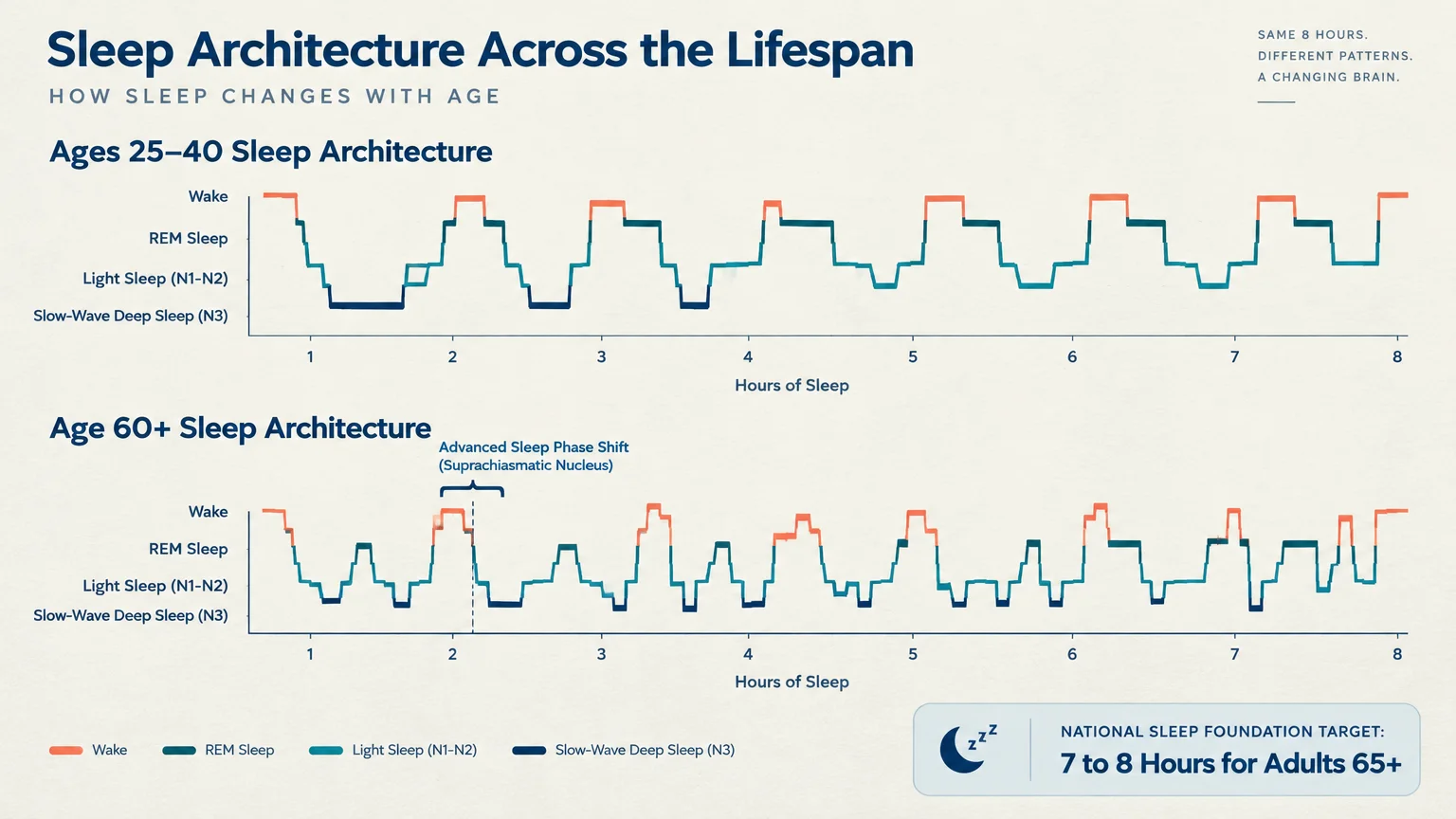
Sleep architecture describes the cyclical journey your brain takes through deep, light, and rapid eye movement stages. Each stage performs distinct restorative tasks, ranging from cellular repair to long-term memory storage.
As you cross the sixty-year milestone, your neurological cycles experience a measurable transition. You spend less time in slow-wave deep sleep and substantially more time in lighter sleep stages.
Because you spend more time in light slumber, ambient noises and minor physical sensations wake you up more easily. This physiological shift often creates the frustrating illusion that you barely slept at all.
Your master circadian clock resides within the suprachiasmatic nucleus of the brain. This biological pacemaker dampens its signaling power as the decades advance, altering your daily hormone production and body temperature rhythms.
This internal dampening explains why you might feel drowsy early in the evening and wake before sunrise. Medical experts refer to this natural timing shift as advanced sleep phase syndrome.
The National Institutes of Health stresses that your physiological requirement for sleep does not vanish with age. While your rhythms shift, your body still requires adequate duration to restore tissues and cleanse metabolic waste.
The National Sleep Foundation recommends seven to eight hours of nightly sleep for adults aged sixty-five and older. In comparison, younger adults typically require seven to nine hours of rest.
The American Academy of Sleep Medicine also recommends at least seven hours of sleep per night for all adults. Sustained sleep deprivation undermines cardiovascular health, suppresses immunity, and accelerates cognitive decline.
Key Biological Considerations for Aging Women
Women navigate unique physiological transformations across the lifespan that profoundly impact nighttime recuperation. The sharp drop in estrogen and progesterone during and after menopause alters central nervous system signaling.
Progesterone promotes relaxation by enhancing gamma-aminobutyric acid receptors in your brain. When this hormone declines, natural anxiety dampening decreases, leaving you more vulnerable to sudden nighttime awakenings.
Estrogen helps regulate your core temperature and maintains upper airway muscle tone. The loss of estrogen destabilizes your thermoregulatory center and permits airway tissues to collapse more readily during sleep.
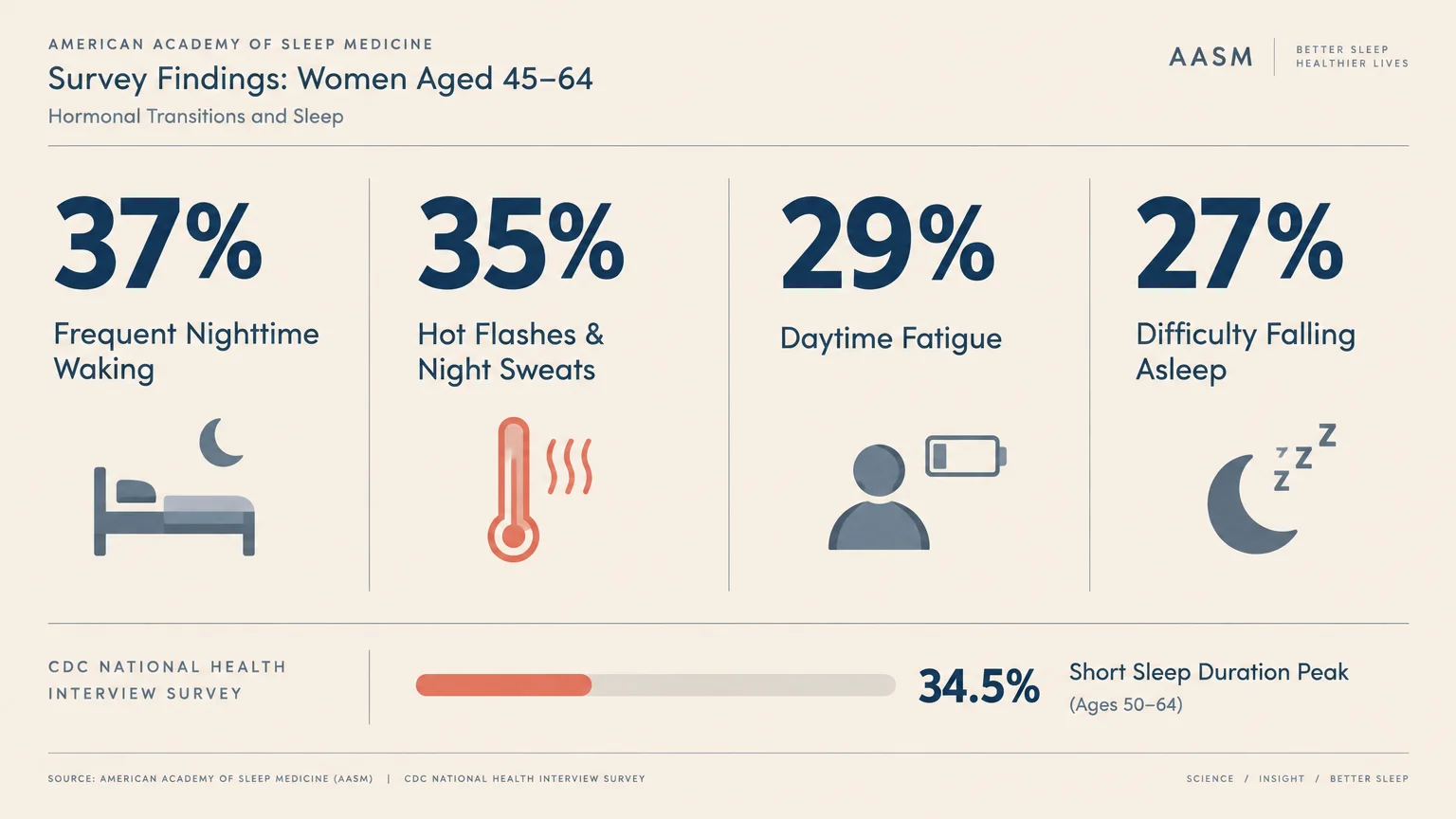
Recent survey data from the American Academy of Sleep Medicine highlights the severity of these menopausal transitions. Among women aged forty-five to sixty-four, thirty-seven percent report frequent nighttime waking.
Furthermore, thirty-five percent experience sleep-disrupting hot flashes or night sweats, while twenty-nine percent report increased daytime fatigue. Another twenty-seven percent struggle with falling asleep, and only six percent report no sleep changes.
The CDC National Health Interview Survey reveals that 30.4 percent of adult women sleep less than the recommended seven hours daily. Short sleep duration peaks at 34.5 percent among adults aged fifty to sixty-four.
That number drops to 27.2 percent among adults aged sixty-five and older, showing that retirement schedules may offer relief. However, sleep quality issues often replace sheer duration deficits as women grow older.
According to CDC records, approximately 12.8 percent of adults aged sixty-five and older report consistent trouble falling asleep. Across every adult age bracket, women remain statistically more likely than men to struggle with staying asleep.
Lifetime data demonstrates that women are forty percent more likely than men to experience insomnia. The U.S. Office on Women’s Health confirms that one in four women experiences insomnia symptoms, with the highest prevalence occurring among older women.
10 Sleep Secrets Doctors Wish Every Senior Woman Knew
1. Nighttime Awakenings Are Normal Human Physiology
Many women panic when they find themselves wide awake at two in the morning. Doctors wish you knew that brief awakenings between ninety-minute sleep cycles are completely natural biological events.
Historically, human beings often slept in two distinct intervals known as biphasic sleep. When you wake up, your heart rate and brain activity simply transition through a lighter physiological valley.
The real problem emerges when you catastrophize these natural awakenings by checking the clock. Stress activates your sympathetic nervous system, releasing cortisol and adrenaline that keep you alert for hours.
Instead of tossing and turning, keep your bedroom dark and practice slow abdominal breathing. Accepting brief awakenings without emotional panic allows your brain to drift smoothly back into slumber.
2. Postmenopausal Snoring Often Masks Obstructive Sleep Apnea
Many women assume that obstructive sleep apnea only affects heavy, middle-aged men who snore loudly. In reality, declining ovarian hormones strip away the muscular tone that keeps your upper airway open during sleep.
Clinical studies reveal that up to sixty-seven percent of postmenopausal women experience some degree of obstructive sleep apnea. Because your airway collapses, your brain must repeatedly wake you to resume normal breathing.
Female sleep apnea rarely looks like classic cinematic snoring or gasping. Instead, women frequently report morning headaches, chronic fatigue, daytime brain fog, depressive moods, or frequent nighttime bathroom visits.
Doctors wish senior women would seek overnight sleep testing rather than accepting exhaustion as normal. Treating sleep apnea with positive airway pressure therapy reduces cardiovascular strain and restores revitalizing deep rest.
3. Over-the-Counter Sleep Medications Pose Severe Cognitive Hazards
Reaching for nonprescription sleep aids seems harmless when you face chronic exhaustion. However, most drugstore sleep formulas rely on diphenhydramine or doxylamine to induce grogginess.
A Kaiser Permanente study of older adults aged sixty-five to seventy-nine found that twenty-two percent of older women regularly use sleep aids. In comparison, only seventeen percent of older men use these products.
The same study noted that sixteen percent of senior women report frequent insomnia, compared to eleven percent of men. Yet only ten percent of older adults discuss their ongoing sleep struggles with a healthcare professional.
First-generation antihistamines block acetylcholine, a neurotransmitter that is essential for memory and cognitive processing. Regular use significantly increases your risk of acute confusion, daytime sedation, urinary retention, and serious falls.
4. Morning Sunlight Serves as Your Master Melatonin Switch
Melatonin does not begin with an evening supplement; it starts with morning light exposure. When bright sunlight enters your eyes, specialized retinal ganglion cells send electrical signals directly to your brain.
This light exposure tells your suprachiasmatic nucleus to suppress daytime melatonin production and initiate an internal countdown timer. Approximately fourteen to sixteen hours later, your brain naturally releases melatonin to prompt sleepiness.
Many seniors spend their mornings indoors behind tinted windows or in dimly illuminated rooms. Dim indoor lighting fails to trigger the robust neurological reset needed to anchor your circadian rhythm.
Step outside for fifteen to thirty minutes within an hour of waking every morning. This simple habit reinforces your biological clock and makes falling asleep at night remarkably effortless.
5. Core Body Temperature Dictates Your Ability to Enter Deep Sleep
Your body must shed approximately one to two degrees Fahrenheit to initiate and sustain deep sleep. If your core temperature stays elevated, your brain interprets the heat as daytime metabolic activity.
Vasomotor symptoms like night sweats disrupt this cooling process dramatically. The American Academy of Sleep Medicine found that thirty-five percent of women aged forty-five to sixty-four experience sleep disruptions from hot flashes.
Taking a warm bath or shower sixty to ninety minutes before bed paradoxically cools your core. The warm water dilates peripheral blood vessels in your hands and feet, dumping heat away from your internal organs.
Keep your bedroom temperature between sixty-five and sixty-eight degrees Fahrenheit. Pairing a cool room with breathable cotton or linen bedding prevents thermal microclimates that trigger midnight awakenings.
6. Fluid Timing and Silent Reflux Trigger Unconscious Arousals
Many older women believe an overactive bladder forces them to wake up three times every night. However, doctors often discover that an underlying arousal occurs first, and you only notice your bladder afterward.
Lying flat shifts extracellular fluid from your lower extremities back into your central bloodstream. Your kidneys process this redistributed fluid during the night, filling your bladder and disturbing your rest.
Elevate your legs for an hour in the late afternoon to encourage daytime fluid excretion. Additionally, restrict your beverage intake during the two hours preceding your scheduled bedtime.
Gastroesophageal reflux also creates micro-arousals without obvious heartburn symptoms. Eating your final meal at least three hours before bed prevents acidic stomach contents from irritating your esophagus while you lie flat.
7. Restless Legs Signal Mineral Deficiencies and Neurological Strain
That irresistible evening urge to move your legs is not a harmless nervous tick or muscle cramp. Restless Legs Syndrome is a recognized neurological sensorimotor disorder that disrupts nighttime tranquility.
Research demonstrates that the risk of developing Restless Legs Syndrome is twice as high in women compared to men. Hormonal history, venous dynamics, and biological iron storage contribute directly to this heightened vulnerability.
Doctors wish women knew that normal blood iron tests do not rule out this condition. Your brain requires ferritin, a protein that stores iron, to synthesize dopamine and regulate smooth motor activity.
Request a comprehensive serum ferritin panel from your healthcare provider if you experience creeping leg sensations. Correcting low iron stores under clinical supervision frequently resolves the discomfort without heavy medications.
8. Physical Resistance Training Directly Deepens Slow-Wave Sleep
Throughout your waking hours, your brain breaks down adenosine triphosphate for cellular energy. The resulting byproduct, adenosine, accumulates in your cerebral tissue and creates powerful biological sleep pressure.
Sedentary days produce minimal adenosine, leaving your brain without the biochemical drive necessary for deep sleep. Moderate physical activity accelerates adenosine accumulation, ensuring that you feel genuinely exhausted when night arrives.
Strength and resistance exercises provide particular benefits for mature women. Engaging major muscle groups enhances metabolic insulin sensitivity, preventing midnight blood sugar crashes that trigger cortisol surges and early awakenings.
Perform gentle resistance training or brisk walking during the morning or early afternoon. Avoid vigorous cardiovascular workouts within three hours of bedtime to allow your heart rate and core temperature to decline.
9. Cognitive Behavioral Therapy Outperforms Sedative Prescriptions
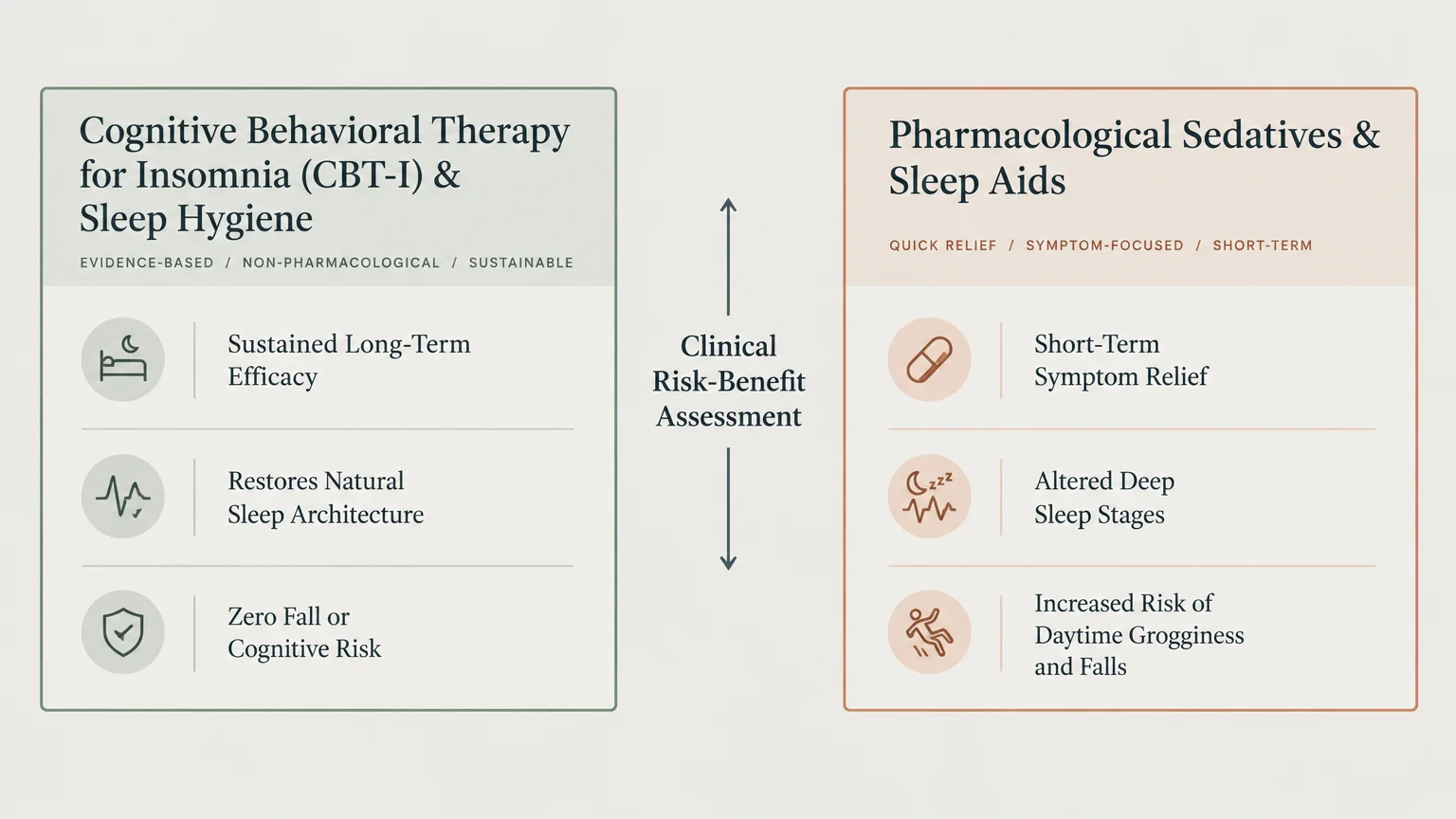
When sleeplessness turns chronic, prescription sedatives offer tempting short-term relief. However, major medical organizations warn that pharmaceutical hypnotics alter your sleep architecture and fail to cure underlying insomnia.
Cognitive Behavioral Therapy for Insomnia, commonly known as CBT-I, serves as the clinical gold standard for persistent sleep problems. This structured psychological therapy targets the thoughts and behaviors that perpetuate poor sleep.
CBT-I teaches stimulus control, retraining your brain to associate your bed exclusively with deep rest. If you remain awake for twenty minutes, you leave the bed to engage in a quiet activity until drowsiness returns.
Clinical studies demonstrate that CBT-I produces longer-lasting improvements in sleep efficiency than prescription sleeping pills. Best of all, this behavioral therapy carries zero risk of physical dependence, tolerance, or balance impairment.
10. Severe Sleep Deprivation Multiplies Fall and Fracture Risks
Skimping on sleep does far more than make you irritable the following afternoon. Chronic sleep restriction severely compromises your proprioception, executive function, and motor coordination.
Studies on women aged seventy and older show that sleeping fewer than five hours per night significantly increases the risk of falls and bone fractures. Exhaustion impairs your neuromuscular reflexes when navigating uneven household surfaces.
Furthermore, your body repairs bone tissue and balances osteoblast activity during the deepest phases of non-REM sleep. Chronic deprivation disrupts bone remodeling, compounding the bone mineral density losses associated with osteoporosis.
Prioritizing seven to eight hours of nightly rest acts as an essential safeguard for skeletal integrity. High-quality sleep preserves the sharp balance and rapid reflexes needed to maintain lifelong independent mobility.
Benefits and Potential Risks of Sleep Interventions
Taking proactive steps to improve your sleep produces transformative benefits across every bodily system. Consistent, high-quality slumber regulates blood pressure, enhances immune defense, and stabilizes glycemic control.
During deep sleep, the brain’s glymphatic system flushes out toxic metabolic waste products, including amyloid proteins linked to neurodegenerative decline. Restorative sleep directly defends your memory, mood, and sharp executive processing.
However, pursuing better sleep through improper methods introduces significant health hazards. Relying on prescription hypnotics or sedative antihistamines increases your risk of daytime cognitive impairment, car accidents, and severe falls.
Sudden discontinuation of prescription sleep aids can also trigger severe rebound insomnia and autonomic nervous system distress. You must always taper off sedative medications under the strict supervision of your physician.
Even unguided supplement use carries risks for senior women. High doses of exogenous melatonin or herbal sedatives can interact dangerously with blood thinners, antihypertensive drugs, and immunosuppressive medications.
The safest path toward restorative rest combines evidence-based behavioral adjustments with targeted clinical evaluations. Addressing underlying physiological drivers eliminates symptoms without exposing you to harmful drug side effects.

What the Experts Say: Clinical Guidelines and Research
Leading medical authorities agree that chronic sleep issues in older adults demand rigorous clinical attention. The Mayo Clinic emphasizes that sleep disturbances are not a normal biological consequence of growing older.
Mayo Clinic specialists recommend conducting a comprehensive sleep assessment whenever nighttime awakenings compromise your daytime alertness or emotional well-being. Identifying root causes like sleep-disordered breathing or restless legs prevents years of unnecessary suffering.
Research published by the Centers for Disease Control and Prevention underscores the widespread nature of senior sleep deficits. While 27.2 percent of seniors experience short sleep, 12.8 percent struggle with sleep initiation.
The American College of Physicians strongly recommends Cognitive Behavioral Therapy for Insomnia as the initial treatment for all adults experiencing chronic insomnia disorder. Their formal clinical guidelines urge clinicians to avoid immediate sedative prescriptions.
Kaiser Permanente researchers highlight a critical communication barrier between older patients and their doctors. Despite sixteen percent of senior women enduring frequent insomnia, only ten percent report discussing their sleep issues with a healthcare provider.
Doctors cannot treat conditions they do not know exist. Healthcare organizations urge older women to voice sleep complaints proactively during routine wellness exams to access proven diagnostic screenings and non-pharmacological treatments.

Practical Steps and Actionable Advice for Restful Nights
You can begin transforming your sleep tonight by implementing structured, physician-backed lifestyle modifications. Taking purposeful control of your daily routine establishes the biological cues necessary for deep, restorative slumber.
Anchor Your Morning Awakening Time
Set an alarm for the exact same hour seven days a week, regardless of how poorly you slept. A fixed wake-up time stabilizes your master circadian clock and ensures predictable nighttime sleep pressure.
Resist the temptation to sleep late or take lengthy afternoon naps after a restless night. Prolonged daytime naps drain your accumulated adenosine, making it nearly impossible to fall asleep on schedule that evening.
Conduct a Bedroom Environment Audit
Transform your bedroom into a quiet, pitch-black sleep sanctuary dedicated solely to rest and intimacy. Remove glowing electronic screens, television sets, and illuminated digital clocks from your direct line of sight.
Install blackout curtains and set your thermostat between sixty-five and sixty-eight degrees Fahrenheit. Keeping your sleeping environment cool and dark prevents nocturnal temperature spikes and sensory micro-arousals.
Strategically Adjust Evening Nutrition and Hydration
Finish your evening dinner at least three hours before retiring to give your stomach ample time to digest. Avoid heavy, fatty, or spicy dishes that exacerbate nighttime reflux and elevate your resting metabolic rate.
Front-load your hydration earlier in the day and taper fluid intake two hours before bed. If nocturnal leg cramps bother you, consume mineral-rich foods like leafy greens and squash during lunch and dinner.
Schedule a Comprehensive Sleep Consultation
Prepare for your next doctor appointment by keeping a detailed seven-day sleep diary. Record your bedtimes, wake times, nighttime awakenings, and any daytime fatigue or brain fog symptoms you notice.
Ask your healthcare provider to evaluate your prescription medications for stimulant side effects that hinder rest. Request screening blood work for serum ferritin, thyroid function, and vitamin D levels.
Inquire about an at-home sleep apnea evaluation if you snore, wake with a dry mouth, or feel unrefreshed. Home testing devices offer convenient, accurate diagnostics from the comfort of your own mattress.
Frequently Asked Questions About Sleep After Sixty
How many hours of sleep do older women actually need?
Older women require seven to eight hours of quality sleep per night, according to the National Sleep Foundation. The common belief that your body naturally requires less sleep as you age is a complete medical myth.
While age-related neural changes make maintaining continuous sleep more challenging, your cellular repair needs remain unchanged. Aim for at least seven hours each night to preserve optimal cardiovascular, immune, and cognitive function.
Why do I wake up at 3:00 AM every night and struggle to fall back asleep?
Awaking around three in the morning often coincides with the natural completion of your deepest slow-wave sleep cycles. As your sleep architecture transitions into lighter stages, minor body temperature changes or environmental sounds wake you.
Furthermore, evening cortisol levels begin their slow morning ascent around this time. If chronic stress, blood sugar drops, or sleep apnea jolt your nervous system, falling back asleep becomes difficult without deliberate relaxation techniques.
Are natural sleep supplements like melatonin safe for long-term use?
Over-the-counter melatonin supplements frequently contain doses that vastly exceed what your brain naturally produces. Taking high doses of melatonin for extended periods can cause morning grogginess, vivid nightmares, and hormonal receptor desensitization.
If you choose to use melatonin, doctors recommend micro-doses ranging from 0.3 to 1 milligram taken two hours before bed. Always consult your physician before using sleep supplements, as they can interact with cardiovascular and neurological medications.
How do I know if my night waking is caused by sleep apnea?
Sleep apnea in women rarely presents with the loud, choking snores typically observed in men. You should suspect sleep-disordered breathing if you wake up with a parched mouth, morning headaches, or racing heartbeats.
Persistent daytime exhaustion despite spending eight hours in bed serves as another classic clinical indicator. Discuss these subtle warning signs with your physician to arrange a comprehensive at-home or clinical sleep study.
Does sleeping less than five hours really weaken my bones?
Yes, clinical research confirms that sleeping fewer than five hours per night significantly increases your risk of bone fractures. Deep sleep serves as the primary window for cellular repair and bone remodeling hormone secretion.
Sleep deprivation also impairs daytime motor coordination, depth perception, and postural stability. This neurological sluggishness increases your likelihood of experiencing a devastating fall that results in a hip or spinal fracture.
Reclaiming Restorative Sleep for Vitality and Longevity
Restful sleep is not a luxury or a relic of your youth; it is a clinical cornerstone of healthy aging. By understanding the physiological shifts that occur after sixty, you can stop accepting exhaustion as your baseline reality.
Simple adjustments to your light exposure, bedroom temperature, and fluid timing yield dramatic improvements in sleep continuity. Ditching hazardous over-the-counter sedatives protects your precious memory and shields you against dangerous nighttime falls.
Partner proactively with your medical providers to identify treatable conditions like sleep apnea or restless legs syndrome. You possess the power to transform your nighttime rest and awaken each morning with renewed vitality and strength.
Medical Disclaimer
This article is intended for informational and educational purposes only and is not a substitute for professional medical advice, diagnosis, or treatment. Always consult with a qualified healthcare provider regarding any health concerns or before making any decisions related to your health or treatment.