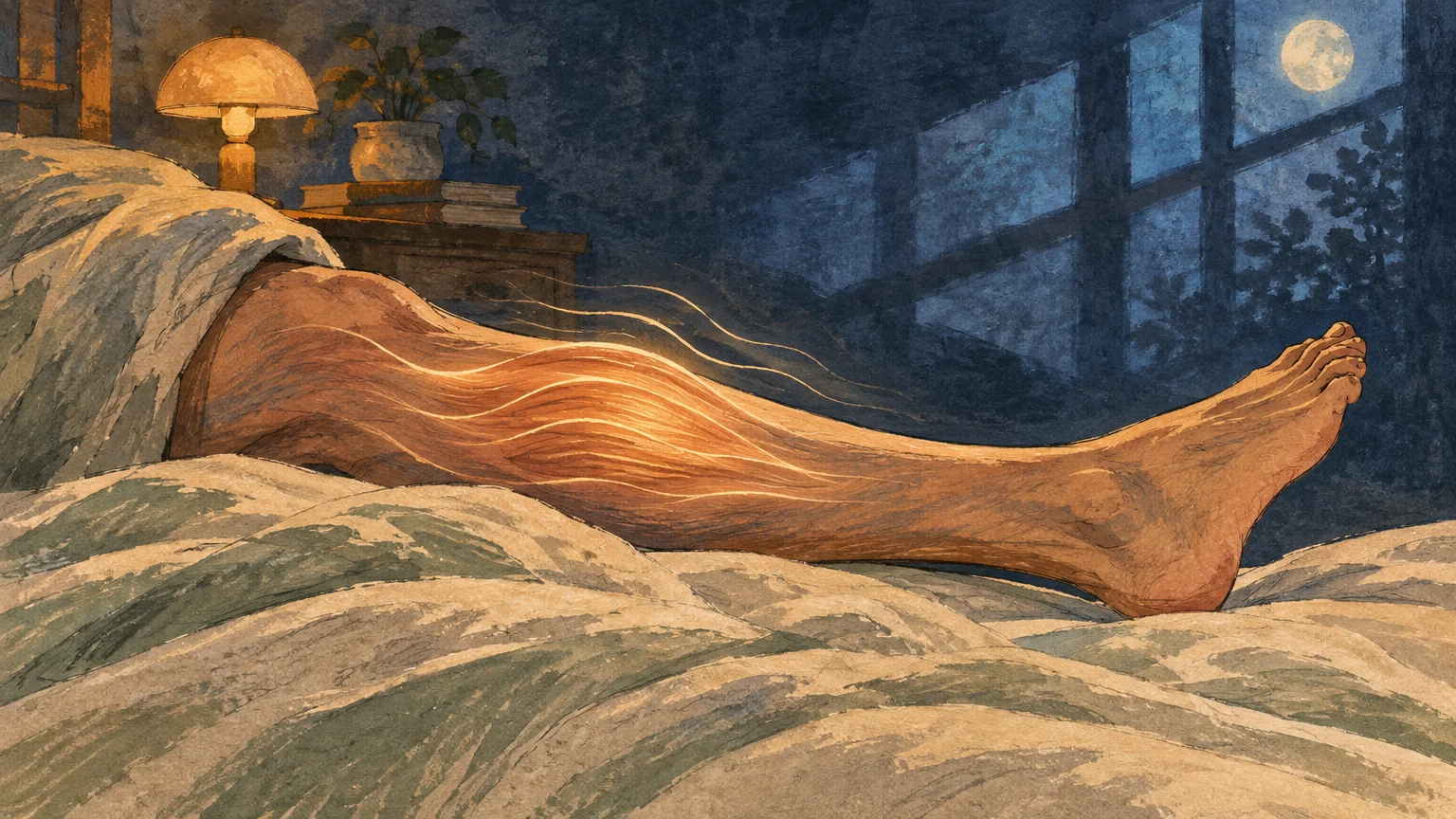
A sudden, tight knot in your calf can jolt you out of a deep sleep in seconds. Nighttime leg cramps affect up to 50% of older adults, turning restful nights into frustrating battles with lingering pain.
Understanding the root triggers behind your leg cramps at night gives you real power to stop them. Most episodes stem from manageable habits, medication side effects, or underlying health shifts you can address with your doctor.
Learn the eight primary causes, practical relief strategies, and clear warning signs that tell you when to seek medical care.
What Happens in Your Body During a Nighttime Leg Cramp
A nocturnal leg cramp is a sudden, involuntary contraction of one or more muscles that wakes you from sleep. Roughly 3 out of 4 leg cramp episodes happen at night while your body rests.
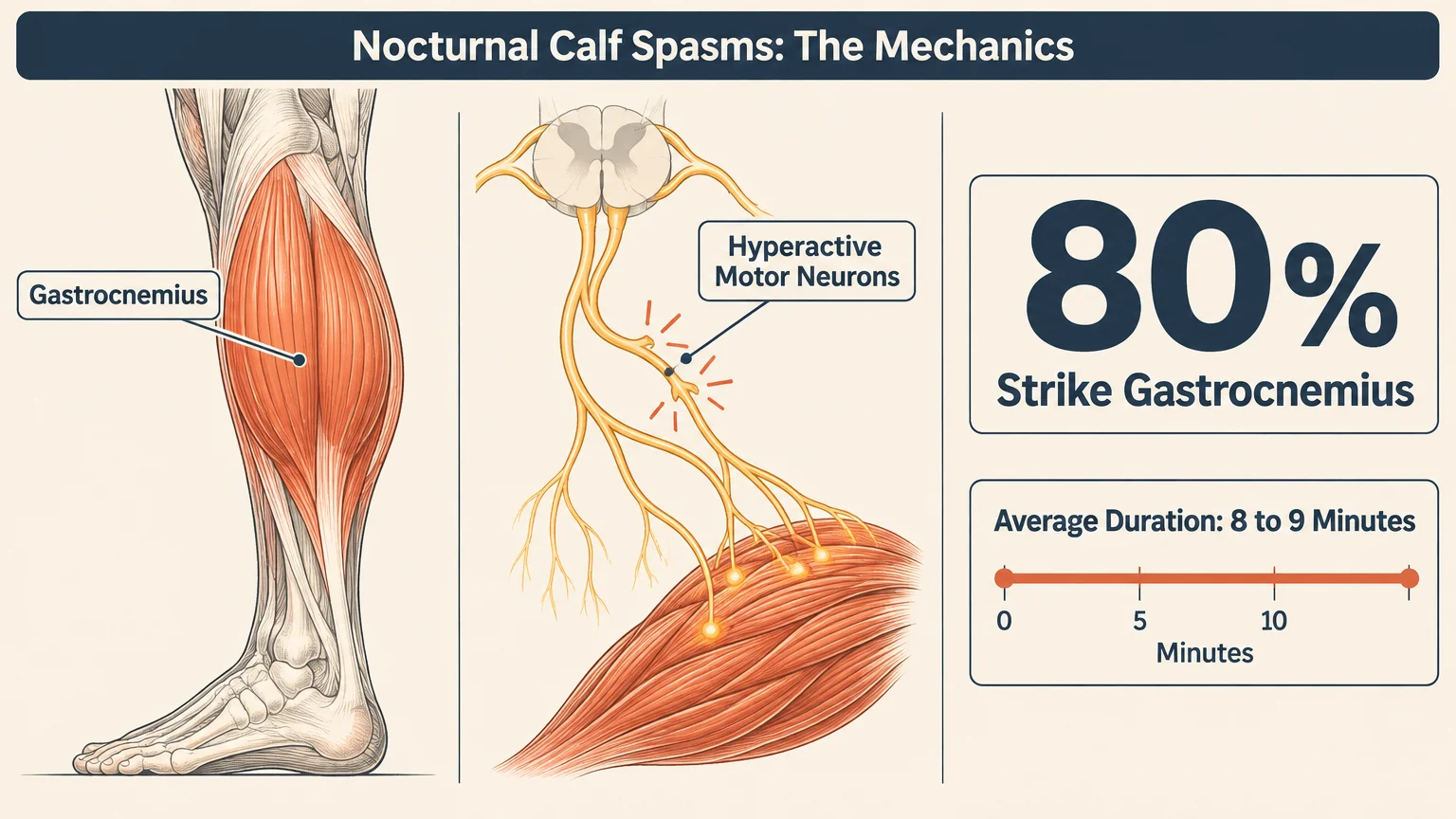
Around 80% of these painful spasms strike the gastrocnemius—the large muscle that forms the back of your lower leg. Cramps can also tighten the small muscles in your feet or the larger muscles in your thighs.
When a cramp hits, your muscle fibers lock into a fierce squeeze without your brain telling them to move. Most episodes last from a few seconds up to 10 minutes, with an average duration of 8 to 9 minutes in adults.
Even after the sharp spasm fades, your affected leg may ache for several hours or up to 24 hours. Between 50% and 60% of adults experience this discomfort at some point, and 6% of U.S. adults endure moderate-to-severe cramps more than five times monthly.
Many older adults confuse nighttime cramps with restless legs syndrome, a separate nerve-related sleep disorder. Restless legs syndrome causes an uncomfortable urge to move your legs at rest rather than a hard, painful muscle knot.
Walking or stretching typically brings quick relief from restless legs syndrome. By contrast, a true cramp locks your muscle into a firm, visible lump that hurts intensely until you forcefully stretch the fibers back out.
The 8 Causes of Leg Cramps at Night
Pinpointing your specific nocturnal leg cramps causes helps you and your caregiver choose the safest solution. Researchers and clinicians group nighttime spasms into eight major triggers.
1. Idiopathic Neuromuscular Fatigue
Doctors use the medical term idiopathic when a symptom appears without an identifiable underlying disease. Most nighttime leg cramps in healthy older adults fall into this category.
Instead of simple mineral loss, research points to hyperactive motor neurons—the nerve cells in your spinal cord that control muscle movement. As muscles tire, normal calming signals from your tendons weaken while excitatory signals keep firing.
Aging naturally shortens muscle fibers and reduces the number of healthy nerve connections in your legs. That biological shift makes overactive nerve firing more likely when your legs finally settle down for sleep.
2. Sleeping Posture and Tight Bedding
How you position your legs in bed can quietly set the stage for a painful spasm. Many people sleep on their stomachs or backs with their toes pointed downward, a position doctors call plantar flexion.
Pointing your toes shortens your calf muscle for hours at a time. When a shortened muscle stays idle all night, even a tiny stretch or shift can trigger a sudden protective spasm.
Heavy blankets or tightly tucked top sheets make this posture worse by pressing your toes down. Loosening the bedding at the foot of your bed gives your feet room to rest at a natural angle.
3. Daytime Strain and Sedentary Habits
What you do during daylight hours strongly shapes how your muscles behave at midnight. Standing on hard concrete or tile floors for long stretches overworks your calves and fatigues your lower-leg nerves.
Sudden, unaccustomed exercise—such as a long walk on steep hills or vigorous gardening—can also exhaust muscle fibers. Those fatigued fibers become irritable hours later while you sleep.
On the other hand, prolonged sitting and physical inactivity shorten your tendons and stiffen your leg muscles. Balancing steady movement with gentle recovery keeps your muscle fibers flexible and far less reactive.
4. Prescription and Over-the-Counter Medications
Several common drugs prescribed to older adults list leg cramps as a well-documented side effect. A major population study of 4.2 million adults aged 50 and older revealed sharp jumps in cramp treatments after starting specific therapies.
Inhaled long-acting beta2-agonists—bronchodilator inhalers used for asthma and chronic lung disease—more than doubled the likelihood of new cramp prescriptions. Diuretics, often called water pills for high blood pressure or heart failure, also significantly raise cramp risk.
Potassium-sparing diuretics and thiazide-like diuretics disrupt fluid balance and nerve stability in your lower legs. Cholesterol-lowering statins carry a smaller but measurable increase in cramp risk as well.
Other medications strongly linked to nighttime spasms include intravenous iron sucrose, conjugated estrogens, and the bone drug raloxifene. Even over-the-counter naproxen and the osteoporosis injection teriparatide can provoke painful leg tightening in sensitive individuals.
5. Vascular Disease and Nerve Compression
Blocked blood vessels and pinched spinal nerves frequently trigger persistent leg pain at night. Peripheral artery disease (PAD) occurs when fatty plaque narrows the arteries carrying oxygen-rich blood to your legs.
Your muscles need steady oxygen to relax properly after contracting. You can learn more about circulation health and PAD symptoms through the American Heart Association.
Lumbar spinal stenosis—a narrowing of the spinal canal in your lower back—can also squeeze nerves traveling down your legs. That nerve irritation mimics muscle cramps or sparks genuine spasms in your calves and feet.
Peripheral neuropathy, which is damage to the nerves outside your brain and spinal cord, similarly scrambles signals to your leg muscles. Unlike harmless fatigue cramps, vascular and nerve conditions often bring numbness, tingling, or aching during daytime walks.
6. Endocrine, Kidney, and Liver Conditions
Ongoing internal illnesses disrupt the chemical environment your muscles need to stay calm. Both type 1 and type 2 diabetes frequently damage tiny blood vessels and peripheral nerves in your lower limbs.
Keeping blood sugar steady protects those vulnerable nerves over time. Practical guidance on blood sugar control is available from the American Diabetes Association.
Thyroid disorders also play a hidden role in muscle health. Both hypothyroidism (an underactive thyroid gland) and hyperthyroidism (an overactive thyroid gland) slow down or overstimulate muscle recovery.
Chronic kidney disease and regular dialysis treatments alter waste clearance and fluid balance, making severe nighttime cramps common. Liver cirrhosis and anemia—a shortage of healthy red blood cells carrying oxygen—can similarly leave leg muscles starved for steady fuel.
7. Dehydration and Fluid Shifts
Your muscle fibers rely on adequate water to conduct electrical signals smoothly and flush out metabolic byproducts. When you fall behind on fluids during the day, the space around your nerve endings shrinks slightly.
That subtle fluid drop leaves motor nerves crowded and overly sensitive to minor twitches. Older adults face higher dehydration risks because natural thirst cues fade with age.
Diuretic medications, hot weather, or illnesses involving fever and diarrhea speed up fluid loss even further. Replacing lost fluids steadily before early evening helps stabilize nerve firing while you sleep.
8. Mineral Deficiencies and Magnesium Imbalances
Minerals like potassium, calcium, and magnesium help muscle cells contract and relax in balanced waves. Severe hypomagnesemia—abnormally low magnesium levels in your blood below 0.75 mmol/L—can trigger numbness, tingling, and painful muscle spasms.
Healthy adult blood magnesium normally sits between 0.75 and 0.95 mmol/L, though less than 1% of your body’s magnesium circulates in blood serum. Poor appetite, chronic digestive disorders, and certain blood pressure pills can slowly drain those stores.
Iron deficiency also deserves attention when nighttime leg discomfort interrupts your rest. Low iron stores, marked by blood ferritin (an iron-storage protein) below 50 ng/mL, strongly drive restless legs syndrome that many people mistake for cramps.

Key Symptoms and Warning Signs in Older Adults
Recognizing how muscle cramps in seniors differ from other leg problems keeps you safe from missed diagnoses. A typical benign cramp strikes suddenly during sleep, locks your calf or foot into a rigid knot, and resolves within 10 minutes.
Roughly 1 in 5 adults with leg cramps experiences daily symptoms severe enough to seek medical attention. Soreness may linger the next morning, making your first steps out of bed feel stiff or bruised.
Women sometimes notice shifting cramp patterns around hormone changes or when starting estrogen-related therapies such as conjugated estrogens or raloxifene. Meanwhile, pregnant individuals experience sharp increases across pregnancy—reaching up to 64.6% in the third trimester—though age-related vascular shifts dominate later in life.
Older adults should watch closely for signs that point beyond ordinary muscle fatigue. Pain that starts reliably during walking and stops within minutes of resting suggests peripheral artery disease rather than harmless sleep cramps.
Burning sensations, pins-and-needles tingling, or balance trouble alongside cramps often signal peripheral neuropathy or spinal nerve pressure. Keeping a brief sleep diary helps your doctor separate simple spasms from circulation or nerve trouble.
Common Risk Factors That Raise Your Odds
Age remains the single strongest predictor of frequent nighttime leg spasms. While roughly 33% of adults over age 50 report cramps in general reviews, clinical surveys of adults aged 65 and older show rates climbing between 37% and 50%.
Taking multiple daily prescriptions multiplies your odds, especially when you combine inhalers, diuretics, and cholesterol medications. Caregivers should review medication timing and newly added drugs whenever cramps suddenly worsen.
Chronic illnesses such as diabetes, kidney disease, thyroid imbalance, and vascular disease further elevate your baseline risk. You can explore healthy aging strategies and chronic condition resources through the Centers for Disease Control and Prevention.
Daily posture habits matter just as much as your medical chart. Hours spent in a recliner without gentle stretching tighten your calves and hamstrings, priming them to misfire once your head hits the pillow.

How Nighttime Leg Cramps Are Managed
When a painful cramp strikes in the middle of the night, immediate physical action breaks the spasm faster than waiting it out. Sit up and pull your toes gently toward your shin while keeping your knee straight.
Standing up and placing your weight slowly onto the cramping leg also forces the tight calf fibers to lengthen. Massaging the knotted muscle firmly or applying a warm towel helps soothe lingering soreness afterward.
For long-term prevention, daily stretching carries stronger clinical support than most over-the-counter pills. A 2021 Cochrane review of 201 adults aged 50 and older found that combining daily calf and hamstring stretches for 6 weeks reduced cramp pain severity.
In that review, older adults over age 55 cut their cramp pain scores by 1.30 points on a 10-centimeter scale. Interestingly, stretching only the calves without the hamstrings showed little reduction in how often cramps occurred.
Many patients ask about magnesium and cramps because supplement ads promise instant overnight relief. However, a 2020 Cochrane review of 11 randomized trials covering 735 participants found magnesium supplements unlikely to prevent idiopathic cramps meaningfully in older adults.
The National Institutes of Health sets the adult daily magnesium goal at 310 to 420 mg from food and supplements combined. It also caps supplemental magnesium at 350 mg per day because higher doses frequently trigger diarrhea, nausea, and stomach cramps.
Emerging research is exploring other nutrients for stubborn senior cramps. A randomized trial of 199 adults aged 65 and older tested 180 mcg daily of vitamin K2 (menaquinone-7) for 8 weeks.
Participants taking vitamin K2 dropped from 2.60 weekly cramps down to 0.96, compared with 3.63 in the placebo group. However, anyone taking the blood thinner warfarin must strictly avoid vitamin K2 because it blocks the medication’s clot-preventing effect.
One older remedy—prescription quinine sulfate—carries serious safety warnings you need to know. Quinine is approved in the United States solely for treating uncomplicated malaria, not routine leg spasms.
The U.S. Food and Drug Administration warned against off-label quinine use for leg cramps after linking it to 665 adverse event reports and 93 deaths since 1969. Life-threatening risks include thrombocytopenia (dangerously low blood platelets), kidney failure, and QT prolongation (a hazardous heart rhythm disturbance).
Neurology guidelines firmly recommend avoiding quinine for routine muscle cramps. Always verify the ingredients in tonic water or herbal cramp blends, and speak with your doctor before trying any new pill.
Proactive Steps for Prevention
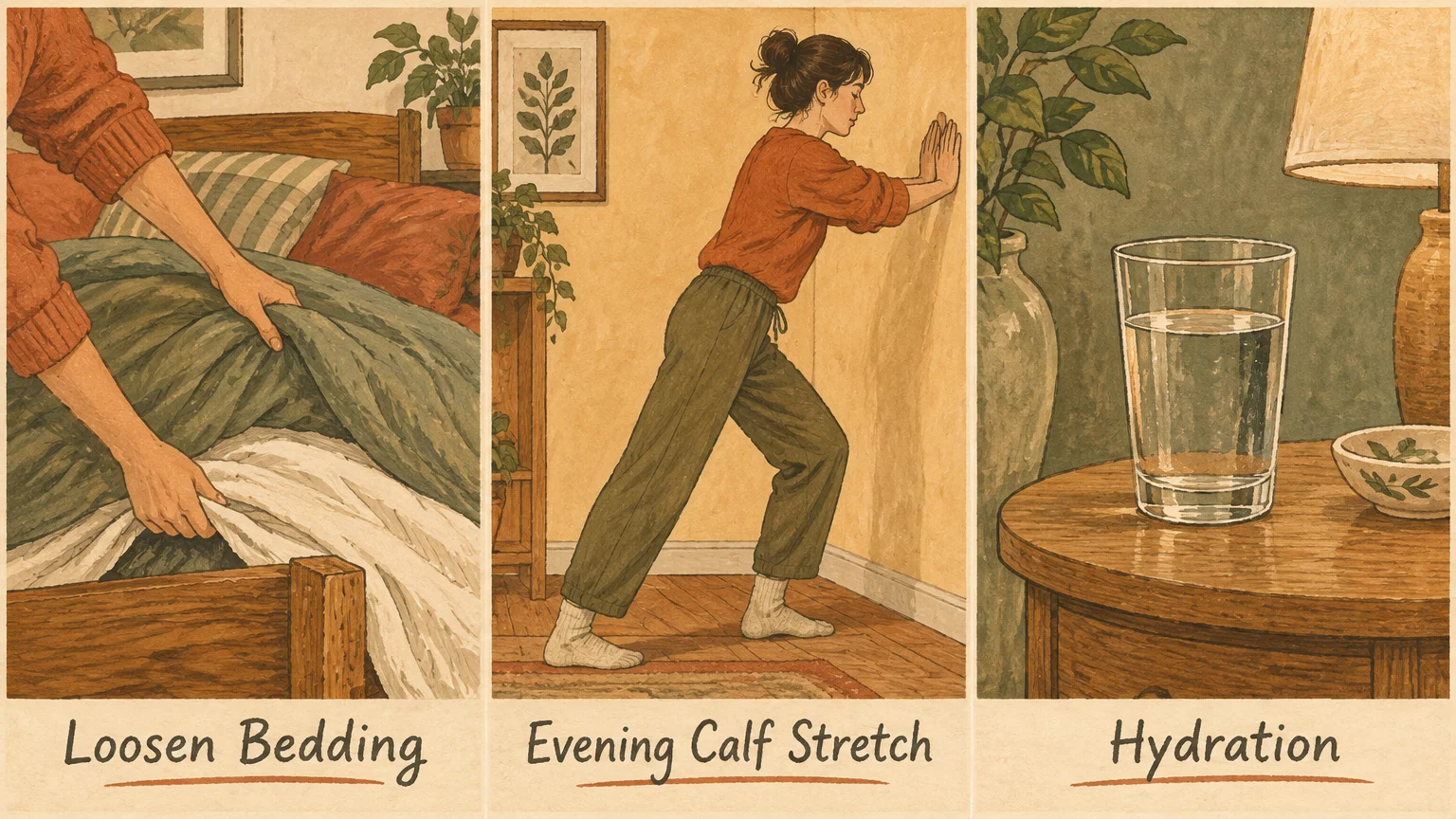
Building a calm evening routine takes only a few minutes and helps quiet overactive leg nerves before sleep. Start with the wall calf stretch protocol recommended by UK health services.
Stand an arm’s length from a wall, step one foot back with a flat heel, and lean forward gently. Hold each stretch 2 to 3 seconds and repeat for 5 minutes, three times daily, finishing right before bed.
Add a simple seated hamstring stretch by sitting on the edge of a firm chair with one leg extended and your heel resting on the floor. Hinge forward slightly at your hips with a flat back to loosen the back of your thigh.
Prepare your bed for neutral foot posture before climbing under the covers. Untuck tight top sheets at the foot of the mattress, or place a small pillow against the footboard to keep heavy blankets off your toes.
Support your daytime legs with cushioned, well-fitting shoes if you stand on hard floors. Taking short 2-minute walking breaks every hour keeps blood flowing and prevents your calf muscles from stiffening.
Drink water consistently from breakfast through late afternoon rather than chugging large glasses right before bedtime. Steady daytime hydration nourishes your muscles without forcing disruptive midnight trips to the bathroom.
Finally, schedule a medication checkup with your doctor or local pharmacist twice a year. Ask whether a different dosing schedule—such as taking a diuretic earlier in the morning—might ease your nighttime spasms safely.
When to Contact a Doctor
Most nighttime leg cramps are harmless, even when they feel miserable in the dark. Still, specific red-flag symptoms call for prompt medical evaluation to rule out dangerous blood clots or nerve injury.
Book a routine appointment if your cramps last longer than 10 minutes, wake you repeatedly every week, or fail to improve with self-care. Your clinician can run simple blood tests for thyroid function, kidney health, blood sugar, and iron stores.
Seek urgent medical attention right away if leg pain comes with one-sided leg swelling, skin redness, or noticeable warmth to the touch. Those symptoms can signal deep vein thrombosis—a dangerous blood clot lodged inside a deep leg vein.
Also contact your doctor promptly if cramps appear alongside new muscle weakness, foot drop, pale or bluish skin changes, or spreading numbness. Early diagnosis protects your mobility, circulation, and long-term independence.
Frequently Asked Questions About Nocturnal Leg Cramps
What tests do doctors use to diagnose the cause of nighttime leg cramps?
Doctors usually diagnose idiopathic leg cramps by reviewing your medical history, sleep posture, and current prescription list. No single lab test confirms a muscle cramp itself.
If your clinician suspects an underlying trigger, they may order blood tests checking electrolytes, kidney function, thyroid hormones, fasting blood sugar, and ferritin. Circulation studies such as a painless leg ultrasound can also check for blocked arteries or clots.
Can nighttime leg cramps be permanently cured?
When cramps stem from a correctable trigger—such as tight bedding, dehydration, or a specific medication—adjusting that factor often stops them completely. Many seniors see dramatic relief once they untuck sheets or switch a culprit drug under medical supervision.
Age-related idiopathic cramps may not vanish forever, yet consistent calf and hamstring stretching lowers both their pain and frequency. Managing chronic conditions like diabetes or thyroid disease also keeps flare-ups much milder.
Should I take a magnesium supplement every night for leg cramps?
Routine magnesium pills rarely prevent nighttime leg cramps in older adults who already eat balanced meals. Clinical trials show little meaningful benefit for older adults with idiopathic cramps.
Focus first on magnesium-rich foods such as spinach, almonds, black beans, and whole grains. Always ask your doctor before taking supplemental magnesium, especially if you have kidney disease or take heart medications.
How can caregivers help an older loved one during an active cramp?
Stay calm and speak reassuringly while helping your loved one sit upright on the edge of the bed. Gently support their heel and press the ball of their foot upward toward their shin to stretch the calf.
Avoid forcing the joint if your loved one has severe arthritis or recent knee surgery. Once the tight knot softens, offer a warm compress and a few sips of water before helping them settle back down.
Are tonic water and pickle juice safe remedies for leg cramps?
Commercial tonic water contains very small amounts of quinine that fall far below prescription levels, though sensitive people can still react badly to it. Medical guidelines advise against relying on quinine products for routine cramp relief.
Small sips of pickle juice sometimes interrupt cramps quickly by triggering a throat-nerve reflex, not by instantly replacing electrolytes. However, pickle juice packs high sodium, so anyone with high blood pressure, heart failure, or kidney disease should avoid it.

Moving Forward With Healthier, More Restful Nights
Nighttime leg cramps can disrupt your rest and leave you dreading bedtime, especially as muscles and nerves change with age. Fortunately, understanding what triggers your spasms puts practical, proven relief within reach.
Simple adjustments—like loosening tight sheets, stretching both your calves and hamstrings before bed, and reviewing prescriptions with your doctor—resolve many stubborn episodes safely. Pay close attention to red-flag signs such as one-sided swelling or numbness, and partner with your healthcare team whenever sleep pain persists.
This article is for informational purposes only and does not constitute medical advice. Please consult a healthcare professional for any health concerns.