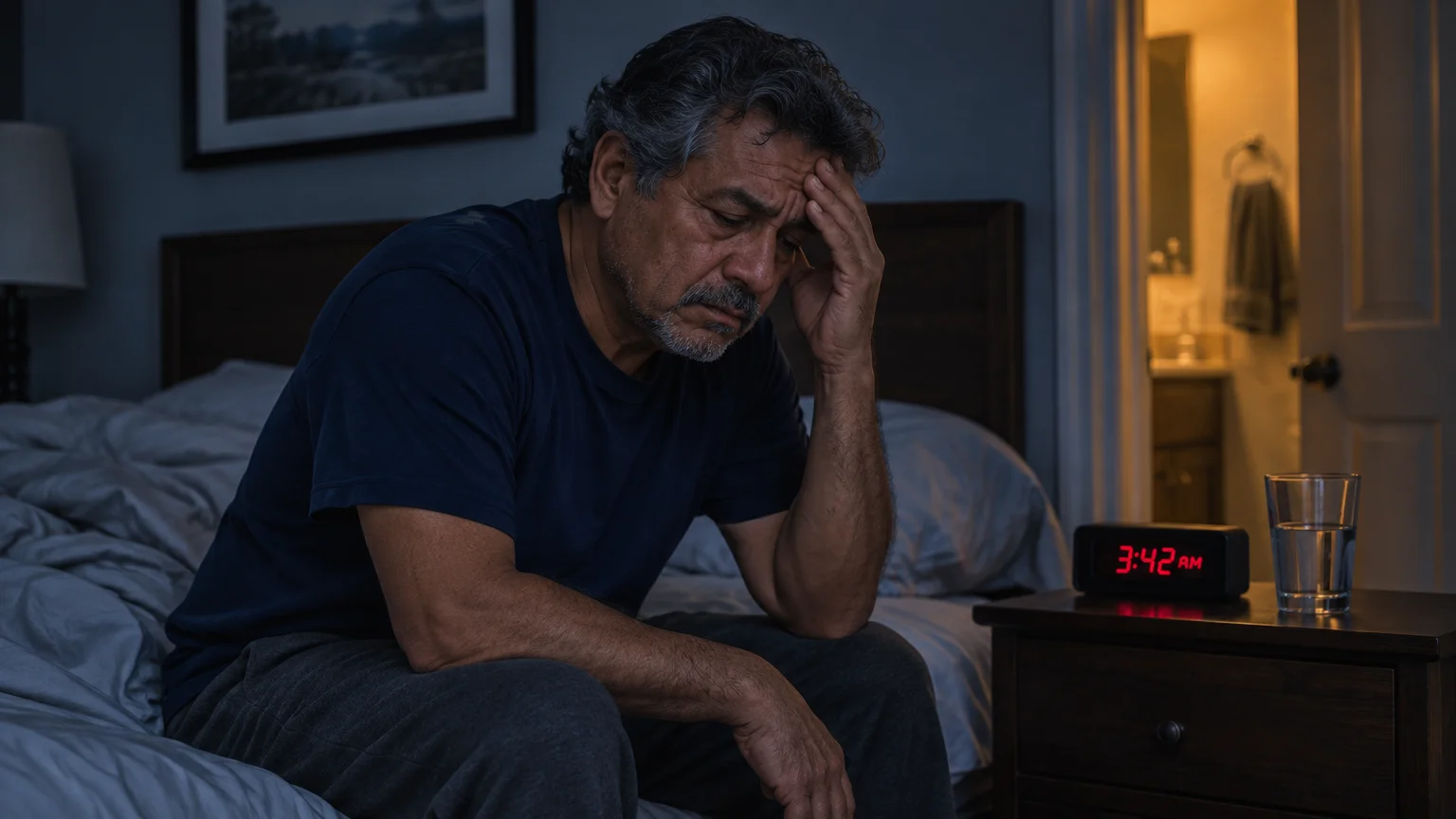
Waking up multiple times each night to urinate often feels like an inevitable part of getting older. Yet specific prostate symptoms signal treatable blockages, painful infections, or even hidden cancer.
Learning how to read these bodily clues helps you act early without unnecessary alarm. Small shifts in your urine flow, pelvic comfort, or energy offer valuable insight into your long-term health.
Clear medical criteria separate harmless gland growth from urgent emergencies like sudden urinary blockage. By recognizing seven key warning signs and following modern screening guidance, you can protect both your comfort and your life.
How Your Prostate Changes With Age
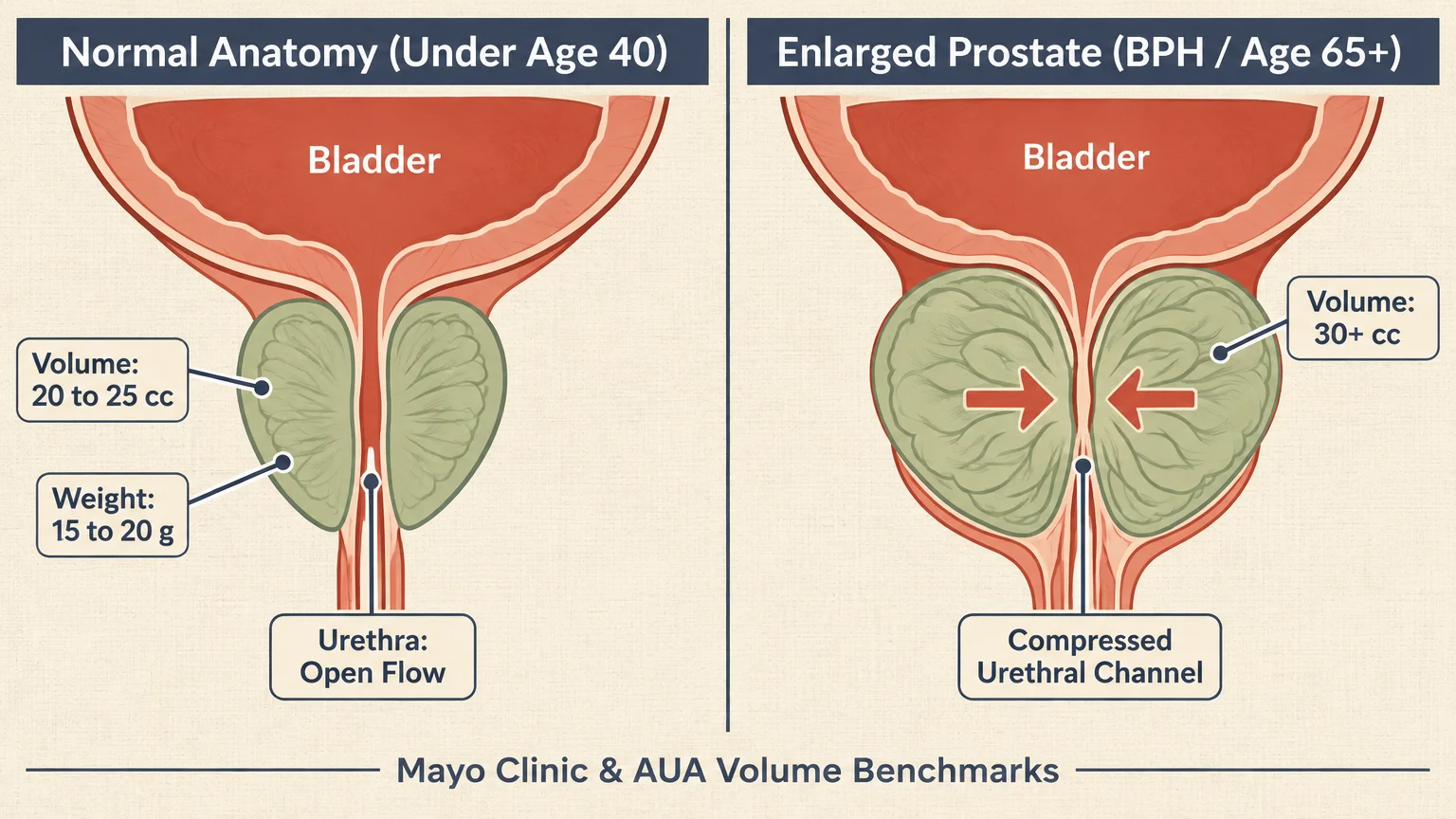
The prostate is a small reproductive gland tucked just beneath your bladder, sitting directly in front of the rectum. In men under age 40, it stays roughly the size of a walnut, weighing 15 to 20 grams with a volume of 20 to 25 cubic centimeters.
Picture this gland as a muscular ring wrapped snugly around the urethra—the narrow tube that carries urine and semen out of your body. Whenever the gland swells or tightens, it presses inward on that flexible tube like a hand squeezing a garden hose.
According to the National Institute of Diabetes and Digestive and Kidney Diseases (NIDDK), the prostate doubles in size early in puberty and enters a second growth phase around age 25. That gradual growth continues for the rest of your life.
Because this expansion happens slowly, noncancerous enlargement—called benign prostatic hyperplasia (BPH)—becomes remarkably common in older adulthood. Claims data from the NIDDK 2024 Urologic Diseases in America report show BPH affects 5% to 6% of U.S. men ages 40 to 64 each year.
That rate jumps sharply to 29% to 35% among men ages 65 and older. Looking at clinical exams rather than insurance claims, Mayo Clinic Primary Care notes BPH affects roughly 25% of men in their 40s and 80% of men in their 70s.
Similarly, the American Urological Association (AUA) notes that 70% of men over age 60 have some degree of BPH. Yet location inside the gland matters just as much as total size.
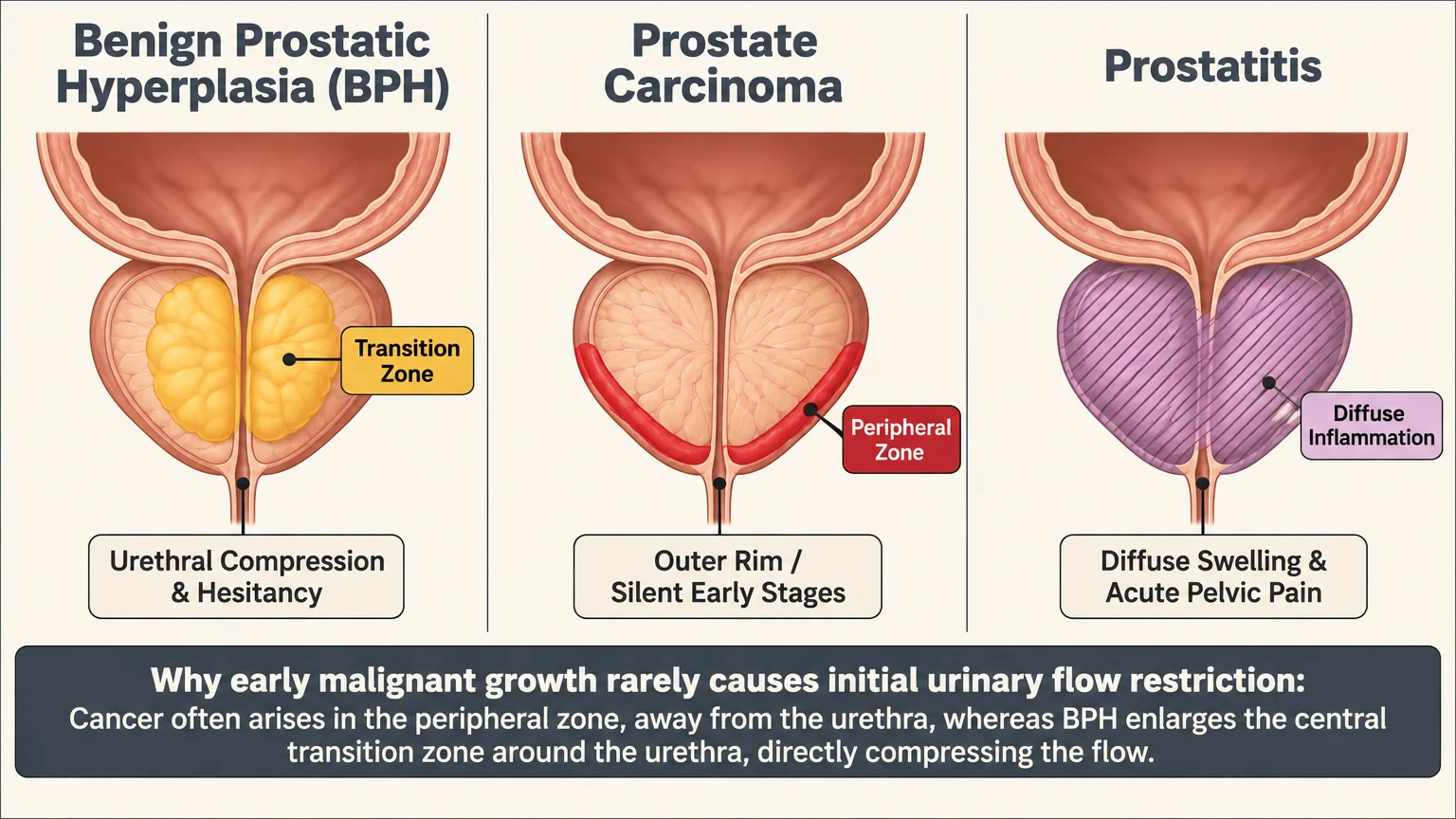
BPH tends to grow in the inner core surrounding the urethra, which triggers obvious urinary bottlenecks early on. By contrast, most prostate cancer tumors develop in the outer edge of the gland, leaving the urinary tube wide open during early stages.
7 Prostate Symptoms Men Shouldn’t Ignore
Paying attention to how your body feels during everyday routines helps you catch problems before complications set in. Watch closely for these seven prostate symptoms, and bring them up promptly with your healthcare provider.
1. Difficulty Starting Your Stream or a Weak, Interrupted Flow
Standing over the toilet waiting for urine to flow—a delay doctors call hesitancy—is often one of the earliest enlarged prostate signs. You may also notice your stream weakens, splits, or stops and starts unpredictably.
Many men find themselves straining with their abdominal muscles just to push urine past a narrowed channel. Post-void dribbling, where small drops leak out after you finish, frequently accompanies this sluggish flow.
The NIDDK, Mayo Clinic, and MSD Manual identify these changes as classic signs of BPH compressing the urethra. Once a gland reaches 30 cubic centimeters or larger alongside bothersome symptoms, it meets AUA thresholds for targeted medications or procedures; advanced benign growth can exceed 80 grams.
Meanwhile, the Centers for Disease Control and Prevention (CDC) and the American Cancer Society (ACS) also list weak flow and trouble starting urination among potential prostate cancer warning signs. Scheduling an exam lets your clinician measure bladder emptying and rule out serious obstruction.
2. Frequent Nighttime Urination and Sudden Urgency
Needing to urinate frequently during the day—or waking up repeatedly each night—disrupts restorative sleep and daytime focus. Doctors refer to this nighttime disruption as nocturia.
Think of an obstructed bladder like a water pitcher you can never quite pour empty. Because stale urine remains trapped at the bottom, the pitcher reaches capacity again much faster than normal.
Over time, pushing against resistance makes your bladder wall thicker and more irritable. You may suddenly feel an overwhelming urge to find a restroom even when your bladder holds very little fluid.
That nagging sensation of incomplete emptying wears down older adults, raising the risk of nighttime stumbles and chronic exhaustion. Reporting these urinary symptoms early allows your doctor to calm bladder irritation before kidney pressure builds.
3. A Sudden Inability to Urinate
If you feel an intense need to urinate yet nothing comes out, you may be experiencing acute urinary retention (AUR). Severe lower abdominal pain and visible swelling above your pubic bone typically accompany this complete shutdown.
According to the NIDDK, acute urinary retention can become life-threatening and demands immediate emergency care. Emergency clinicians relieve the dangerous pressure quickly by threading a sterile catheter into your bladder to drain trapped urine.
This medical crisis grows increasingly likely with advancing age. Over a five-year span, the NIDDK estimates roughly 1 in 10 men over age 70 and nearly 1 in 3 men in their 80s will experience acute urinary retention.
Do not wait overnight to see if the blockage clears on its own. Swelling urine backing up toward your kidneys can cause permanent organ damage and severe systemic infection.
4. Blood in Your Urine or Semen
Noticing pink, red, or cola-colored urine in the bowl—or seeing reddish-brown streaks in your semen—can be startling. Even if the episode happens once without pain, never ignore visible bleeding.
Both the CDC and the ACS highlight blood in the urine or semen as key warning signs that warrant prompt medical evaluation. Mayo Clinic and the UK National Health Service (NHS) echo this guidance for every adult man.
Bleeding does not automatically mean cancer; enlarged prostates contain fragile surface blood vessels that sometimes burst when you strain. Urinary tract infections, bladder stones, and kidney conditions can also tint fluid pink or red.
Still, visible blood always justifies a thorough diagnostic workup. A urine test, imaging scan, or scope exam helps your urologist pinpoint the exact source and treat it safely.
5. Painful Urination, Fever, or Pelvic Ache
Burning or stinging while you urinate—known medically as dysuria—rarely stems from simple age-related gland growth. Instead, pain paired with cloudy urine often points toward prostate inflammation or infection, a condition called prostatitis.
According to Johns Hopkins Medicine, nearly 9% of men experience prostatitis or pelvic pain symptoms, driving more than 2 million U.S. physician visits annually. Between 90% and 95% of those diagnoses involve chronic prostatitis or chronic pelvic pain syndrome.
As the NIDDK and Mayo Clinic explain, prostatitis spans four distinct clinical types and can spark aches across your groin, lower back, abdomen, penis, or testicles. Many men describe a deep, bruised pressure in the perineum—the sensitive area between the scrotum and rectum.
Pay special attention if painful urination hits alongside sudden fever, shaking chills, and flu-like body aches. Those combined symptoms indicate acute bacterial prostatitis, an urgent infection requiring immediate antibiotic treatment.
6. New Erectile Dysfunction or Painful Ejaculation
Delicate nerves and blood vessels supporting erections run right alongside the outer edge of your prostate gland. Because the prostate also produces fluid that nourishes sperm, pelvic trouble frequently shows up in your sexual function.
Painful ejaculation is a hallmark sign of prostatitis listed by both the NIDDK and Mayo Clinic. However, the ACS, CDC, Mayo Clinic, and NHS also include painful ejaculation and newly developing erectile dysfunction among prostate cancer warning signs.
Gradual changes in firmness often trace back to cardiovascular health, diabetes, or shifting hormone levels. By contrast, sudden erection loss or sharp pain during climax—especially alongside urinary shifts—merits a focused prostate exam.
Talking openly about sexual changes may feel uncomfortable in a brief clinic visit. Remember that urologists evaluate these symptoms every day and use them as essential diagnostic clues.
7. Persistent Bone Pain, Unexplained Weight Loss, or Leg Weakness
While early prostate tumors seldom hurt, cancer that spreads beyond the gland frequently targets nearby bones. According to the ACS, Mayo Clinic, and NHS, metastatic disease causes persistent, deep aching in your lower back, hips, pelvis, or ribs.
Unlike a pulled muscle that eases after a few days of rest, cancer-related bone pain lingers steadily and often worsens at night. Unexplained weight loss and severe, unrelenting fatigue can also signal systemic progression.
Watch closely for sudden weakness or numbness in your legs and feet, or an abrupt loss of bowel or bladder control. Medical guidelines classify those nerve symptoms as potential spinal cord compression—an oncology emergency requiring immediate hospital care.
Catching prostate tumors before they reach distant bones makes an enormous difference in outcome. Based on 2015–2021 surveillance data reported by the ACS in 2026, five-year relative survival exceeds 99% for localized or regional prostate cancer, compared with 38% for distant spread.
Distinguishing Benign Enlargement From Cancer and Infection
Because the prostate shares space with your bladder neck and urethra, three very different conditions produce remarkably similar bathroom complaints. Both the ACS and the CDC stress that urinary symptoms are far more commonly caused by BPH than by cancer.
Even so, prostate cancer remains a major health reality as men grow older. According to the ACS Cancer Facts & Figures 2026 report, an estimated 333,830 U.S. men will receive a prostate cancer diagnosis in 2026, and 36,320 will die from the disease.
Excluding skin cancer, prostate cancer ranks as the most common malignancy in U.S. men and the second-leading cause of male cancer death. Roughly 1 in 8 U.S. men—and 1 in 6 Black men—will develop it during their lifetime.
Risk climbs steadily with age; about 60% of cases are diagnosed after age 65, most commonly between ages 65 and 74. Black men also face stark disparities, experiencing a 1.7-times higher diagnosis rate and roughly double the mortality rate compared with White men.
Furthermore, U.S. diagnosis rates rose by roughly 3% per year from 2014 through 2022, underscoring why silent screening matters. Because early tumors grow quietly in the gland’s outer zone, feeling completely fine does not guarantee your prostate is cancer-free.
To measure how heavily urinary symptoms affect your daily routine, urologists rely on the International Prostate Symptom Score (IPSS). This standardized seven-question survey generates a score from 0 to 35.
Clinicians classify scores of 0 to 7 as mild, 8 to 19 as moderate, and 20 to 35 as severe. Tracking your score over time helps your doctor determine whether watchful waiting, medication, or targeted testing makes the most sense.

Understanding Updated Prostate Screening Guidelines
Checking your prostate health before symptoms turn severe relies heavily on the prostate-specific antigen (PSA) blood test. Think of PSA as a sensitive smoke detector inside your bloodstream rather than a direct cancer diagnosis.
An elevated PSA reading alerts your doctor to increased prostate activity, which can stem from BPH, recent prostatitis, or cancer. Major medical organizations offer clear, updated roadmaps on when to start testing.
On November 12, 2026, the American Cancer Society updated its screening guideline for the first time since 2010, moving toward direct testing advice. For men at average risk, the ACS recommends a PSA blood test every two years from ages 50 through 69.
Higher-risk men need earlier surveillance under the 2026 ACS standard. Black men—and non-Black men with multiple first-degree relatives diagnosed at any age, or one diagnosed before age 65—are advised to get annual PSA testing from ages 45 through 69.
Non-Black men with one first-degree relative diagnosed at age 65 or older are advised to test every two years from ages 45 through 69. Notably, the ACS no longer recommends the digital rectal exam (DRE) as a primary screening tool.
If your PSA hits 3.0 ng/mL or higher between ages 45 and 69—or 6.5 ng/mL or higher between ages 70 and 74—the ACS advises confirming with a repeat PSA test. From there, doctors use MRI scans or validated biomarker tests before considering a biopsy.
The AUA and Society of Urologic Oncology (SUO) early detection guideline, amended in 2026, also supports shared decision-making starting at ages 40 to 45 for high-risk men and routine consideration from 50 to 69. Meanwhile, the U.S. Preventive Services Task Force continues to advise individualized choices from 55 to 69.
For older adults, recommendations taper off to prevent overtreatment of slow-growing tumors. The ACS advises individualized decisions at ages 70 to 74, recommends against screening at age 75 and older, and discourages testing after age 80 under all circumstances.
Always tell your physician if you take a 5-alpha reductase inhibitor—a common BPH medication that shrinks enlarged glands. As the AUA and SUO note, these drugs artificially lower your PSA reading, requiring your doctor to adjust how they interpret results.
Proactive Measures You Can Take for Prostate Health
When your symptoms stem from mild or non-bothersome BPH, medication is not always the first step. Both the AUA BPH guideline—updated in May 2026—and the American Academy of Family Physicians recommend starting with targeted behavioral changes.
Adjust Your Evening Fluid Habits
Cutting back on liquids during the final hours before bed directly reduces nighttime bathroom trips. Aim to meet most of your daily hydration goals earlier in the afternoon so your bladder settles down overnight.
Reducing caffeine and alcohol makes an equally strong impact on daytime urgency. Both substances act as mild diuretics while directly irritating the sensitive lining of your bladder wall.
Practice Double Voiding and Bladder Training
Double voiding is a simple bathroom technique that clears leftover urine from a partially blocked bladder. After you finish urinating, stay relaxed for a moment and gently try emptying once more.
Bladder training works well alongside double voiding when urgency controls your schedule. Instead of sprinting to the restroom at the first mild twinge, practice waiting a few extra minutes to gradually rebuild bladder capacity.
Prepare Thoroughly for Your Medical Visit
Bring a brief three-day log of your fluid intake, bathroom frequency, and nighttime awakenings to your appointment. Pair those notes with an up-to-date list of every prescription and over-the-counter product you take.
Asking your primary care physician or urologist to calculate your IPSS score creates a concrete baseline. With clear numbers in hand, you and your clinician can track whether lifestyle adjustments calm your urinary symptoms over several months.
Where Diagnostic Research Is Headed
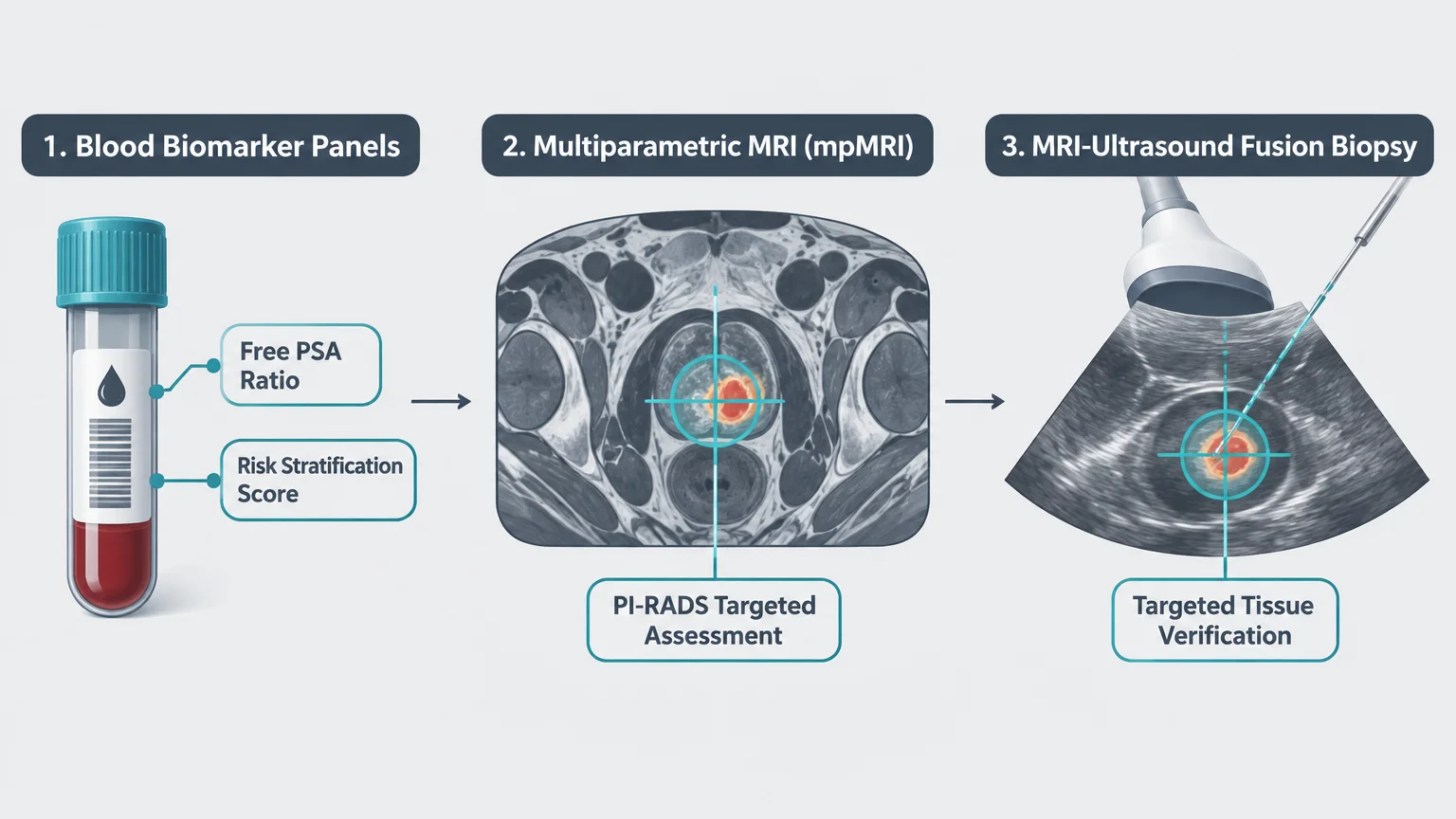
For decades, a single elevated PSA reading often sent men straight to an invasive needle biopsy. Today, clinical guidelines backed by organizations like the National Institutes of Health and the ACS reflect a much smarter diagnostic pathway.
Clinicians increasingly verify an initial abnormal PSA with a repeat blood draw before moving forward. Next, specialized prostate MRI scans and validated blood or urine biomarker panels help pinpoint suspicious areas inside the gland.
This layered approach spares thousands of men from unnecessary procedures for harmless benign growth. At the same time, sharper imaging helps doctors detect aggressive tumors early—a vital advantage as overall U.S. diagnosis rates climb.
Frequently Asked Questions About Prostate Symptoms
Do urinary symptoms always mean I have prostate cancer?
No; urinary trouble far more commonly stems from benign prostatic hyperplasia or localized inflammation than from cancer. Both the ACS and the CDC emphasize this reassuring distinction.
Because early-stage tumors rarely press on the urethra, having a weak stream usually points toward simple gland enlargement. Still, only a formal medical evaluation can confirm the underlying cause.
At what age should I start routine PSA screening?
Under the November 2026 ACS guideline, average-risk men are advised to begin PSA blood testing every two years at age 50. Higher-risk men—including Black men and those with strong family histories—are advised to start at age 45.
The AUA and SUO also note that high-risk individuals can discuss baseline screening as early as ages 40 to 45. Talk with your doctor to tailor the timeline to your personal risk profile.
Can a prostate feel completely normal and still harbor cancer?
Yes; early prostate cancer typically develops in the outer peripheral zone of the gland without causing pain or urinary blockages. Furthermore, the ACS no longer recommends digital rectal exams as a primary screening tool.
Relying on symptoms alone leaves silent tumors undetected during their most curable window. Consistent PSA testing according to your age and risk category catches subtle changes early.
Why did my doctor ask about BPH drugs before ordering my PSA test?
Common enlargement medications known as 5-alpha reductase inhibitors shrink prostate tissue by altering hormone conversion. As a side effect, they artificially suppress blood PSA concentrations.
If your clinician does not know you take these medications, a seemingly low PSA score could mask an underlying tumor. Always share your complete medication list before lab work.
How do doctors decide between lifestyle changes, pills, and surgery for BPH?
Urologists weigh both how deeply symptoms disrupt your life and the physical volume of your gland. Mild IPSS scores between 0 and 7 typically start with behavioral steps like evening fluid restriction and double voiding.
When symptoms grow moderate to severe—and prostate volume reaches 30 cubic centimeters or larger—AUA guidelines support discussing targeted medications or surgical options. Emergency events like acute urinary retention accelerate the shift toward active intervention.

Protecting Your Prostate Health Over Time
Ignoring subtle changes in how you urinate, sleep, or feel physically rarely makes prostate trouble disappear on its own. Treating your symptoms as early warning signals gives you control over your comfort and long-term survival.
Stay attentive to the seven key warning signs outlined above, seek immediate emergency help for sudden blockage or severe infection, and keep up with age-appropriate PSA discussions. Proactive partnership with your healthcare team keeps healthy aging squarely within reach.
This article is for informational purposes only and is not a substitute for professional medical advice, diagnosis, or treatment.