A viral social media trend called “ferritin face” claims that dark under-eye circles, pale skin, and hair shedding signal low iron stores. While the nickname is new, the link between iron and your appearance has real medical roots.
However, you cannot diagnose an iron shortage just by looking in the mirror. Understanding which facial clues matter—and which ones stem from normal aging—helps you ask your doctor for the right blood tests.
Knowing your true ferritin status protects your energy, sharpens your focus, and uncovers hidden health shifts before anemia takes hold.
Understanding Ferritin and How Your Body Stores Iron
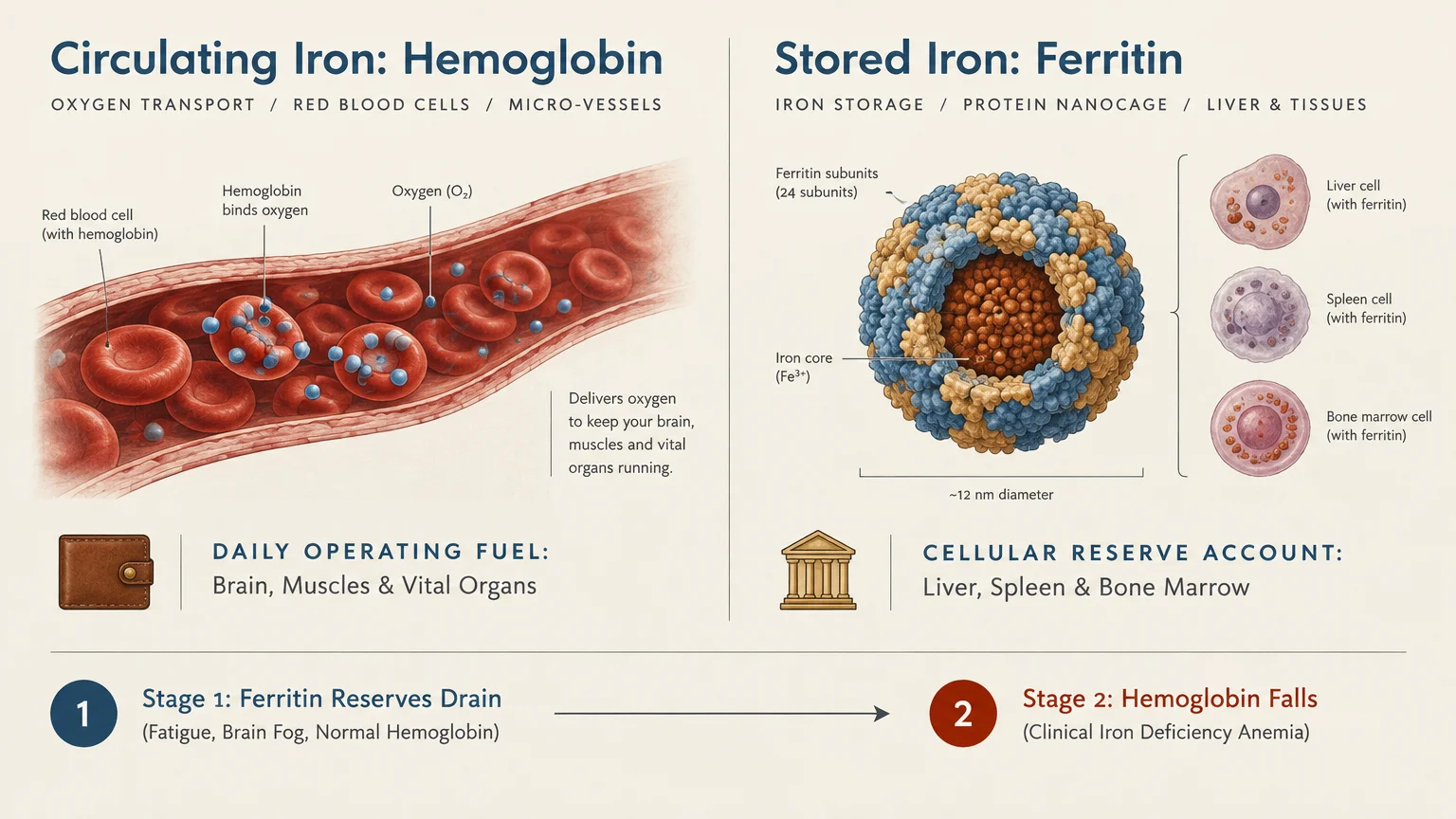
To understand why low iron might show up in your reflection, you first need to distinguish between circulating iron and stored iron. Most people know about hemoglobin, the iron-rich protein inside red blood cells that carries oxygen from your lungs to your tissues.
Think of hemoglobin as the cash in your daily wallet. Your body uses it every second to fuel your muscles, brain, and skin cells.
Ferritin, by contrast, acts like your cellular savings account. It is a specialized protein that stores iron safely inside your liver, spleen, bone marrow, and blood so your body can withdraw it whenever demand rises.
When your iron intake falls short or your body loses blood slowly, you do not run out of hemoglobin right away. Instead, your body quietly drains your ferritin savings account to keep red blood cell production running smoothly.
Because ferritin drops first, you can develop iron deficiency without anemia. During this early stage, standard hemoglobin checks still look normal, yet low ferritin symptoms like fatigue, brain fog, and hair shedding can already appear.
Only after your ferritin reserves drop critically low does hemoglobin begin to fall. At that point, oxygen delivery slows down across your entire body, and clinical iron deficiency anemia sets in.
You may also have heard the viral phrase “ferritin face,” which gained widespread attention between August and November 2026 on social media. Hematologists, including specialists at Northwell Health, and UK consultant dermatologists emphasize that “ferritin face” is not a recognized medical or dermatological diagnosis.
Still, the trend opened a useful conversation about overlooked iron deficiency signs. Separating true clinical clues from everyday skin changes puts you in control of your preventative health.
Decoding “Ferritin Face” and Facial Signs of Iron Deficiency
Iron powers far more than red blood cells; it also supports collagen synthesis, wound repair, and rapidly dividing cells in your hair follicles and mouth lining. When iron stores run low, your body prioritizes vital organs like your heart and brain over your skin and hair.
That biological triage explains why some physical clues appear on your face. Even so, clinicians caution that facial features vary widely from person to person and rarely point to a single cause.
Pallor and the Inner Eyelid Clue
Pallor—an unusual paleness of the skin and mucous membranes—is one of the few facial signs firmly recognized in medical textbooks. Hemoglobin gives blood its bright red color, which creates the healthy rosy undertone beneath normal skin.
When anemia reduces your hemoglobin levels, blood vessels near the skin surface carry less pigment, making your complexion look washed out or sallow. However, surface skin color can fool you depending on your natural skin tone, lighting, or makeup.
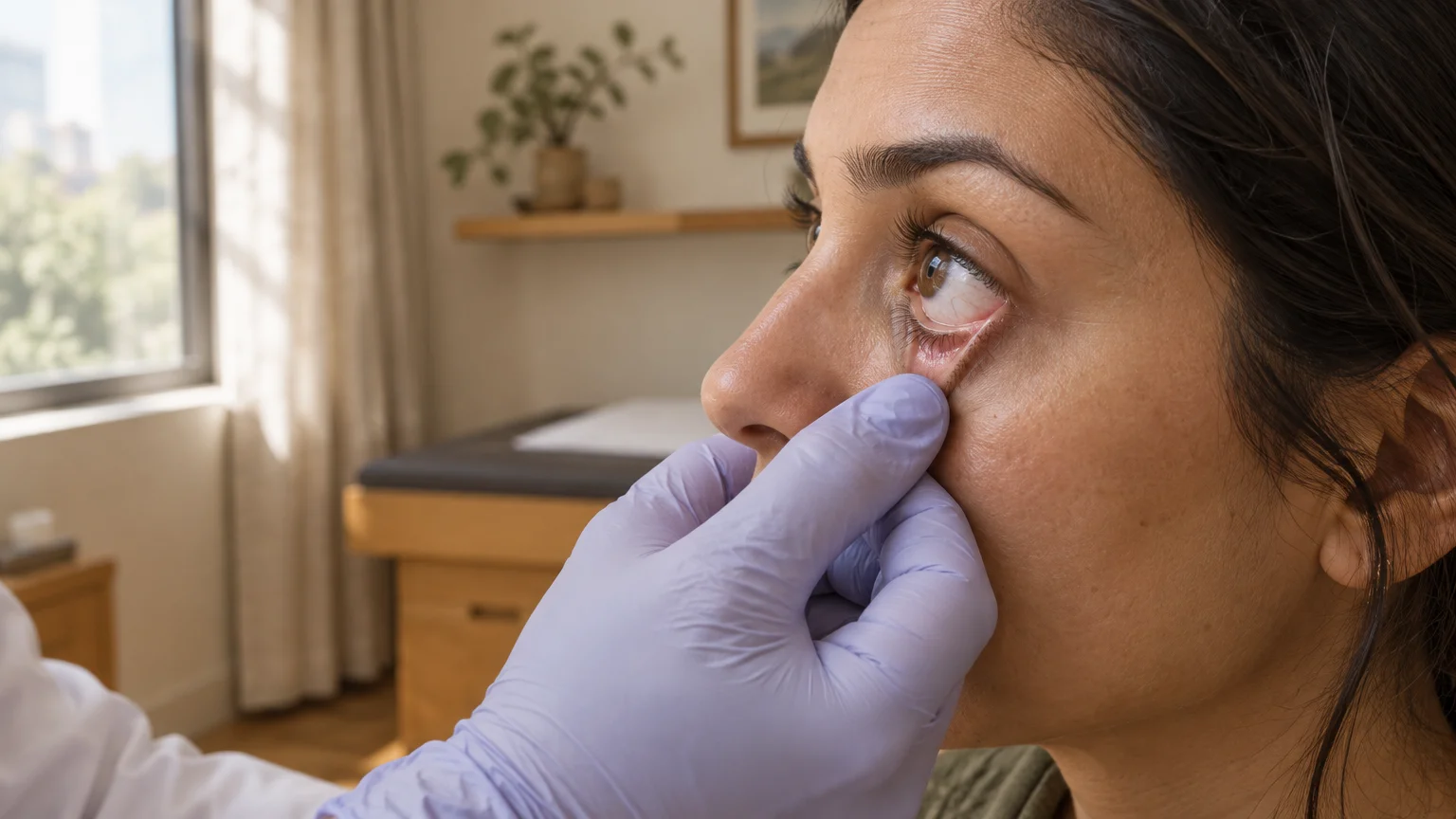
To check more reliably, doctors often look at your conjunctiva, the moist lining inside your lower eyelid. Gently pulling down your lower lid reveals rich blood vessels that stay visibly pale during moderate to severe anemia, regardless of skin tone.
Paleness in your nail beds, palms, or the inside of your lips offers a similar clue. Because surface skin reflects sun exposure and genetics, mucous membranes give clinicians a clearer window into your hemoglobin status.
Dark Under-Eye Circles and Dull Skin: Separating Myth from Reality
Viral posts frequently spotlight dark under-eye hollows and dull skin as hallmark anemia symptoms in the face. Dermatologists and general practitioners note that these features are non-specific and rarely indicate low ferritin on their own.
As you grow older, the delicate skin beneath your eyes naturally loses collagen and fat padding. Thinner skin allows underlying purple blood vessels and natural orbital shadows to show through much more clearly.
Genetics, seasonal allergies, mild dehydration, and a few nights of poor sleep also deepen under-eye darkness. While severe anemia can make existing shadows look slightly starker against pale skin, treating low iron seldom erases dark circles by itself.
Dullness follows a similar pattern. Dry indoor air, sun damage, and slower skin cell turnover create a flat complexion far more often than iron depletion does.
Mouth Corners, Lips, and Hair Shedding
Unlike dark circles, several changes around your mouth and hairline carry stronger clinical links to low iron. One recognized condition is angular cheilitis, which causes painful cracks, redness, or scaling at the corners of your mouth.
Your mouth lining turns over rapidly and needs steady iron to repair micro-tears from talking and chewing. Low iron can also leave your lips unusually dry, cracked, or sore, and occasionally makes your tongue feel smooth and tender.
Hair follicles are another high-turnover tissue sensitive to falling ferritin. Clinicians link depleted iron stores to nonscarring alopecia, which shows up as diffuse hair shedding along your part, temples, or shower drain.
Because hair grows in slow cycles, shedding often begins weeks or months after your ferritin drops. A related clue sits at your fingertips: long-standing iron deficiency can cause koilonychia, leaving fingernails brittle, flat, or spoon-shaped.
Why Iron Deficiency Looks Different as You Age
Public health conversations often focus on iron deficiency in women during their childbearing years, and for good reason. Monthly blood loss and pregnancy place heavy demands on iron reserves.
Yet older adults face distinct iron risks that make proactive monitoring just as important. As you move through midlife and beyond, the root causes of low ferritin shift dramatically.
According to the American Society of Hematology (ASH) in September 2026, iron deficiency affects roughly one in three people worldwide. Meanwhile, the World Health Organization (WHO) Global Anaemia Estimates (2025 Edition) reported that 30.7% of women aged 15 to 49 worldwide experienced anemia in 2023.
That global figure included 35.5% of pregnant women and 30.5% of non-pregnant women. The WHO report also noted that only 10% of countries—just 18 nations—were on track to meet the 2030 target of cutting anemia prevalence in half.
Closer to home, data from the Centers for Disease Control and Prevention (CDC) 2026 Nutrition Report revealed an upward trend in the United States. After adjusting for inflammation, low serum ferritin prevalence among U.S. women aged 12 to 49 rose from about 13% in 2003–2004 to roughly 18% between August 2021 and August 2023.
Among Mexican-American women in that same CDC analysis, prevalence climbed from 15% to 28%. Applying newer diagnostic standards reveals an even broader gap.
A 2024 analysis of 8,021 U.S. adults cited alongside October 2026 ASH reporting showed that raising the ferritin cutoff from below 15 ng/mL to below 30 ng/mL lifts estimated deficiency among U.S. women aged 18 to 49 from 14% to 34%. Among men in the same age bracket, estimated prevalence shifts from 1% to 3%.
Once women reach menopause and monthly bleeding stops, daily dietary iron needs drop significantly. Consequently, low ferritin in older women or adult men is rarely caused by diet alone and warrants careful medical investigation.
The British Society of Gastroenterology (BSG), in guidelines reviewed in 2026, notes that roughly one-third of men and postmenopausal women with iron deficiency anemia have an underlying pathological abnormality. Most often, that hidden cause sits inside the gastrointestinal tract.
Slow, painless bleeding from stomach ulcers, benign polyps, acid reflux erosion, or colon lesions can quietly drain ferritin over months. Digestive conditions such as celiac disease or Helicobacter pylori stomach infections also block iron absorption even when you eat iron-rich meals.
Adding another layer of complexity, aging frequently brings mild chronic inflammation from arthritis, metabolic conditions, or cardiovascular changes. Because inflammation alters how ferritin behaves in your bloodstream, standard lab interpretations can easily miss a real shortage.
What New Diagnostic Guidelines Mean for Your Health
If you had your iron checked years ago and heard your levels were normal, those numbers might look very different under today’s medical standards. On September 16, 2026, ASH issued its first evidence-based guidelines for diagnosing iron deficiency, followed by publication in Blood Advances on October 30, 2026.
Those landmark guidelines roughly doubled the traditional serum ferritin threshold used by many laboratories. Previously, many clinics waited until ferritin dropped to around 15 ng/mL before diagnosing deficiency.
Under the 2026 ASH guidelines, clinicians now use a serum ferritin cutoff of 30 ng/mL or lower to diagnose iron deficiency in adults, including menstruating and pregnant individuals. ASH also issued a strong recommendation against using a 15 ng/mL cutoff during pregnancy.
For higher-risk adults, ASH states that a ferritin level of 50 ng/mL or lower may be appropriate. That higher threshold applies to patients with heavy menstrual or abnormal uterine bleeding, planned pregnancy, preoperative evaluations, or pregnancy complicated by anemia.
ASH also updated pediatric cutoffs, setting the threshold at 20 ng/mL or lower for young children aged 9 months to 4 years, up from roughly 12 ng/mL. While this shift mainly serves younger families, it reflects a broader medical consensus that waiting for rock-bottom ferritin delays care unnecessarily.
Crucially, ASH highlighted how inflammation changes the lab picture. Ferritin is an acute-phase protein, meaning infection, inflammatory bowel disease, cancer, or chronic joint inflammation pushes blood ferritin levels upward even when true iron stores are empty.
Imagine a storehouse locked during an emergency: the alarm system flashes a high number on the dashboard, hiding the fact that the shelves inside are bare. To avoid missing deficiency in adults with chronic inflammation, ASH advises looking for ferritin below 100 ng/mL or a transferrin saturation (TSAT) below 20%.
Transferrin is the shuttle bus that carries iron through your bloodstream. Measuring TSAT tells your doctor what percentage of those shuttle seats are actually occupied by iron.
Global health bodies track these numbers closely as well. In guidelines updated in August 2023, the WHO defines iron deficiency at ferritin below 15 µg/L in apparently healthy adults, or below 70 µg/L in adults experiencing infection or inflammation.
The WHO also sets clear boundaries at the upper end to spot iron overload risk. Ferritin above 150 µg/L in menstruating women, or above 200 µg/L in men and non-menstruating women, signals potential excess iron that requires evaluation.
For diagnosing anemia itself, 2024 WHO guidelines define thresholds at sea level as hemoglobin below 12.0 g/dL (120 g/L) in non-pregnant adult women, below 11.0 g/dL (110 g/L) in pregnant women, and below 13.0 g/dL (130 g/L) in adult men. Clinicians adjust those cutoffs for high altitude and smoking.
Knowing these updated benchmarks empowers your next doctor visit. Rather than accepting a vague “your blood count is fine,” you can ask to review your exact ferritin, hemoglobin, and TSAT values together.
Proactive Steps to Test, Nourish, and Rebuild Iron Safely
If facial clues like pale inner eyelids, cracked mouth corners, or sudden hair shedding have caught your attention, resist the urge to buy over-the-counter iron pills right away. Treating suspected low ferritin without bloodwork can mask serious health issues or overload your organs.
Get the Full Lab Picture First
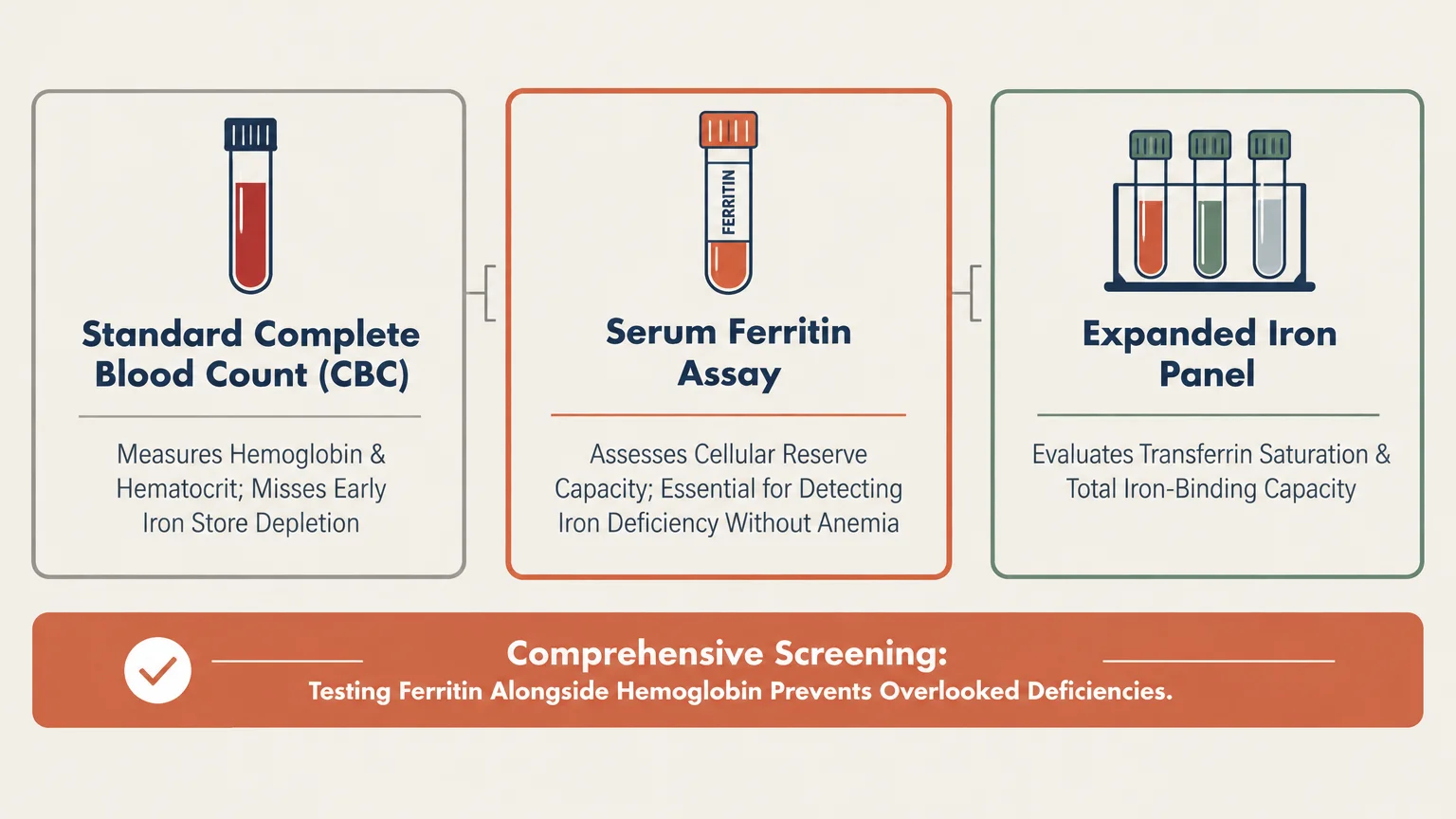
Major medical organizations, including ASH, Northwell Health specialists, and the BSG, advise confirming deficiency with blood tests before starting supplements. Ask your primary care clinician for a complete blood count (CBC), serum ferritin, transferrin saturation, and an inflammation marker such as C-reactive protein (CRP).
Checking CRP alongside ferritin acts like a truth serum for your lab report. If CRP is elevated, your doctor knows to interpret a borderline ferritin result using inflammation-adjusted rules rather than assuming your iron is fine.
Equally important, work with your clinician to uncover why your iron dropped. Investigating heavy bleeding, celiac disease, H. pylori infection, or silent gastrointestinal blood loss treats the root problem instead of endlessly refilling a leaking bucket.
Understand Safe Daily Needs and Upper Limits
Once you know your baseline, match your food and supplement habits to your stage of life. According to the NIH Office of Dietary Supplements (ODS), the Recommended Dietary Allowance (RDA) changes dramatically with age and reproductive status.
Adult men aged 19 and older, along with women aged 51 and older, need just 8 mg of iron per day. Women aged 19 to 50 need 18 mg daily, while teenagers aged 14 to 18 need 15 mg daily.
Pregnancy raises daily iron needs to 27 mg, whereas breastfeeding lowers the target to 9 mg for women 19 and older, or 10 mg for ages 14 to 18. Because plant-based nonheme iron absorbs less efficiently than animal-based heme iron, vegetarians and vegans need 1.8 times the standard RDA—roughly 32 mg daily for premenopausal women.
More iron is never automatically better, because your body has no easy way to excrete excess amounts. The NIH ODS and National Academies set the Tolerable Upper Intake Level (UL) from food and supplements combined at 45 mg per day for anyone aged 14 and older, including during pregnancy, and 40 mg per day for children up to age 13.
In 2024, the European Food Safety Authority (EFSA) established a slightly stricter safe intake level of 40 mg per day for adults, including pregnant and lactating women. Higher therapeutic doses belong strictly under medical supervision.
Excess supplemental iron causes uncomfortable digestive distress and can gradually damage vital organs like your liver and heart. This danger is especially sharp for people carrying hereditary hemochromatosis, a genetic condition that drives excessive iron absorption.
Accidental overdose also poses acute hazards in households with visiting grandchildren. Between 1983 and 2000, at least 43 U.S. children died from accidentally swallowing high-dose iron pills, prompting the U.S. Food and Drug Administration (FDA) in 1997 to require warning labels and single-dose packaging on supplements containing more than 30 mg of elemental iron per dose.
Time Your Meals, Supplements, and Medications
When a doctor confirms true iron deficiency, standard first-line treatment often involves oral iron. BSG guidelines cite 50 to 100 mg of elemental iron once daily—such as a single 200 mg ferrous sulfate tablet—as a standard approach.
However, taking iron every single day often triggers nausea, stomach cramping, or constipation, causing many older adults to quit therapy early. Every-other-day dosing has emerged as a gentler, scientifically backed alternative.
Each large dose of oral iron sparks a temporary spike in hepcidin, a liver hormone that acts like a gatekeeper along your intestinal wall. When hepcidin rises, it shuts the gut’s absorption gates, leaving your next daily pill unabsorbed in your digestive tract.
Skipping a day lets hepcidin settle back down so the gates reopen. A 2025/2026 review of 11 randomized trials covering 1,014 participants found that alternate-day dosing achieved hemoglobin and ferritin gains comparable to daily dosing while causing fewer gastrointestinal side effects.
What you eat and drink alongside iron also alters how much enters your bloodstream. Pairing plant-based iron sources—such as lentils, spinach, fortified grains, or beans—with vitamin C from citrus fruit, bell peppers, or berries boosts absorption and helps offset the blocking tannins found in coffee and tea.
If you take daily prescriptions, watch closely for timing clashes. According to the NIH ODS, iron supplements reduce the absorption of levothyroxine for thyroid health and levodopa for Parkinson’s symptoms, so space those medications and iron several hours apart.
Conversely, calcium supplements and acid-reducing proton pump inhibitors (PPIs) such as omeprazole lower stomach acidity and reduce how well you absorb iron. Discuss medication timing with your pharmacist before adding any mineral supplement.
Finally, track your recovery with follow-up testing rather than guessing. NHS Scotland clinical guidelines recommend rechecking blood counts four weeks after starting oral iron—expecting hemoglobin to climb by about 20 g/L in anemia—and continuing therapy for three months after anemia resolves to rebuild ferritin above 50 µg/L.
Where Iron Deficiency Research Is Heading Next
Diagnostic standards for iron are evolving rapidly, and treatment protocols are following close behind. Following its September 2026 diagnostic guidelines, ASH plans to publish companion treatment guidelines in 2027 to standardize how clinicians manage both mild deficiency and full anemia.
Researchers are also refining inflammation-adjusted biomarkers so older adults with arthritis, heart disease, or chronic digestive conditions receive earlier, clearer answers. Alongside improved screening, ongoing clinical trials continue to compare alternate-day oral regimens against modern intravenous iron therapies to maximize recovery while minimizing side effects.
On a global scale, public health teams are working to understand why anemia rates remain stubbornly high despite decades of fortification programs. Better screening tools and individualized dosing schedules offer promising paths toward closing that gap.
Frequently Asked Questions About Ferritin and Your Face
Can low ferritin cause dark under-eye circles?
Low ferritin alone rarely causes dark under-eye circles. Dermatologists explain that thin aging skin, genetics, allergies, dehydration, and lost sleep drive most under-eye darkness, though severe anemia-related pallor can make existing shadows look more noticeable.
Can I have iron deficiency symptoms if my hemoglobin is normal?
Yes, you can experience symptoms while your hemoglobin stays within normal range. Because your body drains ferritin savings before reducing red blood cell production, fatigue, brain fog, and hair shedding can appear during early iron deficiency without anemia.
What ferritin level is now considered low for adults?
Under the September 2026 ASH guidelines, a serum ferritin level of 30 ng/mL or lower indicates iron deficiency in most adults, roughly doubling older 15 ng/mL cutoffs. Doctors may use 50 ng/mL or lower for high-risk adults, or below 100 ng/mL when chronic inflammation is present.
How long does it take for hair shedding or facial pallor to improve?
Blood counts often start rising within four weeks of proper iron therapy, which gradually restores healthy color to your inner eyelids and skin. Hair follicles recover much more slowly, frequently needing months of consistent ferritin rebuilding before shedding eases.
Should older adults take an iron supplement just in case?
No, you should never start iron supplements without confirmed blood tests. Excess iron accumulates in your liver and heart, and low iron after menopause or in adult men often signals hidden gastrointestinal bleeding that requires medical evaluation first.
Taking Charge of Your Iron Health
Social media coined “ferritin face” as a catchy label, yet your face offers genuine—if imperfect—clues about your internal health. While under-eye shadows usually reflect normal aging or genetics, pale inner eyelids, cracked mouth corners, and unexplained hair shedding deserve a closer look.
Rather than guessing in the mirror or reaching for high-dose supplements, partner with your doctor to test your ferritin, hemoglobin, transferrin saturation, and inflammation markers. Combined with updated diagnostic thresholds and smart meal timing, proactive lab monitoring helps you protect your vitality, clarify your symptoms, and age with confidence.
This article is for informational purposes only and is not a substitute for professional medical advice, diagnosis, or treatment.