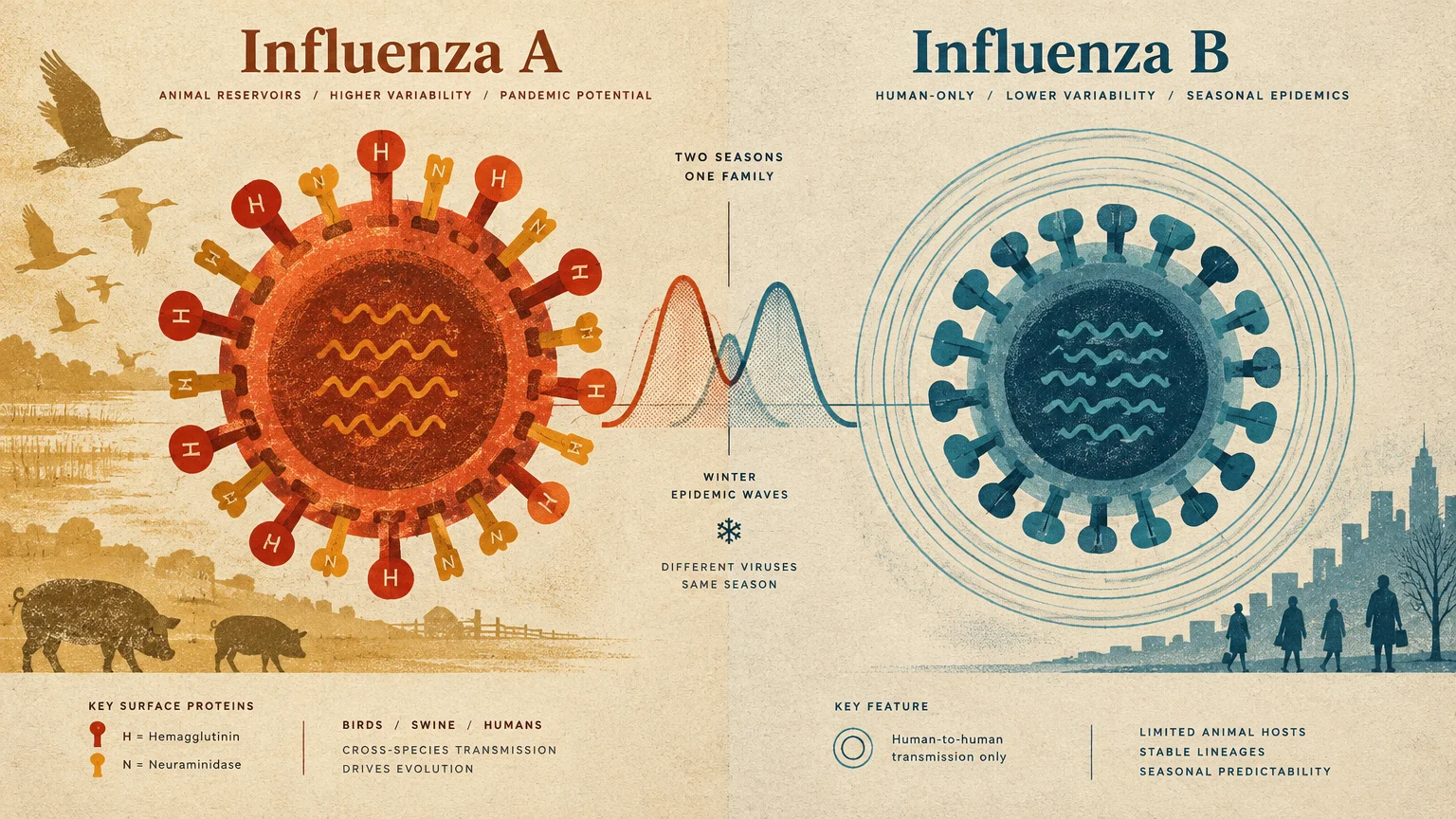
Every winter, news reports warn about rising flu cases, yet test results often mention either Influenza A or Influenza B. Knowing what separates these two viruses helps you act fast when symptoms strike.
Many older adults and caregivers assume one type is harmless while the other brings severe danger. In reality, both strains can cause serious complications, and early treatment decisions depend on speed rather than virus type.
Understanding how Flu A and Flu B spread, appear in seniors, and respond to updated vaccines puts you in control. You can protect your household throughout flu season with clear, practical facts.
What Are Flu A and Flu B? Understanding the Types of Flu
Four distinct types of influenza viruses exist in nature—types A, B, C, and D—according to the Centers for Disease Control and Prevention (CDC). Only Influenza A and Influenza B trigger the seasonal epidemics that disrupt communities every year.
Influenza C typically causes mild upper respiratory symptoms and does not spark widespread outbreaks. Influenza D circulates primarily in cattle and is not known to infect humans.
When either Flu A or Flu B enters your body, it attaches to healthy cells lining your nose, throat, and lungs. The virus hijacks those cells to copy itself, triggering inflammation that produces classic flu aches and congestion.
Infectious disease doctors separate these types of flu by examining their surface proteins and host ranges. Those biological differences explain why Flu A shifts more dramatically from year to year than Flu B.
How Influenza A Subtypes and Influenza B Lineages Differ
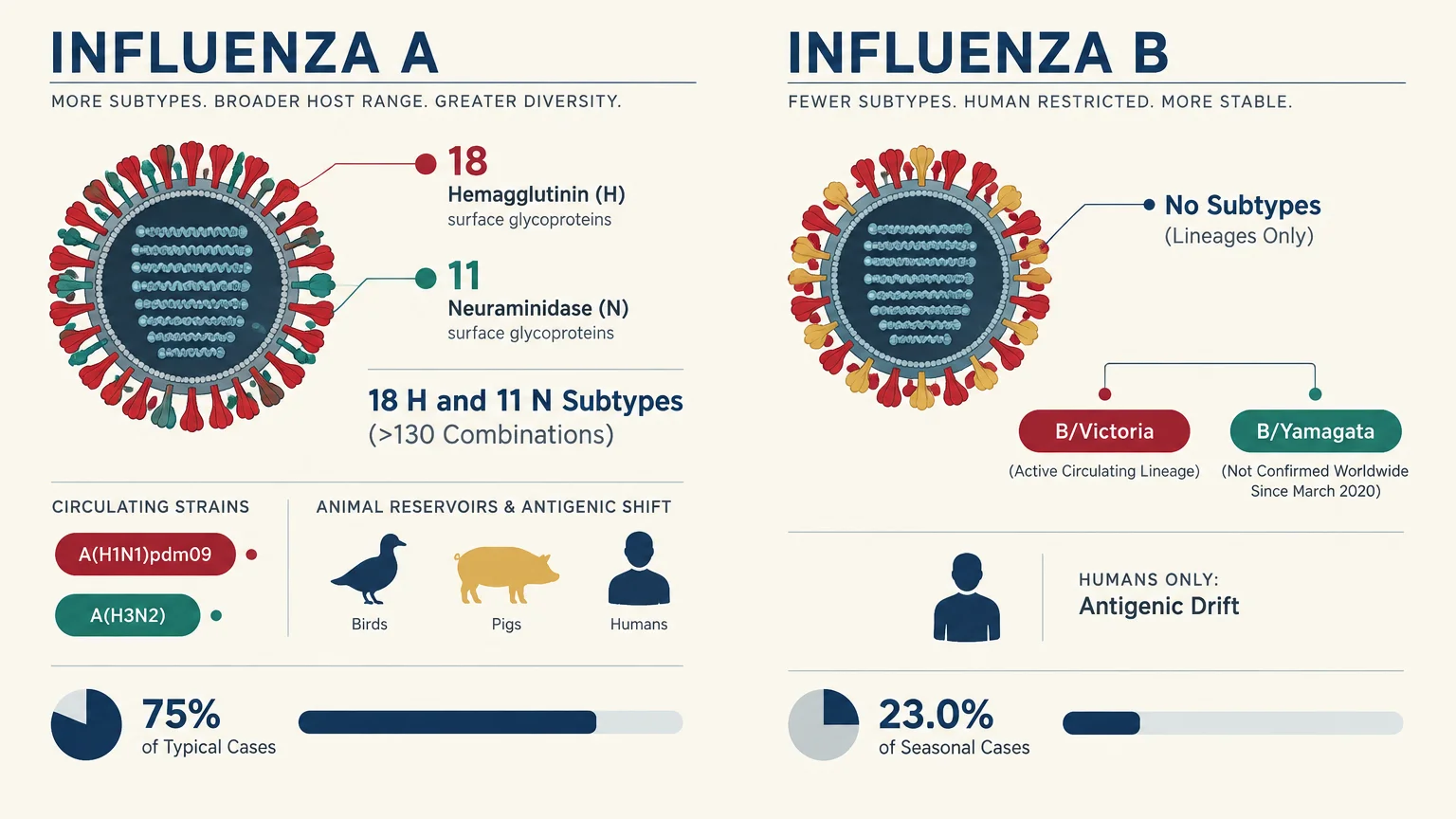
Scientists classify Influenza A into subtypes based on two proteins on the virus surface: hemagglutinin (H) and neuraminidase (N). Hemagglutinin acts like a key that unlocks your cells, while neuraminidase lets newly formed viruses escape to infect neighboring tissue.
Nature holds 18 hemagglutinin subtypes and 11 neuraminidase subtypes, creating more than 130 combinations. In people, two subtypes—A(H1N1)pdm09 and A(H3N2)—routinely circulate each season.
Influenza B does not split into subtypes at all; instead, it divides into two genetic families called lineages. For decades, those two lineages were B/Victoria and B/Yamagata.
Surveillance from the World Health Organization (WHO) and the Public Health Agency of Canada shows that B/Yamagata has not been confirmed anywhere worldwide since March 2020. Today, only the B/Victoria lineage drives seasonal Flu B infections.
Why Only Flu A Causes Global Pandemics
Influenza A is the only flu type known to trigger global pandemics—worldwide outbreaks of a brand-new virus to which few people have immunity. That unique threat exists because Flu A infects wild birds, pigs, and other mammals alongside humans.
When two different Influenza A strains infect the same animal host, they can swap whole gene segments in a sudden leap called antigenic shift. That abrupt change can create a novel virus capable of spreading rapidly across continents.
Influenza B infects humans almost exclusively and lacks the animal reservoirs that fuel antigenic shift. Both Flu A and Flu B still undergo smaller, gradual mutations called antigenic drift, which is why vaccines require yearly updates.
Seasonal Timing and the 2026–2027 Breakdown
Historically, Influenza A accounts for roughly 75 percent of seasonal flu cases in typical years. A 31-country Global Influenza B Study analyzing 1.82 million cases between 2000 and 2018 found that Influenza B caused 23.0 percent of seasonal infections.
In temperate regions like North America, Flu A usually dominates early and mid-season waves. According to the Pan American Health Organization, Flu B cases frequently rise later, creating a second wave toward late winter or spring.
As flu season 2026 unfolds, early U.S. data confirm an active surge led by Flu A. CDC surveillance for the week ending November 7, 2026, showed clinical laboratory test positivity reaching 11.3 percent nationwide.
During that same week, 3.2 percent of outpatient medical visits involved influenza-like illness, surpassing the 2.9 percent national baseline. Seven jurisdictions reported high or very high activity, alongside 9,584 weekly hospital admissions.
Of the 680 viruses reported by U.S. public health laboratories that week, 98.5 percent were Influenza A and 1.5 percent were Influenza B. Among subtyped Flu A samples, 98.9 percent were A(H1N1)pdm09 and 1.1 percent were A(H3N2).
Canadian surveillance recorded a nearly identical split, with 99 percent Influenza A during the same week. Even while Flu A leads early in the season, watching for a late-season Flu B wave remains essential for caregivers.
Influenza A Symptoms vs. Influenza B Symptoms in Older Adults
Many patients expect influenza A symptoms to feel noticeably different from influenza B symptoms. Clinical research confirms that doctors cannot distinguish the two viruses based on how you feel without running a diagnostic test.
Both types share an incubation period—the gap from exposure to your first symptom—of one to four days, averaging two days. Once illness begins, symptoms usually strike suddenly rather than creeping up gradually like a common cold.
Core symptoms for both Flu A and Flu B include fever or chills, a dry cough, sore throat, and a runny or stuffy nose. Muscle aches, headaches, and deep exhaustion frequently accompany respiratory discomfort.
Stomach symptoms such as vomiting and diarrhea can occur with either strain, though children experience them more often than adults. Acute fever usually eases within one week, while a nagging cough can linger for two weeks or longer.
How Long You Remain Contagious
Healthy adults can spread either Flu A or Flu B starting one full day before symptoms ever appear. Contagiousness peaks during your first three to four days of illness and generally continues for five to seven days after you fall sick.
Young children and immunocompromised people—individuals with weakened immune systems from cancer therapy, organ transplants, or chronic illness—can shed live virus even longer. Additionally, a 2017–2023 CDC household study found that 8 percent of people testing positive for flu never developed symptoms.
Because silent or pre-symptomatic spread happens easily, visiting family members can pass the virus before realizing they are ill. Simple precautions around older adults remain vital even when visitors feel completely fine.
Warning Signs Unique to Older Adults
Aging changes how your immune system reacts to respiratory infections, which can mask classic influenza A symptoms or influenza B symptoms. Many adults aged 65 and older never develop a high fever when infected with the flu.
Instead of spiking a temperature, an older adult may suddenly become unusually drowsy, weak, or unsteady on their feet. Caregivers often notice sudden confusion or delirium—a rapid shift in mental clarity and alertness—before any cough begins.
Loss of appetite, dizziness, and unexplained falls can also signal an active flu infection in seniors. Sometimes the primary warning sign is an abrupt worsening of an existing condition, such as heart failure, asthma, or chronic obstructive pulmonary disease (COPD).
Pay close attention to subtle drops in daily energy or sudden shortness of breath during routine tasks like dressing. Treating these atypical shifts as possible flu warning signs helps you seek medical care before pneumonia develops.
What Caregivers Should Watch For in Children
If you care for grandchildren or share a multigenerational home, spotting pediatric flu signs protects everyone under your roof. Children with Flu B sometimes develop acute myositis—painful inflammation of the muscle tissue—most commonly affecting the calves.
A 2022–2025 Italian pediatric emergency department study published in November 2025 linked a Flu B-predominant season to pediatric myositis and elevated creatine phosphokinase, an enzyme released when muscle fibers sustain stress. Refusal to walk or severe leg tenderness warrants prompt medical evaluation.
Why Flu B Is Not the Milder Strain: Severity and Risk Factors
A persistent myth claims that Flu A causes severe illness while Flu B produces only mild colds. Infectious disease data prove that Influenza B can be just as dangerous as Influenza A, especially for hospitalized patients.
A nine-season CDC study published in The Lancet Microbe in September 2023 examined severe outcomes among hospitalized flu patients. More than one in six hospitalized patients required intensive care, invasive mechanical ventilation, extracorporeal membrane oxygenation (ECMO)—advanced heart-lung life support—or died.
Compared with hospitalized A(H3N2) patients, people hospitalized with Influenza B were 6 percent more likely to enter an intensive care unit. They were also 14 percent more likely to need mechanical ventilation or ECMO and 18 percent more likely to die.
Within that same study, A(H1N1)pdm09 carried the highest intensive care risk—42 percent higher than A(H3N2)—along with 79 percent higher ventilation risk and 25 percent higher death risk. Neither Flu A nor Flu B deserves to be dismissed as minor.
Pediatric research echoes these serious findings. A Canadian study of 4,155 hospitalized children found higher in-hospital mortality for Influenza B at 1.1 percent compared with 0.4 percent for Influenza A, with healthy youth aged 10 to 16 facing the highest Flu B intensive care risk.
Who Faces the Highest Risk of Complications
Worldwide, seasonal influenza triggers roughly 1 billion infections, 3 to 5 million severe illnesses, and 290,000 to 650,000 respiratory deaths every year, according to WHO estimates. In the United States, flu infects 5 to 20 percent of residents annually.
Between 2010 and 2025, U.S. flu seasons produced 120,000 to 710,000 hospitalizations and 6,300 to 52,000 deaths each year. Adults aged 65 and older bear a heavy share of those hospitalizations because natural aging gradually weakens immune defenses.
Chronic medical conditions further raise your vulnerability to either flu type. Heart disease, diabetes, kidney disorders, stroke history, asthma, COPD, and obesity all increase the odds that a flu infection spirals into bacterial pneumonia or sepsis.
Living in a nursing home or having an immunocompromised system also elevates danger. When relatives gather closely during winter holidays, one untreated infection can spread quickly to the most vulnerable person in the room.
Lessons From Recent Seasons
Recent U.S. data illustrate how rapidly flu seasons can intensify. During the 2025–2026 season, an antigenically drifted A(H3N2) subclade K virus accounted for 92.5 percent of genetically tested Flu A specimens by March 2026.
Preliminary CDC estimates from October 2025 through May 2026 recorded 47 to 82 million illnesses, up to 1.3 million hospitalizations, and 27,000 to 130,000 deaths, including 199 pediatric deaths. Early 2026–2027 estimates through November 7 already show 2.6 million illnesses and 36,000 hospitalizations.
Those early 2026–2027 totals also include an estimated 2,100 deaths nationwide. Taking every flu season seriously—regardless of which letter appears on a lab report—gives you the best chance of staying out of the hospital.
Testing and How Flu A vs. Flu B Is Managed
Because influenza A symptoms and influenza B symptoms look identical, testing is the only way to confirm which virus you have. Knowing your exact diagnosis also separates flu from COVID-19 and respiratory syncytial virus (RSV), which circulate simultaneously.
Understanding Your Diagnostic Test Options
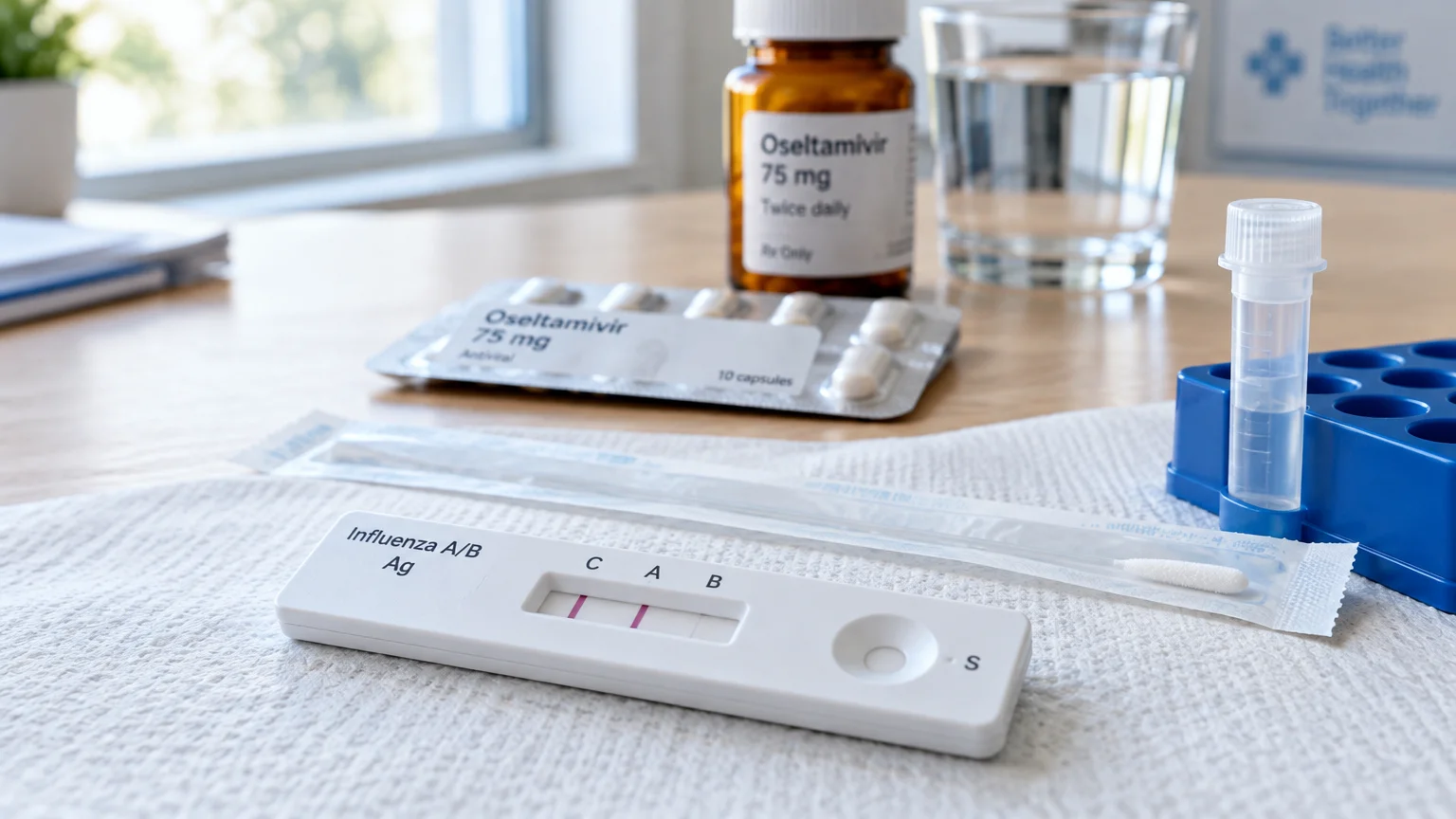
Rapid influenza diagnostic tests (RIDTs)—including many over-the-counter home swabs—deliver Flu A or Flu B results in 10 to 15 minutes. While their specificity reaches 90 to 95 percent, their sensitivity is only 50 to 70 percent.
Sensitivity measures how reliably a test catches an infection when you truly have it. Importantly, rapid antigen tests have lower sensitivity for Influenza B than for Influenza A, meaning a negative home swab does not rule out Flu B.
In 2026, the Food and Drug Administration (FDA) cleared an at-home rapid antigen combination test for Flu A, Flu B, SARS-CoV-2, and RSV down to six months of age. Home combination kits offer convenient screening right when symptoms begin.
Clinics also use rapid molecular tests, called nucleic acid amplification tests (NAATs), which detect viral genetic material in 15 to 30 minutes with far higher accuracy. For hospitalized patients with suspected flu, the CDC recommends laboratory molecular testing such as RT-PCR.
Antiviral Treatments Work Against Both Flu A and Flu B
When clinicians weigh Flu A vs. Flu B for prescription antiviral drugs, the virus type does not change the treatment plan. All four FDA-approved flu antivirals recommended by the CDC effectively target both Influenza A and Influenza B viruses.
Timing matters far more than virus type. Antivirals work best when started within 48 hours of your first symptoms, and doctors should begin treatment immediately for high-risk or hospitalized seniors without waiting for lab confirmation.
Starting treatment early shortens illness by roughly one to two days in outpatients and reduces dangerous complications, hospital stays, and death risk. Four prescription antiviral options exist depending on your age and medical profile.
Oseltamivir, available as Tamiflu or generic capsules and liquid, is taken by mouth twice daily for five days. It is FDA-approved for treatment starting at two weeks of age and for prophylaxis—preventive medication after exposure—at one year and older.
Baloxavir marboxil, known as Xofluza, comes as a single-dose oral pill approved for early uncomplicated flu and post-exposure prevention in people aged five and older. Doctors avoid baloxavir during pregnancy, breastfeeding, or in hospitalized patients.
Zanamivir (Relenza) is an inhaled powder taken twice daily for five days for patients aged seven and older, though it is unsafe for people with asthma or COPD. Peramivir (Rapivab) provides a single-dose intravenous infusion approved for patients six months and older.
Safe Home Care Alongside Medical Treatment
Antibiotics kill bacteria rather than viruses, so they cannot cure Flu A or Flu B unless secondary bacterial pneumonia develops. Rest and steady hydration form the foundation of safe home recovery for older adults.
Sip water, clear broths, or electrolyte drinks throughout the day to prevent dehydration, which can trigger dizziness and kidney strain in seniors. Ask your pharmacist before taking over-the-counter decongestants, as many raise blood pressure or interact with heart medications.
Proactive Steps for Flu Season 2026–2027 Prevention
Annual vaccination remains your strongest shield against severe flu illness, hospitalization, and death. Even during the heavily drifted 2025–2026 season, vaccination reduced outpatient flu visits by 22 to 34 percent overall and cut hospitalizations by 30 percent.
What Changed in the 2026–2027 Flu Vaccine
Because B/Yamagata viruses have not circulated since March 2020, all U.S. and WHO-recommended 2026–2027 Northern Hemisphere flu shots are trivalent—meaning they target three active strains instead of four. Each dose covers A(H1N1), A(H3N2), and the B/Victoria lineage.
On March 13, 2026, the FDA recommended updating every strain in the 2026–2027 vaccine, including a refreshed A(H3N2) component tailored to subclade K. Manufacturers project up to 135 million U.S. doses, with 99 percent thimerosal-free—free of that preservative—and 27 percent non-egg-based.
Choosing the Right Shot for Adults 65 and Older
Because aging immune systems respond less vigorously to standard shots, the CDC advises adults aged 65 and older to preferentially receive one of three enhanced vaccines. Your options include high-dose inactivated vaccine (Fluzone High-Dose), adjuvanted vaccine (Fluad), or recombinant vaccine (Flublok).
High-dose vaccines deliver extra viral antigen designed to spark stronger antibody production in older adults. Adjuvanted vaccines include an immune-boosting ingredient, while recombinant vaccines use synthetic protein technology produced without eggs.
If none of those three enhanced options is available at your local pharmacy or clinic, get a standard-dose shot rather than delaying protection. People with egg allergies can also safely receive any age-appropriate flu vaccine without special precautions.
Timing, Caregivers, and Everyday Protection
The CDC, American Academy of Pediatrics, American Academy of Family Physicians, and Infectious Diseases Society of America all recommend annual flu vaccination for everyone aged six months and older without contraindications. Ideally, get your shot in September or October.
Antibodies take roughly two weeks to build after vaccination, so early fall timing protects you before holiday gatherings. If you missed October, getting vaccinated later still helps as long as flu viruses continue circulating.
Vaccinating grandchildren and caregivers builds a protective barrier around older adults. Flu vaccination cuts fatal flu risk in children and teens by 80 percent, yet only 49.4 percent of U.S. children received a shot in 2025–2026 against a 70 percent national goal.
Families seeking needle-free protection can ask about FluMist, a nasal spray for ages 2 through 49 that is FDA-approved for self- or caregiver-administration at home. Washing hands frequently, improving indoor ventilation, and wearing a well-fitting mask in crowded clinics further reduce risk.
When Older Adults and Caregivers Should Contact a Doctor
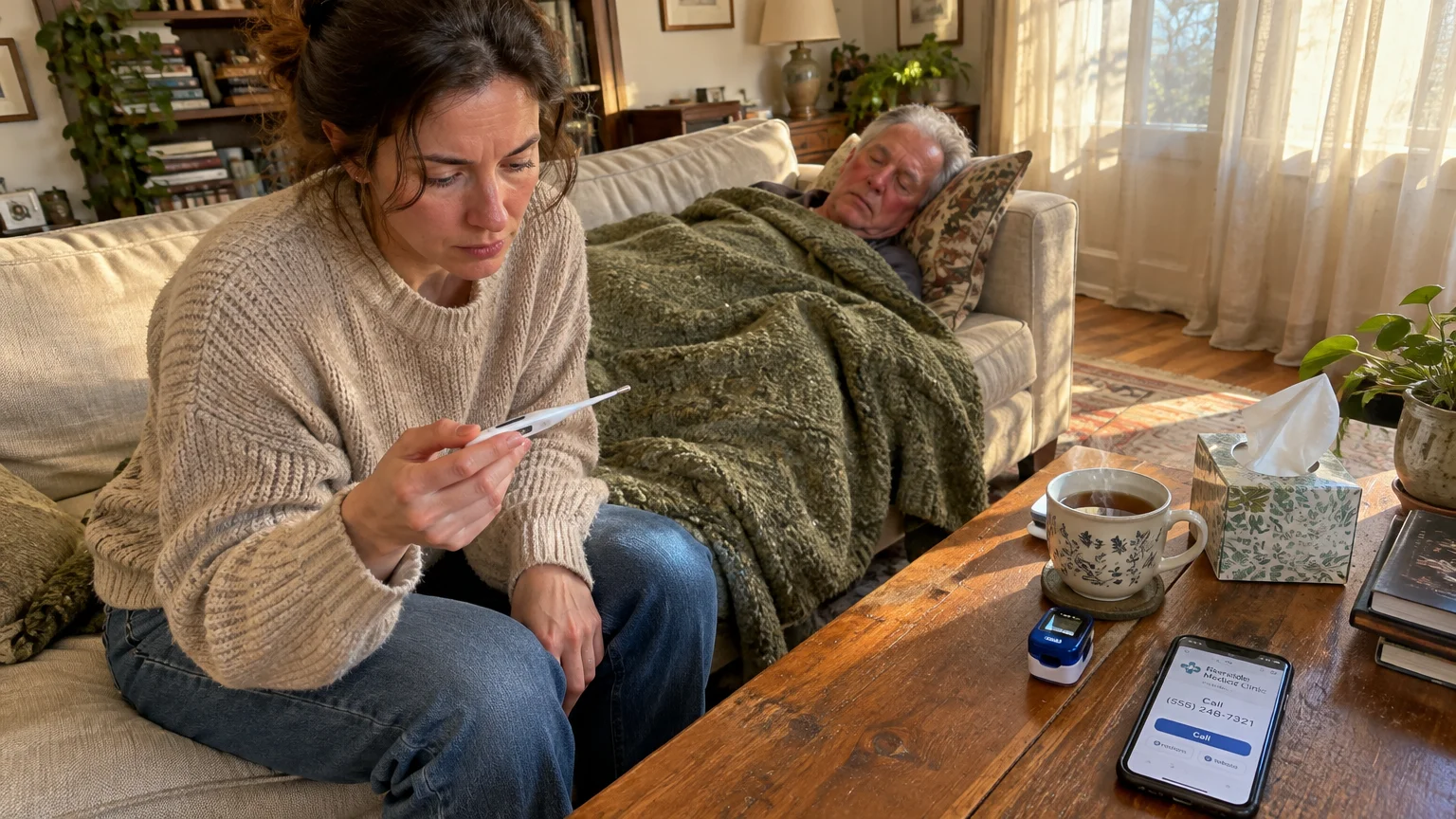
Call your doctor as soon as flu symptoms appear if you are 65 or older, live in a care facility, or manage chronic heart, lung, kidney, or metabolic conditions. Reaching out within 48 hours opens the window for prescription antivirals.
Do not wait for symptoms to worsen before calling your clinic, even if an at-home rapid test reads negative. Many medical offices offer quick telehealth visits so you can begin treatment from home without sitting in a crowded waiting room.
Before calling, write down the exact hour symptoms began, your current temperature, a list of daily medications, and any oxygen reading if you own a pulse oximeter. Clear details help your clinician prescribe safely right away.
Seek emergency care immediately or call 911 if an older adult develops trouble breathing, persistent chest pain or pressure, or bluish lips. Sudden dizziness, inability to wake up, new confusion, or seizures also demand urgent medical attention.
Watch closely for severe dehydration, such as very little urination or inability to keep liquids down. If fever or cough improves briefly and then returns worse with shortness of breath, call immediately to check for secondary pneumonia.
Frequently Asked Questions About Flu A and Flu B
Can you get Flu A and Flu B in the same flu season?
Yes, catching Influenza A does not protect you from Influenza B, and having one does not prevent the other. Because Flu A often peaks in early winter while Flu B frequently rises toward spring, getting infected twice in one season is possible.
Getting an annual trivalent flu shot builds antibodies against A(H1N1), A(H3N2), and B/Victoria simultaneously. Even if you already recovered from Flu A earlier this winter, vaccination helps guard against a late-season Flu B wave.
Is Flu A more contagious than Flu B?
Both viruses spread easily through respiratory droplets when an infected person coughs, sneezes, or talks nearby. Healthy adults with either type can transmit the virus from one day before symptoms begin through five to seven days afterward.
Influenza A tends to cause larger seasonal outbreaks because its subtypes evolve faster through antigenic shift and drift, leaving fewer people with lasting immunity. Inside a household, however, both Flu A and Flu B spread rapidly from person to person.
Why did my home rapid test come back negative when I have flu symptoms?
Rapid antigen home tests detect only 50 to 70 percent of true flu infections and perform even less reliably for Influenza B than for Influenza A. Testing too early—before viral levels peak—or taking a shallow swab can also produce false negatives.
If you are 65 or older and feel sick, contact your clinician despite a negative home test. Your doctor can order a higher-accuracy molecular swab or start antiviral medication right away based on your symptoms and health history.
Should I still take Tamiflu if my test confirms Flu B instead of Flu A?
Yes, oseltamivir (Tamiflu) and the other CDC-recommended antivirals fight both Influenza A and Influenza B effectively. Medical guidelines emphasize that the specific flu type should never delay or alter your decision to start antiviral therapy within the first 48 hours.
How do I know if an older adult has the flu or COVID-19?
Because flu, COVID-19, and RSV share fever, cough, fatigue, and body aches, you cannot separate them by symptoms alone. Using an FDA-cleared at-home combination rapid test or visiting a clinic for a molecular test provides clear answers so you receive the right treatment.
Moving Forward Through Flu Season With Confidence
Flu A and Flu B differ in their biology, animal hosts, and seasonal timing, yet both deserve equal respect when caring for older adults. Neither virus is harmless, and recognizing atypical senior symptoms like sudden confusion or weakness can save lives.
You hold powerful tools to lower your household risk every season: an updated 2026–2027 enhanced flu shot for seniors, routine vaccination for younger relatives, and rapid testing when illness strikes. Calling your clinician within 48 hours keeps effective antiviral options open.
Stay alert to early warning signs, keep a simple symptom log handy, and talk with your pharmacist or doctor before peak winter waves arrive. Proactive planning helps you move through flu season safely and comfortably.
This article is for informational purposes only and does not constitute medical advice. Please consult a healthcare professional for any health concerns.