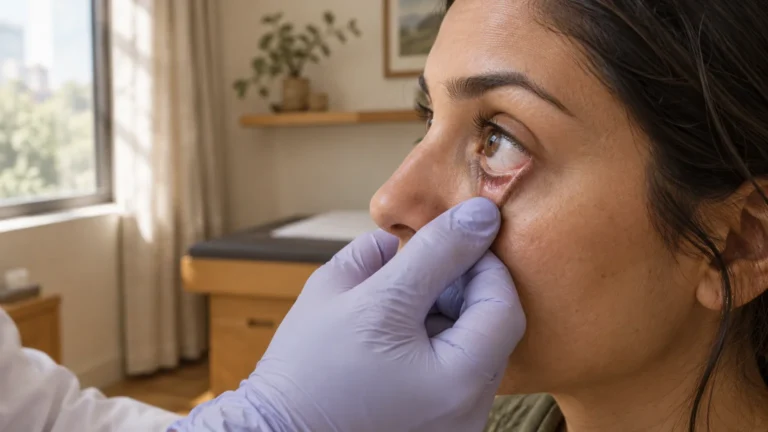
Step inside for a few quiet weeks, and your body begins adjusting to a dimmer, stiller world. Physicians see measurable shifts in your sleep clock, hormone production, mood regulation, and cardiovascular strain long before you notice obvious symptoms.
Modern routines keep most people away from natural light and shifting air for nearly every waking hour. Understanding the staying indoors health effects helps you spot silent drains on your energy and focus.
Small daily changes in how you use outdoor light, movement, and fresh air can reverse many of these biological slowdowns.
Understanding the Hidden Physiology of Staying Indoors
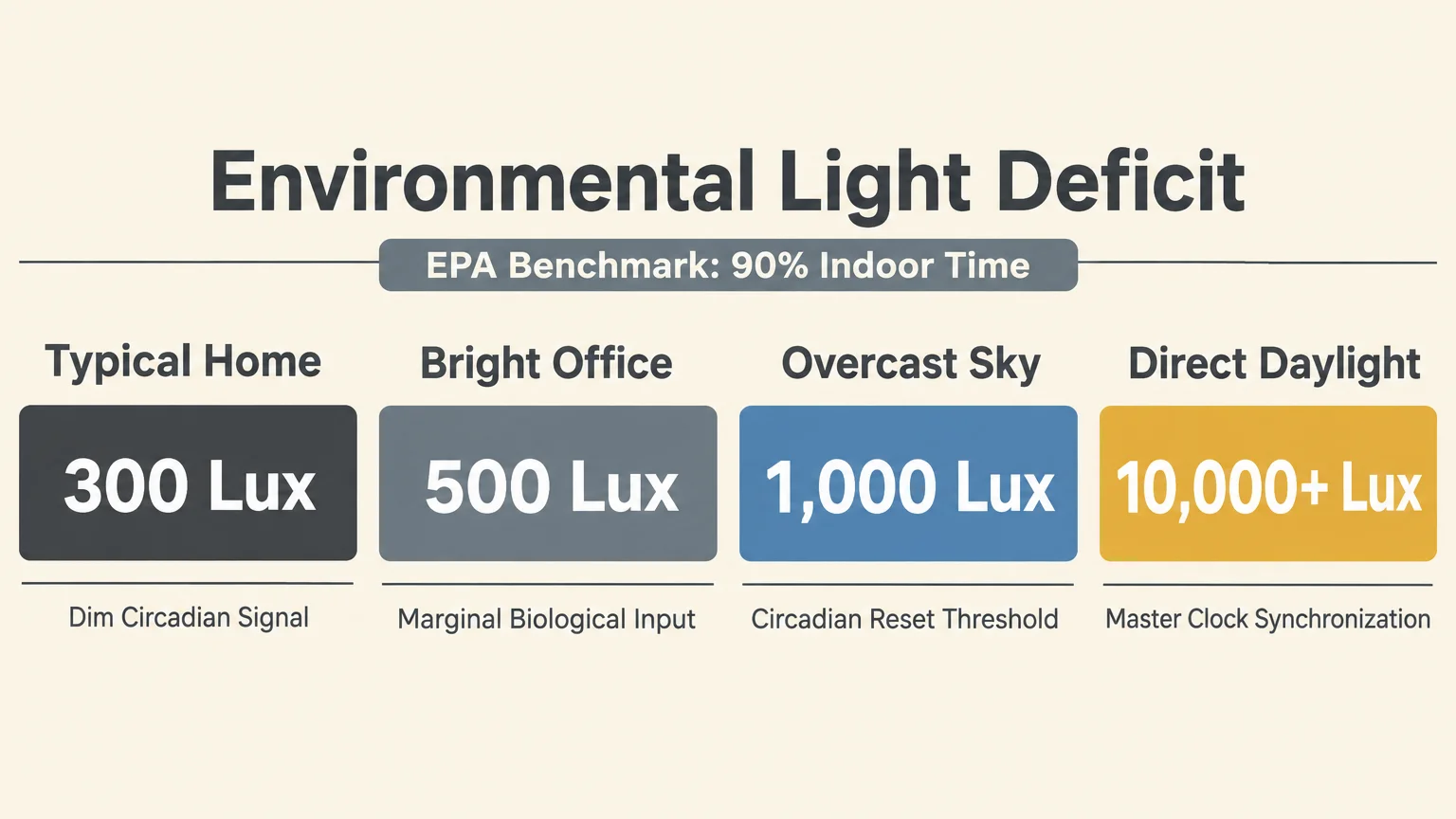
According to the U.S. Environmental Protection Agency, Americans spend roughly 90% of their time indoors. For older adults who drive less or live in extreme seasonal weather, that indoor percentage often climbs even higher.
Your body did not evolve for constant shelter inside climate-controlled rooms. Think of human physiology like a solar-powered watch that slowly loses accuracy when stored in a dim desk drawer.
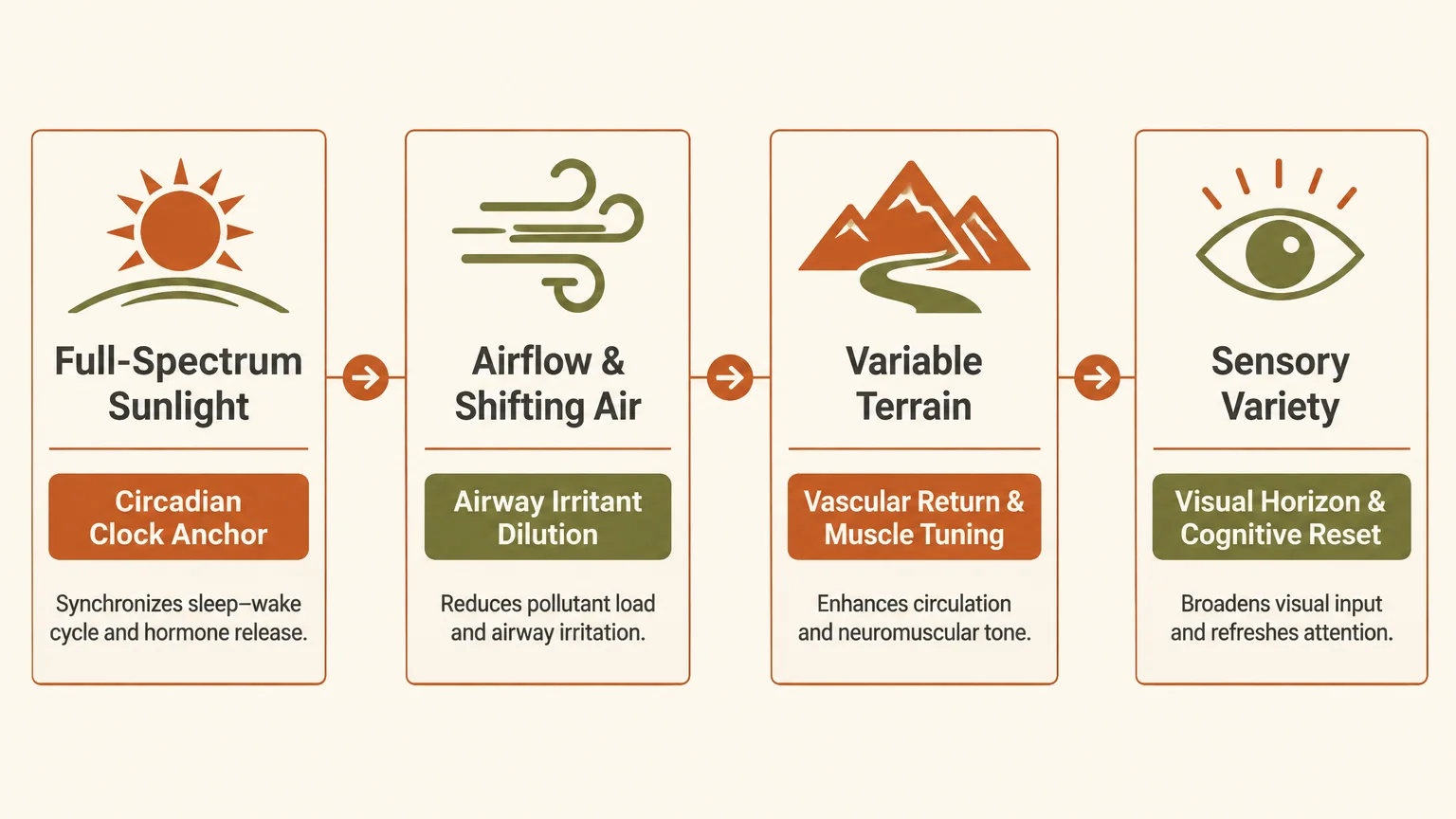
When you stop going outside, four environmental signals drop off at the same time. Bright full-spectrum sunlight disappears, outdoor air circulation stops, physical terrain flattens into soft chairs, and sensory variety shrinks.
None of those changes feels dramatic during a single cozy afternoon at home. Over months and years, however, they quietly alter how your brain clears waste, how your blood vessels handle pressure, and how deeply you sleep.
Indoor spaces also expose your lungs and nervous system to trapped air and artificial glare. Because windows filter out key ultraviolet wavelengths and walls block breeze, an indoor day places very different demands on aging organs than an outdoor one.
How Outdoor Environments Calibrate Human Biology
Stepping through your front door triggers immediate biological adjustments across multiple organ systems. Even ten minutes on a shaded porch changes the sensory data reaching your eyes, skin, and lungs.
Natural light acts as the master gear for your circadian rhythm, the internal 24-hour clock tucked inside your brain. Without bright outdoor morning light, that internal clock tends to drift slightly later each day, muddying your signals for alertness and sleepiness.
Outdoor environments also introduce gentle unpredictability that keeps your balance and mind engaged. Uneven sidewalks, shifting temperatures, bird calls, and distant horizons force your muscles, eyes, and nervous system to adapt continuously.
Physicians often view the benefits of going outside as a form of biological maintenance rather than mere recreation. Fresh air dilutes airborne irritants, daylight anchors hormone cycles, and varied movement keeps blood flowing smoothly back from your legs.
Separating those benefits from indoor habits explains why an indoor treadmill never feels quite the same as a neighborhood stroll. Both raise your heart rate, yet only one feeds your brain the environmental cues it expects.

The Surprising Connection Between Staying Indoors and Accelerated Aging
Medical researchers have spent the past decade connecting indoor lifestyles to specific biological pathways. Rather than causing one isolated problem, staying inside simultaneously stresses sleep architecture, bone metabolism, cognition, emotional regulation, and heart health.
Circadian Disruption and Fragmented Sleep
Most people assume indoor lamps provide plenty of brightness for daytime living. Photometry measurements show a stark gap between artificial bulbs and the sky outside.
Systematic reviews in ophthalmology research report that typical home lighting reaches around 300 lux, while bright offices measure near 500 lux. Step outside on an overcast day and light jumps to roughly 1,000 lux; direct sunlight exceeds 100,000 lux.
In March 2022, an international panel of 18 circadian and photometry scientists recommended a minimum daytime melanopic light level of 250 lux measured directly at the eye. That benchmark is roughly three to four times brighter than ordinary indoor lighting setups.
Data from the National Sleep Foundation shows how rarely people hit that daytime threshold. Only 51% of Americans report bright indoor light exposure in the morning, and just 53% report bright exposure in the afternoon.
Your circadian clock is especially sensitive to light roughly one hour after waking and two hours before bedtime. When mornings stay dim indoors and evenings glow with television or tablet screens, melatonin release becomes sluggish and fragmented.
For older adults, blunted circadian signaling often shows up as early-afternoon grogginess paired with restless 3 a.m. awakenings. Restoring strong contrast between bright outdoor mornings and dim indoor evenings helps rebuild deeper, more restorative sleep cycles.
Vitamin D Synthesis, Windows, and Bone Health
Many people try to soak up sunbeams from a favorite armchair beside a living room window. Unfortunately, the NIH Office of Dietary Supplements notes that ultraviolet B (UVB) radiation does not penetrate standard window glass.
That simple physics rule explains why sitting in sunny indoor rooms cannot trigger vitamin D synthesis in your skin. You get the pleasant warmth of glass-filtered light without the hormonal building blocks your bones require.
Vitamin D functions less like a basic vitamin and more like a precursor hormone that helps your intestines absorb dietary calcium. Without enough of it, your body draws calcium out of bone tissue to keep blood levels steady.
Guidelines from the National Academies of Sciences, Engineering, and Medicine classify blood 25-hydroxyvitamin D levels below 30 nmol/L (12 ng/mL) as risk of deficiency. Levels between 30 and 50 nmol/L signal risk of inadequacy, while 50 nmol/L (20 ng/mL) or higher meets most people’s needs.
Exceeding 125 nmol/L (50 ng/mL), by contrast, may raise the risk of adverse effects. Using the 20 ng/mL threshold, the Endocrine Society’s 2024 clinical guideline notes that 24% of U.S. adults meet the standard for deficiency.
Age and geography also shape your equation for vitamin D and sunlight. After age 70, your recommended daily intake rises from 15 micrograms (600 IU) to 20 micrograms (800 IU) because aging skin synthesizes vitamin D less efficiently.
Season and latitude create another barrier for homebound routines. In northern regions such as the United Kingdom, sunlight from October through early March sits too low in the sky for skin to make meaningful vitamin D regardless of outdoor time.
Because of that winter gap, the UK National Health Service advises adults to consider a daily 10-microgram (400 IU) supplement during autumn and winter. Even in sunnier climates, staying indoors year-round leaves diet and supplements doing all the heavy lifting.
Indoor Air Pollutants and Cognitive Load
Closing your windows for comfort also changes the chemistry of every breath you take. According to the U.S. Environmental Protection Agency and the American Lung Association, indoor air pollutant levels are often two to five times higher than outdoor air.
In poorly ventilated rooms with cooking fumes, cleaning sprays, dust, or off-gassing furniture, concentrations can occasionally climb more than 100 times higher than outside air. Despite those numbers, no federal standards regulate indoor air quality in U.S. homes.
Carbon dioxide builds up quietly alongside chemical pollutants whenever people breathe inside closed rooms. Fresh outdoor air averages around 400 parts per million (ppm) of carbon dioxide, whereas occupied indoor spaces routinely reach 950 to 1,400 ppm or higher.
Scientists use the term cognitive load to describe the total mental effort your working memory spends processing information at one time. Trying to think clearly in stuffy air resembles reading fine print in a dim, noisy cafe—your brain wastes energy filtering discomfort.
Research from the Harvard T.H. Chan School of Public Health illustrates how sharply indoor air affects thinking. In their controlled COGfx Study, participants scored 101% higher on cognitive tests under enhanced ventilation (600 ppm CO2) than in conventional conditions (950 ppm).
A 2021 global follow-up study across six countries confirmed that pattern in everyday workplaces. Every 500 ppm rise in indoor carbon dioxide corresponded to 1.4% to 1.8% slower response times and 2.1% to 2.4% lower cognitive throughput.
When you feel sluggish or foggy after spending all morning inside a sealed bedroom or den, fatigue may not be the only culprit. Simply stepping onto a breezy patio or cracking two opposite windows can clear mild indoor brain fog quickly.
Mental Health Outdoors and Stress Hormones
Cabin fever is not just a figure of speech; prolonged indoor confinement measurably shifts stress physiology. Researchers studying mental health outdoors consistently find rapid nervous-system changes when people trade drywall for trees, water, or open sky.
In a 2019 University of Michigan field study, participants spent self-directed time in outdoor spaces that felt restorative to them. Saliva samples revealed that 20 to 30 minutes of sitting or walking outdoors produced the steepest drop in the stress hormone cortisol.
Longer-term patterns matter just as much as single afternoon breaks. A study of nearly 20,000 adults in England led by the University of Exeter identified a clear weekly threshold for nature exposure.
Adults who spent at least 120 minutes per week in natural outdoor settings showed substantially higher odds of reporting good health and strong well-being compared with zero outdoor time. Below 120 minutes, those health gains disappeared, while benefits peaked between 200 and 300 minutes weekly.
Importantly, how you collect those two hours did not change the outcome. One long Saturday hike delivered similar well-being boosts as four brief 30-minute neighborhood park visits spread across the workweek.
Brain imaging helps explain why green surroundings calm anxious thoughts. In a controlled Stanford University trial, a 90-minute walk through a natural area lowered both repetitive negative rumination and neural activity in the subgenual prefrontal cortex, a brain region tied to depression risk.
Participants who walked for 90 minutes beside a busy urban road gained physical exercise without that neural calming effect. Quiet natural scenery gives your prefrontal cortex permission to step off high alert.
Sedentary Lifestyle Risks and Cardiovascular Strain
Staying inside almost always invites more sitting, because indoor rooms organize life around sofas, desks, and dining tables. Outdoors, even modest errands encourage standing, walking, turning, and carrying.
According to the World Health Organization, 31% of adults worldwide—nearly 1.8 billion people—fell short of recommended physical activity levels in 2022, a figure projected to hit 35% by 2030. Insufficiently active adults face a 20% to 30% higher risk of death than active peers.
Public health surveys show that most American adults sit between six and eight hours daily, with some recent analyses estimating averages near 9.5 hours. Cardiometabolic and mortality risks climb steeply once daily sitting crosses seven to nine hours.
Prolonged sitting slows blood flow through leg arteries and reduces muscle uptake of blood sugar and fats. Think of your leg muscles as auxiliary pumps; when they stay idle all afternoon, your heart and blood vessels absorb extra mechanical strain.
A landmark meta-analysis of more than one million adults led by Ulf Ekelund found that sitting eight or more hours daily paired with low activity carried a 59% higher mortality risk than sitting under four hours with high activity. Accumulating at least 60 minutes of moderate daily movement largely offset that extra risk.
However, new research suggests that vigorous workouts alone cannot always erase extreme sitting hours in older age. A 2024 Women’s Health Initiative analysis of women aged 63 to 99 found that sitting 11.7 hours or more daily raised mortality risk by 30%, regardless of vigorous exercise.
Separately, a 2026 Harvard-affiliated analysis linked every additional sedentary hour per day to a 10% higher risk of cancer death. Breaking up long sitting stretches with light standing or gentle movement measurably lowered those sedentary lifestyle risks.
Light Intensity and Lifelong Vision Health
Your eyes also respond to the distance and brightness of your surroundings. Indoor rooms trap your gaze within a few feet on books, screens, and walls, keeping eye focusing muscles locked in near-focus mode.
According to the American Academy of Ophthalmology, global rates of nearsightedness—or myopia—are rising rapidly, with projections estimating roughly half the world’s population will be myopic by 2050. Population research consistently links spending at least two hours daily outdoors with lower myopia risk in youth.
A Taiwanese clinical trial published in 2018 demonstrated that encouraging students to spend 11 or more hours weekly outdoors in light brighter than 1,000 lux cut rapid myopia progression by 54% over one year. Bright daylight stimulates retinal dopamine, while looking toward distant trees relaxes strained eye muscles at any age.
What These Overlapping Systems Mean for Your Health
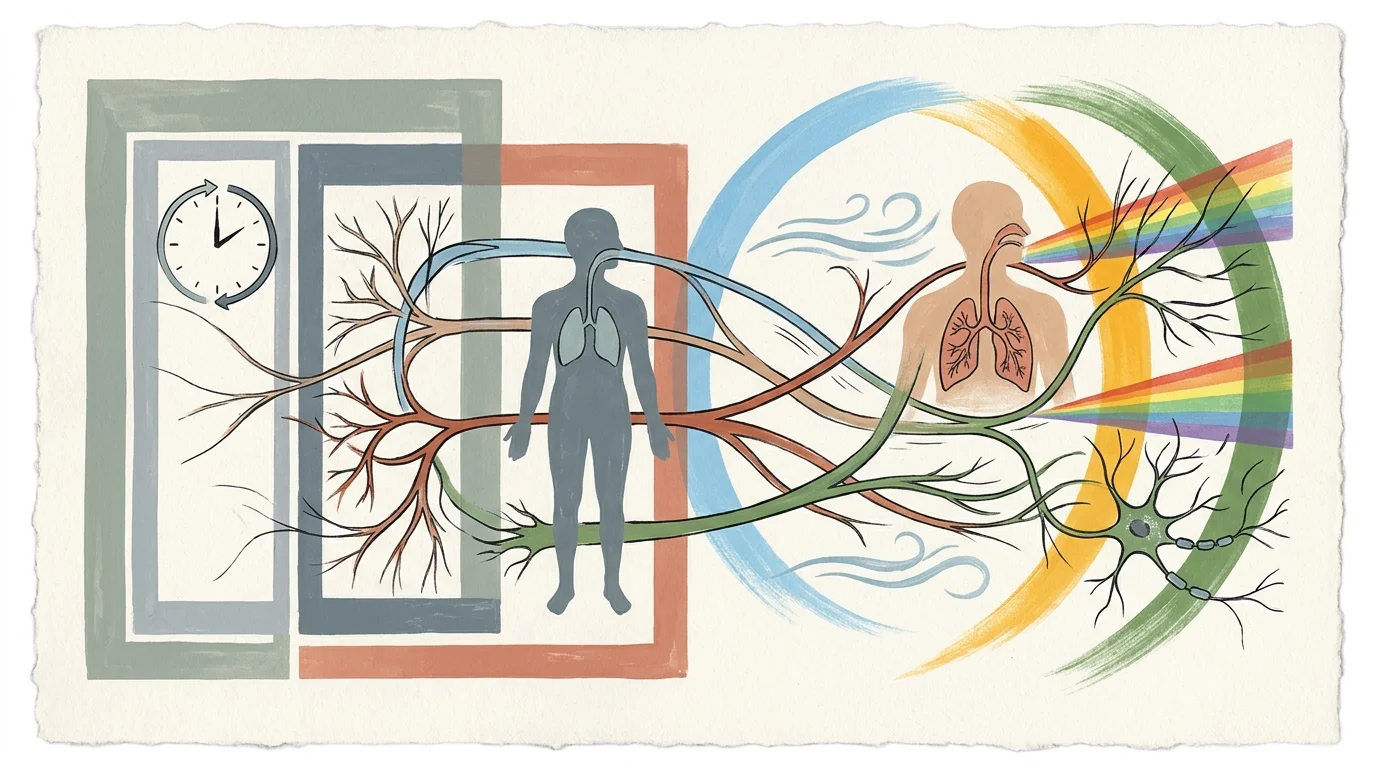
In real life, indoor habits rarely affect just one organ system at a time. Instead, dim mornings, stale indoor air, low vitamin D, and uninterrupted sitting feed into one another like interlocking gears.
Poor daytime light weakens your nighttime sleep drive, leaving you tired the next morning. Fatigue makes skipping your walk feel tempting, which leaves you sitting longer in stuffy indoor air—further draining mood and mental sharpness.
Understanding these connections helps you make smarter preventative choices without chasing extreme fixes. For example, current clinical advice balances sun safety, targeted supplementation, and moderate daily movement.
In June 2024, the Endocrine Society updated its clinical practice guidelines on vitamin D. For generally healthy adults aged 19 to 74, the panel advises against routine vitamin D blood screening and against taking supplements above the recommended daily allowance.
For adults aged 75 and older, however, the Endocrine Society recommends empiric vitamin D supplementation because aging changes skin synthesis, diet patterns, and bone fracture risk. The safe upper limit for adults remains 100 micrograms (4,000 IU) daily unless a physician directs otherwise.
Meanwhile, dermatology guidelines warn against relying on unprotected midday sunbathing to raise vitamin D levels. The American Academy of Dermatology notes there is no safe threshold of ultraviolet exposure that maximizes vitamin D without elevating skin cancer risk.
Instead, dermatologists recommend getting vitamin D from fortified foods, fatty fish, or physician-guided supplements while wearing broad-spectrum SPF 30 or higher sunscreen outdoors. Research from skin cancer groups shows everyday sunscreen use rarely causes vitamin D deficiency because small incidental exposures still add up.
Proactive Measures You Can Take Starting Today
You do not need marathon hikes or expensive outdoor gear to reverse indoor biological drift. Consistent, moderate adjustments throughout your week deliver measurable gains in sleep, mood, mobility, and alertness.
Anchor Your Morning With Bright Outdoor Light
Step onto your porch, balcony, or sidewalk within roughly one hour of waking up for 10 to 20 minutes. Even under gray clouds, outdoor brightness easily beats indoor bulbs and sends a crisp wake-up signal to your circadian clock.
Leave dark sunglasses off for a few minutes if comfortable, while never staring directly at the sun. Pairing morning coffee or a brief stretch with outdoor daylight quickly turns light exposure into an automatic habit.
Build Toward 120 Minutes of Weekly Nature Time
Aim for at least 120 minutes each week in green or blue outdoor spaces—parks, tree-lined streets, community gardens, or lakeside paths. Research shows you can divide that goal into six 20-minute breaks or two hour-long weekend outings.
Leave headphones in your pocket during at least half of those outings so birdsong, wind, and natural sounds engage your attention. Even sitting calmly on a park bench for 20 to 30 minutes helps lower elevated cortisol.
Break Up Indoor Sitting Every Hour
Alongside standard health guidance of 150 to 300 minutes of moderate aerobic movement and two days of muscle strengthening weekly, protect your arteries from unbroken sitting. Set a gentle timer or tie movement to daily cues like commercial breaks or finishing a chapter.
Stand up for two to five minutes each hour to refill water, water patio plants, or walk down the driveway to check the mail. Light movement interrupts blood sugar spikes and takes pressure off stiff hips and lower backs.
Protect Your Skin While Supporting Vitamin D
Check your local UV index before spending extended midday hours outside, especially between 11 a.m. and 3 p.m. When the UV index reaches 3 or higher, apply water-resistant broad-spectrum SPF 30+ sunscreen, wear a wide-brimmed hat, and seek shade.
Cover your vitamin D needs reliably through salmon, fortified milk or plant beverages, eggs, and age-appropriate supplements rather than intentional tanning. If you are 75 or older—or mostly homebound—ask your doctor whether an 800 IU daily supplement fits your care plan.
Refresh Your Indoor Air Whenever Possible
When weather or mobility keeps you inside, fight carbon dioxide buildup by opening two windows on opposite sides of your home for ten minutes. Cross-ventilation rapidly drops indoor CO2 toward outdoor baselines and clears trapped cooking or cleaning particulates.
Running kitchen exhaust fans while cooking and choosing unscented cleaning products further reduces airborne irritants. Fresh indoor air preserves mental stamina on days when outdoor walks are impractical.
The Future of Outdoor and Environmental Health Research
Medical science is moving beyond treating outdoor time as a pleasant hobby and studying it as a measurable health intervention. Researchers are actively testing how light intensity, greenery, and movement interact across aging populations.
Circadian architects are designing senior living residences with tunable overhead lighting and sunlit courtyards to mimic natural dawn-to-dusk shifts.
Public health teams are also studying green prescriptions, where clinicians write structured plans for neighborhood park visits alongside blood pressure medication. Wearable light sensors and indoor air monitors will soon help doctors measure environmental deficits as easily as step counts.
Future studies are examining exact movement break intervals for adults over 70 who cannot perform vigorous workouts. Clarifying how two-minute standing breaks compare with brisk outdoor walks will help clinicians tailor realistic advice for every mobility level.
Frequently Asked Questions
Does sitting beside a sunny window give me vitamin D?
No, standard window glass blocks the ultraviolet B rays your skin needs to manufacture vitamin D. You still gain pleasant warmth and some circadian brightness near a window, yet you must step outside or use diet and supplements for vitamin D.
Does wearing sunscreen block all vitamin D production?
Clinical studies show everyday sunscreen use rarely causes vitamin D deficiency. Even SPF 30 or SPF 50 allows tiny amounts of UVB through, and most people receive incidental exposure on missed spots while protecting their skin from sunburn and skin cancer.
Does it matter if I go outside for one long walk or several short breaks?
Population research shows total weekly outdoor time matters more than how you divide it. Reaching at least 120 minutes weekly in natural settings yields similar well-being benefits whether completed in one long outing or several 20-minute neighborhood strolls.
Can indoor exercise completely erase the risks of sitting all day?
Daily exercise helps substantially, yet extreme sitting hours still carry risk in older adulthood. Studies of women aged 63 to 99 found that sitting nearly 12 hours daily increased mortality risk even among vigorous exercisers, making frequent standing breaks essential.
Should every older adult ask for a routine vitamin D blood test?
Current 2024 Endocrine Society guidelines advise against routine blood screening in generally healthy adults without specific medical conditions. However, the guidelines recommend daily empiric supplementation for adults aged 75 and older.

Making Fresh Air Part of Healthy Aging
Your body constantly reads the world around you, adjusting sleep hormones, blood vessels, bone chemistry, and stress circuits to match your surroundings. Stepping outside—even briefly and gently—reminds those systems that daytime has arrived and movement has begun.
Treat outdoor light, fresh air, and hourly standing breaks as simple pillars of preventive self-care rather than difficult chores. Over weeks and years, those accessible daily habits help protect sharper thinking, steadier mood, stronger bones, and lasting independence.
This article is for informational purposes only and is not a substitute for professional medical advice, diagnosis, or treatment.