
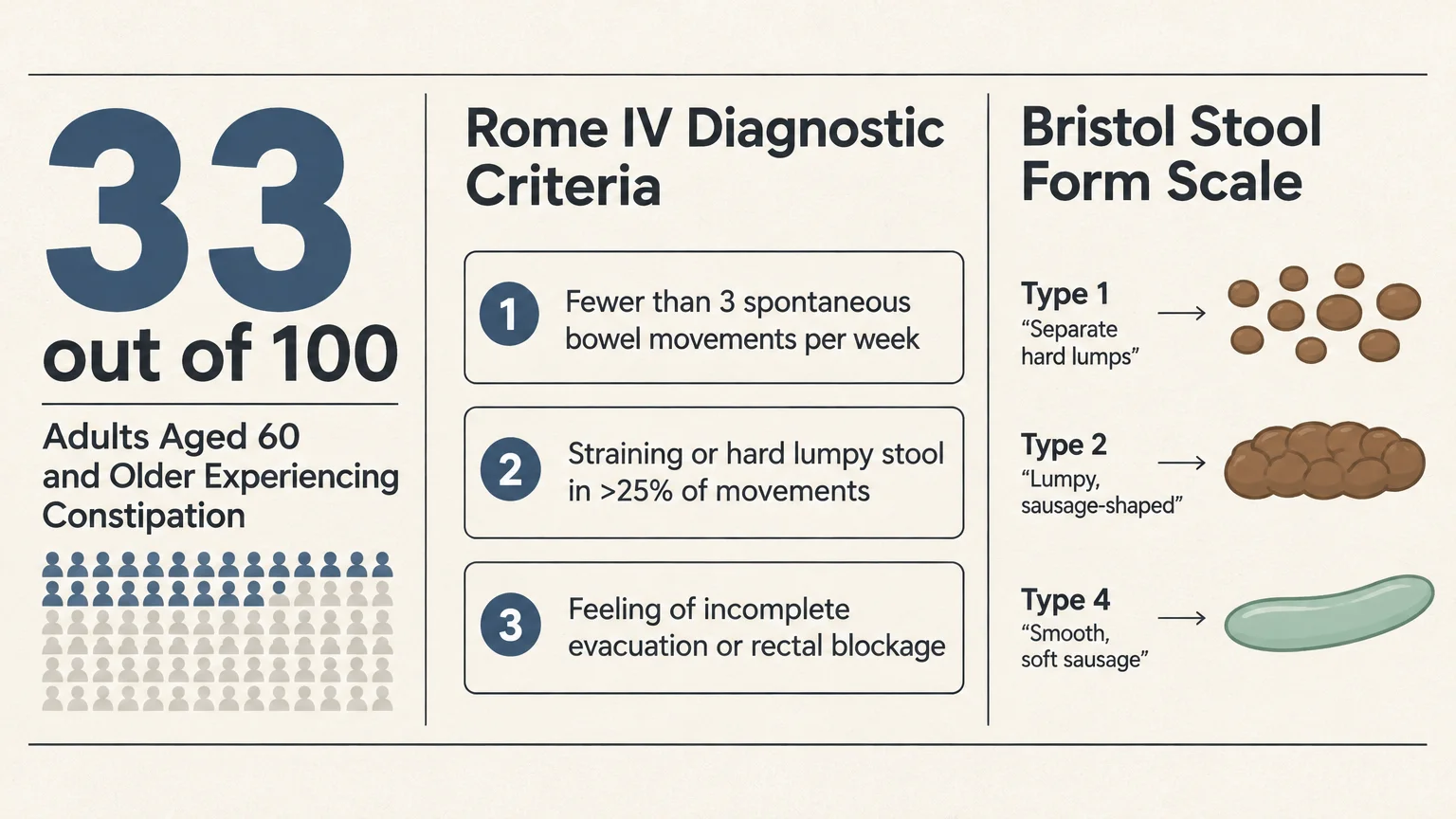
Constipation becomes far more common as you age, affecting about 33 out of 100 adults aged 60 and older compared with 16 out of 100 adults overall. Understanding why your digestion slows down gives you the power to fix it safely.
Normal shifts in gut muscle strength, hydration, and daily medications all drive constipation in older adults. Fortunately, targeted food choices, gentle movement, and proven over-the-counter remedies offer reliable constipation relief without harsh side effects.
Knowing how to spot early warning signs and adjust your daily routine helps protect your comfort and independence.
What Is Constipation in Older Adults?
Constipation is more than simply skipping a day or two between bathroom visits. It describes bowel movements that are infrequent, overly hard, dry, or difficult to pass.
Inside your digestive tract, the large intestine—also called the colon—absorbs water from leftover food waste. When stool moves too slowly through your colon, too much water gets pulled out, leaving waste hard and stubborn.
Medical guidelines from The Rome Foundation define chronic functional constipation using clear benchmarks called the Rome IV diagnostic criteria. Symptoms must last at least three months, with initial onset beginning at least six months earlier.
Under those clinical rules, a diagnosis requires two or more persistent issues. One benchmark is having fewer than three spontaneous bowel movements per week without laxatives.
Other benchmarks occur during more than 25 percent of your bowel movements. These include heavy straining, passing lumpy or hard stools—classified as types 1 or 2 on the Bristol Stool Form Scale—or feeling an uncomfortable blockage near the exit.
Sensing that your bowels did not empty completely or needing manual help to pass stool also meet clinical criteria. Recognizing these patterns helps you and your doctor address symptoms early.
According to the National Institute of Diabetes and Digestive and Kidney Diseases, about 33 out of 100 Americans aged 60 and older live with constipation symptoms. Worldwide, chronic constipation affects roughly 14 percent of all adults and 18.9 percent of older adults.
Among older adults living independently in the community, global rates reach 33.5 percent, with a sharp spike between ages 75 and 79. In long-term care facilities, prevalence climbs as high as 80 percent, with 55 to 67 percent of nursing home residents relying on laxatives.
Left unmanaged, severe constipation becomes a serious health burden. Between 2006 and 2011, constipation led to more than 700,000 emergency room visits across the United States.
Key Symptoms and Warning Signs in Older Adults
Everyday Signs Beyond Infrequent Trips
Many older adults assume their bowel health is fine simply because they go every morning. Yet passing small, pebble-like stools with heavy effort still counts as constipation.
Watch for persistent straining, pelvic pressure, or the nagging feeling that stool remains trapped inside after you finish. Lower belly bloating, gas, and dull cramping also signal backed-up waste.
Over time, pushing hard on the toilet raises blood pressure briefly and triggers painful hemorrhoids—swollen veins around your lower rectum. Straining can even cause dizziness or fainting spells in seniors with heart conditions.
Subtle Symptoms Unique to Seniors and Caregivers
Older bodies do not always announce digestive trouble with obvious stomach pain. Instead, trapped stool can show up as a sudden loss of appetite, mild nausea, or unexplained fatigue.
In frail seniors or those living with memory loss, severe constipation can even trigger sudden restlessness or confusion. Caregivers should pay close attention whenever a loved one becomes unusually irritable or refuses meals.
Another hidden danger is fecal impaction—a large, hardened plug of stool wedged firmly inside the rectum. Because solid waste cannot get past that plug, watery fluid from higher in the colon sometimes leaks around it.
This overflow leakage looks like sudden diarrhea, which tricks many people into taking anti-diarrheal medicine. Treating overflow leakage as standard diarrhea makes the underlying blockage much worse.
How Constipation Affects Women and Men Differently
While both sexes face higher rates with age, women experience constipation in older adults more frequently than men. Clinical reviews show community rates of 26 percent in women and 16 percent in men aged 65 and older.
By age 84 and beyond, prevalence climbs to 34 percent among women and 26 percent among men. Pregnancy history, past pelvic surgery, and post-menopausal changes can weaken supportive tissues in older women.
Older men often run into trouble from different angles. Medications for enlarged prostate glands, high blood pressure, and heart disease frequently slow bowel contractions in men over 65.

Why Digestive Health Changes With Aging: Common Risk Factors
Slower Gut Motility and Pelvic Floor Changes
Digestive health aging involves gradual shifts in the nerves and smooth muscles lining your gastrointestinal tract. Peristalsis—the rhythmic wave-like muscle contractions that sweep waste along your colon—naturally loses some strength and speed over the decades.
At the bottom of your pelvis, a hammock of muscles supports your bladder, uterus, and rectum. Normally, these pelvic floor muscles relax smoothly so stool can exit without resistance.
With age, some adults develop pelvic floor dyssynergia, a condition where those muscles fail to coordinate properly. Instead of relaxing when you bear down, the muscles accidentally tighten and block stool from leaving.
Blunted Thirst Signals and Kidney Shifts
Water keeps stool soft and easy to move, yet staying hydrated gets trickier with age. Research from the National Academies of Sciences, Engineering, and Medicine shows that thirst sensation and fluid intake drop naturally with age.
You can become mildly dehydrated without ever feeling thirsty. Meanwhile, aging kidneys lose some ability to concentrate urine and conserve water, meaning your body lets go of fluid more easily.
When fluid reserves dip even slightly, your colon compensates by drawing extra moisture out of food waste. Dry, hard stools quickly follow.
Medications That Slow Your Bowels
Taking multiple daily prescriptions is one of the strongest drivers of constipation in older adults. Even helpful, life-saving medicines can bring digestion to a crawl.
Opioid painkillers attach directly to gut nerve receptors, freezing normal bowel movement. Over-the-counter iron supplements and antacids containing calcium or aluminum also bind and harden stool.
Blood pressure treatments play a frequent role as well. Calcium channel blockers relax smooth gut muscle, while diuretics—often called water pills—flush away fluid your bowels need.
Allergy pills, certain antidepressants, and anticholinergic medications pose another common hurdle. Anticholinergic drugs work by blocking acetylcholine, a chemical messenger your nerves use to trigger muscle contractions in the gut.
Chronic Health Conditions
Long-term medical conditions often interfere with digestive health aging by disrupting hormones, blood flow, or nerve pathways. Hypothyroidism—an underactive thyroid gland that slows your body’s metabolism—directly sluggishly slows colonic transit.
High blood sugar from diabetes can injure delicate digestive nerves over time. Neurological disorders such as Parkinson’s disease, multiple sclerosis, dementia, and past strokes also disrupt the brain-to-gut signals that coordinate healthy bowel habits.
Inactivity and Ignoring the Urge
Daily physical movement acts like an internal massage for your intestines, yet staying active grows harder with joint pain or fatigue. Fewer than 15 percent of U.S. adults aged 65 and older meet federal physical activity guidelines.
Long stretches of sitting or bed rest after surgery allow waste to linger in the colon. Everyday habits matter just as much as exercise.
Guidance from the National Institute on Aging highlights the danger of repeatedly ignoring the urge to use the bathroom. Holding stool because a restroom feels inconvenient or unsafe trains your rectum to stop sending strong signals.
How Constipation Is Managed: Evidence-Based Relief
Targeted Foods Backed by Clinical Guidelines
For years, routine advice simply told seniors to eat a high-fiber diet. However, comprehensive guidelines released by the British Dietetic Association in October 2025 showed that general high-fiber advice alone lacks solid clinical trial proof for chronic constipation.
Reviewing four systematic analyses covering 75 randomized controlled trials, dietitians pinpointed specific whole foods that reliably improve stool softness and frequency. Adding these proven foods offers practical constipation relief you can taste.
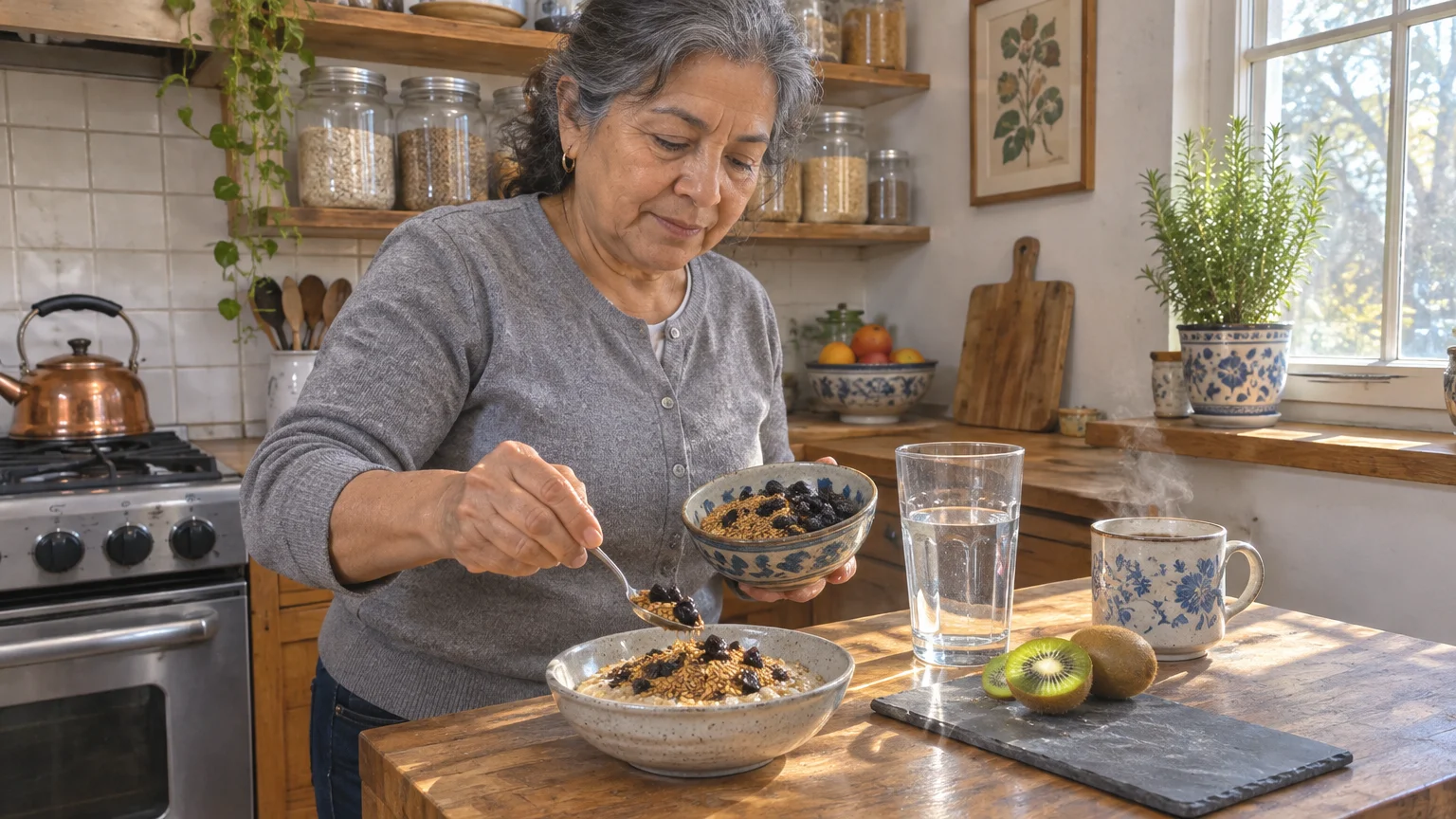
Eating two to three kiwifruits each day for at least four weeks significantly softens stools and increases weekly bowel movements. Kiwifruit works gently without causing the heavy gas many people get from bran cereals.
Eight to ten prunes daily deliver natural fiber alongside sorbitol, a gentle fruit sugar that pulls water into your colon. Eating six to eight slices of rye bread daily also boosted bowel frequency in trials, though that portion can trigger mild stomach upset for some.
Drinking 0.5 to 1.5 liters of high-mineral water daily—especially varieties rich in magnesium and sulfates—also helps soften stubborn waste. Pairing these targeted foods with warm morning beverages often gets sluggish bowels moving comfortably.
Over-the-Counter Options and First-Line Laxatives
When food adjustments fall short, clinical practice guidelines published in 2023 by the American Gastroenterological Association and American College of Gastroenterology provide a clear roadmap. Choosing the right over-the-counter option depends on how your body responds and your kidney health.
Polyethylene glycol (PEG 3350) holds a strong recommendation as the top first-line over-the-counter treatment. A standard daily dose of 17 grams mixes cleanly into water or juice and remains effective over six months of use.
PEG 3350 acts as an osmotic laxative, meaning it holds water inside your stool rather than irritating gut nerves. Because it works gently, it rarely causes painful cramps.
Psyllium fiber supplements receive conditional support when taken at doses above 10 grams daily for at least four weeks. Pushing total daily fiber above 25 to 30 grams, however, shows no extra benefit for relieving constipation, and supplements like inulin or polydextrose failed to increase frequency in trials.
Magnesium oxide—started low at 400 to 500 milligrams daily and adjusted cautiously up to 1,000 or 1,500 milligrams—also pulls fluid into your gut. Never use magnesium oxide if you have kidney impairment, because toxic levels can build up in your blood and cause hypermagnesemia.
Stimulant laxatives such as bisacodyl (5 to 10 milligrams orally) or sodium picosulfate carry strong support specifically for rescue relief or short-term use under four weeks. Senna and lactulose (15 grams daily) offer additional conditional options, though overusing stimulants risks diarrhea and electrolyte loss.
Critical Medication Safety Warnings for Seniors
Store-bought bowel remedies require extra care as you grow older. Paying attention to federal label warnings protects your throat, kidneys, and heart.
The U.S. Food and Drug Administration requires bold choking warnings on psyllium and other bulk-forming laxatives. You must stir each dose into at least eight ounces—one full glass—of water or another beverage and drink it right away.
Never take bulk-forming fiber powders or capsules if you have any trouble swallowing. Without plenty of liquid, dry fiber swells rapidly and can block your esophagus or harden into fecal impaction.
Federal safety alerts also warn strongly against misusing over-the-counter sodium phosphate laxatives and rectal enemas. Never take more than one oral dose (20 to 45 milliliters) or more than one enema within a 24-hour window.
Taking extra sodium phosphate doses can cause dangerous dehydration, severe salt imbalances, acute kidney injury, and heart damage. Adults over age 55, anyone with kidney disease, and people taking diuretics, NSAID pain relievers, or blood pressure drugs called ACE inhibitors or ARBs face the highest danger.
To prevent fatal accidental overdoses, regulators capped over-the-counter oral sodium phosphate bottles at 90 milliliters—about three ounces—in May 2023. Always double-check active ingredients on laxative boxes with your pharmacist before buying.
Pelvic Floor Physical Therapy and Prescription Options
If your stools feel soft yet still seem impossible to push out, pelvic muscle coordination may be the hidden obstacle. Standard laxatives cannot fix muscles that squeeze shut when they should open.
A 2021 guideline from the American Physical Therapy Association Academy of Pelvic Health strongly recommends biofeedback therapy for adults with functional constipation. During biofeedback, tiny painless sensors show your muscle activity on a screen so a physical therapist can coach you to relax your pelvic floor properly.
Manual therapy performed by a trained pelvic floor therapist also helps release tight tissues and improve bowel comfort. Many seniors find this hands-on coaching transforms bathroom habits after years of frustration.
When dietary changes and over-the-counter laxatives still fail, your physician can prescribe stronger targeted medicines. Proven prescription choices include linaclotide, plecanatide, prucalopride, and lubiprostone, each designed to boost intestinal fluid secretion or natural muscle movement safely.
Proactive Steps for Long-Term Bowel Health
Meeting Daily Fiber Intake for Seniors
Consistent eating habits keep your digestive tract humming smoothly every week. Meeting daily fiber intake seniors actually need helps build soft, bulky stools that move effortlessly.
Because daily calorie needs decline after age 50, the National Academy of Medicine sets daily fiber targets at 21 grams for women and 30 grams for men. Those benchmarks follow the standard guideline of 14 grams of fiber for every 1,000 calories eaten.
Most Americans miss that mark by a wide margin, averaging only 16 to 17 grams per day. Federal nutrition surveys show that more than 90 percent of women and 97 percent of men fall short, leaving roughly 95 percent of adults below target.
The U.S. Department of Agriculture and Department of Health and Human Services released updated 2025–2030 dietary guidelines in January 2026 emphasizing minimally processed whole foods. Limiting refined white breads and ultra-processed snacks gives natural fiber room on your plate.
On a typical 2,000-calorie pattern, aim for two to four servings of fiber-rich whole grains, three servings of vegetables, and two servings of fruit daily. Oats, beans, berries, leafy greens, and whole-wheat breads make easy, affordable staples.
Increase your fiber gradually over two or three weeks rather than overnight. Sudden jumps in roughage can trigger bloating and cramping while your gut bacteria adjust.
Hydration Habits Without Relying on Thirst
Adding fiber without enough liquid backfires quickly, turning soft bulk into concrete inside your colon. Building simple fluid routines protects your bowel health even when thirst signals fade.
The National Academies recommend an Adequate Intake for total water of 2.7 liters—about 11.5 cups—daily for women and 3.7 liters—about 15.5 cups—for men. Total water includes plain drinks as well as moisture inside soups, stews, yogurt, cucumbers, and melons.
Set a small glass of water beside your morning pills, sip herbal tea in the afternoon, and keep a lightweight bottle near your favorite reading chair. If heart or kidney conditions limit your fluid allowance, ask your doctor for your exact daily target.
Daily Movement and Bowel Retraining
Regular movement wakes up sluggish intestinal muscles and strengthens your core. Both the Centers for Disease Control and Prevention and the World Health Organization recommend at least 150 minutes of moderate aerobic activity weekly for adults 65 and older.
That equals just 30 minutes of brisk walking five days a week, paired with muscle-strengthening exercises twice weekly and regular balance practice. Gentle swimming, tai chi, gardening, or seated marching still stimulate gut contractions if arthritis limits longer walks.
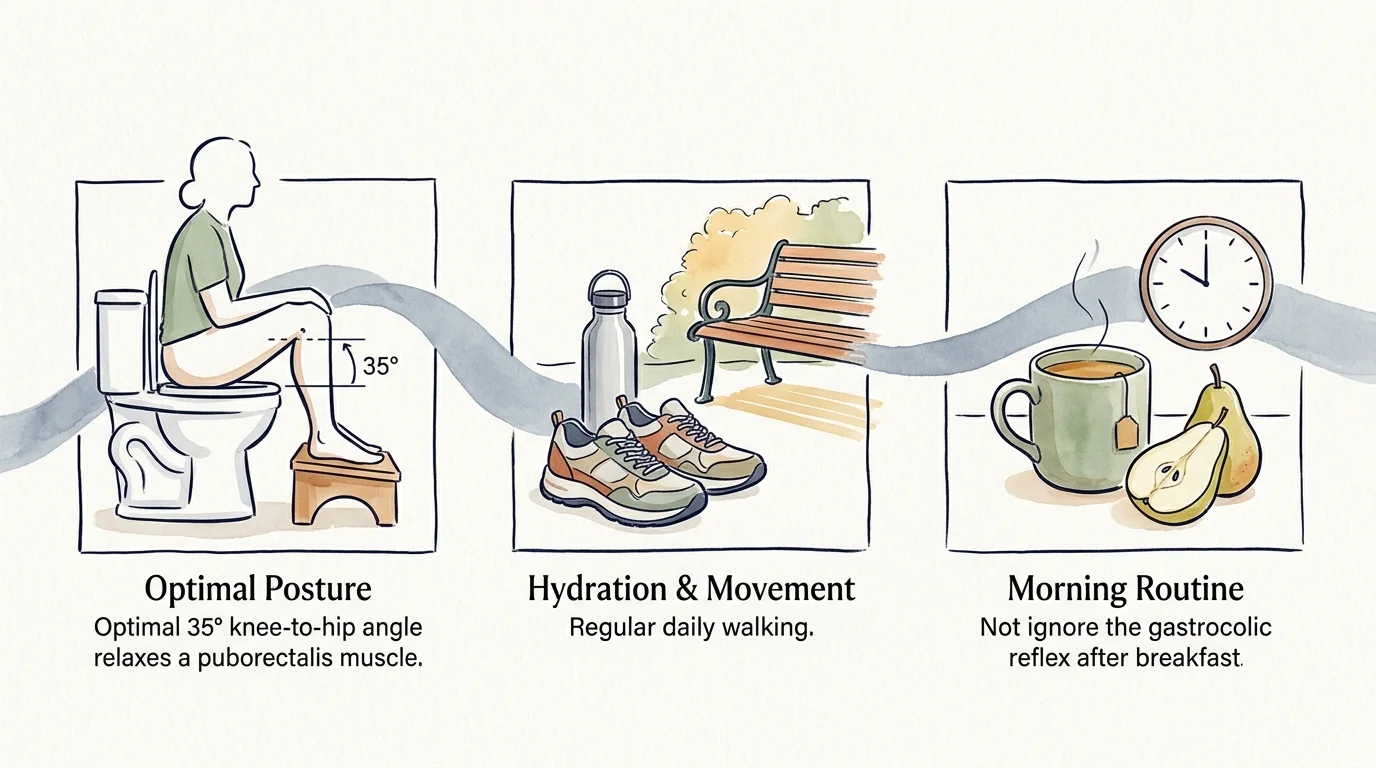
You can also gently retrain your colon using your body’s built-in clock. Guidance citing the National Institute on Aging suggests sitting on the toilet for a calm visit 20 to 40 minutes after a meal.
Eating triggers the gastrocolic reflex—a natural surge of wave-like movement through your colon designed to make room for new food. Taking advantage of that morning reflex after breakfast and warm coffee or tea often produces results without straining.
Resting your feet on a small sturdy footstool raises your knees slightly higher than your hips. That simple posture shift straightens the bend in your lower rectum and lets stool exit smoothly.

When to Contact a Doctor
While occasional mild constipation responds well to home care, certain symptoms demand prompt medical attention. Never brush off warning signs as just another part of getting older.
Rome IV clinical guidance advises ruling out serious problems such as colorectal cancer or structural blockages whenever alarm symptoms appear. Call your doctor right away if you notice bright red blood in the toilet, dark tarry stools, or unexplained iron deficiency anemia—a low red blood cell count tied to hidden blood loss.
Schedule an urgent visit for unintentional weight loss, a firm lump you can feel in your belly, or a sudden sharp shift in bowel habits. New constipation beginning at age 50 or older also needs evaluation if you are behind on colon cancer screening.
Seek immediate emergency care if constipation comes with severe abdominal pain, fever, vomiting, or an inability to pass gas. You can also explore general senior wellness resources at the National Institutes of Health before your appointment so you arrive prepared with clear questions.
Frequently Asked Questions
What tests do doctors use to diagnose chronic constipation?
Your doctor begins by reviewing your prescription list, over-the-counter supplements, diet, and bathroom patterns alongside a gentle abdominal and rectal exam. Depending on your age and symptoms, they may order blood tests for thyroid or iron levels, a colonoscopy, or specialized pelvic muscle tests like anorectal manometry.
Can age-related constipation be reversed?
While you cannot turn back your biological clock, constipation in older adults can almost always be relieved or dramatically improved. Adjusting constipating medications with your doctor, adding proven foods like kiwifruit or prunes, staying active, and using pelvic floor biofeedback often restore comfortable regularity.
Is it safe to take a daily laxative long-term?
Gentle osmotic laxatives like polyethylene glycol (PEG 3350) are proven safe and effective for daily use over months under medical guidance. However, stimulant laxatives should be saved for short-term relief under four weeks, and sodium phosphate products should never be used repeatedly.
Why does drinking water matter so much when I increase fiber?
Fiber works like a sponge inside your colon, soaking up water to create soft, easy-to-pass stool. Without enough fluid, high-fiber foods and supplements can actually harden waste, worsen blockages, or even cause dangerous swallowing troubles with bulk-forming powders.
What can caregivers do to support bowel health in someone with memory loss?
Offer water-rich fruits, broths, and warm morning beverages on a set schedule instead of waiting for your loved one to ask for a drink. Encourage unhurried bathroom visits 20 to 40 minutes after meals, and keep a simple written log so silent blockages are caught early.
Taking Charge of Your Digestive Comfort
Slowed digestion, subtle dehydration, and overlapping prescriptions make constipation more likely as decades pass, yet discomfort does not have to be your new normal. Small daily shifts—sipping fluids steadily, eating kiwifruit or prunes, staying active, and respecting bathroom urges—build lasting protection.
When diet and routine changes need backup, safe options like polyethylene glycol and pelvic floor physical therapy offer reliable, gentle relief. Bring a complete list of your medicines and supplements to your healthcare provider to build a personalized plan that protects your comfort and independence.
This article is for informational purposes only and does not constitute medical advice. Please consult a healthcare professional for any health concerns.