Staring at the same bowl of oatmeal every morning can drain the joy right out of breakfast. You can protect your digestion, boost your energy, and nourish your microbiome without eating oats seven days a week.
Rotating different whole grains, legumes, seeds, and fermented foods onto your morning plate feeds a wider variety of helpful gut bacteria. Better microbial variety supports smoother digestion, steadier blood sugar, and stronger immunity as you age.
Below, you will discover twelve satisfying breakfast ideas that deliver more fiber, protein, and gut-friendly variety than a standard bowl of oats.
Why Your Gut Needs More Than Oatmeal After 60
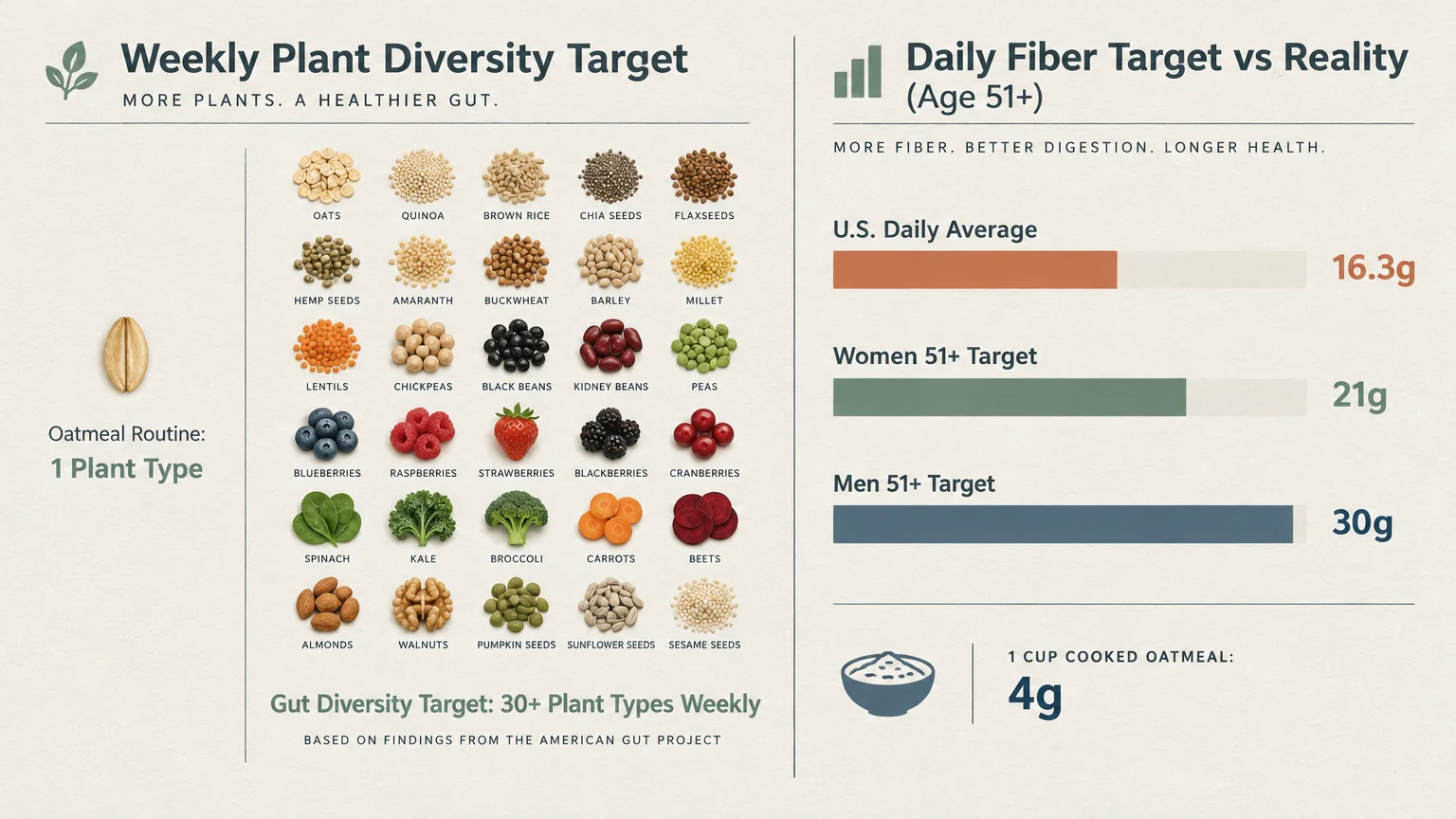
A single cup of cooked oatmeal provides 4 grams of fiber and 6 grams of protein. That makes oats a respectable start, yet relying on one grain leaves your gut microbes hungry for variety.
Your digestive tract hosts trillions of bacteria, and each species prefers different plant fibers. When you eat the same breakfast every morning, you feed the same small group of microbes while others dwindle.
Research from the American Gut Project at UC San Diego School of Medicine highlights how much variety matters. Analyzing 15,096 stool samples from 11,336 participants, researchers compared people eating more than 30 plant types weekly against those eating 10 or fewer.
The high-variety group showed richer microbiome diversity, higher levels of beneficial short-chain fatty acid producers like Faecalibacterium prausnitzii, and fewer antibiotic resistance genes. Adding new breakfast grains, berries, seeds, and beans is one of the easiest ways to reach that variety.
Most adults also fall far short on total daily fiber. According to the National Academies of Medicine, women aged 51 and older need 21 grams of fiber daily, while men 51 and older need 30 grams.
Yet national dietary data from the USDA shows American adults average just 16.3 grams of fiber per day. Women average 15.0 grams, and men average 17.7 grams.
Roughly 95 percent of U.S. adults miss their daily fiber targets, and data from the CDC shows only 1 in 10 adults meets federal fruit and vegetable quotas. That daily shortfall carries real consequences for long-term health.
A major meta-analysis in The Lancet linked the highest fiber intakes to a 15 percent to 30 percent lower risk of premature death and chronic disease. The largest drop in risk appeared at 25 to 29 grams daily, including a 16 percent lower risk of type 2 diabetes.
Intakes above 30 grams per day offered even stronger protection against heart disease, colorectal cancer, and breast cancer. Another national analysis published in September 2025 found that each 10-gram daily fiber boost lowered gallstone risk by 21 percent.
Federal nutrition guidance backs up this shift toward whole foods. The 2025–2030 Dietary Guidelines for Americans recommend 2 to 4 servings of fiber-rich whole grains daily while urging people to cut back on packaged, ready-to-eat breakfast foods.
Probiotic-rich foods add a second layer of morning gut support alongside fiber. In the Stanford School of Medicine FeFiFo trial, adults who built up to roughly six servings of fermented foods daily saw rising microbiome diversity and drops in 19 inflammatory blood proteins.
You do not need extreme diets to capture these benefits. By swapping plain oatmeal for diverse, whole-food breakfasts, you give your digestive system both the prebiotic fibers and live cultures it thrives on.
12 Gut-Healthy Breakfasts That Beat Plain Oatmeal
1. Chia Seed and Raspberry Yogurt Parfait
Chia seeds pack an astonishing punch in a tiny spoonful. Just 1 ounce—about 2 tablespoons—delivers 9.8 to 10 grams of fiber, more than double the fiber in a full cup of cooked oatmeal.
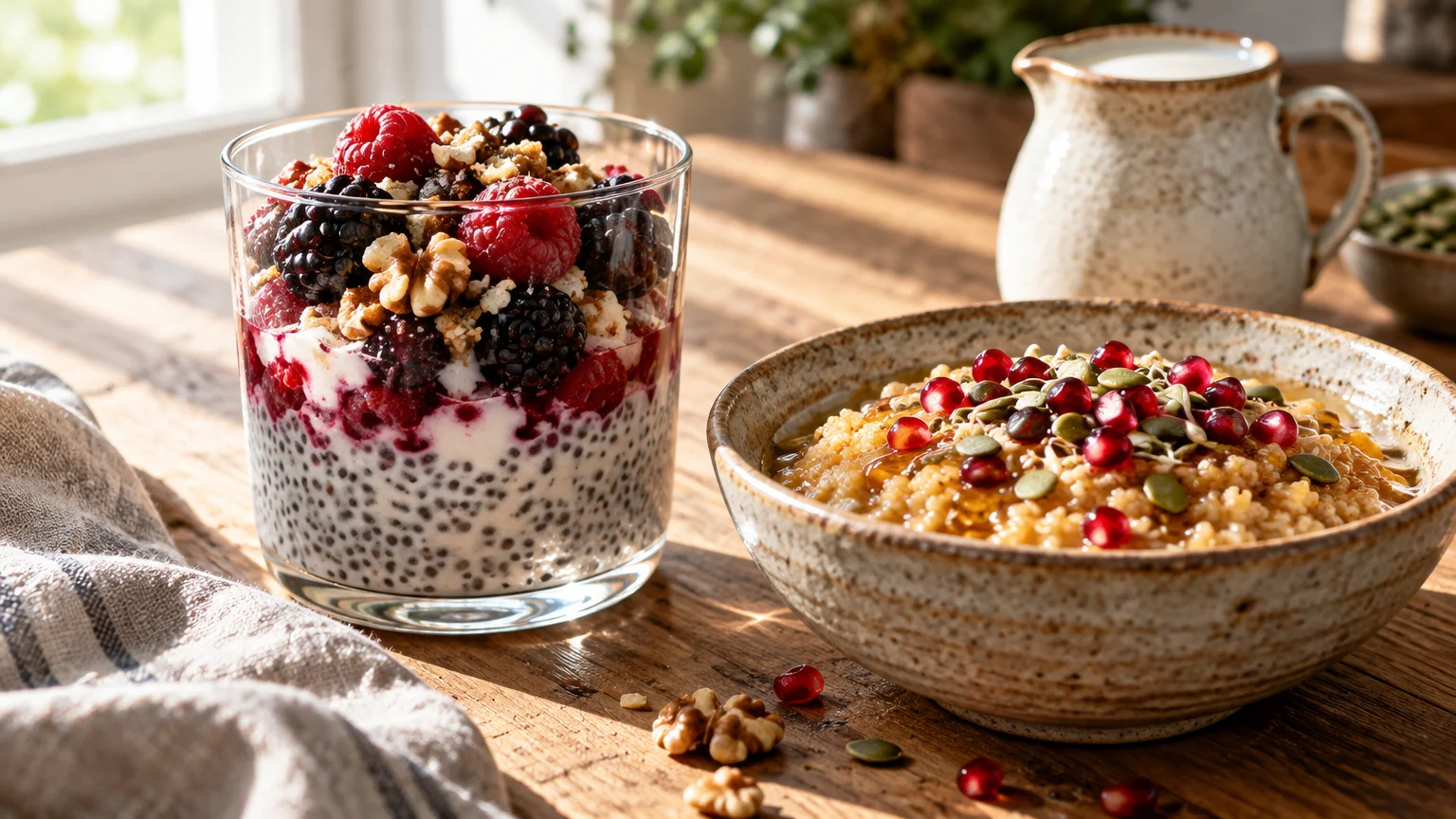
Stir 2 tablespoons of chia seeds into plain Greek yogurt the night before so the mixture thickens into a creamy pudding. Top your morning bowl with 1 cup of fresh raspberries for another 8.0 grams of fiber.
Plain yogurt supplies live probiotic cultures while the berries and seeds supply prebiotic fiber. Together, they create a chilled, naturally sweet parfait that needs zero cooking.
2. Kefir and Wild Blueberry Smoothie Bowl
Kefir is a tangy fermented milk drink teeming with diverse probiotic strains. Pour 1 cup into a blender with 1 cup of wild blueberries, which offer 6.2 grams of fiber per cup.
Blend in 1 tablespoon of ground flaxseed for an extra 2.8 to 3 grams of fiber and omega-3 fats. Pour the thick mixture into a bowl and sprinkle 1 ounce of sliced almonds on top for 3.5 grams of added fiber.
Keep frozen wild blueberries in your freezer so you can make this breakfast in five minutes year-round. You get fermented dairy, berry polyphenols, seeds, and nuts in one refreshing meal.
3. Savory Lentil and Spinach Scramble
Beans and lentils belong at breakfast just as much as they belong at dinner. Half a cup of cooked lentils provides 7.8 grams of fiber, while a full cup delivers 15 to 16 grams of fiber and 18 grams of protein.
Warm half a cup of pre-cooked brown or green lentils in a skillet with olive oil, garlic, and two handfuls of fresh spinach. Crack two eggs over the greens and scramble gently until set.
This savory plate keeps you full past lunchtime without a mid-morning energy crash. Cooked lentils keep well in the refrigerator for four days, making weekday assembly effortless.
4. Warm Quinoa Bowl With Pear and Cinnamon
If you crave something warm and cozy, quinoa mimics the comfort of oatmeal with better nutrition. One cup of cooked quinoa gives you 5 grams of fiber and 8 grams of complete plant protein.
Simmer quinoa in milk or unsweetened soy milk with a dash of cinnamon and vanilla. Top the bowl with a sliced medium pear—leaving the skin on—for an extra 5.5 grams of fiber.
Finish with a spoonful of roasted whole pumpkin seeds, which add 5.2 grams of fiber per ounce plus magnesium. Your morning bowl easily clears 15 grams of fiber while tasting like spiced dessert.
5. Avocado and Chickpea Whole-Wheat Toast
Upgrade standard toast into a powerhouse gut healthy breakfast by layering fiber-rich spreads. One slice of whole-wheat bread supplies 2 to 3 grams of fiber, giving you 4 to 6 grams for two slices.
Mash half a cup of canned, rinsed chickpeas with a fork, lemon juice, and black pepper. Half a cup of chickpeas provides 8.1 grams of fiber along with steady plant protein.
Layer half an avocado over your toast before spooning on the smashed chickpeas. Half a cup of avocado adds 5.0 grams of fiber and heart-healthy monounsaturated fats that keep saturated fat well below daily limits.
6. Fermented Cottage Cheese With Blackberries and Flax
Cottage cheese is enjoying a well-deserved comeback, especially cultured varieties that contain live active probiotics. Fermented cottage cheese was one of the exact foods linked to lower inflammation in the Stanford fermented-food trial.
Spoon a generous serving into a bowl and top it with 1 cup of blackberries for 7.6 grams of fiber. Dust the fruit with 2 tablespoons of ground flaxseed, adding roughly 4 grams of fiber.
Choose brands that list live active cultures on the ingredient label and keep added sugars out. This five-minute meal balances creamy protein with crisp, juicy fiber.
7. Sweet Potato, Black Bean, and Egg Hash
Replacing refined breakfast potatoes with sweet potatoes boosts beta-carotene and gut-friendly fiber at once. One medium sweet potato eaten with its skin provides 3.8 to 4 grams of fiber.
Dice the sweet potato into small cubes and roast or pan-sear until tender, then toss in half a cup of cooked black beans. Those black beans contribute 7.5 grams of fiber and slow-digesting resistant starch.
Top the warm hash with a fried or poached egg and fresh salsa. You get savory comfort, vibrant vegetables, and over 11 grams of fiber before ten in the morning.
8. Savory Pearled Barley and Mushroom Porridge
Pearled barley offers a pleasantly chewy texture that holds up far better than mushy instant oats. One cup of cooked pearled barley supplies 6 grams of fiber, including soluble fibers that nourish colon cells.
Cook a batch of barley in low-sodium vegetable or chicken broth instead of water. Stir in sautéed mushrooms, thyme, and a sprinkle of Parmesan cheese, then crown the bowl with a soft-boiled egg.
Savory grains also help you break free from sweet breakfast habits loaded with syrup or brown sugar. Leftover barley reheats cleanly with a splash of broth in under two minutes.
9. Buckwheat Groats With Spiced Apples and Almonds
Despite its name, buckwheat is not wheat at all—it is a naturally gluten-free seed prized for gut health. One cup of cooked buckwheat groats provides 6 grams of protein and prebiotic compounds that feed beneficial microbes.
Toast raw groats dry in a saucepan for two minutes before simmering them in water for nutty depth. Fold in one chopped medium apple with the peel left on for 4 to 5 grams of pectin-rich fiber.
Scatter 1 ounce of chopped almonds over the bowl for crunch and 3.5 grams of extra fiber. Apple skin pectin acts as a gentle prebiotic gel that supports smooth, regular bowel movements.
10. Farro Breakfast Bowl With Kimchi and Avocado
Farro is an ancient wheat grain with a hearty bite and impressive protein content. One cup of cooked farro delivers 11 grams of protein alongside slow-burning complex carbohydrates.
Warm cooked farro in a skillet and arrange it in a bowl with half a cup of sliced avocado for 5.0 grams of fiber. Add a generous forkful of crisp kimchi and a cooked egg on the side.
Kimchi introduces live lactic acid bacteria alongside garlic, ginger, and cabbage fibers. Never cook the kimchi directly in the hot pan, though, because high heat destroys its live probiotic microbes.
11. Teff Porridge With Pumpkin Seeds and Raspberries
Teff is a tiny Ethiopian grain with a mild, molasses-like flavor that cooks faster than steel-cut oats. One cup of cooked teff supplies 10 grams of protein, and even a quarter cup delivers 1.8 grams of fiber.
Simmer teff in water or almond milk for about 15 minutes, stirring occasionally until thick and glossy. Top with half a cup of raspberries for 4.0 grams of fiber and 1 ounce of roasted whole pumpkin seeds for 5.2 grams.
Because teff grains are so small, they require no soaking and feel gentle on sensitive teeth. This mineral-rich porridge delivers iron, calcium, protein, and crunch in every spoonful.
12. Mediterranean Chickpea and Sauerkraut Plate
Sometimes the best morning meal looks more like a light Mediterranean lunch plate. Combine half a cup of warmed chickpeas—providing 8.1 grams of fiber—with a drizzle of extra-virgin olive oil, lemon, and oregano.
Serve the chickpeas alongside a crisp scoop of refrigerated, unpasteurized sauerkraut and a slice of whole-wheat toast for 2 to 3 grams of extra fiber. Add sliced cucumbers or cherry tomatoes to round out the colors.
Refrigerated sauerkraut gives you raw fermented cabbage bacteria without the heavy sodium of processed deli meats. Look for jars in the chilled produce aisle rather than shelf-stable cans, which are pasteurized.

Signs Your Morning Routine Needs More Gut Support
Your digestive tract sends clear signals when your morning meals lack fiber and microbial variety. Sluggish or irregular bowel movements are often the first clue that your plate needs more intact plant fiber.
Mid-morning energy crashes and intense sugar cravings around ten o’clock point to another common culprit. Refined breakfasts—like white toast, pastries, or sugary boxed cereals—spike blood glucose quickly and leave you hungry an hour later.
You might also notice uncomfortable bloating after meals when your microbiome lacks diversity. A sparse bacterial community struggles to break down everyday foods smoothly.
Switching to balanced healthy breakfast alternatives often brings noticeable shifts within a few weeks. Many older adults report steadier morning focus, less bloating, and more predictable digestion.
You also build stronger long-term protection against metabolic and cardiovascular strain without counting every calorie. When breakfast delivers 8 to 15 grams of natural fiber alongside protein, the rest of your day falls into place effortlessly.
How to Easily Rotate These Breakfasts Into Your Week
You do not need to cook twelve different recipes from scratch every seven days. Smart batch cooking lets you enjoy variety in five minutes on busy mornings.
Pick one afternoon—such as Sunday—to cook a pot of quinoa, farro, or pearled barley. Store the cooked grains in airtight glass containers in your refrigerator for up to five days.
At the same time, rinse two cans of chickpeas and black beans so they sit ready to scoop. Keep a jar of chia seeds, ground flaxseed, and roasted pumpkin seeds right next to your coffee maker where you see them.
Build a simple weekly rhythm that alternates sweet and savory mornings. Try a chia berry parfait on Monday, lentil spinach eggs on Tuesday, warm apple buckwheat on Wednesday, and avocado chickpea toast on Thursday.
On Friday, blend a kefir wild blueberry smoothie bowl, then enjoy sweet potato black bean hash on Saturday. Finish Sunday with fermented cottage cheese and blackberries—seven mornings, zero monotony, and dozens of plant species.
Stock your freezer with raspberries, blackberries, and wild blueberries to save money and prevent spoilage. Frozen berries retain their fiber and antioxidants while costing far less per cup than off-season fresh clamshells.
When shopping for yogurt, kefir, sauerkraut, or kimchi, always check the refrigerated section and read ingredient labels carefully. Choose options with minimal added sugar and clear statements confirming live active cultures.
Store ground flaxseed inside your refrigerator or freezer after opening the bag. Its delicate healthy fats stay fresh longer in the cold rather than turning bitter in a warm pantry.

What to Consider Before Overhauling Your Morning Fiber
Jumping straight from 10 grams of daily fiber to 35 grams overnight almost guarantees gas and cramping. Your gut bacteria need time to multiply and adapt to heavier workloads.
Increase your morning fiber gradually by adding just one high-fiber ingredient every few days. Pair every fiber-rich breakfast with a full glass of water, herbal tea, or coffee so fiber moves smoothly through your digestive tract.
Whole foods outperform isolated fiber powders and bars for overall gut health. Guidance from the U.S. Food and Drug Administration notes that isolated added fibers—such as inulin or polydextrose—may not deliver the same benefits as intact plant fibers.
Food labels require at least 5 grams of fiber per serving to carry a high-fiber claim, based on a 28-gram daily reference value. Checking labels helps you spot genuine whole grains while avoiding sugary breakfast bars disguised with synthetic fiber.
Older adults taking daily medications should pay close attention to timing. Very large doses of fiber or fermented foods can occasionally affect how quickly certain thyroid, heart, or diabetes medications absorb.
If you manage irritable bowel syndrome, inflammatory bowel disease, kidney disease, or a compromised immune system, speak with your doctor or a registered dietitian before making big dietary changes. You can explore evidence-based guidance through the National Institutes of Health or find a qualified nutrition specialist via the Academy of Nutrition and Dietetics.
Frequently Asked Questions
How much fiber should adults over 60 aim for at breakfast?
Women aged 51 and older need 21 grams of total daily fiber, while men need 30 grams. Aiming for 7 to 10 grams at breakfast sets you up comfortably to hit your daily goal.
Are frozen berries as good for gut health as fresh berries?
Yes—frozen raspberries, blackberries, and wild blueberries are picked at peak ripeness and keep their full fiber and polyphenol content. One cup of raspberries still gives you 8.0 grams of fiber whether fresh or thawed.
What if fermented foods like kimchi or kefir upset my stomach at first?
Start with tiny portions, such as 1 tablespoon of sauerkraut brine or 2 tablespoons of kefir alongside a meal. Let your digestive tract adjust for a week before increasing the serving size.
Can I still eat oatmeal sometimes if I enjoy it?
Of course—oats contain valuable soluble beta-glucan fiber and remain a healthy choice. The goal is simply rotating other grains, beans, fruits, and fermented foods so your gut microbes receive wider nourishment.
Do I need a probiotic supplement if I eat fermented breakfasts?
Most healthy adults do not need daily probiotic pills when they regularly eat yogurt, kefir, kimchi, sauerkraut, or fermented cottage cheese. Whole fermented foods supply diverse live microbes alongside natural nutrients at a fraction of the cost.
Start Tomorrow Morning With One Simple Swap
You do not have to abandon oatmeal forever to build a thriving, resilient digestive system after 60. Trading even three oat mornings a week for quinoa, lentils, chia pudding, or fermented cottage cheese transforms the fuel your microbiome receives.
Pick just one recipe from this list to add to your grocery cart this week—perhaps a bag of frozen raspberries, a container of kefir, or a can of chickpeas. Cook one batch of quinoa or farro on Sunday so Monday morning feels effortless.
Track how your digestion, morning fullness, and steady afternoon energy respond over the next two weeks. Your taste buds—and your trillions of gut microbes—will thank you for the welcome change of pace.
This article is for informational purposes only. Consult with a healthcare provider before making significant changes to your diet, exercise routine, or supplement regimen.