Skip to content

9 Signs of Spinal Stenosis That Seniors Often Dismiss as Normal Aging

This article is for general information and is not a substitute for professional medical advice. Talk to a qualified health provider about your situation.

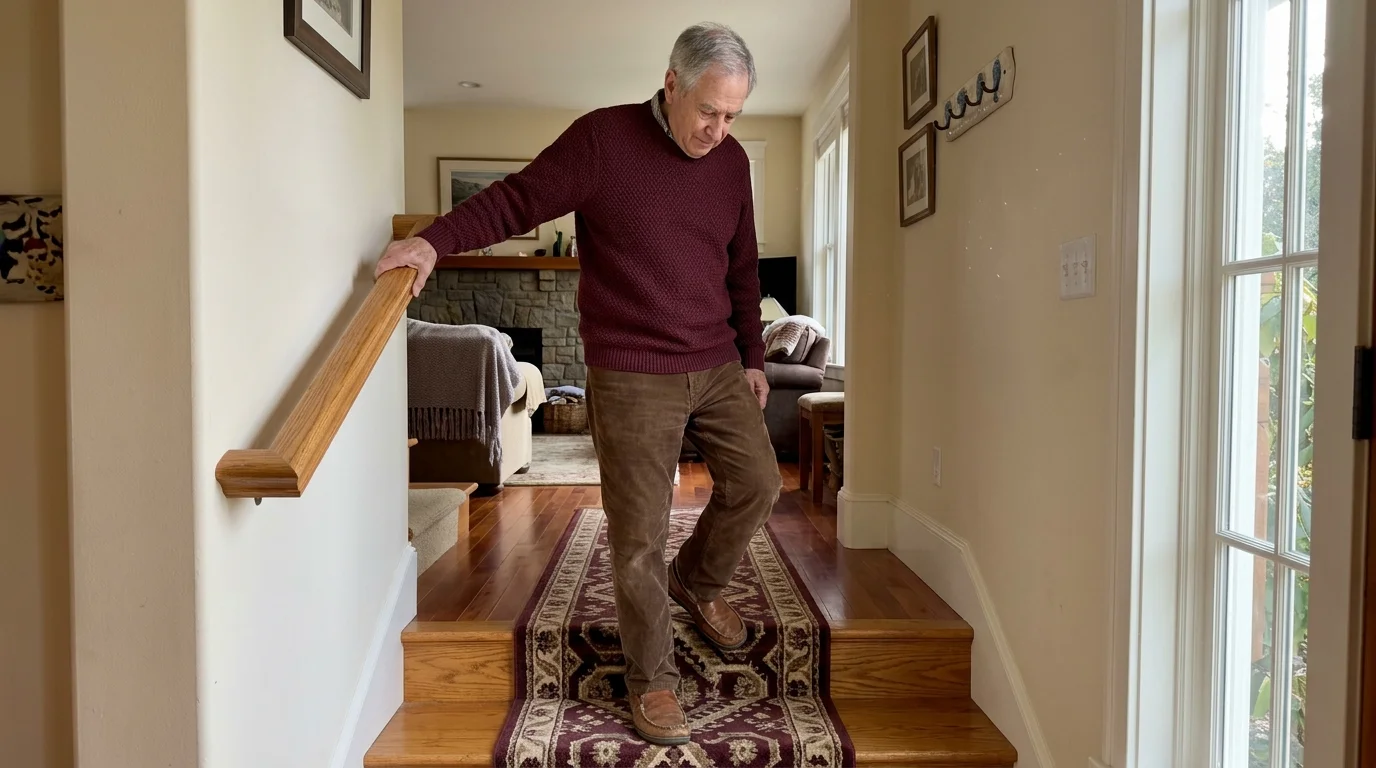
An older man holding a wooden handrail as he carefully steps down carpeted stairs inside a home.
Cervical spinal stenosis disrupts sensory signals from your legs to your brain, causing clumsy balance issues that heighten fall risks.

Sign 4: Subtle Balance and Coordination Issues

Tripping over flat rugs or feeling unsteady on your feet does not always stem from inner ear problems or failing eyesight. Cervical spinal stenosis, which occurs in the neck, can violently disrupt the proprioceptive signals traveling from your legs up to your brain. This sensory disconnect leaves you feeling uncoordinated or clumsy, significantly increasing your risk of a devastating fall. Do not write off your declining balance as a natural part of growing older when it might point directly to a compressed spinal cord.

Leave a Comment

Your email address will not be published. Required fields are marked *

Get the latest wellness insights

Practical health, nutrition and lifestyle reporting — in your inbox every week.

No spam. Unsubscribe at any time.