Understanding the Basics
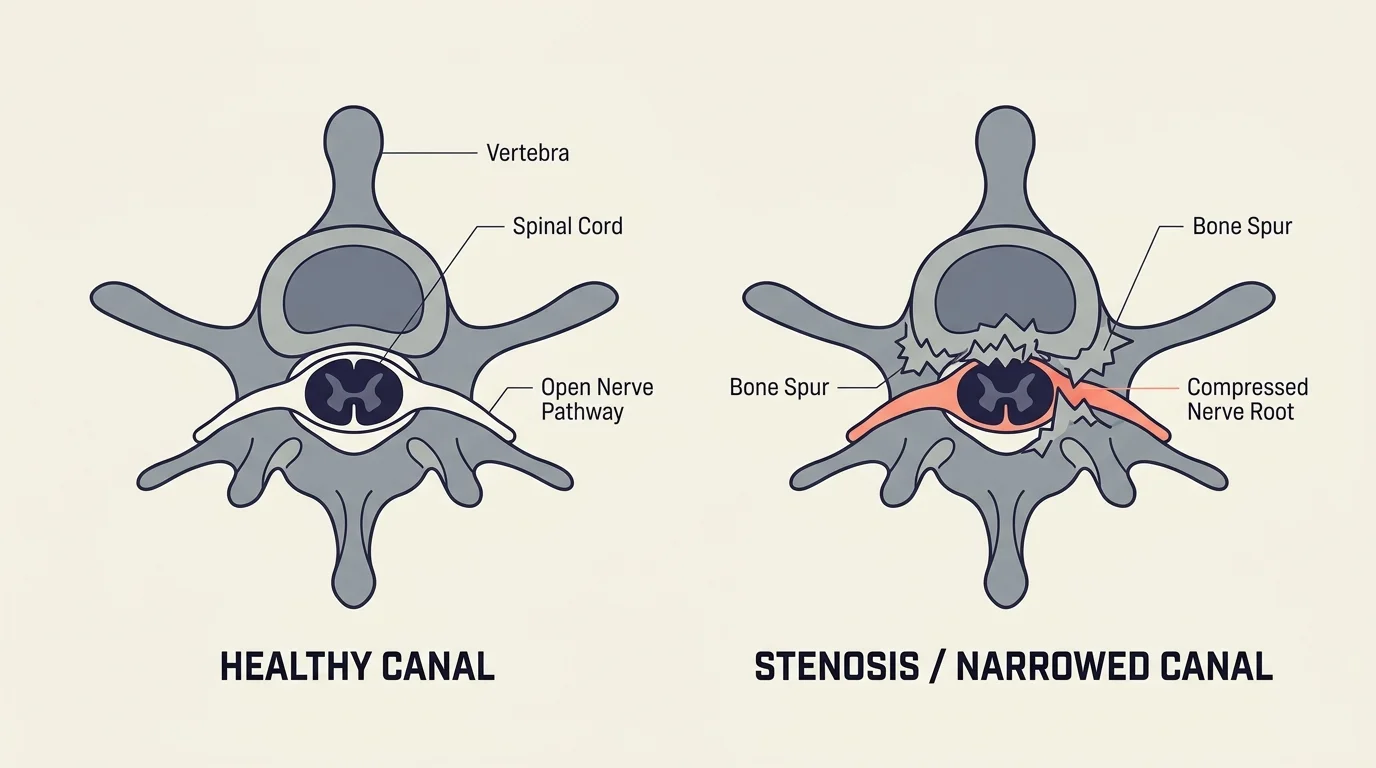
To grasp what spinal stenosis means for your body, you must first picture the intricate architecture of your spine. Your backbone is not a solid column of bone; rather, it is a stacked series of vertebrae forming a protective, hollow canal. This central tunnel houses your spinal cord, which acts as the main communication superhighway between your brain and the rest of your body. Smaller openings called foramina branch off from this main canal, allowing individual nerve roots to exit and travel down your arms and legs. When you have spinal stenosis, these vital spaces begin to shrink.
This narrowing does not happen overnight. Years of mechanical stress, degenerative disc disease, and osteoarthritis cause the cartilage between your spinal joints to wear away. In response, your body attempts to stabilize the spine by growing extra bone, known as bone spurs. These bony overgrowths intrude into the spinal canal or the foraminal openings, crowding the delicate nerves. Ligaments can also thicken and bulge into these spaces, further compounding the crowding effect inside your back.
The consequences of this structural bottleneck matter profoundly for your daily function. Nerves require ample space to transmit electrical signals and receive adequate blood flow. When bone or connective tissue compresses them, they become inflamed and dysfunctional, misfiring pain signals or failing to transmit sensory information correctly. This neurological traffic jam compromises your mobility, ruins your sleep quality, and depletes your overall vitality. Understanding the mechanics of this condition empowers you to advocate for better diagnostic testing and targeted therapies, rather than simply accepting discomfort as a mandatory phase of your senior years.