Understanding Kidney Function and Dietary Stress
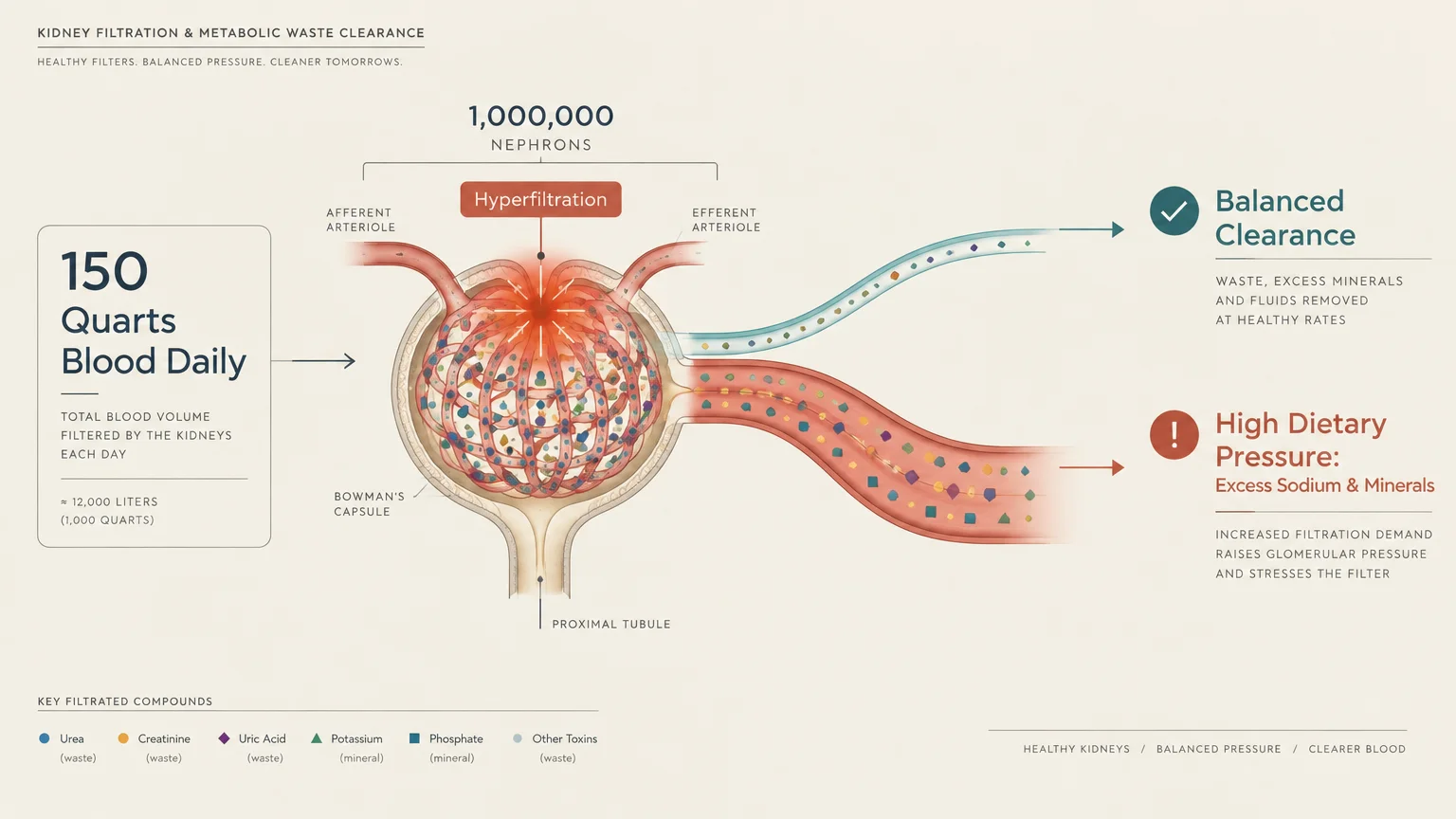
Your kidneys contain roughly one million microscopic filtering units known as nephrons. These intricate structures regulate systemic blood pressure, stimulate red blood cell production, and maintain mineral balance.
When kidneys function properly, they seamlessly eliminate metabolic byproducts while returning essential nutrients into circulation. Compromised kidneys struggle to clear waste, allowing toxic compounds to accumulate in the bloodstream.
According to data from the Centers for Disease Control and Prevention, approximately 35.5 million adults live with chronic kidney disease. Shockingly, nearly nine out of ten individuals remain completely unaware of their condition.
Kidneys lose operational capacity quietly over decades without presenting noticeable warning signs. Routine blood panels and urine tests remain the only dependable method for detecting early glomerular filtration changes.
Every food you eat breaks down into chemical constituents that pass across renal membranes. Excess sodium, concentrated minerals, and heavy protein loads force nephrons to filter under intense pressure.
This state of overwork, known clinically as hyperfiltration, accelerates scarring within fragile renal tissues. Adjusting your nutritional intake reduces this mechanical burden, effectively protecting your remaining kidney cells.