6. Sores or Wounds That Will Not Heal
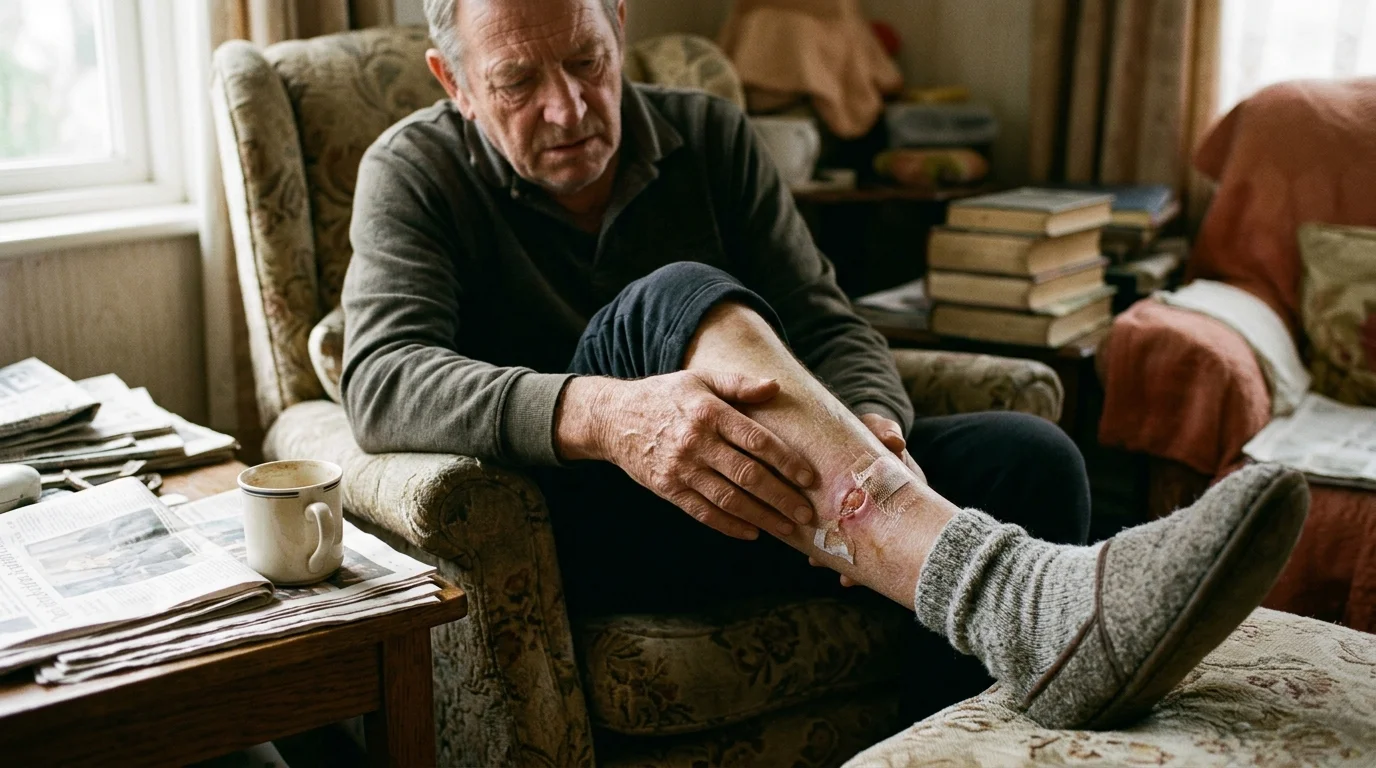
Your immune system utterly depends on your circulatory system to swiftly deliver specialized white blood cells, powerful localized antibodies, and massive amounts of vital oxygen to effectively heal cuts, scrapes, and blisters. When severe peripheral arterial disease completely barricades this biological delivery route, even the most microscopic, seemingly insignificant skin injury can rapidly spiral into a life-threatening medical crisis. You might develop an arterial ulcer—a highly dangerous, deeply painful sore that stubbornly refuses to close or heal over a period of several weeks.
These severe vascular wounds typically manifest on the extreme tips of your toes, directly under your heels, or strictly along the bony pressure points of your foot. Unlike venous ulcers, which frequently appear wet and irregularly shaped on the lower leg, arterial ulcers notoriously feature a very perfectly round, punched-out appearance. The base of the wound often looks pale, gray, or entirely blackened by dead tissue, and the sore rarely bleeds due to the catastrophic lack of underlying blood flow. You absolutely cannot afford to adopt a wait-and-see approach with a non-healing foot wound. Arterial ulcers invite massive bacterial infections that can swiftly aggressively penetrate down to the underlying bone, forcing surgeons into performing major limb amputations to save your life.