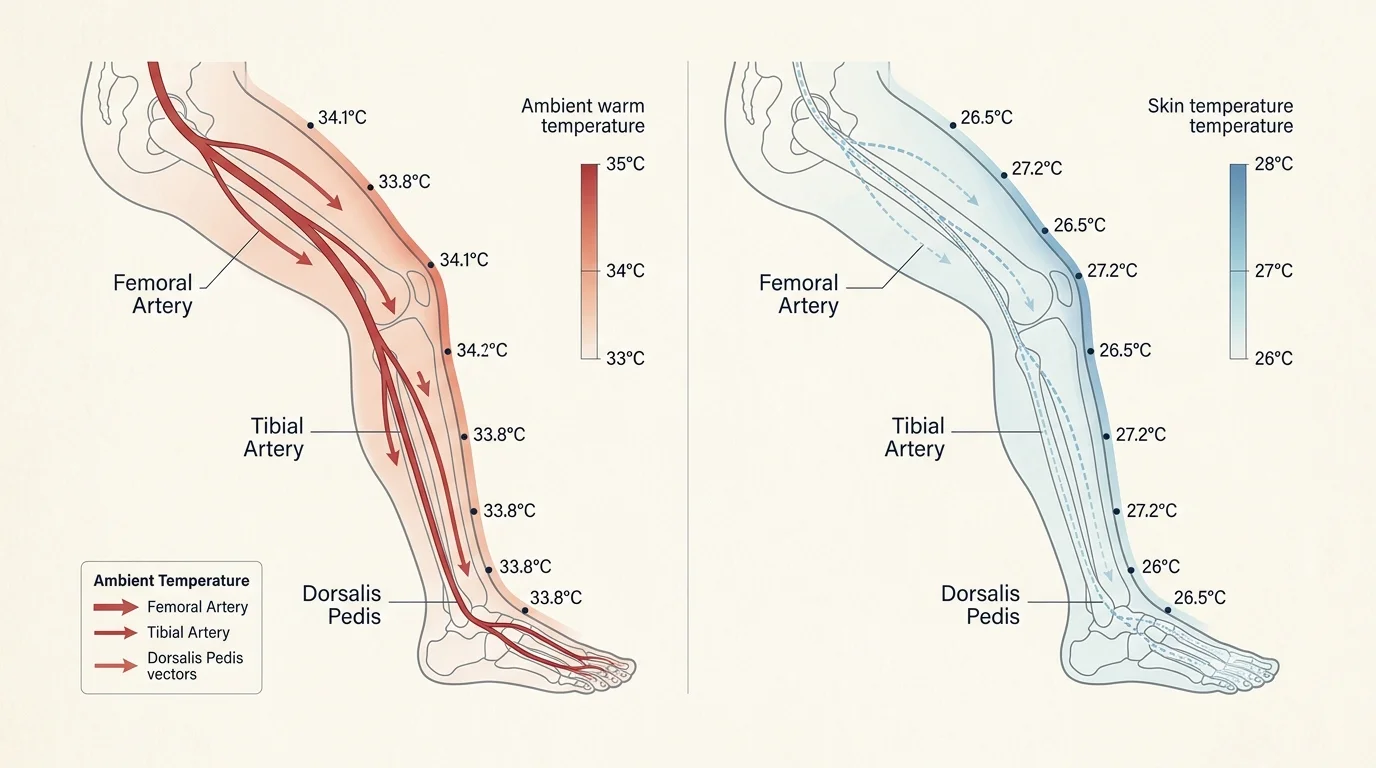
2. Noticeable Coldness in the Lower Leg or Foot
Your body relies heavily on healthy, robust blood circulation to regulate its internal temperature and keep your extremities comfortably warm. Blood essentially acts as a localized heating system for your tissues. When peripheral arterial disease strangles the blood flow to your lower extremities, you will begin to notice a distinct, persistent coldness in your affected foot or lower leg. This icy sensation completely defies the ambient temperature of your environment. You could sit in a well-heated living room wearing incredibly thick, insulated wool socks, yet your foot will remain stubbornly, uncomfortably cold to the touch.
You can easily test for this alarming symptom by simply feeling both of your feet simultaneously with the back of your hands. The back of the human hand possesses a high degree of temperature sensitivity. If one foot feels significantly colder than the opposite foot, or if your lower leg feels noticeably cooler than your upper thigh on the same side, you are actively observing a severe circulatory deficit. Seniors frequently dismiss cold feet as a harmless, natural quirk of growing older or attribute the chill to poor winter weather. However, localized, asymmetrical coldness serves as a direct, physical measurement of vascular failure. Putting on extra layers of clothing will never solve this problem because the chilling deficit originates from deep inside your starved arteries, not from the air around you.