4. Poor or Altered Toenail Growth
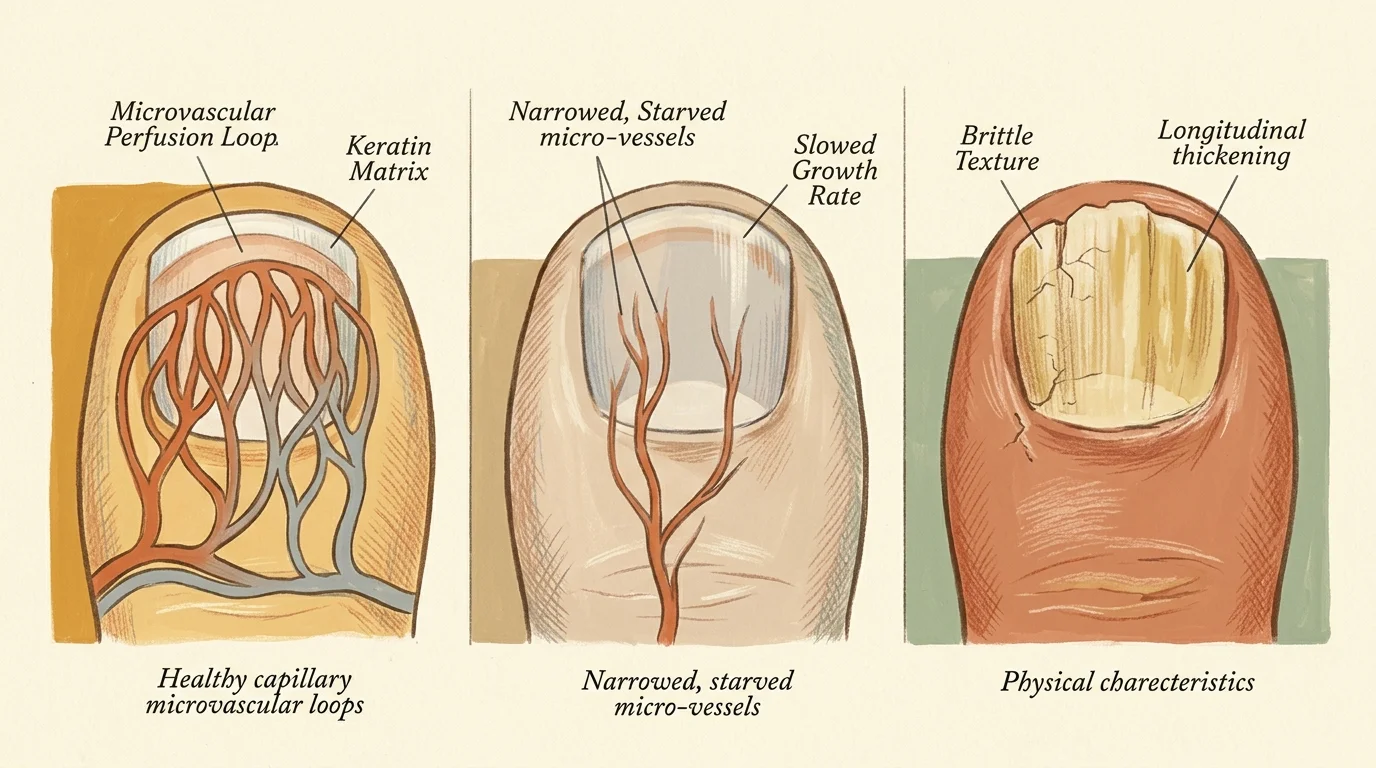
Healthy, vibrant toenail growth requires massive amounts of cellular energy, fueled directly by a steady, robust supply of oxygen-rich blood. When peripheral arterial disease systematically strangles the blood flow reaching your toes, your body ruthlessly initiates a strict biological triage system. It immediately diverts the severely limited oxygen supply away from non-essential cosmetic appendages to fiercely preserve more critical internal tissues. As a direct result of this triage, your toenails suffer extreme, visible malnutrition. You will quickly notice your nails growing incredibly slowly, requiring far fewer trimmings than they did in previous years.
Beyond the remarkably slow growth rate, the actual physical structure of the nail changes dramatically under vascular starvation. Your toenails may become excessively thick, unusually brittle, and notoriously difficult to cut cleanly with standard clippers. They routinely lose their natural, healthy pink hue, turning dull yellow, deeply opaque, or chalky white. Seniors frequently and dangerously mistake these severe vascular changes for a stubborn fungal infection. You might desperately spend months applying expensive, over-the-counter anti-fungal creams and lacquers without seeing a single ounce of improvement. Fungal treatments fail completely when the fundamental root cause involves deep arterial starvation rather than a localized surface infection. If you observe intense structural changes in your toenails accompanied by a grinding halt in general growth, you must urgently consider the internal health of your blood vessels.