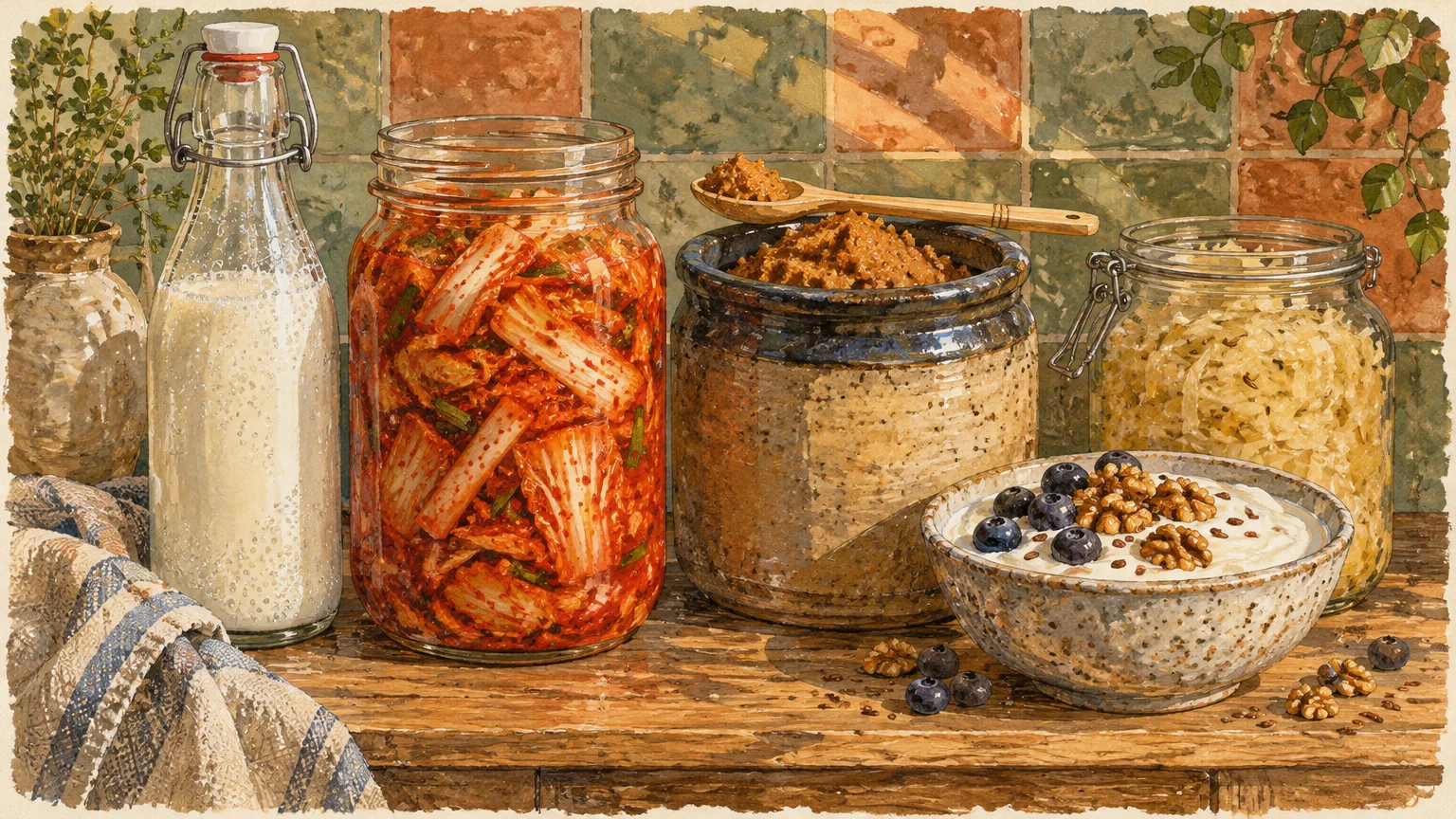
Swap expensive probiotic capsules for real fermented foods to nourish your gut, calm inflammation, and save money every month. Whole foods deliver diverse live bacteria alongside essential vitamins, minerals, and protein that pills simply cannot match.
As you age, maintaining a balanced digestive tract supports steady energy, smooth regularity, and strong immune defenses. Knowing which refrigerated staples actually contain live microbes helps you skip clever marketing traps at the grocery store.
You will discover ten powerhouse foods that serve as a practical probiotic supplements alternative, plus simple ways to enjoy them safely every day.
Why Gut Health and Fermented Foods Matter After 60
Your digestive tract hosts trillions of microbes that help break down food, produce key vitamins, and regulate immune responses. Keeping this internal ecosystem diverse becomes even more valuable as your body ages.
Many older adults reach for capsules hoping for quick relief, yet supplements are rarely a magic fix. A 2026 study in Clinical Gastroenterology and Hepatology analyzing federal survey data from 2009 to 2023 found probiotic supplement use surged 287% among adults over 20.
Even with that jump, supplement users still fell short of the recommended 14 grams of fiber per 1,000 calories. Without enough plant fiber, swallowed bacteria struggle to thrive once they reach your digestive tract.
Understanding basic labels also protects your wallet. According to the National Institutes of Health Office of Dietary Supplements, true probiotics are live microorganisms that provide a measurable health benefit when consumed in adequate amounts.
By contrast, an International Scientific Association for Probiotics and Prebiotics panel defines fermented foods as foods transformed by desired microbial growth. Not every fermented item carries clinically tested strains, yet whole fermented foods consistently nourish microbiome diversity.
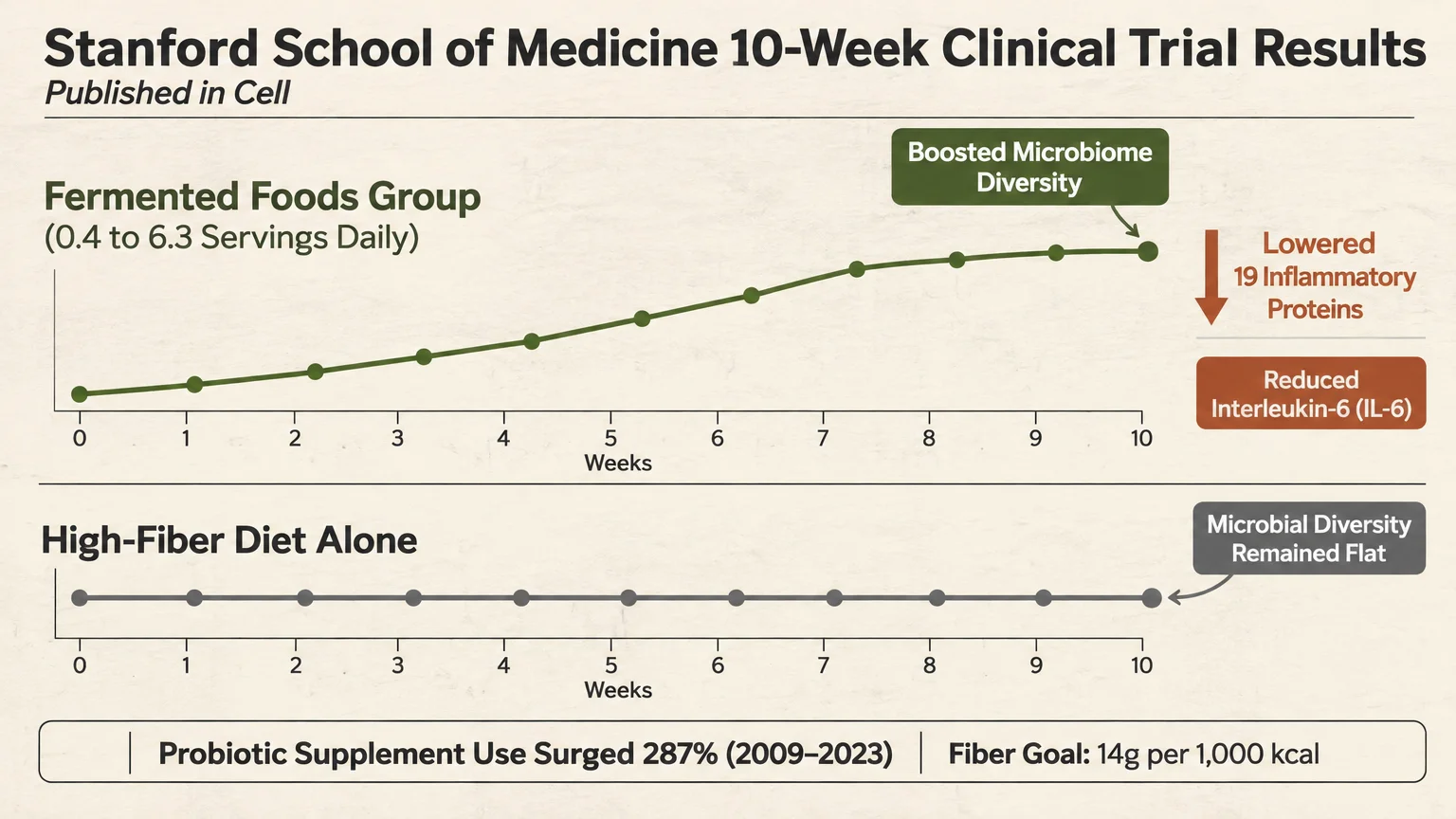
In fact, a July 2021 Stanford School of Medicine trial published in Cell showed remarkable benefits from whole foods. Healthy adults who increased fermented foods from 0.4 to 6.3 servings daily steadily boosted microbiome diversity over ten weeks.
Those participants also lowered 19 inflammatory proteins in their blood, including interleukin-6. Meanwhile, another group eating a high-fiber diet alone kept average microbial diversity flat during that same ten-week window.
Pairing natural probiotics with fiber-rich plants creates a powerful synergy for healthy aging. The 2025–2030 Dietary Guidelines for Americans explicitly advise combining fiber-rich meals with fermented choices like yogurt, kefir, sauerkraut, kimchi, and miso.
The Top 10 Probiotic-Rich Foods That Can Replace a Supplement
Shopping for gut health foods does not require hunting down obscure specialty items. These ten widely available options supply active cultures, culinary versatility, and real nutritional value.
1. Plain Yogurt with Live and Active Cultures
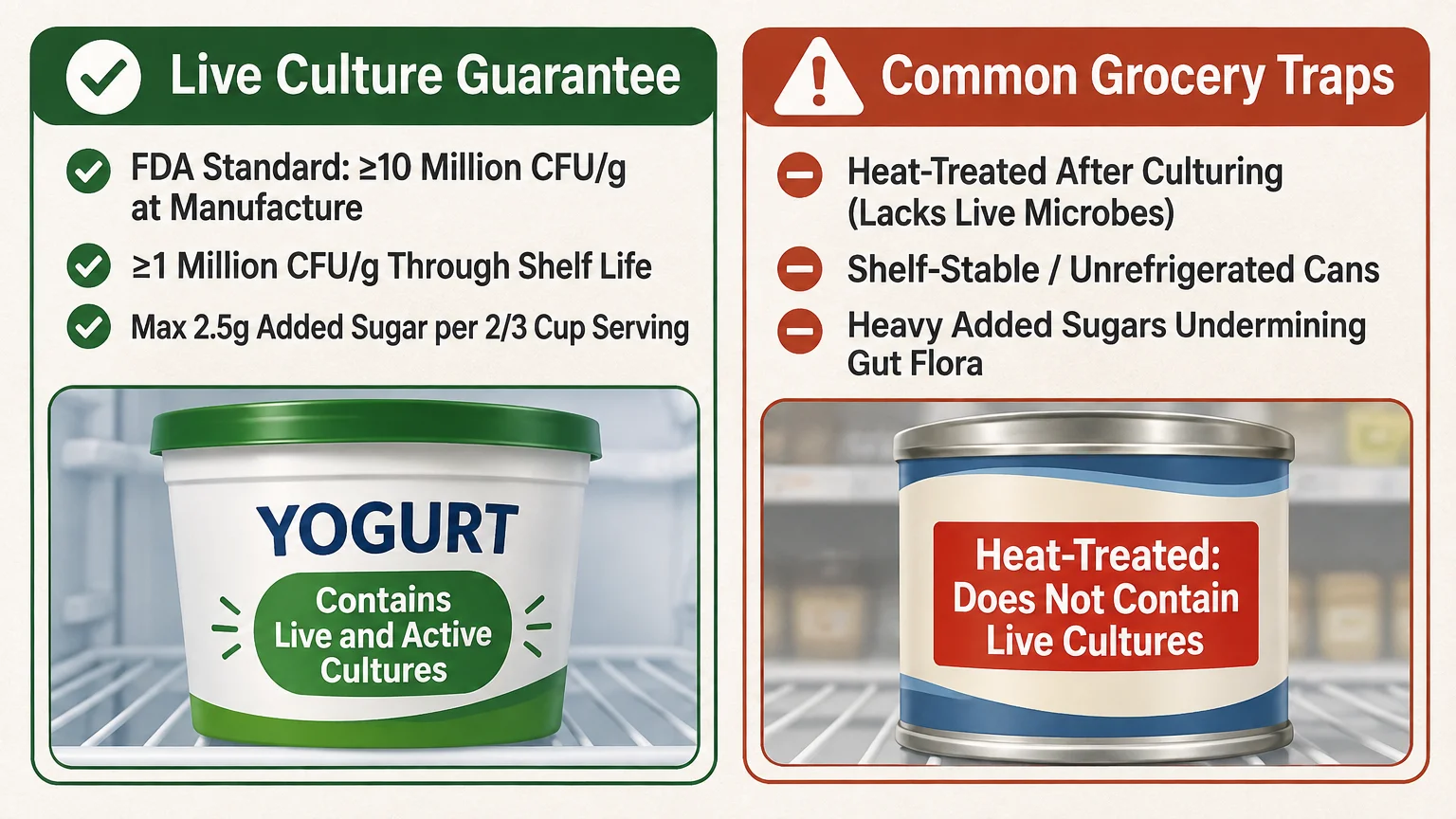
Yogurt remains one of the easiest natural probiotics to keep in your refrigerator. Under U.S. Food and Drug Administration rules effective January 1, 2024, yogurt claiming live and active cultures must contain at least 10 million colony-forming units per gram at manufacture.
Those labels must also maintain a reasonable expectation of 1 million colony-forming units per gram through shelf life. Heat-treated yogurts are legally required to state on the package that they lack live cultures.
Choose plain, unsweetened varieties to dodge heavy added sugars that undermine digestive balance. To meet federal healthy snack standards, yogurt cannot exceed 2.5 grams of added sugar per two-thirds cup serving.
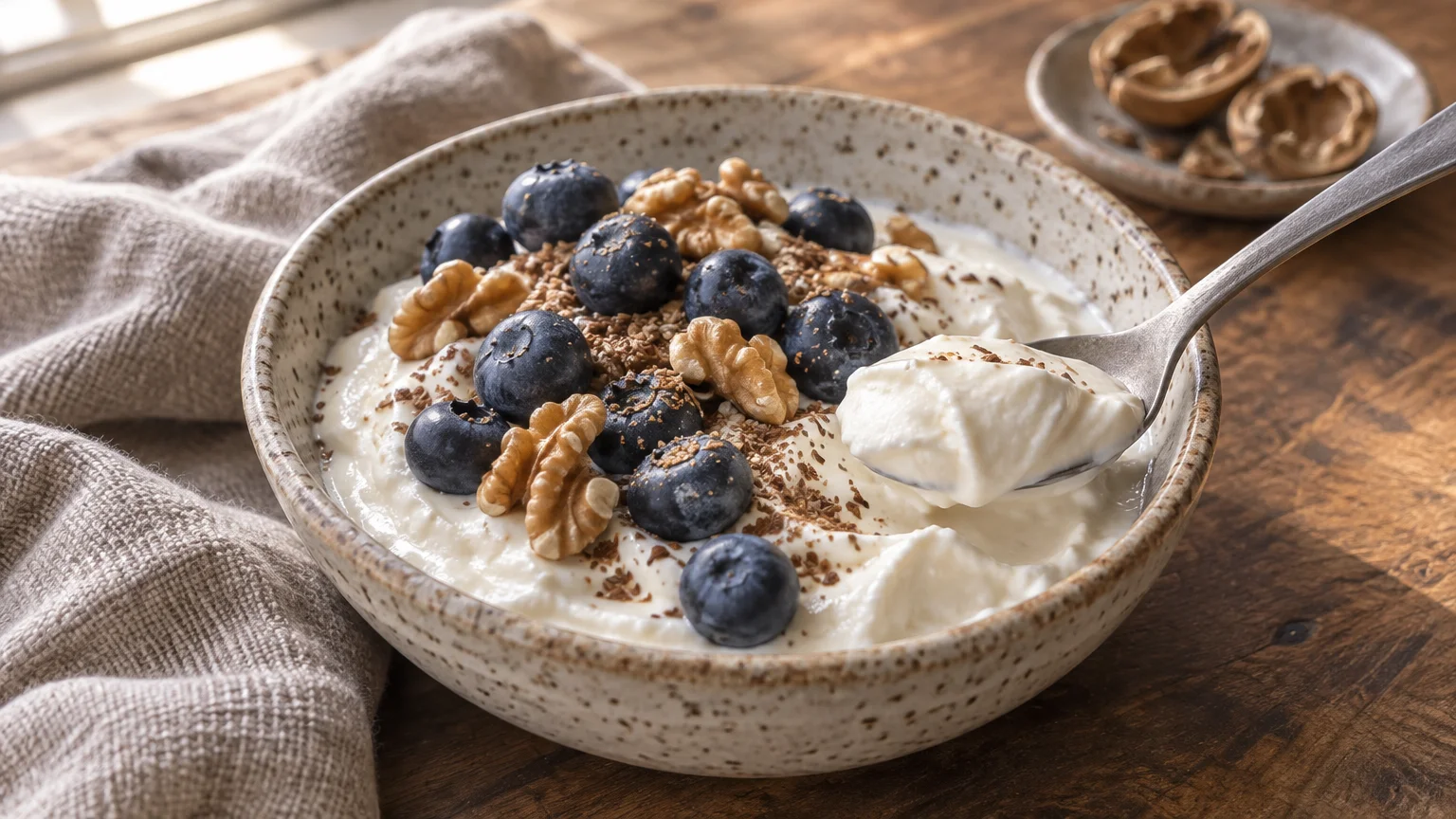
Top a 6-ounce bowl of plain Greek yogurt with fresh berries and toasted walnuts for breakfast. You get bone-supporting calcium, filling protein, and millions of helpful microbes in one simple dish.
2. Kefir
Think of kefir as a tangy, drinkable cousin to yogurt with an even wider cast of friendly bacteria and yeasts. Published food surveys show fermented dairy like kefir typically packs 10 million to 1 billion live microbes per gram.
A single 1-cup serving can deliver roughly 1 billion to 10 billion active microbes, rivaling standard daily capsules. A 2019 review indexed by the National Institutes of Health also highlighted randomized controlled trials showing gastrointestinal benefits from kefir.
Because kefir microbes break down much of the milk sugar during fermentation, many seniors with mild lactose sensitivity digest it easily. Plain dairy kefir and coconut-based kefir both work well in morning smoothies.
Pour 6 ounces of chilled kefir over rolled oats or blend it with frozen peaches for a refreshing snack. Never heat kefir on the stove, because high temperatures instantly wipe out its delicate cultures.
3. Unpasteurized Sauerkraut
Crisp, tangy sauerkraut is shredded cabbage fermented slowly in salt and water. While shelf-stable cans and jars are heat-pasteurized and void of living microbes, refrigerated raw versions burst with life.
Food surveys show unpasteurized sauerkraut contains anywhere from 1,000 to 100 million live microbes per gram. Randomized clinical trials have also linked raw sauerkraut consumption to meaningful digestive comfort.
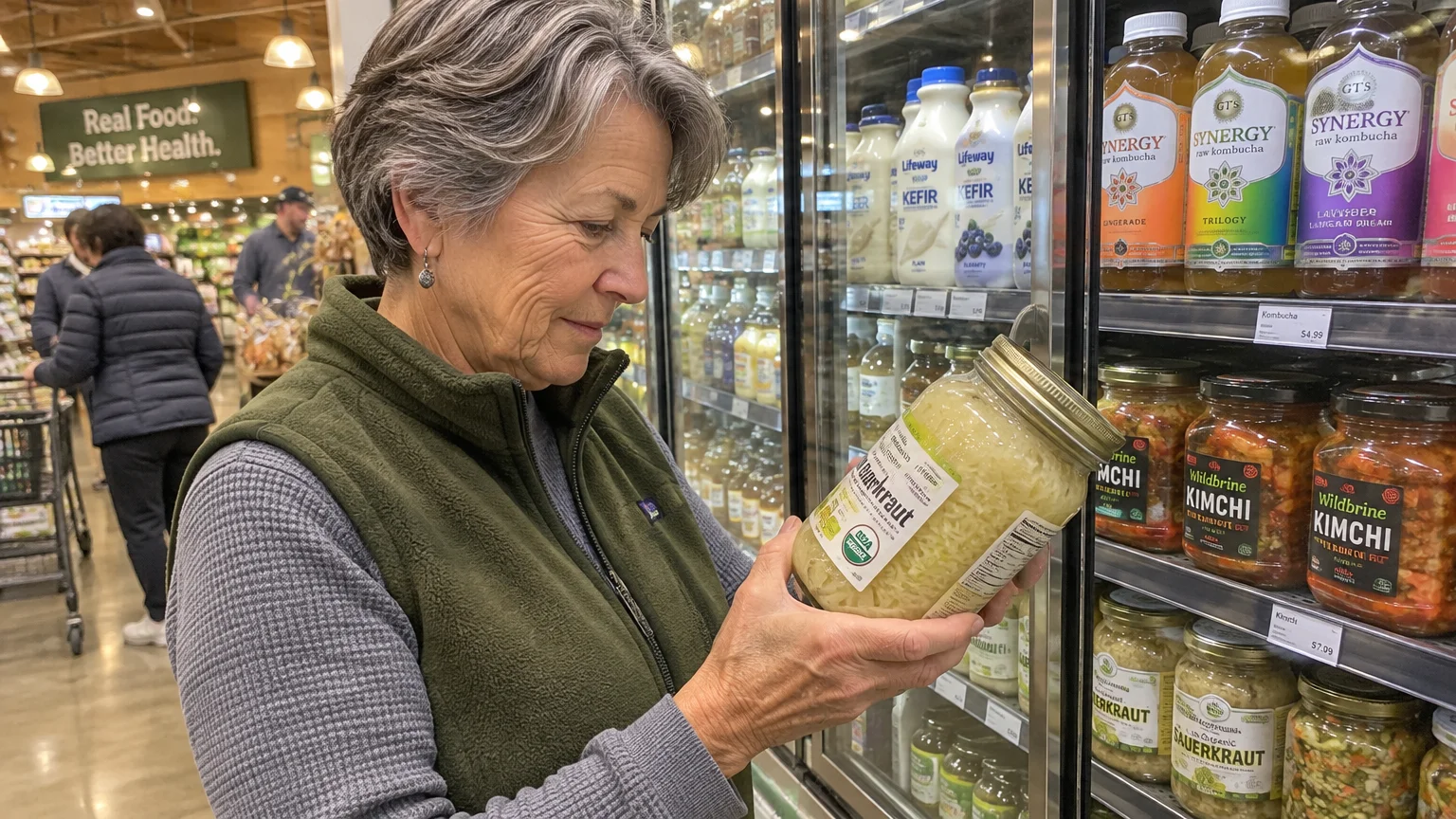
Check the refrigerated produce or deli aisle for jars labeled raw or unpasteurized, with only cabbage, water, and salt listed. Making your own batch at home costs under $2 per quart, making it an ultra-affordable probiotic supplements alternative.
Start with a quarter cup alongside roasted chicken, scrambled eggs, or a turkey sandwich. Rinse a portion briefly under cool water if you want a milder flavor and slightly less salt.
4. Kimchi
Kimchi brings bold garlic, ginger, and chili warmth to traditional Korean vegetable fermentation. Napa cabbage and daikon radish ferment together, creating a spicy staple packed with vitamins A and C alongside fiber.
Laboratory surveys show kimchi typically carries 10 million to 100 million live microbes per gram. That equals roughly 100 million beneficial microbes in every half-cup serving you spoon onto your plate.
Look for glass jars in the refrigerated section rather than canned varieties stored at room temperature. Mild white kimchi offers the same live bacterial perks without fiery red pepper heat if you prefer gentler flavors.
Toss a quarter cup of chopped kimchi into grain bowls, avocado toast, or cooled broth soups right before serving. Keeping it away from boiling pots preserves every active culture intact.
5. Fermented Cottage Cheese
Many shoppers assume all cottage cheese contains live microbes, yet most commercial brands skip active culturing or pasteurize the curds afterward. Fortunately, newer specialty brands inoculate their curds with live bacterial strains after cooking.
This cultured dairy staple counts as one of the core gut health foods studied in the 2021 Stanford University trial. A 6-ounce serving delivers abundant protein to protect aging muscles alongside gentle, creamy probiotics.
Inspect the ingredient panel closely for the phrase live and active cultures before placing a tub in your cart. Brands that add live microbes usually advertise specific strains clearly on the lid.
Pair a scoop of fermented cottage cheese with sliced tomatoes, cracked black pepper, and fresh basil for a fast lunch. It also spreads smoothly onto whole-grain toast topped with sliced cucumbers.
6. Miso
Miso is a savory Japanese paste created by fermenting soybeans with salt and a starter culture called koji. Even a small spoonful adds deep umami richness to dressings, marinades, and comforting broths.
Nutrition researchers typically count 1 tablespoon of miso as a practical daily serving. Choose unpasteurized refrigerated tubs of white, yellow, or red miso rather than dry soup packets that lack live cultures.
Because heat above roughly 115 degrees Fahrenheit destroys lactic acid bacteria, timing matters when cooking with miso. Always remove your soup pot from the burner and let the liquid cool slightly before whisking in the paste.
You can also blend 1 tablespoon of mellow white miso with olive oil, rice vinegar, and grated ginger. Drizzle that creamy dressing over steamed broccoli or baked salmon for an effortless flavor boost.
7. Kombucha
Kombucha is a lightly effervescent tea fermented using a symbiotic culture of bacteria and yeast. Many people enjoy its crisp, tart bite as a wholesome replacement for sugary afternoon sodas.
Under U.S. Alcohol and Tobacco Tax and Trade Bureau rules, commercial kombucha must stay below 0.5% alcohol by volume to remain a nonalcoholic grocery item. Refrigerated raw bottles preserve live microbes, whereas shelf-stable cans are often pasteurized or filtered.
Brewing kombucha at home drops the cost to roughly 25 to 50 cents per 16-ounce serving, compared with $4 to $5 for store-bought bottles. When buying ready-made bottles, scan the nutrition label carefully for added cane sugar or fruit juice.
Pour 6 ounces over ice with a squeeze of fresh lime for an afternoon pick-me-up. Sip it slowly at first if you are sensitive to carbonation or mild acidity.
8. Naturally Fermented Pickles
Most crunchy pickles sitting on unrefrigerated supermarket shelves are soaked in hot vinegar, which kills beneficial bacteria. Naturally fermented pickles skip vinegar completely and rely on saltwater brine to encourage lactic acid fermentation.
These cloudy-brine cucumbers deliver tangy crunch alongside live gut-friendly microbes. Look inside refrigerated deli cases for jars mentioning lacto-fermentation, raw brine, and zero vinegar on the ingredient label.
Notice the slight cloudiness inside the jar, which is a healthy sign of active microbial fermentation. A quarter cup of crisp sliced pickles makes a bright, satisfying side next to grilled fish or bean salads.
Do not pour out the leftover brine when the cucumbers are gone. Nutrition researchers even recognize small sips of fermented vegetable brine as a potent source of active cultures.
9. Natto
Natto is a traditional Japanese dish made from whole soybeans fermented with Bacillus subtilis. Although its sticky texture and earthy aroma take some getting used to, its nutritional profile stands out remarkably.
A 2019 National Institutes of Health-indexed review identified natto as one of the few fermented foods with randomized clinical trials backing gastrointestinal benefits. It is also famously rich in vitamin K2, which plays a vital role in supporting bone mineral density.
Find small frozen or refrigerated packs of natto at Asian grocery stores, and thaw them gently without microwaving. Stir the beans briskly with a splash of soy sauce and mild mustard to mellow their flavor.
Serve natto over warm brown rice or chopped scallions so the residual warmth enhances aroma without scorching the live bacteria. Start with a tablespoon or two until your palate adjusts.
10. Fermented Salsa
If pungent cabbage or tangy dairy does not appeal to your taste buds, fermented salsa offers a bright, familiar entry point. Raw tomatoes, onions, jalapeños, and cilantro ferment together in salt brine instead of vinegar.
Stanford nutrition researchers count just 2 tablespoons of fermented salsa as a full serving of fermented food. You get live lactic acid bacteria alongside heart-healthy lycopene from tomatoes and crisp plant fiber.
Check natural grocers for refrigerated tubs marked raw and naturally fermented, or stir up a jar on your kitchen counter in just a few days. Always double-check that vinegar is absent from the ingredient list.
Spoon fermented salsa over black bean tacos, baked potatoes, or morning omelets once they leave the skillet. You will brighten everyday meals while steadily nourishing your gut microbiome.
Benefits of Natural Probiotics and Signs Your Gut Needs Support
Switching to probiotic foods offers advantages that reach far beyond your stomach. When beneficial microbes flourish, they crowd out unwanted pathogens and strengthen the protective lining of your intestinal wall.
In the 2021 Stanford clinical trial, volunteers who added multiple servings of fermented foods daily saw measurable drops in 19 inflammatory proteins. Lowering chronic low-grade inflammation helps protect joints, blood vessels, and cognitive sharpness after 60.
Whole fermented foods also outshine pills in simple economics and nutrition. Multi-strain supplements frequently cost $20 to $60 every month, whereas store-bought raw fermented vegetables average roughly 50 cents per serving.
Moreover, fermented foods arrive naturally packaged with calcium, potassium, B vitamins, and prebiotic plant fibers. Capsules deliver isolated bacteria without the nutritional scaffolding your body expects from real food.
How can you tell when your digestive tract needs extra support? Frequent bloating after ordinary meals, sluggish bowel habits, or lingering digestive upset following a course of antibiotics often point toward an imbalanced microbiome.
A 2022 Journal of Nutrition analysis of federal dietary data found that only 26% of U.S. adults regularly eat high-microbe foods. Simply shifting one snack or side dish each day can move you into that healthier tier.
How to Easily Add Gut Health Foods to Your Daily Routine
Introducing too many fermented foods overnight can trigger temporary gas as your digestive microbes adjust. Nutrition researchers recommend starting with 1 small serving per day and gradually building to 2 or more servings as your body feels comfortable.
Use simple kitchen measurements so you never have to weigh food or guess portions. Researchers generally count 6 ounces of yogurt, kefir, fermented cottage cheese, or kombucha as one serving.
For stronger-flavored condiments, a quarter cup of sauerkraut, kimchi, or fermented pickles counts as a full serving. Just 1 tablespoon of miso or 2 tablespoons of fermented salsa hits the same target.
Protecting live cultures comes down to smart grocery habits and gentle handling at home. Follow three straightforward rules whenever you shop and cook.
First, stick to the refrigerated section for fermented foods, because canned or shelf-stable jars have been pasteurized. Second, read ingredient labels carefully to confirm there is no vinegar in pickles or salsa and minimal added sugar in dairy or tea.
Third, keep live microbes away from high heat. Because temperatures above roughly 115 degrees Fahrenheit kill lactic acid bacteria, stir miso, kimchi, or kraut into dishes after removing them from the stove.
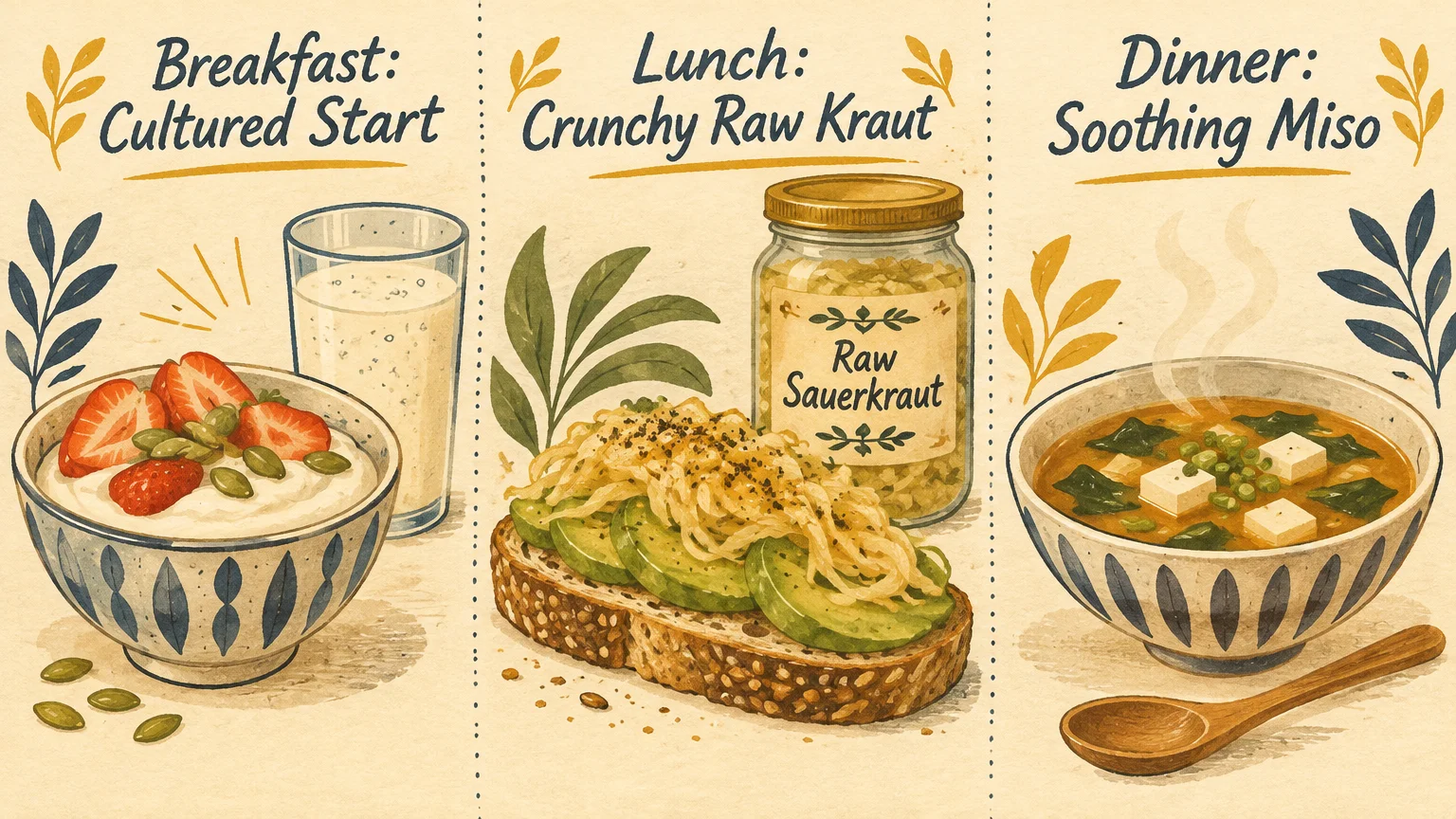
Here is how an effortless day of natural probiotics looks on a normal menu. Enjoy 6 ounces of plain yogurt topped with sliced berries and ground flaxseed for breakfast.
At lunch, top a green salad with roasted chicken, chickpeas, and 2 tablespoons of raw fermented salsa. For dinner, serve baked fish alongside steamed vegetables drizzled with cool miso-ginger dressing and a quarter cup of crisp sauerkraut.
You can explore reliable food safety and nutrition planning tools through the U.S. Department of Agriculture. Pairing these fermented staples with colorful vegetables, beans, and whole grains gives your friendly bacteria plenty of fuel.
What to Consider: Supplements, Medications, and Label Traps
While probiotic foods serve most healthy adults wonderfully, smart planning keeps you safe from hidden label pitfalls and medication conflicts. Knowing when to skip a supplement or ask your pharmacist makes all the difference.
First, look closely at what probiotic capsules actually promise. Typical daily supplements list 1 billion to 10 billion colony-forming units, and some specialty bottles boast 50 billion or more.
However, federal dietary supplement rules only require labels to list total microbial weight, which can legally include dead cells alongside live ones. Higher counts on a bottle do not automatically deliver stronger health results.
Even major medical guidelines urge caution with routine pills. In 2020, the American Gastroenterological Association reported insufficient evidence to recommend probiotic supplements for irritable bowel syndrome, Crohn’s disease, ulcerative colitis, or treating C. difficile infections.
Doctors conditionally recommend specific tested probiotic strains only in narrow situations, such as preventing C. difficile during antibiotic therapy or managing pouchitis. Federal health agencies offer no blanket recommendation for healthy adults to swallow probiotic pills daily.
Still, natural fermented foods carry a few important safety cautions for older adults managing chronic conditions. Watch sodium closely if you have high blood pressure, because half a cup of sauerkraut contains roughly 450 to 700 milligrams of sodium.
Kimchi, fermented pickles, and miso also pack significant salt, so balance them with fresh, unsalted produce throughout the day. Likewise, watch added sugars in flavored yogurts, sweetened kefirs, and fruity kombuchas, which can quietly spike blood sugar.
Medication interactions deserve special attention before you stock up on fermented staples. If you take monoamine oxidase inhibitor medications, tyramine in aged and fermented foods can trigger dangerous blood pressure spikes.
If you take the blood thinner warfarin, speak with your doctor before eating vitamin K-rich fermented foods regularly. Natto and sauerkraut supply notable vitamin K, which can alter blood-clotting test levels when intake fluctuates wildly.
Some people also experience histamine sensitivity when eating fermented foods. Because fermentation bacteria convert histidine into histamine, sensitive individuals may notice flushing, nasal congestion, headaches, or hives after eating sauerkraut or aged items.
Finally, if you have a severely weakened immune system or serious underlying illness, consult your healthcare team first. Both the National Institutes of Health and the National Center for Complementary and Integrative Health note rare risks of serious infection in severely immunocompromised individuals.
Working with a registered dietitian through the Academy of Nutrition and Dietetics helps you tailor fermented choices around kidney disease, heart medications, or food sensitivities safely.
Frequently Asked Questions About Probiotic Foods
Are probiotic foods really better than taking a daily supplement?
For most healthy older adults, whole fermented foods offer broader microbial diversity, extra vitamins, and far better value at roughly 50 cents per serving. Supplements remain helpful mainly when a doctor prescribes a targeted strain during antibiotic use.
How many servings of fermented foods should I eat each day?
Start slowly with 1 serving daily for the first week so your digestive system adjusts smoothly without excess bloating. Many nutrition researchers suggest gradually building up to 2 or more servings per day as tolerated.
Can I bake or cook with sauerkraut, miso, or yogurt and still get probiotics?
High cooking temperatures above roughly 115 degrees Fahrenheit destroy live lactic acid bacteria. You still gain flavor and fiber from cooked fermented dishes, so always stir raw sauerkraut, kimchi, or miso in after removing food from heat.
Why do some store-bought yogurts and pickles lack live bacteria?
Manufacturers often pasteurize jars after fermentation or soak pickles in hot vinegar to extend shelf life at room temperature. Always shop in the refrigerated section and check labels for raw, unpasteurized, or live and active cultures.
What happens if fermented foods give me gas or bloating at first?
Mild gas or temporary bloating is common during the first several days as new microbes interact with your existing gut bacteria. Cut your portion size in half for a few days, drink plenty of water, and increase slowly.
Simple Steps to Upgrade Your Gut Health This Week
Replacing pricey capsules with real fermented foods empowers you to take charge of digestion, inflammation, and grocery spending all at once. Small, consistent daily habits deliver far stronger results than sporadic mega-doses from a bottle.
Start this week by choosing just two refrigerated gut health foods you genuinely enjoy, such as plain Greek yogurt and raw sauerkraut. Add 1 small serving alongside a fiber-rich meal each day, and pay attention to how steady your digestion feels.
Next, scan your pantry and refrigerator labels to swap sugary flavored dairy or vinegar pickles for unsweetened, unpasteurized alternatives. Keep your meals colorful, keep live cultures cool, and let real food nourish your microbiome naturally.
This article is for informational purposes only. Consult with a healthcare provider before making significant changes to your diet, exercise routine, or supplement regimen.