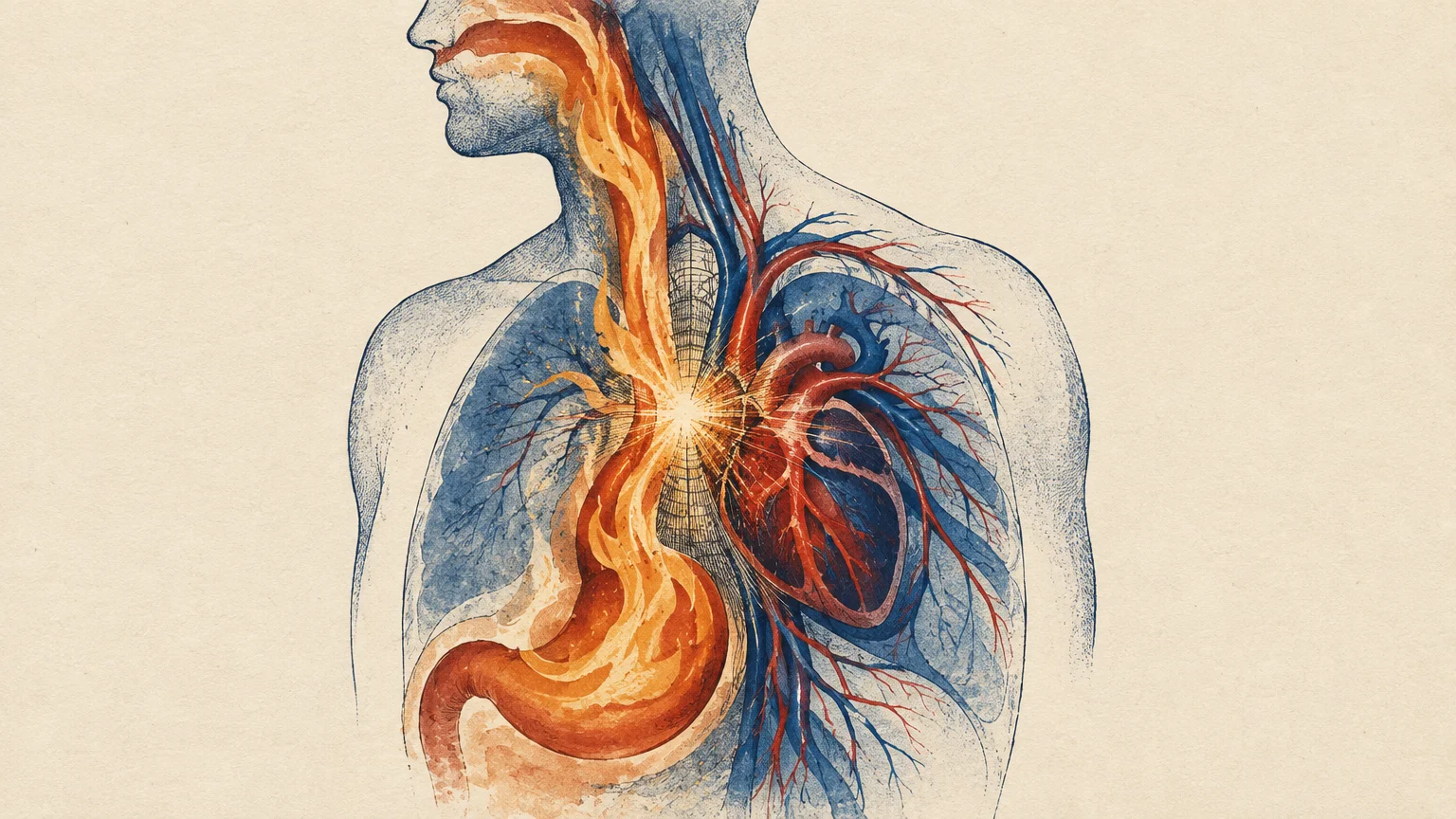
Telling the difference between severe heartburn and a heart attack can save your life. Because both conditions trigger identical internal nerve pathways, a burning chest sensation may signal either acid reflux or a life-threatening cardiac event.
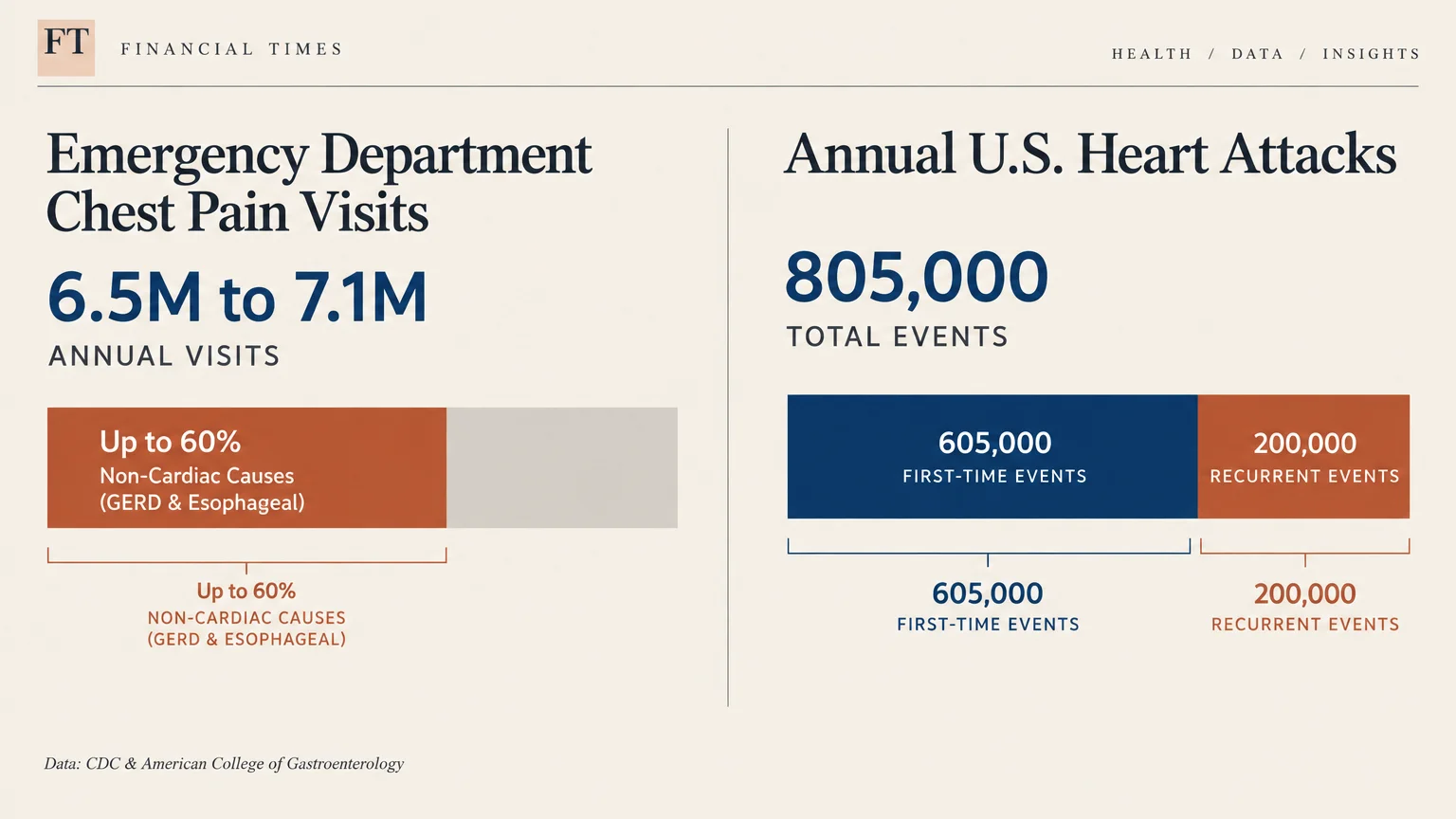
Chest pain sends over 6.5 million Americans to emergency departments every year. While more than half of these cases stem from non-cardiac causes like acid reflux, you should never guess the cause on your own.
Recognizing how gastrointestinal distress mimics cardiovascular trouble helps you act quickly when every second counts. Here is what you need to know about these deceptive, overlapping warning signs.
Understanding the Shared Physiology of Chest Pain
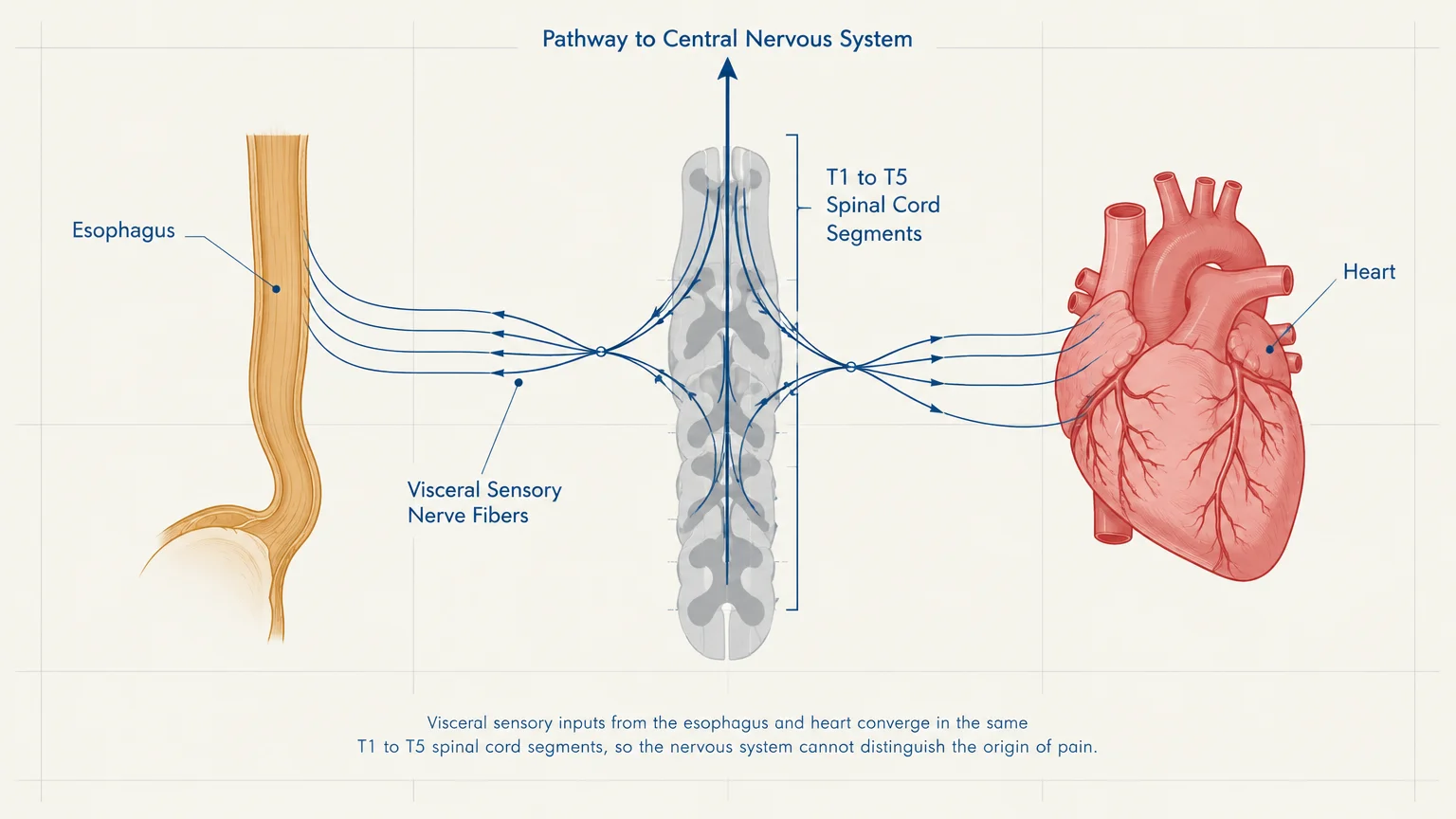
Your heart and esophagus sit close together inside your thoracic cavity. Because of this anatomical proximity, trouble in your food pipe often feels identical to trouble in your heart.
Both organs share an intricate sensory nerve network. Visceral sensory fibers from your heart and esophagus travel through the T1 to T5 segments of your spinal cord.
These nerve signals converge before traveling upward toward your brain. Consequently, your central nervous system struggles to distinguish whether pain originates in your coronary arteries or your digestive tract.
Data from the CDC shows that approximately 805,000 Americans suffer a heart attack annually. Roughly 605,000 of these cases are first-time events, while 200,000 occur in people who already survived one.
Meanwhile, emergency departments evaluate between 6.5 million and 7.1 million chest pain visits every year. Clinical research confirms that up to 60 percent of these urgent visits represent non-cardiac chest pain.
The American College of Gastroenterology notes that non-cardiac chest pain affects roughly 23 percent of adults. That equals nearly 69 million people across the United States.
Gastroesophageal reflux disease, or GERD, causes up to 60 percent of all esophageal-origin chest discomfort. When caustic acid escapes upward, it inflames sensitive nerve endings, producing severe retrosternal distress.
The 8 Heartburn Symptoms That Mimic a Heart Attack
When stomach acid breaches your lower esophageal sphincter, it generates sensations that closely imitate coronary ischemia. Below are eight specific symptoms where heartburn and cardiovascular emergencies collide.
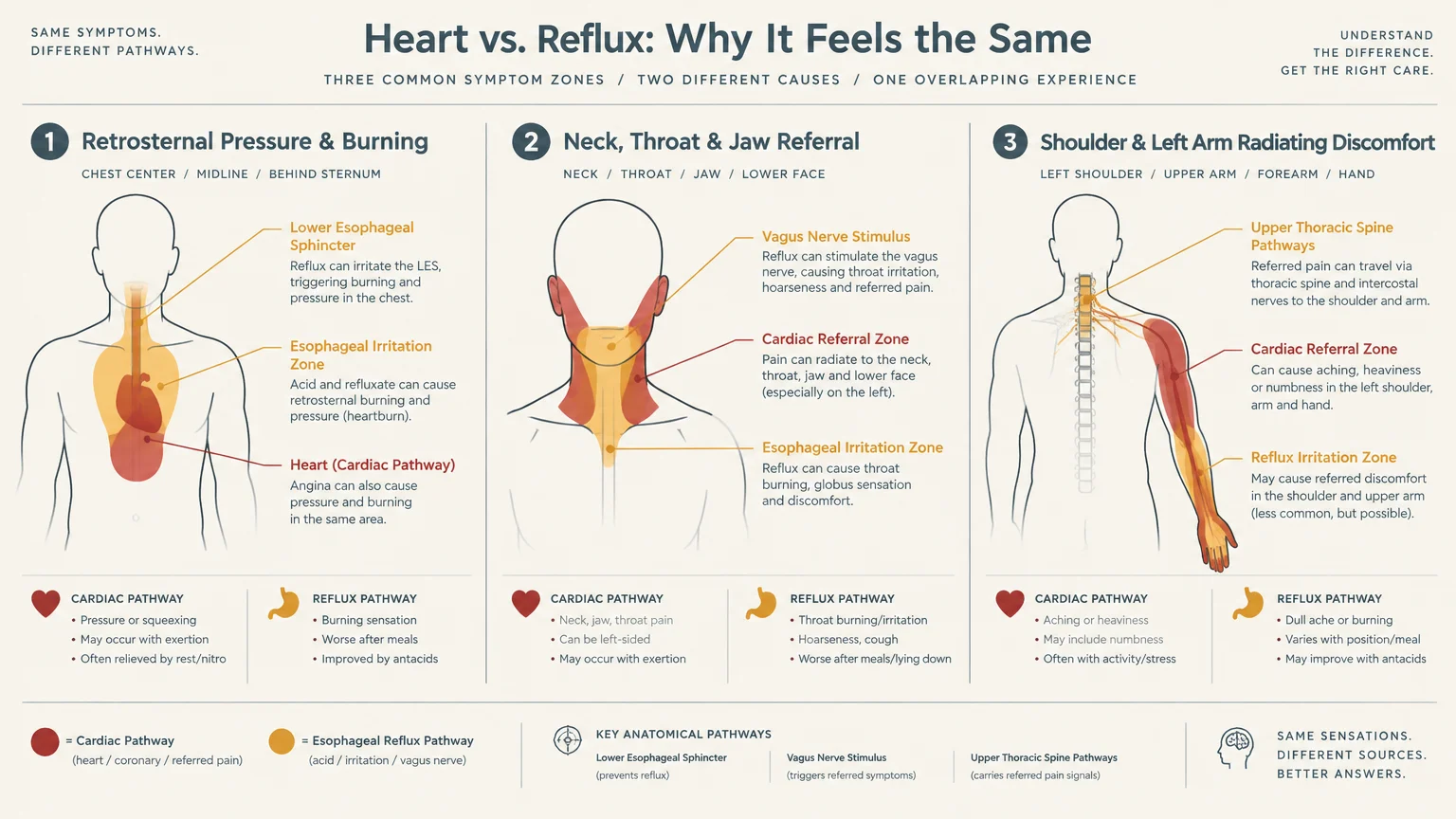
1. Severe Retrosternal Pressure and Burning
Classic heartburn produces a harsh, searing burn directly behind your breastbone. This irritation happens when acidic digestive juices scald the vulnerable lining of your esophagus.
Acute coronary syndrome can produce a virtually identical sensation in the exact same location. Many cardiac patients report feeling heavy retrosternal pressure, tight squeezing, or deep burning rather than sharp stabbing pain.
2. Pain Radiating into the Neck, Throat, and Jaw
Heart attacks frequently send pain upward into your neck, throat, and lower jaw. This referred pain occurs because your spinal cord processes sensory inputs from your heart alongside superficial cranial pathways.
Severe acid reflux triggers this exact same referral pattern. When rising stomach acid irritates your upper esophagus, it stimulates the vagus nerve, broadcasting sharp or aching discomfort straight into your jawline.
3. Discomfort Spreading to the Shoulders and Left Arm
Many people associate aching in the left shoulder and arm exclusively with heart attacks. Shared nerve pathways in the upper thoracic spine transmit cardiac distress down your inner arm.
Yet severe esophageal distension and acid irritation cause the very same radiating ache. When your esophagus reacts violently to acid, discomfort radiates outward across your shoulders and down your left arm.
4. Sudden Shortness of Breath and Chest Constriction
Shortness of breath is a major warning sign of an acute myocardial infarction. When an ischemic heart struggles to circulate blood effectively, pressure builds inside pulmonary vessels, restricting air exchange.
Gastroesophageal reflux can also impair your breathing through a mechanism known as bronchospasm. When acid fumes or microscopic droplets irritate your upper airway, your bronchial tubes constrict reflexively to protect your lungs.
5. Profuse Sweating and Cold Clamminess
Breaking out into an unexplained cold sweat is known clinically as diaphoresis. During a heart attack, your sympathetic nervous system activates in crisis mode, drenching your skin in cold perspiration.
Acute gastrointestinal distress triggers an almost identical autonomic nervous system surge. Severe esophageal spasms and intense reflux pain overwhelm internal nerves, leaving you pale, shaky, and covered in sudden sweat.
6. Nausea, Indigestion, and Abdominal Fullness
Digestive complaints often include sour stomach, upper abdominal fullness, and mild nausea. When acid builds up in your digestive tract, you naturally expect an upset stomach following a heavy meal.
However, an inferior wall heart attack frequently mimics an upset stomach. Because the lower surface of your heart rests against your diaphragm, cardiac irritation stimulates nerves right above your stomach.
7. Dizziness, Lightheadedness, and Sudden Fatigue
When a blocked coronary artery impedes cardiac output, blood flow to your brain drops rapidly. This temporary drop triggers profound dizziness, lightheadedness, or sudden, overwhelming physical exhaustion.
Acid reflux can also cause dizzy spells through vasovagal nerve stimulation. Intense esophageal inflammation stimulates your vagus nerve, causing your blood pressure and heart rate to fall abruptly.
8. Intense Esophageal Spasms Mimicking Angina
Distal esophageal spasms involve violent, uncoordinated muscular contractions of your food pipe. These contractions generate intense, crushing chest pressure that feels virtually identical to true cardiac angina.
The agonizing pressure can radiate backward between your shoulder blades or grip your entire ribcage. Both coronary arteries and esophageal walls contain smooth muscle tissue that constricts under physiological stress.

Key Considerations for Adults Over 60
As you age, your peripheral and autonomic nervous systems undergo gradual changes. Nerves become less responsive, which can blunt the sharpness of pain signals during life-threatening medical emergencies.
Consequently, older adults rarely experience the classic, crushing chest pain depicted in entertainment media. Instead, your heart attack symptoms might look like mild indigestion, breathlessness, or unusual fatigue.
If you manage type 2 diabetes, you face an even higher diagnostic risk. Diabetic autonomic neuropathy desensitizes internal nerve fibers, leading to silent myocardial ischemia without noticeable discomfort.
Under these circumstances, you might easily misinterpret a developing coronary occlusion as mild heartburn. You must treat any new, unfamiliar sensation in your chest or stomach with heightened caution.
Your digestive anatomy also alters as the decades pass. The muscular valve controlling your lower esophageal sphincter gradually weakens, allowing acid to splash upward into your food pipe more frequently.
At the same time, older adults produce less saliva, which normally helps neutralize stomach acid. With reduced natural defenses, acid reflux causes more severe mucosal inflammation and more pronounced spasms.
Prescription and over-the-counter medications can further complicate the picture. Many drugs taken by seniors irritate the stomach or relax the esophageal valve.
Nonsteroidal anti-inflammatory drugs taken for joint stiffness can erode your stomach lining. Blood pressure medications, such as calcium channel blockers, often relax your esophageal sphincter and exacerbate acid reflux.

The Dangers of the Antacid Test and Delayed Care
When sudden chest discomfort begins, many individuals immediately reach for chewable antacids or liquid remedies. They wait thirty to sixty minutes to see whether their discomfort subsides before calling a doctor.
Cardiologists strongly warn against using this so-called antacid test to evaluate chest symptoms. Relying on an over-the-counter medication to self-diagnose chest distress creates dangerous, life-threatening delays.
According to guidelines from the American Heart Association, medication relief cannot rule out acute coronary syndrome. Cardiac chest pain often waxes and wanes spontaneously during an evolving heart attack.
Furthermore, taking an antacid can provide a psychological placebo effect. That temporary sense of calm can easily fool you into believing your heart is out of danger.
In emergency medicine, clinicians follow the rule that time lost equals heart muscle lost. Irreversible myocardial necrosis begins within thirty minutes of total coronary artery occlusion.
A similar diagnostic trap occurs with sublingual nitroglycerin tablets. Nitroglycerin relaxes smooth muscle tissue throughout your body, including the muscular walls of your esophagus.
Because nitroglycerin can relieve esophageal spasms as effectively as it relieves angina, symptom relief proves nothing. You cannot use medication response to tell these two conditions apart safely.
What Clinical Guidelines and Health Organizations Say
Leading medical organizations maintain a unified consensus on evaluating unexplained chest pain. The National Institutes of Health advises that clinicians must always exclude cardiac causes first.
Emergency departments follow systematic protocols to eliminate life-threatening emergencies right away. Doctors screen for myocardial infarction, pulmonary embolism, and aortic dissection before considering gastrointestinal issues.
The 2021 AHA and ACC chest pain guidelines emphasize high-sensitivity troponin blood testing. Troponin is a specific protein released into your bloodstream whenever heart muscle cells sustain ischemic damage.
These modern assays detect minute cardiac cell death within an hour or two of symptom onset. This rapid biomarker screening allows doctors to confirm or exclude cardiac injury with extraordinary accuracy.
Gastrointestinal diagnostic tools, such as upper endoscopy and esophageal pH testing, take days or weeks to schedule. These non-emergent procedures belong in outpatient clinics, not in acute triage scenarios.
Clinical guidelines from the Mayo Clinic emphasize that non-cardiac chest pain is strictly a diagnosis of exclusion. You must complete a thorough cardiovascular examination before your doctor attributes chest distress to GERD.
Following these structured clinical guidelines saves lives every day. Establishing cardiovascular safety first gives your physician the clear foundation needed to address digestive disorders effectively.

Actionable Steps When Sudden Chest Discomfort Occurs
Facing sudden chest discomfort can feel frightening and overwhelming. Having a structured, rehearsed plan of action allows you to respond effectively and protect your health.
Call 911 immediately if you experience new, unexplained chest pressure, fullness, or pain. Never attempt to drive yourself to the hospital, and do not ask a neighbor to drive you.
Emergency medical service vehicles carry specialized cardiac monitors, defibrillators, and emergency medications. Paramedics begin life-saving care the moment they arrive at your home, transmitting your heart rhythm directly to hospital cardiologists.
While waiting for emergency responders, cease all physical movement immediately. Sit upright in a comfortable, sturdy chair to reduce strain on your heart and lungs.
Loosen tight clothing around your neck and chest to maximize airflow. Focus on slow, rhythmic breathing to keep your sympathetic nervous system as relaxed as possible.
Keep an updated printed list of your current medications, allergies, and emergency contacts on your refrigerator. Paramedics rely heavily on this information when deciding which acute therapies are safe for you.
Once emergency physicians evaluate your heart and rule out acute coronary syndrome, follow up with your gastroenterologist. A specialist can prescribe targeted acid reducers or recommend dietary changes to control reflux long-term.
Frequently Asked Questions About Heartburn and Heart Attacks
Can drinking water or milk stop heart attack chest pain?
Drinking water or milk will not relieve chest pain caused by reduced coronary blood flow. While cool liquids may wash stomach acid down your food pipe, they cannot restore oxygen to your heart muscle.
If chest discomfort disappears after drinking water, reflux may be responsible, but uncertainty remains. Never rely on dietary liquids to evaluate severe or recurring chest distress.
Does changing your body position distinguish acid reflux from a heart attack?
Positional shifts offer helpful clues, but they do not provide a foolproof diagnosis. Acid reflux often worsens when you lie flat or bend forward because gravity no longer keeps stomach acid down.
Cardiac pain typically persists regardless of whether you stand, sit, or lie down. However, unstable angina can occur at complete rest, meaning positional comfort does not guarantee safety.
Can severe acid reflux trigger an actual heart attack?
Acid reflux cannot directly cause a myocardial infarction or clog your coronary arteries. GERD remains a localized digestive problem involving stomach acid and esophageal tissue.
However, the severe pain and panic of an esophageal crisis can elevate your heart rate and blood pressure. For individuals with advanced coronary artery disease, that added cardiovascular workload can precipitate angina.
Why do women over 60 experience different heart attack symptoms than men?
Women frequently experience atypical cardiac presentations such as isolated nausea, jaw tightness, or deep fatigue without crushing chest pain. These subtle symptoms overlap directly with ordinary gastrointestinal distress.
Because women often lack textbook chest pressure, they frequently delay seeking emergency medical attention. Older women must treat sudden, unexplained upper-body aches with serious suspicion and prompt action.
How quickly should you seek medical care after chest pain starts?
You should seek emergency medical help immediately if unexplained chest discomfort lasts more than five minutes. Delaying treatment during an acute coronary event risks irreversible heart muscle damage.
Emergency departments can rapidly evaluate your cardiovascular status using non-invasive tools and blood tests. It is always safer to discover your pain was heartburn than to ignore a life-threatening heart attack.
Prioritizing Your Cardiovascular Safety
Living with frequent heartburn requires continuous vigilance, particularly as you enter your senior years. Understanding how closely gastrointestinal distress mirrors a cardiovascular event empowers you to respond decisively when symptoms strike.
Never let the fear of a false alarm prevent you from seeking emergency medical attention. Emergency teams prefer evaluating benign acid reflux over treating a delayed, complicated cardiac emergency every single time.
Treat every unexpected episode of chest tightness, burning, or pressure as a priority for professional evaluation. Taking rapid action protects your heart muscle, preserves your long-term independence, and safeguards your health.
This article is intended for informational and educational purposes only and is not a substitute for professional medical advice, diagnosis, or treatment. Always consult with a qualified healthcare provider regarding any health concerns or before making any decisions related to your health or treatment.