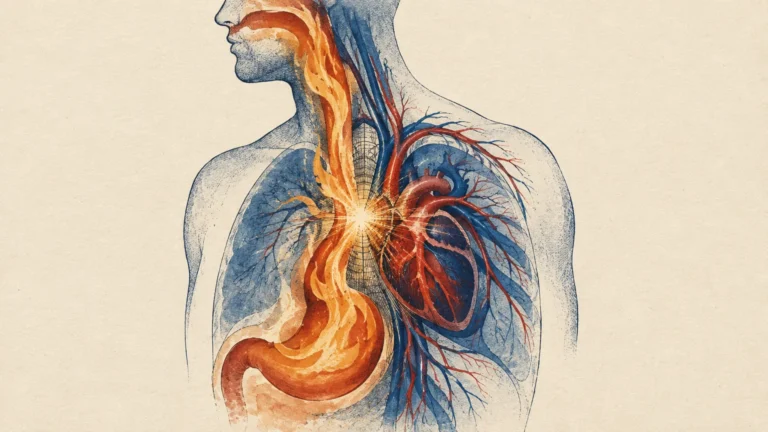
Chronic constipation does far more than make your stomach feel bloated and uncomfortable; it actively threatens your heart, brain, and kidneys. Protecting your long-term vitality after age 60 requires looking closely at how sluggish digestion impacts your entire body.
While many older adults dismiss infrequent bowel movements as a normal part of aging, recent medical breakthroughs reveal deep connections between your gut and distant organs. Addressing this hidden issue today gives you powerful control over your cognitive sharpness and cardiovascular wellness.
Below, you will discover the five surprising systemic health conditions linked to ongoing constipation and learn practical, gentle ways to restore your digestive rhythm safely.

Understanding the Basics of Chronic Constipation and Gut Health
Many people assume constipation simply means skipping a bowel movement for a day or two after eating a heavy meal. Clinicians, however, define chronic constipation as persistent difficulty emptying your bowels that lasts for several weeks or longer.
You do not have to experience complete blockage to suffer from this condition. Passing hard, dry, or lumpy stools, straining excessively on the toilet, or feeling like your rectum is never completely empty all qualify as chronic symptoms.
According to the 2025 World Gastroenterology Organisation Global Guideline and U.S. population surveys, chronic constipation affects 9% to 20% of the adult population globally and in the United States. Those numbers climb even higher as you enter your later decades of life.
Despite how common digestive health struggles are, silence surrounds the topic in most medical exam rooms. A nationwide U.S. survey published in the American Journal of Gastroenterology found that 62.4% of Americans with constipation—roughly 3 out of 5 people—have never discussed their symptoms with a healthcare provider.
Instead of seeking personalized medical guidance, the vast majority of sufferers try to manage the problem alone in the pharmacy aisle. That same nationwide survey revealed that 93.5% of individuals taking medication for relief rely solely on over-the-counter remedies.
Masking symptoms with store-bought pills ignores the underlying mechanics of gut health and leaves you vulnerable to wider complications. Your gastrointestinal tract is not just a passive waste pipe; it acts as a bustling chemical factory and signaling hub for your entire body.
When waste sits in your colon far longer than nature intended, the delicate balance of trillions of beneficial bacteria begins to shift. Medical researchers call this microbial imbalance dysbiosis, and it fundamentally alters what gets absorbed through your intestinal lining.
Stagnant stool allows harmful bacteria to ferment proteins and produce toxic metabolic byproducts that leak into your bloodstream. At the same time, ongoing physical straining places intense mechanical pressure on your blood vessels, nerves, and pelvic organs.
Recognizing these biological ripple effects transforms how you view your daily bathroom habits. Regular, comfortable digestion serves as a foundational pillar of healthy aging rather than a minor matter of daily convenience.
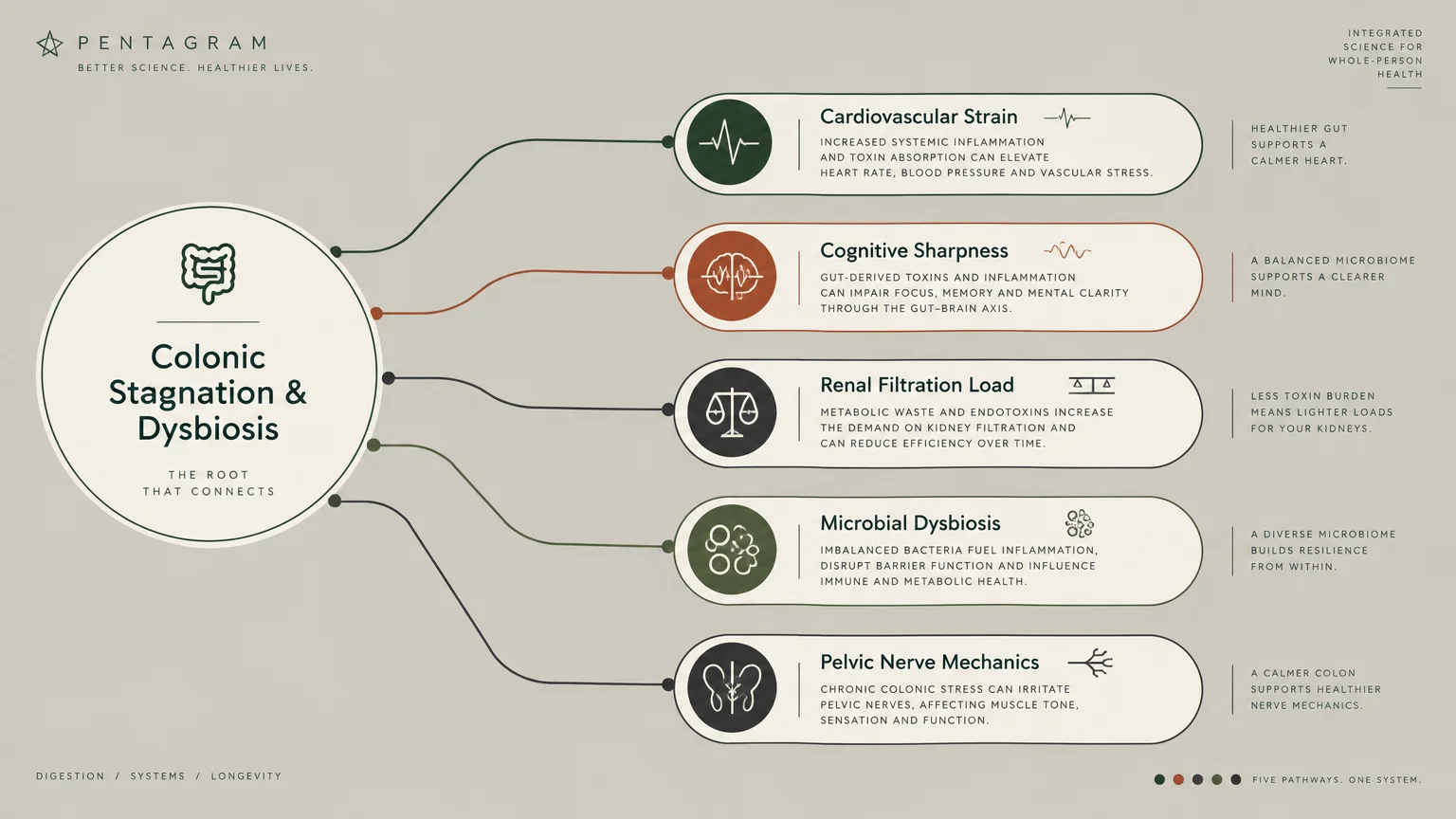
5 Surprising Health Issues Linked to Chronic Constipation
For decades, doctors viewed constipation complications primarily through a local lens, warning patients mostly about hemorrhoids, anal fissures, or fecal impaction. While those local issues remain painful and important to prevent, modern epidemiological studies paint a much broader picture.
Large-scale population research now demonstrates that chronic constipation health issues extend to your most vital organ systems. Examining the five science-backed connections below will help you understand why prompt, effective digestive care matters so much for your future.
1. Accelerated Cognitive Decline and Brain Aging
Your digestive tract and your brain communicate constantly through a bidirectional network of nerves, hormones, and biochemical signals known as the gut-brain axis. When your bowel motility slows down chronically, your brain health can suffer measurable consequences.
Groundbreaking research presented at the Alzheimer’s Association International Conference in July 2023 brought this connection into sharp focus. Researchers analyzed long-term health data from 112,753 adults participating in the Nurses’ Health Study and the Health Professionals Follow-Up Study.
The investigative team discovered that chronic constipation—defined in the study as having a bowel movement only every 3 or more days—was associated with significantly worse objective cognition. Specifically, the cognitive deficit equaled 3.0 years of additional chronological cognitive aging compared to adults who had daily bowel movements.
Furthermore, individuals dealing with chronic constipation faced 73% higher odds of experiencing subjective cognitive decline, meaning they actively noticed their own memory and thinking skills slipping. Protecting your memory requires paying attention to what happens at the other end of your central nervous system.
Scientists point to the gut microbiome to explain why infrequent bowel movements age the brain so rapidly. Individuals with slow colonic transit often lack specific beneficial gut bacteria that produce butyrate and other short-chain fatty acids.
These healthy fatty acids normally strengthen the blood-brain barrier and calm neuroinflammation—the chronic, low-grade brain inflammation tied to dementia. Without enough butyrate, inflammatory molecules travel from a sluggish gut through the bloodstream and irritate delicate neural tissue.
If you or a loved one are already monitoring mild memory changes, evaluating bowel frequency offers an actionable, modifiable target. Supporting smoother digestion helps nurture the microbial protectors that keep your thinking sharp as you grow older.
2. Cardiovascular Disease and Major Cardiac Events
Few people associate a difficult trip to the bathroom with heart trouble, yet your cardiovascular system reacts strongly to chronic bowel dysfunction. Both the physical act of straining and the systemic inflammation of gut dysbiosis place heavy burdens on your heart and arteries.
A major August 2024 study published in the American Journal of Physiology-Heart and Circulatory Physiology analyzed UK Biobank data from 408,354 individuals to measure this exact risk. The researchers found that people with constipation were more than twice as likely to experience a major adverse cardiac event—including heart attack, stroke, or heart failure—compared to those with normal bowel habits.
The cardiovascular danger proved especially pronounced for older adults already managing elevated blood pressure. Among individuals diagnosed with hypertension, also having chronic constipation increased their risk of suffering a subsequent cardiac event by 34%.
Even more recently, a December 2025 meta-analysis of 9 cohort studies encompassing over 3.6 million total participants in Frontiers reinforced these urgent findings. That comprehensive review confirmed that constipation is associated with a 10% increased risk of coronary heart disease overall and a 14% increased risk of myocardial infarction, commonly known as a heart attack.
Why does holding onto stool threaten your heart so severely? When you hold your breath and bear down hard on the toilet, you inadvertently perform what cardiologists call the Valsalva maneuver.
This intense physical straining spikes pressure inside your chest cavity, reduces blood return to your heart, and triggers a sudden, sharp surge in blood pressure. In older adults with stiffened arteries or underlying plaque, that sudden blood pressure spike can trigger abnormal heart rhythms or rupture a vulnerable arterial plaque.
Additionally, the vagus nerve regulates both your digestive motility and your heart rate. Impaired vagal nerve tone and circulating gut toxins accelerate atherosclerosis, making gentle, strain-free bowel movements an essential part of any heart-healthy lifestyle.
3. Chronic Kidney Disease and Renal Failure
Your kidneys work tirelessly around the clock to filter metabolic waste products and excess fluid from your bloodstream. When your large intestine fails to eliminate solid waste on schedule, your kidneys are forced to pick up the heavy biochemical slack.
A December 2024 longitudinal study of 118,020 participants from the UK Biobank, followed for a median of 7.4 years, highlighted this hidden gut-kidney axis. Investigators found that clinically diagnosed constipation is independently associated with a 51% increased risk—a Hazard Ratio of 1.51—of developing incident chronic kidney disease.
These findings echo an earlier landmark study in the Journal of the American Society of Nephrology that tracked over 3.5 million U.S. veterans. In that massive cohort, constipation was linked to a 13% higher likelihood of developing chronic kidney disease and a 9% higher likelihood of progressing to end-stage kidney failure.
Furthermore, the veteran study noted that more severe constipation correlated directly with a faster decline in kidney filtration rates over time. The biological culprit behind this renal damage is the accumulation of uremic toxins born in a stagnant colon.
When protein remnants sit in a constipated gut, altered bacteria ferment them into toxic compounds such as p-cresyl sulfate and indoxyl sulfate. These toxins cross the intestinal wall, enter the liver and bloodstream, and must be filtered out exclusively by your kidneys.
Over months and years, high levels of these gut-derived uremic toxins trigger oxidative stress and scarring inside the tiny filtering units of your kidneys, called nephrons. Keeping your bowels moving steadily reduces this toxic load and helps preserve your vital kidney function for decades to come.
4. Depression and Anxiety Disorders
Living with persistent abdominal cramping, bloating, and unpredictable bathroom habits takes an undeniable emotional toll on your daily happiness. However, the link between chronic constipation and mental health runs much deeper than situational frustration; it is hardwired into your biology.
A 2026 large-scale meta-analysis published in Translational Psychiatry evaluated 18 observational studies involving over 730,000 participants to quantify this psychological connection. The analysis revealed that individuals with chronic constipation have roughly double the likelihood of experiencing depression, showing a pooled odds ratio of 2.08.
Similarly, a November 2024 study in BMC Gastroenterology analyzing 11,760 adults from National Health and Nutrition Examination Survey data found that major depression was associated with a 91% higher risk—an Odds Ratio of 1.91—of chronic constipation. By using Mendelian randomization, researchers also confirmed a direct genetic causal link between major depressive disorder and constipation.
Anxiety disorders follow a strikingly similar pattern among patients struggling with sluggish digestion. Clinical estimates show that anxiety rates exceed 30% in chronically constipated patients, compared to 19% in the general population.
This two-way street exists because the vast majority of your body’s serotonin—a critical neurotransmitter that stabilizes mood and promotes feelings of well-being—is produced right inside your gastrointestinal tract. In the gut, serotonin also acts as the primary chemical spark plug that tells intestinal muscles to contract and move food forward.
When gut serotonin signaling falters or microbiome changes disrupt tryptophan metabolism, both your mood and your bowel motility stall simultaneously. Stress hormones like cortisol further divert blood flow away from your digestive organs, creating a vicious cycle where anxiety worsens constipation and constipation deepens emotional distress.
5. Pelvic Floor Dysfunction and Bladder Complications
Your pelvis is a tightly packed anatomical neighborhood where your rectum, bladder, urethra, and reproductive organs share limited physical space and overlapping nerve networks. Because these organs sit right next to one another, chronic rectal fullness directly interferes with how your bladder and pelvic muscles operate.
According to clinical data from the Mayo Clinic and the Cleveland Clinic, up to 50% of people with chronic constipation have pelvic floor dysfunction. Instead of relaxing smoothly during a bowel movement, the sling of muscles supporting the pelvis accidentally tightens or spasms, trapping stool inside.
Meanwhile, a rectum chronically distended with hard stool presses physically against the back wall of the bladder and the urethra. This mechanical compression can either irritate the bladder muscle into spasming prematurely or pinch the urinary outlet so your bladder cannot empty completely.
A Massachusetts General Hospital study of 1,471 women published in Techniques in Coloproctology in 2022 demonstrated the real-world impact of this pelvic crowding. Researchers showed that women with chronic constipation are significantly more likely to suffer from urinary hesitancy, incomplete bladder emptying, nocturia, stress urinary incontinence, and painful intercourse, known medically as dyspareunia.
For older adults, waking up multiple times at night to urinate—nocturia—greatly increases the risk of dangerous nighttime falls and hip fractures. Likewise, retaining stale urine due to rectal compression creates a breeding ground for recurrent urinary tract infections.
Many seniors spend years taking bladder medications that fail to work simply because an unrecognized bowel backup is pressing against their urinary tract. Resolving chronic constipation and rehabilitating the pelvic floor often clears up stubborn urinary symptoms without adding another prescription pill to your nightstand.

Key Considerations for Seniors Over 60
Understanding why constipation causes become more complex after age 60 empowers you to address the root triggers rather than blaming your birthday. While aging itself does not make constipation inevitable, several age-related shifts make your digestive tract much more sensitive to everyday disruptions.
First, the enteric nervous system—the mesh of nerves embedded in your intestinal walls—loses some of its cellular density as you grow older. This subtle nerve change means the smooth muscle contractions that propel waste through your colon, called peristalsis, can lose some of their forceful vigor.
Second, your body’s natural thirst signals weaken significantly in your sixties, seventies, and beyond. By the time an older adult actually feels thirsty, their body is often already mildly dehydrated, prompting the colon to extract every drop of water from the stool and turning it rock-hard.
Medication side effects represent perhaps the single biggest hidden driver of chronic constipation in the senior population. Older adults frequently take multiple daily prescriptions to manage blood pressure, cholesterol, joint pain, or bladder control—a clinical reality known as polypharmacy.
Calcium channel blockers for hypertension, opioid pain relievers, anticholinergic drugs for allergies or overactive bladder, and even daily iron or calcium supplements can dramatically slow bowel motility. Taking two or three of these medications simultaneously multiplies the braking effect on your digestive tract.
Dietary habits also shift as household sizes shrink or dental issues make chewing crisp, fibrous vegetables more difficult. Relying on soft, convenient processed foods strips your diet of the insoluble fiber bulk needed to stretch the intestinal wall and trigger natural peristaltic waves.
Finally, reduced daily mobility after retirement or during recovery from joint surgery deprives your gut of mechanical stimulation. Walking and moving your core muscles gently massages your intestines and encourages gas and stool to travel downward efficiently.
Because older adults face higher risks for serious structural bowel issues, you must also know which warning signs demand immediate medical investigation. Never assume new or worsening constipation is harmless if it arrives alongside unexplained weight loss, dark or tarry stools, bright red rectal bleeding, persistent abdominal pain, or iron-deficiency anemia.
Evaluating Treatments: Benefits and Potential Risks
Because 93.5% of medicated constipation sufferers rely solely on over-the-counter products, understanding how different remedies work—and where their hidden dangers lie—is crucial for your safety. Walking down the pharmacy aisle can feel overwhelming when dozens of boxes promise overnight relief through completely different biological mechanisms.
Bulk-forming laxatives, such as psyllium husk, methylcellulose, and polycarbophil, represent the gentlest first-line option for most older adults. They work by absorbing liquid in your intestines to create a bulky, gel-like stool that glides smoothly through your colon.
However, bulk-forming agents carry a major catch for seniors: you must drink plenty of water every time you take a dose. If you swallow concentrated fiber powder without enough fluid, or if you have a medical condition that restricts your daily fluid intake, the fiber can congeal and cause a dangerous intestinal obstruction.
Osmotic laxatives, such as polyethylene glycol or milk of magnesia, pull water from surrounding body tissues directly into your bowel lumen to soften hard stool. Doctors frequently recommend polyethylene glycol because it is generally safe for longer-term use and causes minimal cramping compared to harsher alternatives.
Still, older adults must use caution with magnesium-based or phosphate-based osmotic products. If you have any degree of reduced kidney function—one of the very complications linked to chronic constipation—your kidneys may struggle to clear excess magnesium or phosphorus, leading to toxic electrolyte imbalances in your blood.
Stimulant laxatives, including senna and bisacodyl, take a much more aggressive approach by chemically irritating the intestinal lining to force muscle contractions. While they work rapidly for short-term rescue, relying on stimulants week after week can cause severe abdominal cramping, fluid loss, and low potassium levels that endanger your heart rhythm.
Stool softeners like docusate sodium act as wetting agents that allow water and fats to penetrate dry stool, making them helpful when you must avoid straining after heart trouble or surgery. Clinical studies show, however, that stool softeners alone are relatively weak for moving stool forward if your colon muscles are sluggish.
When over-the-counter options fall short, prescription secretagogues or prokinetic medications can safely restore fluid secretion and muscle coordination under a doctor’s watchful eye. For the up to 50% of patients whose constipation stems from pelvic floor dysfunction, laxatives cannot fix the mechanical blockage; instead, specialized biofeedback therapy with a pelvic floor physical therapist offers life-changing, drug-free relief.

What the Experts Say About Digestive Health
Leading medical authorities across the globe are urging both patients and primary care physicians to take chronic bowel symptoms far more seriously. The National Institutes of Health and gastroenterology societies emphasize that bowel frequency and stool consistency act as vital signs of whole-body wellness.
In its 2025 Global Guideline, the World Gastroenterology Organisation advocates for a stepped, individualized approach to constipation rather than a one-size-fits-all reliance on strong laxatives. Experts stress that identifying the specific subtype of constipation—whether slow-transit, normal-transit, or pelvic floor dyssynergia—is the key to lasting success.
Specialists at the Mayo Clinic highlight the importance of breaking the silence in the exam room, noting that patients often suffer needlessly for years out of embarrassment. Because 62.4% of Americans with constipation have never discussed their symptoms with a provider, doctors cannot order simple medication adjustments or targeted therapies unless you speak up.
Meanwhile, cardiovascular and nephrology researchers studying the UK Biobank and U.S. veteran cohorts advise clinicians to screen for bowel habits when managing hypertension, heart disease, and early kidney decline. Treating the gut is rapidly becoming a recognized strategy for protecting distant organs from inflammatory and mechanical harm.
Public health guidance from the Centers for Disease Control and Prevention also underscores the value of regular colorectal screenings and whole-food nutrition for aging populations. When experts look at the totality of recent evidence, their message is unmistakable: protecting your gut microbiome and bowel regularity is one of the smartest investments you can make in your longevity.
Practical Steps and Actionable Advice for Daily Relief
Transforming your digestive health does not require extreme cleanses or complicated medical regimens. By combining smart daily habits with proactive medical communication, you can gently retrain your bowel and shield your body from constipation complications.
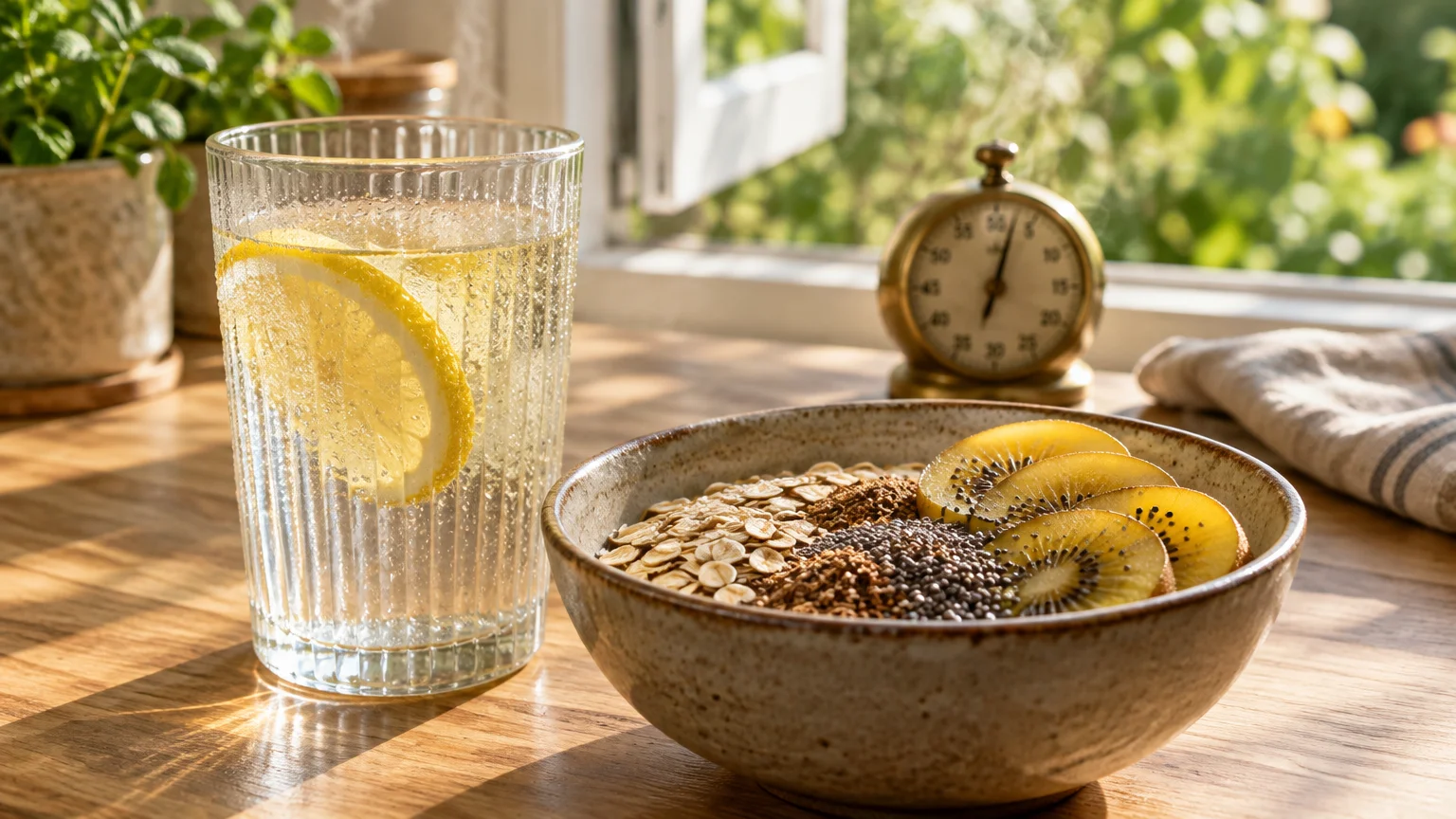
Start by upgrading your dietary fiber strategically, focusing on a mix of soluble and insoluble sources. Soluble fiber—found in oats, apples, beans, berries, and chia seeds—dissolves into a soothing gel that feeds beneficial butyrate-producing bacteria, while insoluble fiber in whole grains and leafy greens adds necessary physical bulk.
Always increase your fiber intake gradually over several weeks rather than dumping a huge portion of bran onto your plate overnight. Adding too much fiber too quickly overwhelms your gut bacteria, triggering uncomfortable gas, bloating, and cramping that discourage people from sticking with healthy eating.
Pair every high-fiber meal with intentional hydration throughout the morning and afternoon. Keep a refillable water glass visible on your kitchen counter, and enjoy warm liquids like herbal tea or broth, as warm beverages naturally stimulate digestive movement.
Take full advantage of your body’s built-in morning clock, known physiologically as the gastrocolic reflex. Eating a nutritious breakfast and sipping a warm beverage triggers a strong wave of colonic contractions shortly afterward; sitting on the toilet calmly during this window helps establish a predictable daily rhythm.
Change your physical posture on the toilet by placing a sturdy footstool—such as a dedicated bathroom step stool—underneath your feet while seated. Raising your knees slightly above the level of your hips mimics a natural squatting position, which relaxes the puborectalis muscle and straightens the bend at the end of your rectum so stool exits without straining.
Never hold your breath or push forcefully when trying to pass a bowel movement. Instead, practice slow diaphragmatic breathing, allowing your belly to expand as you inhale and gently exhaling through pursed lips to relax your pelvic floor and protect your blood pressure.
Incorporate gentle, consistent movement into your daily routine, such as a brisk walk after meals, water aerobics, or seated torso twists if you have limited mobility. Even modest physical activity wakes up sluggish intestinal nerves and helps clear trapped gas.
Finally, schedule a dedicated appointment with your primary care doctor or pharmacist to conduct a comprehensive medication review. Bring a complete list of every prescription drug, over-the-counter pain reliever, allergy pill, and dietary supplement you take, and ask specifically whether a bowel-friendly alternative exists for any constipating medication.
Frequently Asked Questions
Do I need to have a bowel movement every single day to avoid these health risks?
Not necessarily, though daily or near-daily comfort is ideal for minimizing toxin buildup and straining. Medical experts generally consider normal bowel frequency to range anywhere from three times a day to three times a week, provided the stool passes easily and feels complete.
However, as the July 2023 cognitive aging study demonstrated, going 3 or more days between bowel movements correlates with measurable brain aging. If your schedule drops to every third day or less—or if passing stool requires straining regardless of frequency—you should take action with your doctor.
Can eating prunes and kiwifruit really work as well as over-the-counter laxatives?
Yes, clinical trials comparing whole foods to commercial fibers show that both dried plums (prunes) and green kiwifruit are remarkably effective natural remedies. Prunes contain not only dietary fiber but also sorbitol, a natural sugar alcohol that acts as a gentle osmotic agent to draw water into the bowel.
Green kiwifruit contains a unique enzyme called actinidin that stimulates upper gastrointestinal motility and softens stool without causing the severe bloating sometimes linked to prunes. Enjoying a couple of kiwifruits or a small serving of prunes daily offers a delicious, nutrient-dense way to stay regular.
Are daily probiotic supplements a guaranteed cure for chronic constipation?
While probiotics support overall gut health, taking a random probiotic capsule off the store shelf is rarely a magic cure for chronic constipation on its own. Different bacterial strains perform vastly different jobs, and only specific strains—such as certain Bifidobacterium lactis varieties—have solid clinical evidence for speeding up gut transit time.
Furthermore, probiotic bacteria cannot thrive or produce protective short-chain fatty acids unless you feed them prebiotic fibers from whole plant foods. Discuss targeted probiotic strains with your healthcare provider rather than spending money on generic blends.
Will taking laxatives every day make my bowel lazy and permanently dependent on them?
The fear of creating a permanently “lazy bowel” is largely a myth when it comes to modern bulk-forming and osmotic laxatives like polyethylene glycol. These gentle options simply hold water inside the stool and do not damage your intestinal nerves or muscles over time.
Chronic overuse of harsh stimulant laxatives like senna or bisacodyl, however, can lead to tolerance, electrolyte depletion, and sluggish natural contractions. If you find yourself needing a stimulant laxative multiple times a week just to go, consult a physician to transition to a safer long-term strategy.
When should I ask my doctor for a referral to a pelvic floor physical therapist?
You should ask about pelvic floor evaluation if you frequently feel like stool gets stuck right at the exit, even when the stool itself is relatively soft. Other classic signs include needing to press on your lower abdomen or pelvic area with your fingers to help stool pass, or feeling unfinished after every trip to the bathroom.
If your constipation occurs alongside new bladder leaks, difficulty starting your urine stream, or frequent nighttime urination, pelvic floor dysfunction is highly likely. A trained physical therapist can use gentle, non-invasive biofeedback to teach your pelvic muscles how to coordinate and relax properly.
Taking Charge of Your Digestive and Whole-Body Health
Viewing chronic constipation as a whole-body health signal rather than a minor bathroom annoyance empowers you to protect your independence as you age. The scientific links connecting sluggish bowels to cognitive decline, heart events, kidney disease, depression, and bladder trouble prove that your gut sits at the center of healthy longevity.
You do not have to join the majority of adults who suffer in silence and rely solely on guesswork in the laxative aisle. By hydrating consistently, embracing fiber-rich whole foods, optimizing your toilet posture, and starting an honest conversation with your doctor, you can restore comfortable, effortless digestion for years to come.
This article is intended for informational and educational purposes only and is not a substitute for professional medical advice, diagnosis, or treatment. Always consult with a qualified healthcare provider regarding any health concerns or before making any decisions related to your health or treatment.