
Every year, millions of retirees leave thousands of dollars in covered healthcare services on the table simply because they do not know these benefits exist. Medicare Part B covers more than twenty essential preventive screenings, immunizations, and annual wellness examinations with zero cost-sharing, meaning you pay nothing out-of-pocket when seeing participating providers. Taking full advantage of these benefits helps you catch potential health issues early, manage chronic conditions proactively, and protect your hard-earned retirement savings. From routine cancer screenings and bone density tests to comprehensive immunization coverage, understanding your no-cost preventive options empowers you to take complete control of your overall health and personal longevity.
Understanding the Basics
Preventive care focuses on maintaining wellness, preventing illnesses before they begin, and detecting medical conditions at their earliest, most treatable stages. Unlike diagnostic care—which investigates specific symptoms or treats existing conditions—preventive care aims to keep you healthy and out of the hospital. For seniors, access to routine preventive care serves as the cornerstone of maintaining independence throughout retirement.
Under Medicare Part B, beneficiaries gain access to over twenty preventive services offered at zero cost-sharing. This means you owe zero dollars in copayments, zero dollars in coinsurance, and no deductible payment, provided your healthcare provider accepts Medicare assignment. Accepting assignment means the clinician agrees to accept the Medicare-approved amount as full payment for covered services.
A common point of confusion involves the distinction between initial Medicare appointments and routine ongoing visits. During your first twelve months enrolled in Medicare Part B, you qualify for a one-time “Welcome to Medicare” preventive visit. This initial appointment sets a baseline for your health, reviewing your medical history and ensuring immunizations remain current. After your first year, you become eligible for an Annual Wellness Visit once every twelve months. Crucially, this visit differs from a traditional physical exam; it focuses on constructing a personalized prevention plan, assessing cognitive function, and identifying safety concerns.
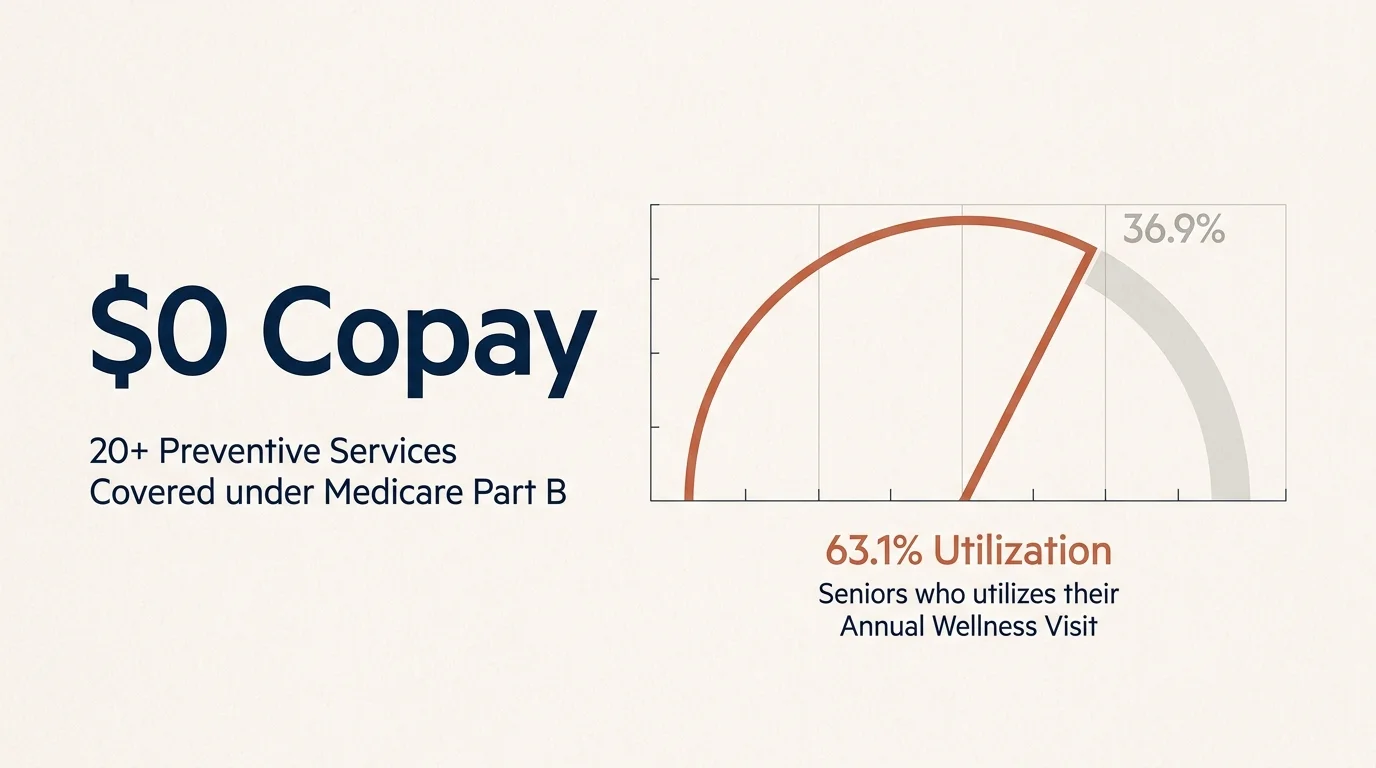
Despite these generous coverage rules, recent data from the Centers for Medicare & Medicaid Services reveals a significant gap between eligibility and utilization. Centers for Medicare & Medicaid Services data indicates that only 63.1 percent of eligible Medicare beneficiaries utilize their free Annual Wellness Visit each year. This statistic means over one-third of retirees miss out on a tailored health blueprint every single year.

Key Considerations for Seniors
As your body ages, health risks naturally shift, making routine health monitoring far more critical than in earlier decades. Biological changes can alter bone density, arterial flexibility, immune system resilience, and cognitive processing speed. Tailoring your preventive care routine to match your individual risk profile ensures that you remain active, mobile, and independent.
Essential Cancer Screenings Covered at Zero Cost
Cancer risks increase significantly with age, making scheduled screenings vital. Medicare covers annual screening mammograms at no out-of-pocket cost for women aged forty and older. For colorectal health, screening colonoscopies are covered once every ten years for average-risk individuals, or every two years for high-risk individuals. Furthermore, Medicare covers annual lung cancer screenings using Low-Dose Computed Tomography scans for adults aged 50 to 77 who have a 20 pack-year smoking history and currently smoke or quit within the past 15 years.
Comprehensive Immunizations and Vaccine Coverage
Immune function gradually declines with age, increasing vulnerability to infectious diseases. Thanks to Medicare Part B coverage and provisions within the Inflation Reduction Act, key adult vaccines carry zero cost-sharing. You pay nothing out-of-pocket for seasonal influenza shots, COVID-19 vaccines, or pneumococcal vaccines. Essential vaccines such as the two-dose Shingrix vaccine for shingles and Respiratory Syncytial Virus vaccines are also covered at zero cost-sharing under Medicare Part D prescription drug plans.
Metabolic, Bone, and Behavioral Health Services
Maintaining metabolic balance and bone strength forms another pillar of healthy aging. Medicare Part B covers up to two free diabetes screenings per year for individuals at risk. If diagnosed with pre-diabetes, eligible beneficiaries can participate in the Medicare Diabetes Prevention Program at zero out-of-pocket expense.
Bone density DEXA scans are covered once every 24 months for high-risk individuals, such as estrogen-deficient women or individuals on long-term steroid therapy. Additionally, mental health receives high priority under Medicare guidelines. You receive one free annual depression screening in a primary care setting, along with an annual alcohol misuse screening paired with up to four brief counseling sessions if test results indicate risk.

Benefits and Potential Risks
Engaging fully with your preventive benefits yields profound long-term health advantages, yet navigating billing details requires a clear understanding of coverage rules. Recognizing both benefits and potential financial pitfalls allows you to schedule appointments with complete confidence.
The Advantages of Proactive Healthcare Utilization
The primary advantage of preventive care lies in early diagnosis and prompt intervention. Detecting elevated blood pressure, early-stage colorectal polyps, or minor cognitive changes before symptoms manifest allows for early treatment. Using no-cost preventive services protects your financial security, preventing major chronic illnesses that lead to expensive hospital stays.
Navigating the Diagnostic Transition Risk
While preventive benefits are designed to be completely free, a challenge arises when a screening transitions into a diagnostic service during the appointment. If you bring up a new medical symptom—such as persistent joint pain or severe fatigue—during your free Annual Wellness Visit, your doctor may evaluate that complaint. Medicare classifies that evaluation as diagnostic care, meaning you may incur charges subject to your Part B deductible and a 20 percent coinsurance fee.
Understanding Screening Nuances and Coinsurance Rules
A specific example of billing complexity occurs during colorectal screenings. A screening colonoscopy is covered at zero cost. However, if your doctor removes a polyp during the procedure, medical coding shifts. Under Medicare regulations, if a polyp is removed during a screening colonoscopy, your Part B deductible is waived, but a 15 percent coinsurance applies for the doctor’s procedure fee. Always confirm with your doctor’s office before any appointment that services will be coded strictly as preventive care, and ensure all providers accept Medicare assignment.

What the Experts Say
Leading public health institutions universally emphasize the transformative value of routine preventive care for older adults. The National Institutes of Health highlights that early screening and continuous health tracking remain the most reliable strategy for extending healthy life expectancy and delaying functional decline. Scientific research shows that seniors who regularly participate in preventive care experience fewer emergency room visits compared to those who seek care only when severe symptoms emerge.
According to guidelines from the Centers for Disease Control and Prevention, routine vaccinations and screenings form a vital defense against preventable illness and mortality in adults over age 65. The CDC notes that vaccine-preventable diseases account for thousands of avoidable hospitalizations each year among seniors.
Medical experts from the Mayo Clinic emphasize the unique cognitive benefits provided by Medicare’s Annual Wellness Visit. During this encounter, clinicians perform formal cognitive screenings to detect early signs of mild cognitive impairment. Catching memory changes early gives families essential time to plan care and adjust living arrangements. Furthermore, global health guidelines from the World Health Organization advocate for primary care models that prioritize disease prevention over reactive care, affirming that screening is essential for healthy aging.

Practical Steps and Actionable Advice
Taking full advantage of your entitled Medicare preventive care benefits requires an organized approach. By following structured steps, you can streamline appointments and minimize out-of-pocket costs.
Schedule Your Appointments with Specific Language
When calling your doctor’s office, explicitly state that you are scheduling a “Medicare Annual Wellness Visit” or a “Medicare $0 Preventive Screening” rather than a routine physical exam. Clarifying this terminology ensures billing departments apply proper administrative coding, guaranteeing zero cost-sharing.
Prepare Your Comprehensive Health Information
Before arriving at your appointment, compile a complete list of all prescription drugs, over-the-counter medications, vitamins, and dietary supplements you take daily, including exact dosages. Draft a list of all health specialists, physical therapists, and medical equipment suppliers you currently utilize to build an accurate health profile.
Formulate Targeted Questions for Your Physician
Maximize your appointment time by preparing written questions. Ask your doctor if you are up to date on all recommended adult immunizations, including shingles, RSV, and pneumococcal vaccines. Inquire whether your health risk factors warrant a DEXA bone density scan, an annual Low-Dose CT lung screening, or a diabetes screening.
Verify Medicare Assignment and Tracking Portals
Prior to undergoing recommended lab work or specialist consultations, verify that every provider accepts Medicare assignment. Additionally, establish an online account at Medicare.gov to track your official preventive services history and check eligibility dates for future exams.
Frequently Asked Questions
Is the Medicare Annual Wellness Visit the same as an annual physical exam?
No, a Medicare Annual Wellness Visit differs from a physical exam. A physical exam involves hands-on clinical checks like listening to heart and lungs or taking blood samples. An Annual Wellness Visit focuses on creating or updating a personalized prevention plan, assessing cognitive function, and checking fall risks. While hands-on physical exams carry standard cost-sharing, the Annual Wellness Visit is covered at 100 percent with zero copayment.
Are shingles and RSV vaccines completely free under Medicare?
Yes, thanks to provisions in the Inflation Reduction Act, recommended adult vaccines are completely free for Medicare beneficiaries. Shingrix shingles vaccines and RSV immunizations are covered under Medicare Part D prescription plans with zero deductible and zero copayment when received at network pharmacies.
What happens if my doctor finds a health issue during a free preventive screening?
If your doctor discovers a new medical problem during a screening, that portion of the visit becomes diagnostic care. While Medicare covers the preventive screening at zero cost, diagnostic evaluation is billed separately under standard Part B rules, subjecting it to your annual deductible and a 20 percent coinsurance fee.
How often does Medicare cover bone density scans for osteoporosis?
Medicare Part B covers a DEXA bone density scan once every 24 months for beneficiaries meeting high-risk criteria, such as estrogen-deficient women, individuals with vertebral fractures, or patients taking long-term steroid medications.
Does Medicare cover mental health and depression screenings at no charge?
Yes, Medicare covers one free annual depression screening per year in a primary care setting. Medicare Part B also covers an annual alcohol misuse screening paired with up to four counseling sessions if screening tests indicate risky drinking behaviors.
Conclusion
Taking advantage of your Medicare preventive care benefits is one of the most effective ways to protect your health, independence, and financial security during retirement. From fully covered annual wellness visits and crucial cancer screenings to completely free immunizations and bone density scans, these benefits provide a vital safety net designed to keep you thriving. By collaborating with your primary care provider, confirming Medicare assignment, and scheduling routine screenings on time, you take proactive control of your long-term wellness. Make the commitment today to review your coverage, schedule your eligible appointments, and enjoy total peace of mind.
This article is intended for informational and educational purposes only and is not a substitute for professional medical advice, diagnosis, or treatment. Always consult with a qualified healthcare provider regarding any health concerns or before making any decisions related to your health or treatment.