Benefits and Potential Risks of the Policy Changes
The Advantages of Stricter Federal Standards
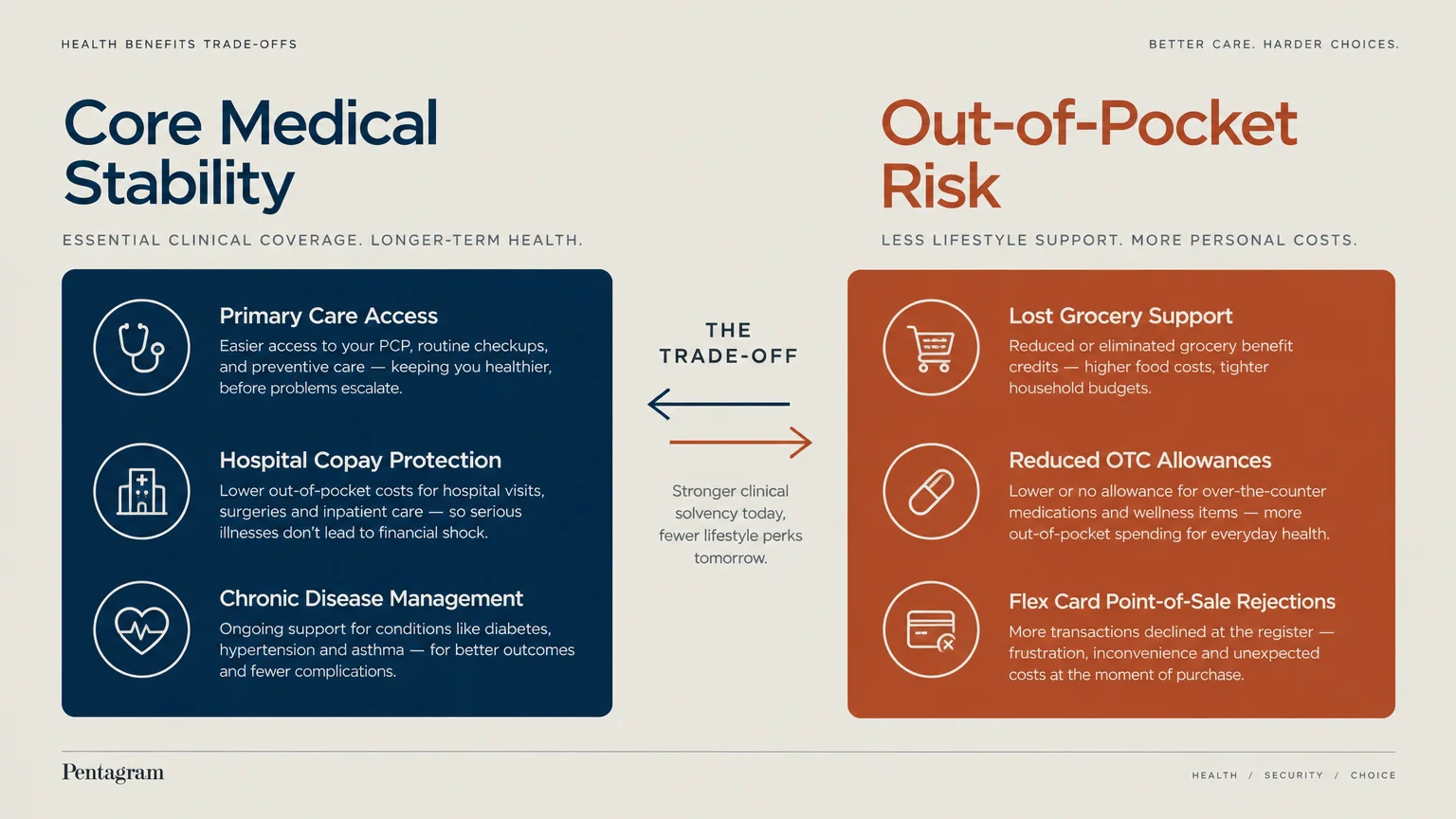
Although losing lifestyle perks creates frustration, stricter federal oversight offers important consumer protections. Clearer marketing rules stop dishonest insurance commercials that promised universal grocery cards to vulnerable seniors.
Furthermore, channeling limited federal rebates into essential medical coverage safeguards hospital, specialty, and surgical benefits. You maintain strong financial protection against catastrophic healthcare events when major illnesses occur.
Potential Risks and Health Inequities
The immediate drawback of benefit reductions is the increased financial strain placed on low-income retirees. Seniors living on fixed incomes may face painful trade-offs between purchasing fresh groceries and filling prescription medications.
Additionally, rigorous documentation requirements create bureaucratic barriers for frail individuals. Many eligible seniors may abandon their legitimate food benefits simply because obtaining verified clinical paperwork proves too daunting.
Comparing Medicare Advantage to Original Medicare
The erosion of supplemental perks significantly shifts the value calculation between private plans and Original Medicare. Historically, enrollees accepted narrow provider networks and prior authorization rules in exchange for lucrative lifestyle allowances.
Without generous flex funds, the nationwide flexibility of Original Medicare paired with Medigap becomes far more compelling. Traditional Medicare lets you visit any participating specialist across the country without network restrictions or carrier approvals.