Understanding the Basics of Medicare Advantage Changes
What Are Medicare Advantage Supplemental Perks?
Medicare Advantage plans, commonly called Part C, bundle hospital and outpatient coverage into private insurance networks. Private carriers frequently include supplemental perks to make their policies attractive to older adults.
These extras traditionally covered services that Original Medicare excludes, such as routine dental cleanings, vision exams, and hearing aids. Over recent years, plans expanded these benefits to include everyday grocery cards, utility bill assistance, and home gym allowances.
How Federal Rebate Dollars Fund Plan Extras
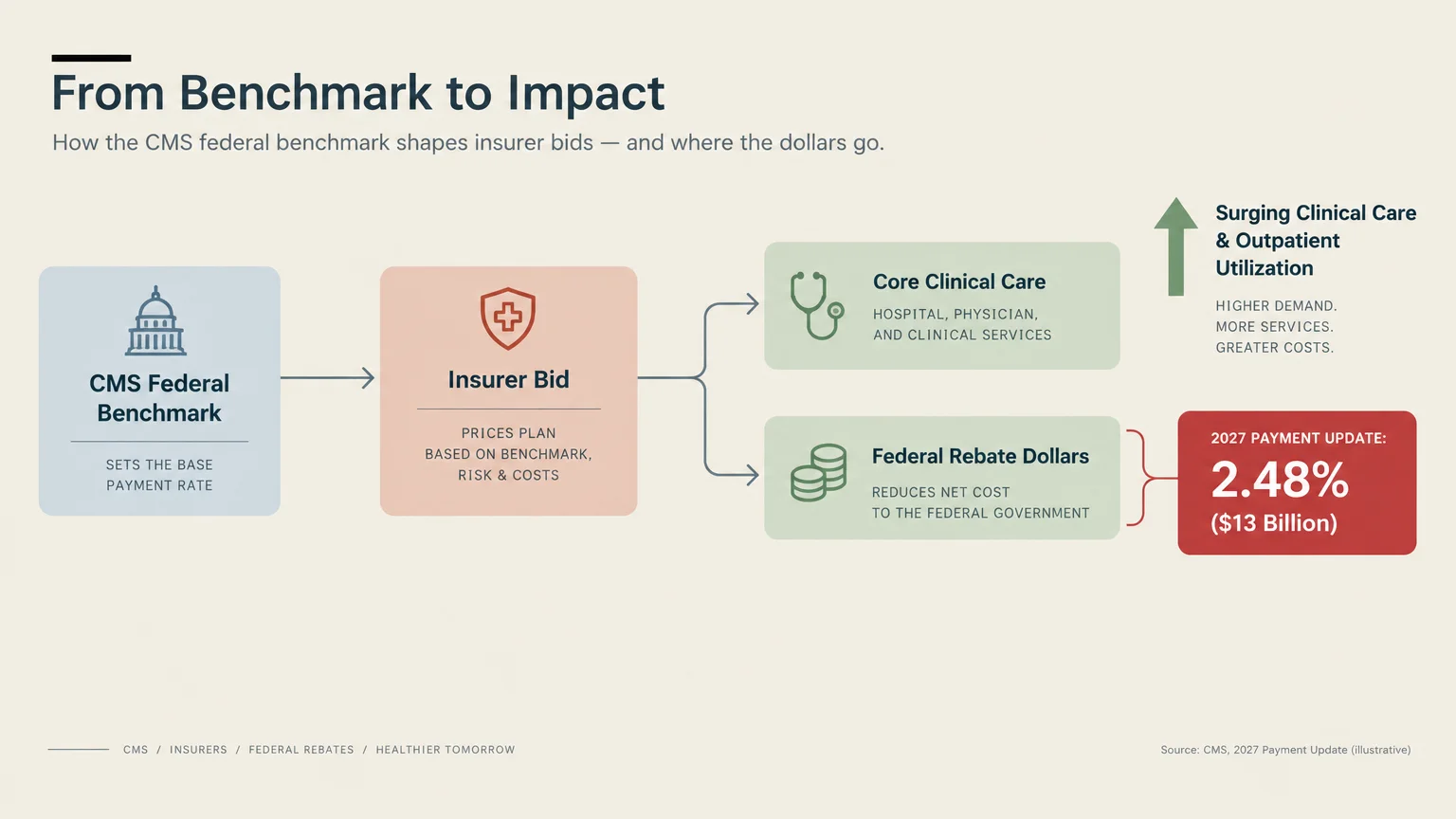
Private insurers fund these non-medical perks using federal rebate dollars paid by the Centers for Medicare & Medicaid Services. When an insurer bids below the regional government benchmark to provide clinical care, it earns a rebate payment.
Federal law requires insurers to return these rebate dollars to beneficiaries. Carriers historically channeled this money toward generous lifestyle benefits to win enrollments in highly competitive regional markets.
When healthcare inflation surges, those federal rebate amounts cannot cover both core clinical needs and extensive non-medical rewards. Consequently, plan administrators must decide which extra services to reduce or remove.
Why Insurers Face Margin Compression for 2027
On April 6, 2026, federal regulators finalized the calendar year 2027 Medicare Advantage payment rate update. The policy established a net average payment increase of just 2.48 percent, amounting to approximately $13 billion.
Major carriers, including UnitedHealthcare and Humana, reported that medical cost inflation and patient healthcare utilization far exceed that 2.48 percent adjustment. Older adults are scheduling more joint replacements, cardiac treatments, and outpatient surgeries than in prior seasons.
Because clinical care costs outpace federal revenue increases, insurance profit margins face unprecedented pressure. To balance operating budgets, insurers are aggressively slashing supplemental lifestyle perks rather than raising core medical copayments or primary care deductibles.