
Proactive health screenings after age 60 give you the upper hand in detecting silent health conditions before they cause irreversible damage or interrupt your active lifestyle. While aging brings natural physiological shifts, modern diagnostic medicine allows you and your physician to identify cardiovascular changes, bone density loss, and cellular abnormalities at their earliest, most treatable stages. Navigating routine medical appointments becomes far more effective when you know precisely which diagnostic tests match your age, personal medical history, and lifestyle risk factors. Asking your primary care doctor about targeted screenings ensures you protect your long-term independence, optimize your vitality, and maintain peak wellness throughout your retirement years.

Understanding the Basics of Preventive Screenings
Preventive health screenings evaluate your body for underlying disease before you notice any physical symptoms. Unlike diagnostic tests—which physicians order after you report chest pain, chronic fatigue, or joint swelling—preventive screenings assess asymptomatic individuals. The fundamental goal involves intercepting illness during its latent phase, when interventions remain far less invasive, significantly less costly, and substantially more successful.
Chronic illnesses develop quietly over years or decades. High blood pressure damages vascular walls without producing headaches; bone mineral density degrades silently until a minor fall results in a fracture; and precancerous polyps grow in the colon without causing pain. When you undergo systematic screenings, you transform healthcare from a reactive defense into an offensive strategy designed to preserve your longevity and daily comfort.

Key Considerations for Seniors and Aging Bodies
Your body experiences continuous biological shifts as you advance through your sixties and seventies. Cellular regeneration naturally slows, blood vessels lose elasticity, metabolic rates decline, and the immune system undergoes a gradual transition known as immunosenescence. Because advancing age represents the primary risk factor for conditions such as cardiovascular disease, osteoporosis, and various malignancies, screening schedules must adapt to reflect your evolving physiological profile.
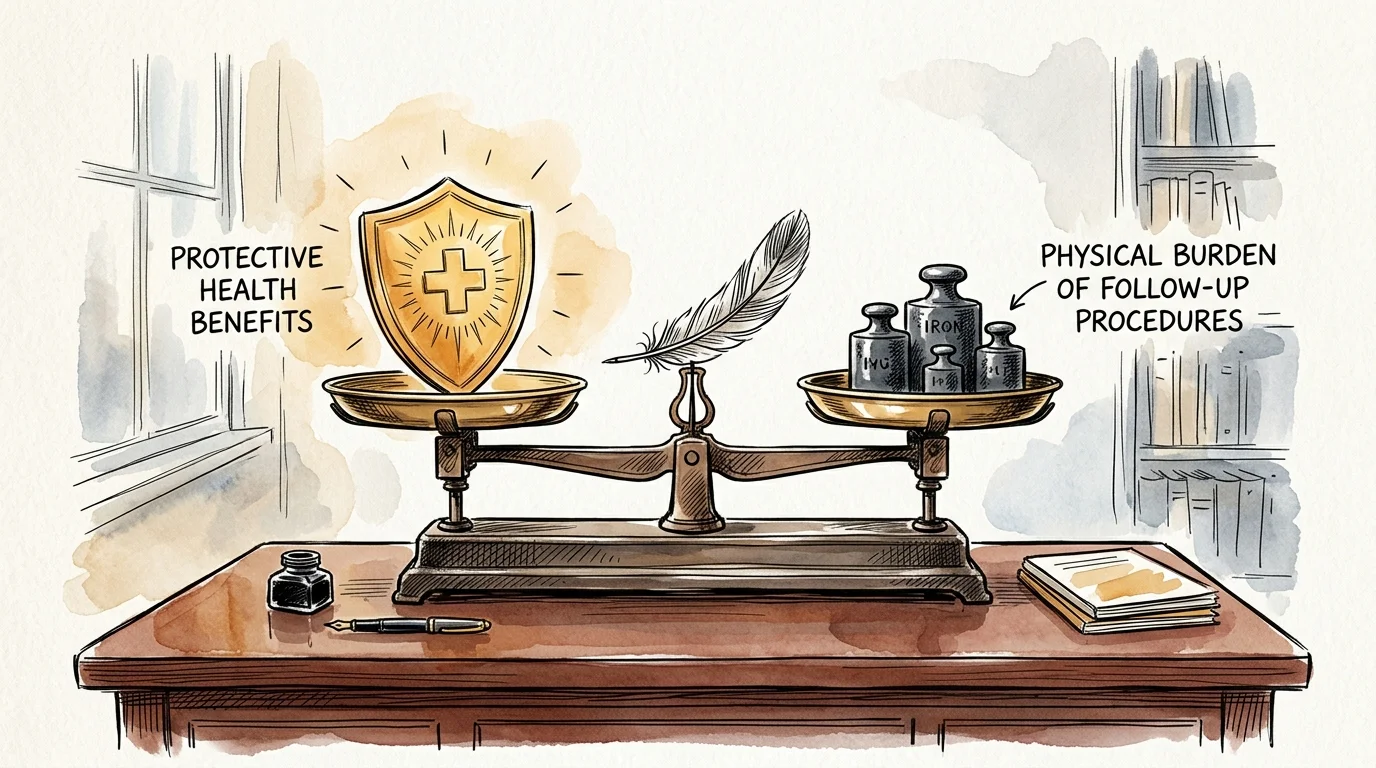
However, chronological age tells only part of the story. Functional status, personal vitality, and individual life expectancy matter just as much as your birth year. Clinical decision-making after 60 centers on personalized care, where you and your doctor weigh the tangible benefits of each test against the physical burdens of follow-up procedures. Furthermore, enrolling in Medicare provides access to covered preventive benefits, starting with the Welcome to Medicare visit and continuing through the annual Medicare Annual Wellness Visit.
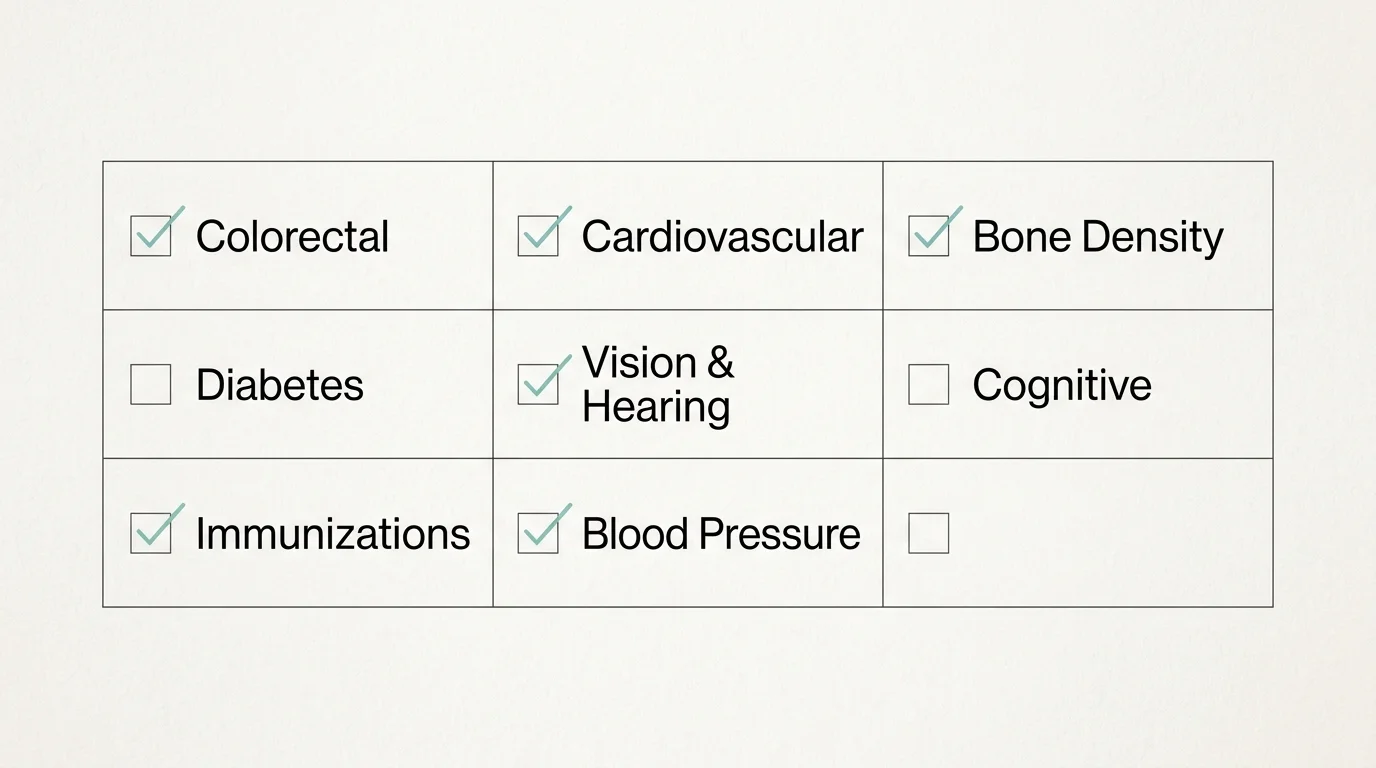
9 Essential Preventive Screenings to Discuss With Your Doctor
Modern clinical guidelines outline specific diagnostic evaluations designed to safeguard your health across multiple bodily systems. Here are the nine essential preventive screenings worth discussing at your next medical appointment.
1. Colorectal Cancer Screening
Colorectal cancer almost always originates from benign precancerous polyps in the large intestine. The U.S. Preventive Services Task Force recommends routine colorectal screening for all adults aged 45 to 75, with individualized decision-making for adults aged 76 to 85. Identifying and removing these polyps during routine visual examinations eliminates danger before malignancy develops.
You have several screening options to consider with your physician. A visual colonoscopy performed every 10 years remains the clinical gold standard, enabling immediate polyp removal during the exam. Alternatively, you may choose non-invasive stool-based tests, such as an annual high-sensitivity fecal immunochemical test (FIT) or a stool DNA-FIT test performed every one to three years. Computed tomography colonography or flexible sigmoidoscopy every five years provide additional alternatives. Any abnormal non-invasive test requires a timely follow-up colonoscopy.
2. Bone Mineral Density DEXA Scan
Osteoporosis causes bones to become porous, fragile, and exceptionally susceptible to fractures from minor falls. Dual-energy X-ray absorptiometry (DEXA) scans measure the mineral density of your hip, lumbar spine, and forearm to generate a numerical score called a T-score. A T-score of -1.0 to -2.5 indicates osteopenia, while a score of -2.5 or lower confirms osteoporosis.
Clinical guidelines recommend universal DEXA screening for all women aged 65 and older, as well as postmenopausal women under 65 with elevated fracture risk factors. Men over 70 also benefit from bone density assessments when clinical risk factors exist. Medicare Part B covers a screening DEXA scan once every 24 months at no out-of-pocket cost. Early detection enables you to start bone-strengthening therapies, targeted exercise, and nutritional support before an unexpected fracture limits your mobility.
3. Cardiovascular Health and Lipid Profile Screening
Cardiovascular disease remains the primary threat to long-term health among older adults, yet arterial plaque accumulates silently without outward symptoms. Comprehensive cardiovascular prevention combines regular blood pressure monitoring with a routine lipid panel. Health guidelines recommend annual blood pressure checks for all adults, a crucial step after 60 because arterial stiffening naturally raises systolic pressure.
Lipid panel blood tests measure total cholesterol, low-density lipoprotein (LDL), high-density lipoprotein (HDL), and triglycerides. Clinicians combine these values with your age, blood pressure, and smoking history to calculate your 10-year risk of Atherosclerotic Cardiovascular Disease. Medical guidelines recommend initiating statin therapy for primary cardiovascular prevention in adults aged 40 to 75 who present with one or more risk factors and a 10-year cardiovascular risk score of 10% or higher.
4. Breast Cancer Screening (Mammography)
Breast cancer risk increases with age, making regular surveillance vital throughout your sixties and seventies. Digital mammography and 3D breast tomosynthesis capture high-resolution images of breast tissue, identifying suspicious microcalcifications and small masses years before they become palpable during a physical examination.
Leading medical guidelines recommend biennial screening mammograms for women aged 40 through 74. If you are 75 or older, clinical consensus emphasizes shared decision-making between you and your healthcare provider. This collaborative conversation evaluates your overall vitality and life expectancy against the necessity of ongoing testing. Detecting tumors early preserves breast tissue, minimizes invasive treatments, and maximizes long-term survival.
5. Prediabetes and Type 2 Diabetes Screening
Type 2 diabetes impairs glucose regulation, fueling systemic inflammation and driving damage across your kidneys, eyes, and peripheral nerves. Guidelines recommend screening for prediabetes and type 2 diabetes in asymptomatic adults aged 35 to 70 who are overweight or obese, repeating the test every three years when results are normal.
Screening involves a standard blood draw measuring fasting plasma glucose or hemoglobin A1c (HbA1c), which tracks your average blood sugar over the previous three months. An HbA1c between 5.7% and 6.4% indicates prediabetes, while 6.5% or higher signals diabetes. Identifying elevated glucose levels early allows you to reverse insulin resistance through nutritional adjustments, physical activity, and targeted medications before permanent vascular damage occurs.
6. Abdominal Aortic Aneurysm (AAA) Ultrasound
An abdominal aortic aneurysm occurs when the lower section of the aorta weakens and balloons outward. Because these enlargements rarely produce pain or symptoms before rupturing, they carry an extremely high mortality rate. A painless, non-invasive abdominal ultrasound accurately measures the vessel diameter to detect life-threatening expansions early.
Clinical guidelines recommend a one-time screening ultrasound for men aged 65 to 75 who have ever smoked at least 100 cigarettes in their lifetime. Men who have never smoked may still benefit from screening if they have a family history of aneurysms. Routine screening is not recommended for women without smoking or family histories. Discovering an enlarged aorta allows physicians to monitor its size safely or perform elective repair long before emergency rupture occurs.
7. Low-Dose Computed Tomography (LDCT) for Lung Cancer
Lung cancer remains the leading cause of cancer deaths primarily because it is frequently diagnosed at advanced stages. Low-dose computed tomography (LDCT) uses minimal radiation to capture cross-sectional thoracic images, pinpointing non-calcified lung nodules when they are small and surgically curable.
Guidelines recommend annual LDCT screening for adults aged 50 to 80 who have a 20 pack-year smoking history and currently smoke or have quit within the past 15 years. You calculate pack-years by multiplying the number of cigarette packs smoked daily by your total smoking years. Screening stops once you have remained smoke-free for 15 consecutive years or if you develop a condition that severely limits life expectancy or surgical tolerance.
8. Cognitive Impairment and Fall Risk Assessment
Protecting cognitive function and mobility represents the foundation of personal independence. The Medicare Annual Wellness Visit requires clinicians to screen for cognitive impairment, helping detect early signs of mild cognitive impairment or dementia. Using standardized tools like the Mini-Cog or Montreal Cognitive Assessment, physicians evaluate memory, attention, and executive function to establish a baseline and identify reversible causes of cognitive decline.
During this same wellness visit, your clinician assesses your balance and fall risk. Falls represent the leading cause of injury among older adults. Simple mobility checks, such as the Timed Up and Go test, gauge your walking stability. Identifying balance deficits allows your physician to recommend physical therapy, review fall-inducing medications, and suggest home modifications that keep you safe and mobile.
9. Comprehensive Sensory Screenings: Vision and Hearing
Sensory changes develop subtly, often escaping notice until communication or daily safety becomes compromised. Age-related eye diseases—including glaucoma, macular degeneration, cataracts, and diabetic retinopathy—progress without early discomfort. Scheduling comprehensive dilated eye exams every one to two years allows eye specialists to evaluate intraocular pressure and retinal health, preventing irreversible vision loss.
Similarly, regular audiometric screening detects age-related hearing loss (presbycusis). Untreated hearing loss increases cognitive strain, encourages social isolation, and accelerates cognitive decline. Standard audiograms measure your hearing across various frequencies, enabling audiologists to prescribe modern digital hearing aids that restore crystal-clear communication and support neurological wellness.
Balancing the Benefits and Potential Risks of Screening
While preventive screenings offer substantial health advantages, understanding their potential risks helps you make informed choices. The primary benefit lies in early disease detection: finding tumors, bone thinning, or vascular narrowing early allows for gentle, highly effective interventions that protect your long-term independence and quality of life.
However, screening tests also carry specific downsides. False-positive results occur when a screening suggests an abnormality that follow-up diagnostic testing proves harmless. False alarms generate emotional distress, require additional imaging, and may lead to invasive biopsies that carry risks of bleeding or infection. Furthermore, overdiagnosis occurs when a test detects slow-growing, harmless abnormalities that would never have caused symptoms during your lifetime. Discussing these nuances with your physician helps you balance statistical benefits against potential procedural burdens.

What Leading Health Experts and Guidelines Recommend
Prominent health organizations, including the National Institutes of Health, the Centers for Disease Control and Prevention, and the Mayo Clinic, emphasize that preventive care requires combining diagnostic tests with routine adult immunizations. Authoritative panels assign letter grades to screenings based on extensive clinical evidence, ensuring recommended tests deliver proven net benefits.
In addition to diagnostic imaging and blood work, public health experts emphasize keeping your vaccinations up to date. The Centers for Disease Control and Prevention recommends the two-dose shingles vaccine (Shingrix) for adults 50 and older, routine pneumococcal conjugate vaccines starting at age 50, and respiratory syncytial virus (RSV) immunizations for all adults aged 75 and older, as well as adults aged 60 to 74 with chronic medical conditions. Pairing regular screenings with targeted immunizations creates an unshakeable wellness foundation.

Practical Steps to Prepare for Your Screening Appointments
Maximizing the value of your preventive appointments requires proactive planning. Start by assembling a comprehensive personal health record that lists your past surgeries, active medical conditions, daily prescription medications, over-the-counter supplements, and family medical pedigree. Knowing your family history gives your doctor crucial context to tailor your screening schedule.
Next, write down specific questions before your appointment. Ask your doctor which screenings best match your age and lifestyle, what preparation is necessary, and how test results will influence your treatment plan. Inquire about false-positive rates so you understand what to expect if initial results appear abnormal.
Finally, leverage your Medicare Annual Wellness Visit to establish a long-term preventive care calendar. Ensure your clinic submits screening orders under preventive billing codes to take full advantage of zero-copay preventive benefits. Organizing your test results in a personal health binder or patient portal keeps you informed and empowered.
Frequently Asked Questions About Senior Health Screenings
Do I still need preventive screenings if I feel completely healthy?
Yes, you should continue scheduling recommended preventive screenings even when feeling completely healthy. Screenings are specifically designed for asymptomatic people. Serious conditions like elevated blood pressure, early colorectal polyps, bone mineral loss, and glaucoma develop silently without pain. Catching these issues early prevents severe complications later.
How does Medicare cover these preventive health screenings?
Medicare Part B covers many essential preventive screenings at 100% with no deductible or coinsurance when delivered by participating healthcare providers. This coverage includes your Annual Wellness Visit, screening mammograms, DEXA bone scans every two years, diabetes testing, and standard colorectal screenings. If a screening reveals a condition requiring immediate treatment—such as polyp removal during a colonoscopy—small cost-sharing fees may apply.
At what age can an older adult safely stop routine screenings?
There is no rigid cutoff age for stopping screenings; instead, guidelines suggest shifting toward shared decision-making around age 75. For example, colorectal screening guidelines recommend individualized choices between ages 76 and 85 based on personal health and past results. When overall life expectancy is under 10 years, the risks of invasive diagnostic follow-ups often outweigh the benefits of detecting slow-progressing conditions.
What is the difference between a screening test and a diagnostic test?
A screening test checks healthy, asymptomatic individuals to discover undetected disease at an early stage. A diagnostic test investigates specific symptoms, unusual physical findings, or abnormal screening results. For instance, a routine screening mammogram evaluates asymptomatic breast tissue, whereas a diagnostic mammogram investigates a newly discovered breast lump.
How often should I have blood tests for cholesterol and blood sugar?
Testing frequency depends on your baseline laboratory values and personal cardiovascular risk factors. If your blood sugar and HbA1c levels are normal, diabetes screening is typically repeated every three years. For cardiovascular health, lipid panels are generally checked every three to five years for low-risk individuals, though doctors recommend annual testing if you take statins or manage heart disease risks.
Empowering Your Health Journey After 60
Prioritizing preventive health screenings after age 60 gives you the tools to protect your physical vitality, cognitive clarity, and personal independence. By partnering closely with your physician, reviewing evidence-based clinical guidelines, and asking targeted questions, you take active control of your wellness. Schedule your preventive screenings today to build a healthier, more vibrant tomorrow.
This article is intended for informational and educational purposes only and is not a substitute for professional medical advice, diagnosis, or treatment. Always consult with a qualified healthcare provider regarding any health concerns or before making any decisions related to your health or treatment.