Key Considerations for Seniors: How Aging Changes Absorption
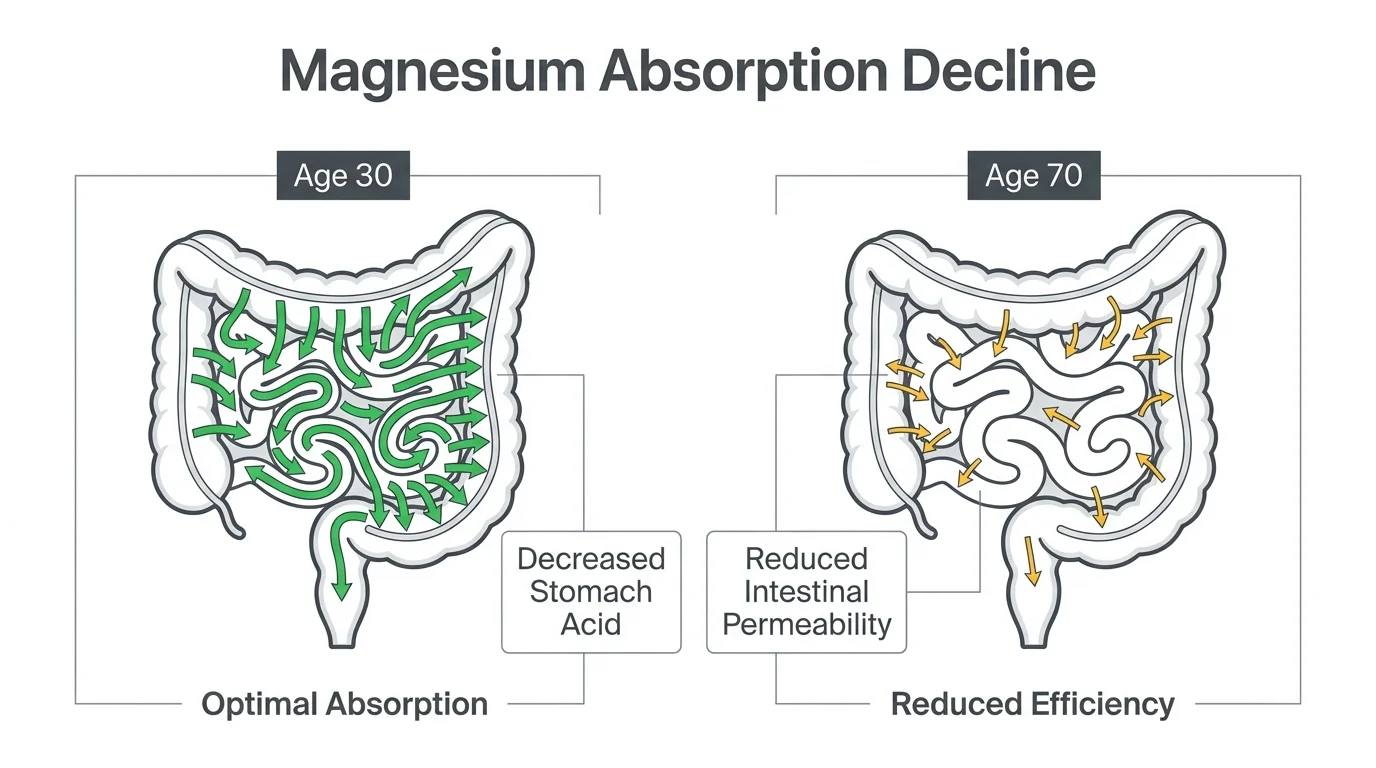
As you transition into your sixties, seventies, and beyond, your digestive physiology undergoes several changes that make extracting and retaining magnesium significantly more difficult. One of the most common age-related shifts involves hypochlorhydria, a natural decrease in the production of stomach acid. Strong stomach acid is absolutely necessary to break down tough food matrices and separate magnesium from the proteins and fibers holding it together. When your stomach acid levels drop, whole foods simply pass through your digestive tract without releasing their full nutritional payload, leaving you undernourished even if you consume a textbook-perfect diet.
The medications you take daily can also actively deplete your body’s magnesium reserves. Polypharmacy—the concurrent use of multiple prescription medications—affects millions of older adults and frequently creates hidden nutritional blind spots. Proton pump inhibitors, commonly prescribed to treat acid reflux and chronic heartburn, alter the pH of your digestive tract so severely that they drastically inhibit mineral absorption. The longer you take these medications, the more profound the deficit becomes. If you treat high blood pressure with loop or thiazide diuretics, these “water pills” force your kidneys to aggressively excrete essential electrolytes, literally flushing your magnesium reserves down the drain.
Furthermore, standard dietary habits often shift as you age, compounding the problem. Dental issues, ill-fitting dentures, or simple changes in taste preferences might cause you to avoid crunchy, fibrous foods like raw nuts, seeds, and tough leafy greens—the exact foods that offer the highest natural concentrations of magnesium. When you combine reduced stomach acid, nutrient-depleting prescription medications, and a dietary shift toward softer, more processed foods, the likelihood of developing a clinical magnesium deficiency skyrockets.