
Recognizing subtle shifts in your body can save your life. Catching cancer in its earliest stages provides the greatest opportunity for successful treatment, preserving your vitality and independence.
Many early signs mimic normal aches, digestive changes, or fatigue associated with aging. Consequently, adults often dismiss these critical signals until an illness advances into later stages.
Paying close attention to persistent bodily changes allows you to act before complications arise. Discover fifteen frequently overlooked cancer warning signs and learn when to consult your healthcare provider.
Understanding the Basics: Why Early Detection Saves Lives
Cancer occurs when abnormal cells divide uncontrollably and invade nearby tissues. In its infancy, a tumor remains localized, making surgical removal or targeted therapies far more effective.
When abnormal cells enter the bloodstream or lymphatic system, they can spread to distant organs. Clinicians refer to this advanced process as metastasis.
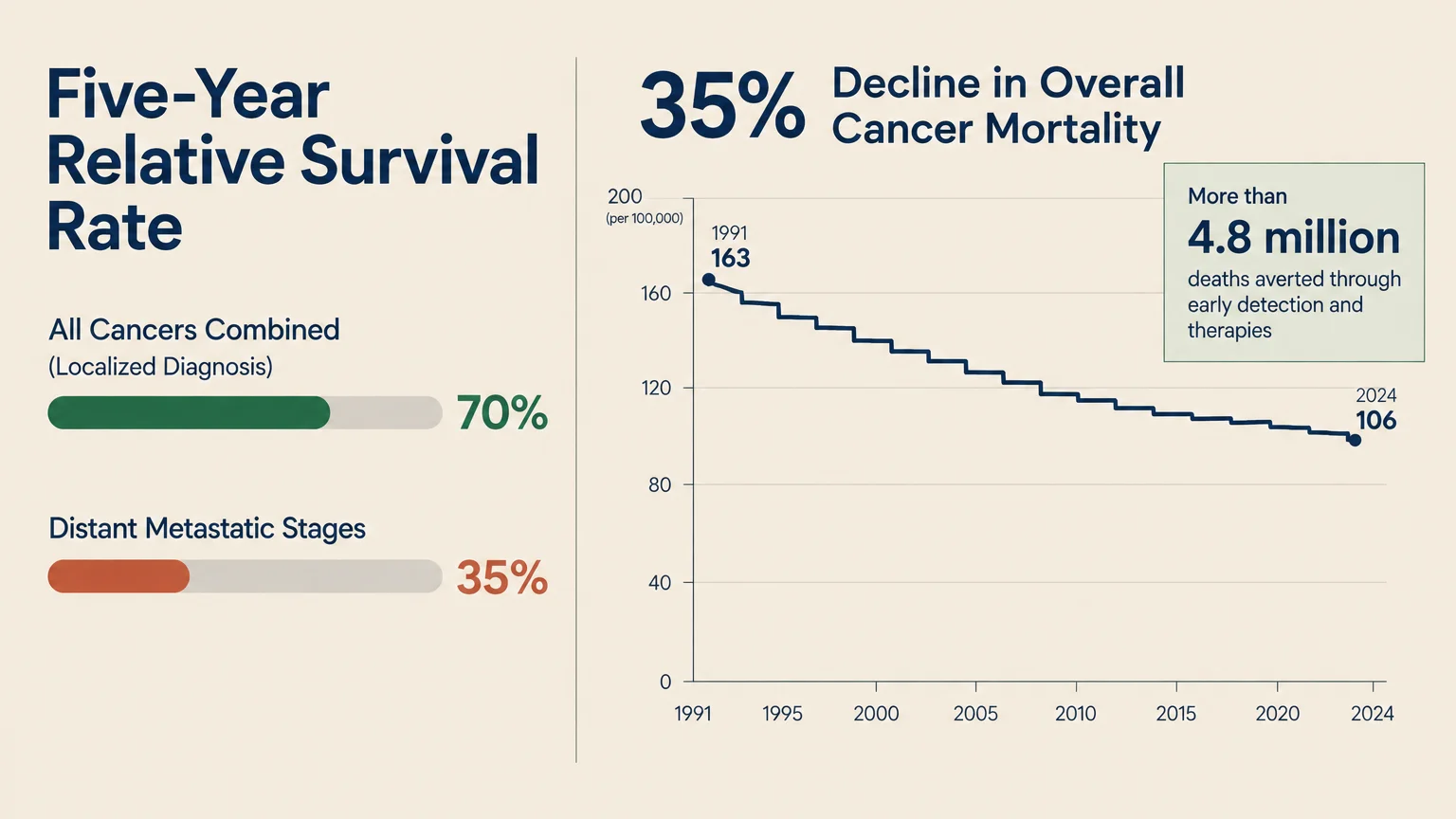
Data from the National Cancer Institute demonstrates that stage at diagnosis fundamentally dictates patient outcomes. Localized disease consistently offers the highest probability of complete remission.
The overall five-year relative survival rate for all cancers combined has reached a historic milestone of 70%. In contrast, that rate drops to 35% when malignancies reach distant, metastatic stages.
Between 1991 and 2024, the overall cancer mortality rate dropped by 35%. This dramatic decline averted more than 4.8 million deaths through earlier detection, smoking reductions, and superior therapies.
Routine medical evaluations help you spot biological changes before physical discomfort even manifests. Knowing your physical baseline gives you an invaluable advantage in identifying potential disruptions early.

Key Considerations for Seniors: Aging and Symptom Confusion
Aging naturally alters physiology, which can obscure early cancer symptoms. As your immune system matures, it responds with less obvious inflammatory spikes, masking warning signs.
Pre-existing health conditions also create diagnostic confusion. You might attribute joint discomfort to osteoarthritis, urinary hesitation to benign prostate enlargement, or heartburn to common reflux.
Prescription medications can further conceal emerging issues. Routine analgesics dampen pain signals, while anti-inflammatory drugs might suppress mild fevers caused by occult disease.
Some older adults hesitate to contact their doctors out of fear or anxiety. Others worry about burdening family members with additional medical visits or clinical testing.
You should never accept persistent discomfort or physical decline as an unavoidable consequence of aging. Healthy aging involves maintaining open, honest communication with your medical team about every new symptom.

15 Early Cancer Warning Signs People Often Overlook
1. Unexplained Weight Loss
Losing ten pounds or more without altering your daily diet or physical exercise demands attention. Unintended weight loss frequently signals an underlying systemic metabolic change.
Cancer cells consume significant caloric energy while releasing inflammatory cytokines that degrade muscle mass. This unintended reduction occurs commonly in cancers of the pancreas, stomach, esophagus, and lungs.
If your clothes suddenly fit loosely without conscious effort, consult your doctor. A thorough clinical assessment will determine whether metabolic disruptions or gastrointestinal issues explain the change.
2. Persistent Fatigue That Rest Does Not Relieve
Normal exhaustion resolves after adequate sleep and physical rest. In contrast, cancer-related fatigue leaves you feeling utterly drained regardless of how many hours you sleep.
Leukemia and lymphoma frequently trigger severe exhaustion by impairing healthy red blood cell production. Colon or stomach tumors can cause microscopic internal bleeding, resulting in chronic anemia and lethargy.
Track your energy patterns over two to three weeks. If overwhelming exhaustion interferes with everyday tasks like grocery shopping or gardening, seek professional medical guidance.
3. Noticeable Changes in Bowel Habits
Occasional irregularity happens to everyone, especially when diet, hydration, or medications change. However, persistent constipation, diarrhea, or narrowing of the stool requires clinical investigation.
Colorectal tumors physically obstruct the intestinal tract, altering stool shape and defecation frequency. Detecting colorectal malignancies in early stages yields an approximate 90% five-year survival rate.
Discuss lingering digestive changes lasting longer than several weeks with your primary care provider. Simple diagnostic evaluations can rule out benign conditions or identify polyps before they spread.
4. A Chronic Cough or Lasting Hoarseness
A cough that lingers beyond three or four weeks is not just a remnant of a common cold. Continuous coughing or voice hoarseness can indicate irritation along your respiratory tract or vocal cords.
Lung cancer, laryngeal cancer, and thyroid malignancies can irritate the recurrent laryngeal nerve or compress airways. Coughing up blood—even tiny flecks of rust-colored sputum—demands urgent medical evaluation.
Localized lung cancer carries a 65% five-year survival rate, compared to just 10% for metastatic disease. Prompt imaging ensures that suspicious pulmonary nodules receive rapid evaluation and targeted treatment.
5. Difficulty Swallowing (Dysphagia)
Dysphagia occurs when you feel food sticking in your throat or chest on its way down. While people often dismiss it as eating too fast, the sensation usually progresses over time.
Tumors in the esophagus, throat, or stomach can gradually narrow the digestive conduit. You might find yourself unconsciously chewing food longer or transitioning to softer foods and liquids.
Do not wait until swallowing liquids becomes painful or impossible. An upper endoscopy can quickly evaluate the lining of your esophagus and identify mechanical obstructions.
6. Persistent Bloating or Feeling Full Too Fast
Experiencing abdominal fullness after eating only a few bites is known medically as early satiety. When accompanied by chronic pelvic pressure or bloating, it warrants careful gynecological and abdominal evaluation.
Ovarian and stomach cancers frequently cause early satiety by exerting pressure on the stomach wall or generating fluid in the abdomen. Unlike dietary gas, this type of abdominal swelling persists daily.
According to the Mayo Clinic, persistent daily bloating lasting over three weeks requires evaluation. Diagnostic pelvic ultrasound and physical examinations can clarify the underlying source.
7. Unexplained Bleeding or Unusual Discharge
Unexplained blood loss should never be ignored, regardless of how minor the quantity seems. Bleeding can occur in the stool, urine, phlegm, or through unexpected postmenopausal vaginal spotting.
Any vaginal bleeding occurring after menopause requires immediate clinical assessment. Endometrial and cervical cancers often announce their presence through light spotting long before physical pain develops.
Similarly, blood in your urine—even a single episode of pink or tea-colored fluid—can signal bladder or kidney cancer. Your physician can perform non-invasive urinalysis to detect microscopic blood cells.
8. Evolving Skin Lesions or Changing Moles
Skin changes represent some of the most visible yet frequently disregarded cancer warning signs. Melanoma and non-melanoma skin cancers often arise as new spots or subtle evolutions in existing moles.
Dermatologists recommend monitoring the ABCDE criteria: asymmetry, border irregularity, color variations, diameter larger than a pencil eraser, and evolving features. Any sore that bleeds, oozes, or refuses to heal within four weeks deserves evaluation.
Older adults frequently develop harmless seborrheic keratoses, making professional skin checks essential. A board-certified dermatologist can differentiate benign age-related growths from potentially dangerous skin malignancies.
9. New Palpable Lumps or Thickened Tissue
Discovering a firm, painless lump beneath your skin requires prompt clinical attention. While cysts and lipomas are common benign growths, malignant tumors frequently feel hard, immovable, and distinct from surrounding tissue.
Palpable lumps commonly appear in breast tissue, the testicles, neck, armpits, or groin. Five-year relative survival for localized breast cancer stands at 91.9%, reinforcing the value of early discovery.
Perform regular self-checks and report any new mass to your healthcare provider immediately. Modern diagnostic ultrasound and mammography can swiftly characterize the tissue composition of any lump.
10. Persistent, Unexplained Aches and Discomfort
Pain serves as your nervous system’s primary alarm system when tissue damage or pressure occurs. Chronic, localized pain unrelated to an identifiable injury or arthritis flare-up demands diagnostic scrutiny.
Bone cancers, metastatic lesions, and brain tumors often present as dull, aching discomfort that worsens during nighttime hours. Unexplained back pain can also indicate occult retroperitoneal, pancreatic, or colon tumors.
Do not simply mask unexplained, persistent pain with over-the-counter painkillers. Discuss the exact location, timing, and nature of your discomfort with your physician to identify root causes.
11. Non-Healing Mouth Sores or Oral Patches
Oral tissues normally regenerate rapidly following minor injuries like biting your cheek. A sore, ulcer, or red or white patch that lingers beyond two weeks requires a professional dental or medical assessment.
Leukoplakia appears as flat white patches inside the mouth that cannot be scraped away. These lesions, along with erythroplakia (red patches), frequently serve as precursors to oral squamous cell carcinoma.
Tobacco users and regular alcohol consumers face elevated risks for oral malignancies. Routine dental checkups provide a prime opportunity for professional visual screenings of your tongue, gums, and oral cavity.
12. Drenching Night Sweats or Unexplained Fevers
Waking up soaked in sweat to the point of needing fresh sheets is not a normal part of aging. While infections often cause fevers, recurrent temperature spikes without an obvious pathogen require attention.
Night sweats and persistent low-grade fevers frequently accompany hematologic malignancies, such as Hodgkin and non-Hodgkin lymphoma. Tumors release specialized biochemical signals that disrupt your brain’s internal temperature regulation.
Keep a daily temperature log if you experience recurring evening fevers or night sweats. Sharing these patterns helps your doctor determine whether comprehensive blood testing or imaging is necessary.
13. Frequent Indigestion and Stubborn Heartburn
Occasional acid indigestion after a heavy or spicy meal is exceptionally common. However, severe heartburn or upper abdominal distress that resists standard antacid medications demands formal evaluation.
Cancers of the stomach, esophagus, and pancreas can mimic peptic ulcer disease and gastroesophageal reflux. When pancreatic tumors develop, they can cause vague upper abdominal discomfort that radiates directly into your back.
The five-year relative survival rate for pancreatic cancer is just 13.7%, partly because early symptoms are so easily overlooked. Only 17% of pancreatic cases are caught in the localized stage, making prompt investigation vital.
14. Altered Urinary Patterns or Bladder Changes
Changes in bladder habits extend beyond normal age-related prostate enlargement or pelvic floor relaxation. Increased frequency, sudden urgency, painful urination, or a weakened stream can indicate underlying pathology.
Prostate cancer in men and bladder cancer in both sexes often produce urinary disruptions. Fortunately, the five-year relative survival rate for localized prostate cancer exceeds 98%, underscoring the benefit of timely detection.
Do not assume that waking multiple times each night to urinate is just an inconvenience of growing older. Simple blood tests, such as PSA measurements, and non-invasive urine screenings clarify the cause.
15. Swollen Lymph Nodes That Linger
Lymph nodes act as tiny filtration hubs throughout your body, capturing bacteria, viruses, and abnormal cells. When fighting routine infections, these nodes swell and often feel tender to the touch.
Malignant lymph nodes, however, typically feel firm, rubbery, and painless, persisting long after an infection resolves. Swelling in the neck, armpit, or collarbone area that lasts over three weeks warrants medical investigation.
Enlarged nodes can indicate leukemia, lymphoma, or metastatic spread from a nearby organ. Your healthcare provider can evaluate the size, texture, and mobility of your lymph nodes to determine if imaging is warranted.

Benefits and Potential Risks of Cancer Screening
Participating in routine cancer screening offers profound clinical advantages. Routine screenings identify precancerous growths before they transform into invasive malignancies, dramatically reducing mortality risk.
Early-stage interventions generally require less aggressive therapy than late-stage treatments. Patients diagnosed early frequently avoid extensive surgical resections, high-dose chemotherapy regimens, and prolonged radiation protocols.
Screening programs also deliver tremendous peace of mind. Knowing that rigorous diagnostic assessments revealed no abnormalities allows you to live with confidence and reduced medical anxiety.
Nevertheless, cancer screenings carry specific potential downsides that you should carefully consider. False-positive test results occur regularly, triggering psychological distress and unnecessary follow-up procedures like invasive tissue biopsies.
Overdiagnosis represents another meaningful risk, particularly among older adults. Some slow-growing, indolent tumors might never cause clinical symptoms or shorten life expectancy during a person’s natural lifetime.
Treating indolent tumors can subject patients to unnecessary surgical risks, infections, and medication side effects. You and your physician must weigh these risks against your overall health and personal preferences.
What the Experts Say: Modern Screening Guidelines
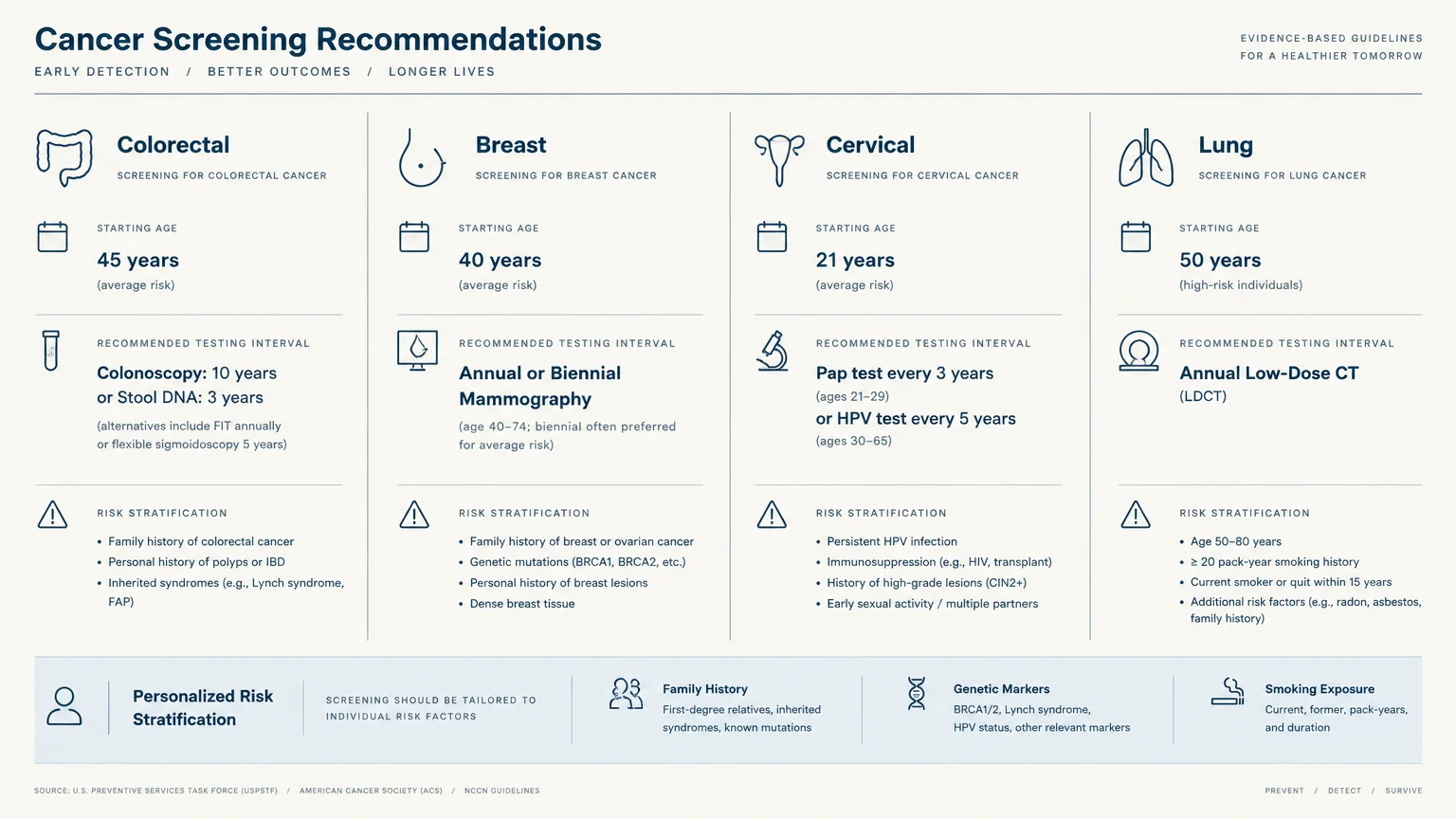
Authoritative health agencies maintain evidence-based guidelines to maximize screening benefits while limiting procedural risks. Projections from the American Cancer Society estimate 2,114,850 new cancer cases and 626,140 cancer deaths in the United States in 2026.
Crucially, at least 40% of newly diagnosed cancers and 44% of cancer deaths are potentially preventable. Modifiable lifestyle factors—including smoking at 19%, excess body weight at 8%, and alcohol intake at 5%—combine with routine screening to avert disease.
The U.S. Preventive Services Task Force recommends biennial screening mammograms for women starting at age 40 through 74. The American Cancer Society recommends annual mammography for women ages 45 to 54, with the option to transition to biennial screening at age 55.
Both major organizations recommend regular colorectal cancer screening for average-risk individuals between ages 45 and 75. High-risk smokers aged 50 to 80 with a 20 pack-year history should obtain annual low-dose computed tomography (LDCT) scans.
Despite these clear recommendations, only about 18% of eligible high-risk adults receive recommended annual lung scans. Furthermore, approximately 59% of Americans report skipping a recommended preventive screening examination.
Federal rulings have preserved zero-cost coverage for preventive screenings for over 150 million Americans under the Affordable Care Act. Regulatory updates also mandate zero-cost coverage for necessary follow-up breast imaging, removing major financial barriers to timely care.

Practical Steps and Actionable Advice
Take charge of your health by establishing proactive communication habits with your medical providers. Maintaining structured health records makes evaluating new or changing symptoms far more straightforward.
Keep a dedicated symptom journal whenever you notice a physical change. Record the exact date symptoms began, their severity on a scale of one to ten, and any aggravating or relieving factors.
Prepare three to five specific questions before visiting your physician. Ask directly whether your symptoms could indicate an underlying malignancy and whether non-invasive diagnostic tests are appropriate.
Bring a trusted friend or family member to important medical consultations. A companion can take detailed notes, ask clarifying questions, and help you remember complex clinical advice.
Review your personal and family medical history annually with your primary care provider. Genetic factors and shared environmental exposures help clinicians personalize your screening schedule.
Address modifiable lifestyle factors to lower your personal risk profile significantly. Cease tobacco use, engage in regular cardiovascular activity, eat whole nutrient-dense foods, and limit alcohol consumption.
Fulfill every scheduled preventive screening appointment promptly. If fear or financial concerns cause hesitation, discuss community clinic options or low-cost diagnostic programs with a medical social worker.
Frequently Asked Questions
Does having one of these symptoms mean I definitely have cancer?
No, experiencing one of these symptoms does not mean you have cancer. The vast majority of these warning signs stem from benign, treatable health conditions like infections, ulcers, or digestive changes.
However, you should never guess the cause of persistent bodily changes. Only a qualified medical professional can perform the necessary diagnostic evaluations to rule out serious illness safely.
Should I continue cancer screenings if I am over 75 years old?
Continuing routine screening past age 75 depends on your individual health status, life expectancy, and personal values. Major health organizations recommend individualized clinical decision-making for adults between ages 76 and 85.
If you remain active, possess a life expectancy exceeding ten years, and would pursue treatment if cancer were found, screening often remains beneficial. Discuss your overall health profile directly with your doctor.
Why do older adults frequently delay reporting new health symptoms?
Many seniors dismiss new symptoms as inevitable side effects of aging or confuse them with existing chronic health issues. Fear of receiving a serious diagnosis also causes people to avoid seeking timely medical attention.
Concerns about medical expenses or becoming a burden to family members can also create hesitations. Remember that identifying health challenges early minimizes invasive treatments and preserves your independence.
How does a doctor determine whether a symptom is caused by aging or cancer?
Physicians utilize physical examinations, patient history, specialized laboratory blood work, and advanced diagnostic imaging to investigate symptoms. They look for specific objective biomarkers and structural tissue changes that benign aging does not produce.
If initial tests reveal suspicious irregularities, your doctor may recommend a tissue biopsy. A biopsy allows a pathologist to examine cellular structures directly under a microscope for absolute certainty.
Will Medicare or private insurance cover tests ordered for these warning signs?
Yes, Medicare and private insurance policies provide comprehensive coverage for diagnostic evaluations ordered to investigate active symptoms. These procedures fall under diagnostic medical benefits rather than routine preventive screening categories.
Standard copayments, coinsurance, or deductibles may apply depending on your specific healthcare plan. Always ask your physician’s billing staff to verify your coverage requirements prior to elective diagnostic imaging.
Moving Forward with Confidence
Your body continually communicates its internal health through subtle physical signals. Learning to recognize the difference between normal aging and persistent warning signs empowers you to protect your long-term wellness.
Never ignore a symptom because you worry about overreacting or bothering your doctor. Healthcare professionals rely on your direct observations to detect internal changes before they evolve into complex medical crises.
By scheduling your routine screenings, adopting healthy daily habits, and speaking up about persistent changes, you take active ownership of your future. Stay observant, advocate for your health, and approach every medical evaluation with confidence.
This article is intended for informational and educational purposes only and is not a substitute for professional medical advice, diagnosis, or treatment. Always consult with a qualified healthcare provider regarding any health concerns or before making any decisions related to your health or treatment.