
Skipping breakfast might seem like an effortless way to trim daily calories and manage your body weight. However, skipping your morning meal often triggers an unexpected blood sugar spike when you sit down for lunch.
More than 155 million American adults live with diabetes or prediabetes, according to federal health data. For older adults, delaying nutrition until midday disrupts how your body handles insulin throughout the entire afternoon.
Clinical research reveals that passing on breakfast alters digestive hormones and drives up later-meal glucose levels; understanding this connection helps you protect your daily metabolic health.
Understanding the Second-Meal Phenomenon
When you wake up after an overnight fast, your liver continuously releases stored glucose into your bloodstream. Eating an early meal signals your pancreas to release insulin, which helps move that sugar into your cells for energy.
Medical researchers call the protective effect of an initial meal the second-meal phenomenon. A morning meal essentially primes your metabolic machinery to process carbohydrates more efficiently later in the day.
If you skip breakfast, your digestive system misses this initial metabolic cue. As a result, your body struggles to handle the sudden influx of carbohydrates when you finally consume your afternoon meal.
What Happens to Blood Sugar and Insulin
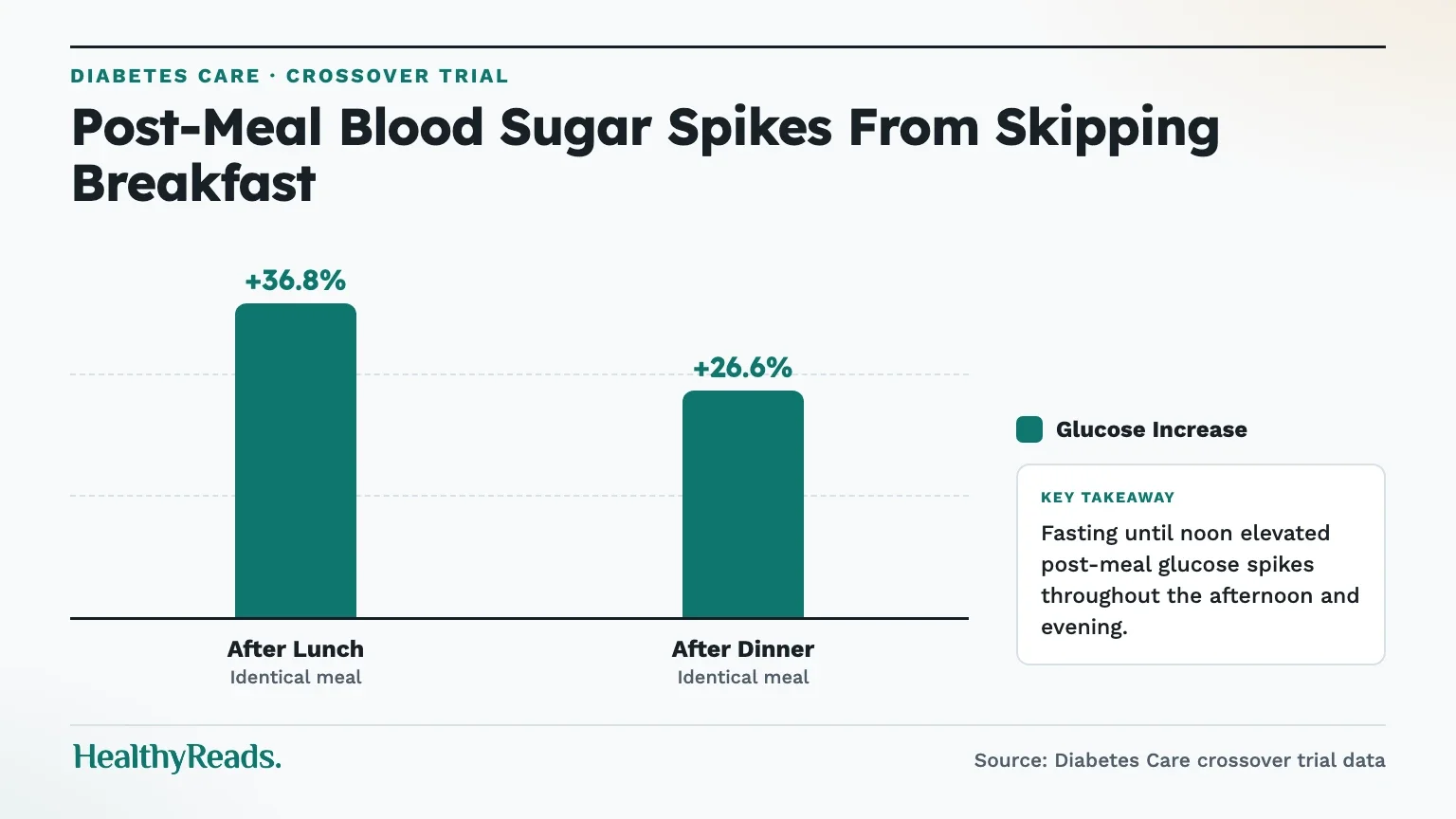
A landmark crossover trial published in Diabetes Care evaluated adults with type 2 diabetes who either ate breakfast or fasted until noon. Researchers fed participants identical lunches and dinners across both test days.
Fasting until noon increased blood sugar spikes by 36.8% after lunch and 26.6% after dinner. Skipping breakfast also reduced overall insulin secretion by 17% and delayed peak insulin delivery by thirty minutes.
Furthermore, morning fasting blunted the release of glucagon-like peptide-1 (GLP-1), a vital gut hormone that enhances insulin secretion. At the same time, free fatty acid levels surged by 41.1% before lunch.
Elevated fatty acids impair your cells’ ability to absorb glucose quickly. Even in healthy young adults, studies show a single skipped breakfast elevates post-lunch glucose despite lowering total daily calorie intake.
Some people assume skipping breakfast damages their resting metabolic rate, but clinical evidence tells a different story. Research published in the American Journal of Clinical Nutrition showed resting metabolism differed by only 11 calories between fasters and breakfast eaters.
Distinguishing Morning Spikes from Fasting Rebounds
It is easy to confuse post-meal spikes with early-morning glucose surges. Many older adults notice elevated blood sugar the moment they wake up, even before taking their first bite of food.
This natural morning increase is known as the dawn phenomenon. Between 3 a.m. and 8 a.m., your body releases a surge of cortisol and growth hormone to prepare you for waking.
These waking hormones prompt your liver to release glucose into your bloodstream. In people with insulin resistance, this natural surge can cause morning blood sugar to spike independently of meal timing.
A clinical study in Diabetes Care found that the dawn phenomenon occurred in 52% of adults aged 70 and older with type 2 diabetes. Skipping breakfast does not cause this early-morning hormone surge; rather, skipping elevates your numbers after subsequent meals.
Key Considerations for Adults Over 60
Aging naturally changes how your body processes nutrients and regulates blood sugar. As you grow older, gradual muscle loss reduces the primary tissue responsible for clearing glucose from your blood.
According to the Centers for Disease Control and Prevention, meal skipping can cause blood sugar to drop dangerously low in individuals taking certain diabetes medications. If you take insulin or sulfonylureas, an extended morning fast increases your risk of hypoglycemia.
Older adults also face unique nutritional needs that make meal skipping counterproductive. Consuming sufficient protein across several meals helps preserve your strength, balance, and lean muscle mass.
USDA nutritional data reveal that only 7% of adults aged 60 and older regularly skip breakfast, compared to 23% of younger adults. Maintaining this consistent morning routine protects your physical stamina throughout the day.

Weighing the Potential Benefits and Real Risks
Skipping breakfast often appeals to adults seeking simple ways to cut calories. A systematic review in The BMJ found that breakfast skippers consumed roughly 260 fewer daily calories over short periods.
However, researchers observed that any minor weight difference vanished in trials lasting eight weeks or longer. Extended fasting often prompts intense afternoon hunger, leading people to choose refined carbohydrates or oversized portions later.
A 2026 network meta-analysis in BMJ Medicine examined meal schedules across 41 clinical trials. Researchers discovered that early time-restricted eating—finishing dinner before 5 p.m. while preserving breakfast—produced superior results compared to late eating windows.
Participants keeping an early eating schedule achieved 1.15 kilograms greater weight loss and significantly lower fasting insulin levels. Skipping breakfast appears to work against your natural biological clock, whereas aligning meals with daylight optimizes metabolic control.
What Health Authorities and Clinical Research Advise
Major health organizations emphasize consistent meal timing over extreme fasting routines. Guidance from the National Institutes of Health highlights how circadian biology regulates your digestive organs and insulin sensitivity.
Your pancreas produces insulin most effectively during the morning hours. As evening approaches, your body naturally becomes more insulin resistant, making large late meals harder to process.
The Mayo Clinic recommends balanced, evenly spaced meals to prevent dramatic glucose fluctuations. Planning consistent meals with stable carbohydrate amounts helps stabilize your energy and protects your blood vessels from steep glycemic spikes.

Actionable Steps for Balanced Morning Nutrition
You do not need a massive feast to prime your metabolism for the day. Making deliberate, practical adjustments to your morning routine can help keep your afternoon blood sugar steady.
Prioritize Lean Protein and Soluble Fiber
Anchor your first meal with protein and fiber rather than refined starches or sugary pastries. Eggs, Greek yogurt, chia seeds, and unsweetened oatmeal digest slowly, preventing rapid rises in blood sugar.
Starting your day with protein also stimulates satiety hormones and keeps fatty acid levels stable before lunch. This steady foundation prevents the sharp glucose surge that often follows midday meals.
Keep a Consistent Meal Schedule
Try to eat your morning meal around the same time each day to support your circadian rhythms. Predictable meal patterns train your digestive system to anticipate and process incoming nutrients efficiently.
If you prefer an eating window for weight management, consider shifting it earlier in the day. Finishing your final meal before sunset often yields better metabolic benefits than skipping breakfast altogether.
Monitor Your Personal Glucose Patterns
Use a home glucose meter or continuous glucose monitor to observe how breakfast alters your afternoon numbers. Check your blood sugar two hours after lunch on days you eat breakfast versus days you fast.
Tracking your individual data provides clear evidence of how your body responds to different meal timings. Discuss these readings with your healthcare provider to tailor your daily nutrition plan.
Frequently Asked Questions About Skipping Breakfast
Does skipping breakfast permanently damage your metabolism?
Skipping breakfast does not permanently damage or slow your resting metabolic rate. Clinical trials show that resting energy expenditure remains virtually identical between breakfast eaters and fasters.
However, skipping breakfast temporarily impairs insulin sensitivity and hormone signaling at your next meal. This creates higher blood sugar spikes at lunch rather than a permanent metabolic slowdown.
What if you are not hungry when you first wake up?
You do not have to eat the moment your feet hit the floor. Waiting an hour or two after waking allows your appetite to develop naturally while still priming your digestive system before lunch.
A light snack such as a hard-boiled egg or a small handful of walnuts provides metabolic benefits without feeling heavy. Even a small portion of protein helps stabilize your afternoon glucose response.
Can skipping breakfast cause low blood sugar instead of high?
Yes, skipping breakfast can trigger dangerous hypoglycemia if you take blood sugar-lowering medications. Insulin and sulfonylureas continue lowering your blood glucose even when you have not eaten carbohydrates.
Always speak with your prescribing doctor before altering your meal schedule or attempting extended morning fasts. Your medication dosages may require careful adjustment to prevent severe low blood sugar episodes.
Is intermittent fasting safe for adults over 60?
Intermittent fasting can be safe for some older adults, but skipping breakfast is rarely the best approach. If you practice time-restricted eating, preserving breakfast and finishing dinner earlier generally offers superior glycemic control.
Seniors must also ensure they consume adequate daily protein and calories to prevent unintentional muscle loss. Always consult your physician to verify whether fasting aligns with your overall medical plan.
Making the Best Choice for Your Health
Cutting calories remains an important strategy for weight management, but the timing of your nutrition matters just as much as the quantity. Skipping breakfast may seem convenient, yet the resulting later-meal blood sugar spikes create unnecessary metabolic strain.
By fueling your body with a balanced, protein-rich morning meal, you prime your cells for balanced glucose control throughout the afternoon and evening. Small, sustainable habits around your morning table will protect your vitality and long-term health for years to come.
This article is intended for informational and educational purposes only and is not a substitute for professional medical advice, diagnosis, or treatment. Always consult with a qualified healthcare provider regarding any health concerns or before making any decisions related to your health or treatment.