
A nationwide recall now affects one lot of prescription-strength 800 mg ibuprofen tablets due to potential aluminum particulate contamination. If you take this medication for joint pain or arthritis, you should check your supply immediately.
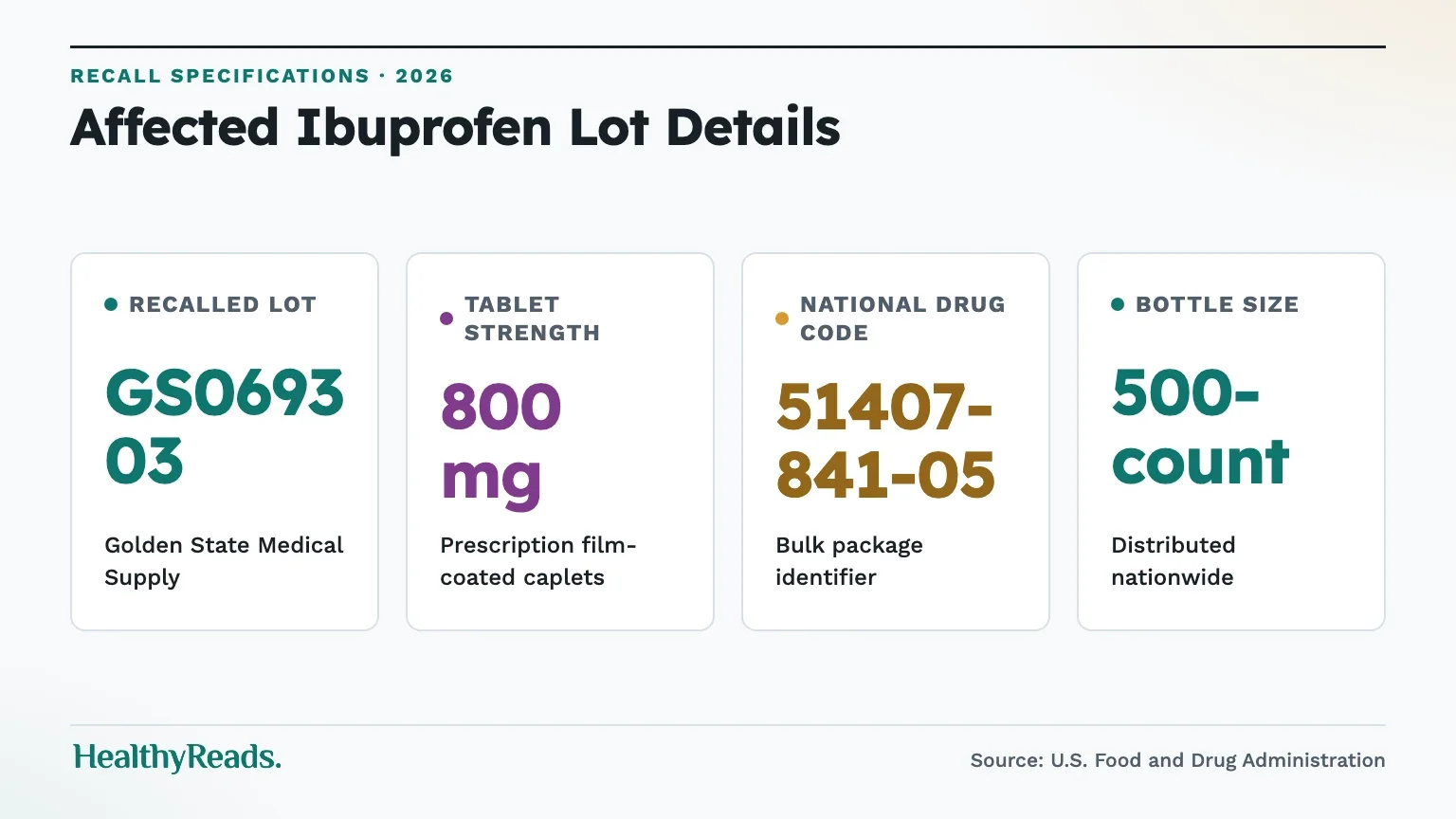
Golden State Medical Supply initiated the voluntary recall after discovering tiny metal particles measuring up to 0.10 millimeters on tablet surfaces. The affected medication was distributed across the country in bulk 500-count bottles.
While health officials report no injuries, these surface particles can irritate your digestive tract. You should contact your dispensing pharmacy right away to confirm whether your prescription came from the recalled batch.
Understanding the Nationwide Ibuprofen Recall
Golden State Medical Supply issued the voluntary recall for lot GS069303 of prescription ibuprofen 800 mg tablets. The company published the consumer-level alert through the U.S. Food and Drug Administration.
The affected bottles carry National Drug Code 51407-841-05 and display an expiration date of January 2030. Wholesaler McKesson distributed these 500-count bulk containers nationwide to healthcare facilities and retail pharmacies.
The tablets are white, film-coated, and caplet-shaped, featuring the debossed code “8I” on one side. They contain a high prescription dosage often prescribed for severe arthritis and chronic inflammation.
This recall does not involve over-the-counter ibuprofen products such as Advil, Motrin, or standard store brands. Smaller 100-count prescription bottles and other lot numbers remain unaffected and safe to use.
Why Aluminum Particulates Pose a Health Concern
Testing identified tiny aluminum fragments on the tablet surfaces, ranging between 0.01 and 0.10 millimeters in size. The root cause of this contamination has not yet been verified.
Ingesting microscopic metal particles can cause localized irritation or superficial abrasion along your gastrointestinal lining. This friction may lead to unexpected stomach discomfort or nausea.
Fortunately, medical experts consider the overall likelihood of serious harm to be remote. Golden State Medical Supply has received zero reports of adverse medical events or injuries tied to this recall.
The regulatory classification for this specific event remains unconfirmed on official federal enforcement reports. However, regulators monitor foreign particulate contamination closely to prevent internal digestive trauma.

Key Health Considerations for Older Adults
Prescription-strength ibuprofen is common among older adults managing osteoarthritis or rheumatoid arthritis pain. Doctors routinely prescribe the 800 mg dose because it provides substantial anti-inflammatory relief.
As you age, your stomach lining becomes naturally thinner and more vulnerable to physical and chemical irritation. Adding physical particulate friction to high-dose nonsteroidal anti-inflammatory drugs increases the potential for digestive distress.
Your kidneys and cardiovascular system also process nonsteroidal pain relievers differently as your body matures. The National Institutes of Health cautions seniors about balancing high pain dosages against gastrointestinal risks.
Because older bodies heal more slowly from internal irritation, addressing contaminated medication quickly is vital. Protecting your gut lining preserves your ability to tolerate essential long-term arthritis therapies.
How to Identify Your Medication
Identifying recalled medication requires an extra step because pharmacies rarely dispense manufacturer bottles directly to patients. Instead, pharmacists repackage bulk pills into standard amber prescription vials.
Your personal prescription label probably displays your name and dosage, but it often omits the manufacturer lot number. As a result, you cannot confirm your safety by reading your amber vial alone.
Inspect your pills closely under bright lighting. If you take white, oval caplets debossed with “8I,” your medication matches the physical description of the affected lot.
Call your dispensing pharmacy and provide the prescription number printed on your label. Your pharmacist maintains detailed dispensing logs and can immediately tell you if your pills came from lot GS069303.
Safe Medication Return and Disposal Guidelines
If your pills belong to the recalled lot, stop taking them immediately. Do not discard these prescription tablets in your household trash or wash them down the sink.
The manufacturer instructs all patients to return unused tablets directly to the pharmacy that dispensed them. Returning the medication allows the pharmacy to document the return and issue an uncontaminated replacement.
While federal agencies sometimes suggest mixing old pills with coffee grounds for household disposal, you should follow specific recall protocols here. The Mayo Clinic emphasizes adhering strictly to manufacturer recall instructions.
For direct inquiries regarding the recall, you can contact Golden State Medical Supply at 800-284-8633, extension 116. You can also email the company’s dedicated safety team at recalls@gsms.us.

Managing Pain Safely While Awaiting Replacement
Do not attempt to replace your prescription medication with over-the-counter pain relievers without professional medical guidance. Over-the-counter ibuprofen carries a recommended maximum adult daily limit of 1,200 milligrams.
In contrast, supervised prescription regimens for chronic joint inflammation may reach up to 3,200 milligrams daily. Attempting to match that dose using nonprescription pills could lead to accidental misuse or organ strain.
Contact your prescribing physician immediately to request an alternative pain regimen while your pharmacy refills your prescription. Your doctor may suggest temporary non-pharmacological relief strategies, such as heat packs or gentle stretching.
If you experience persistent stomach pain, dark stools, or unusual nausea after taking recalled medication, seek medical evaluation promptly. You can report any adverse reactions directly to the FDA MedWatch program online or by phone.
Frequently Asked Questions
Can I take over-the-counter Advil or Motrin instead?
You should not substitute nonprescription pain relievers without speaking with your healthcare provider first. Your doctor must determine a safe alternative dose that effectively manages your pain without harming your stomach.
What should I do if I already swallowed pills from this lot?
Monitor how you feel and contact your physician if you experience stomach ache, heartburn, or nausea. The overall likelihood of harm is remote, and no adverse reactions have been reported to date.
Does this recall include children’s liquid ibuprofen?
No, this recall involves only 800 mg prescription tablets for adults. Earlier in 2026, an unrelated recall affected specific lots of children’s oral suspension, but that matter is entirely separate.
How do I report a bad reaction to federal regulators?
You can report side effects to the FDA MedWatch program by calling 800-332-1088 or submitting a report through their official website. Sharing this information helps health authorities monitor drug safety nationwide.
Protecting Your Health During Drug Recalls
Prescription recalls can feel alarming, but staying informed puts you in complete control of your wellness. Checking your medication promptly ensures you manage your joint pain safely without unnecessary digestive complications.
Keep open lines of communication with your pharmacist and doctor whenever safety notices arise. They remain your most dependable partners in navigating prescription changes and safeguarding your long-term health.
This article is intended for informational and educational purposes only and is not a substitute for professional medical advice, diagnosis, or treatment. Always consult with a qualified healthcare provider regarding any health concerns or before making any decisions related to your health or treatment.