Clear sensory tests allow you to determine whether beef is wholesome or dangerous before you start cooking. You can protect your household from foodborne illness by checking three physical markers: color, scent, and texture.
Fresh beef should display a firm texture, a neutral scent, and a uniform color appropriate to its packaging. Detecting early warning signs keeps harmful bacteria off your dinner table and prevents unnecessary grocery waste.
Learning these practical food safety checks gives you total control over your kitchen. This comprehensive guide helps you evaluate raw cuts, ground meat, and leftovers with complete clinical confidence.
Understanding the Basics of Beef Spoilage
Meat spoilage occurs when microscopic organisms break down the muscle proteins and fats within beef. This natural decomposition alters the structural integrity, chemical balance, and flavor profile of the tissue.
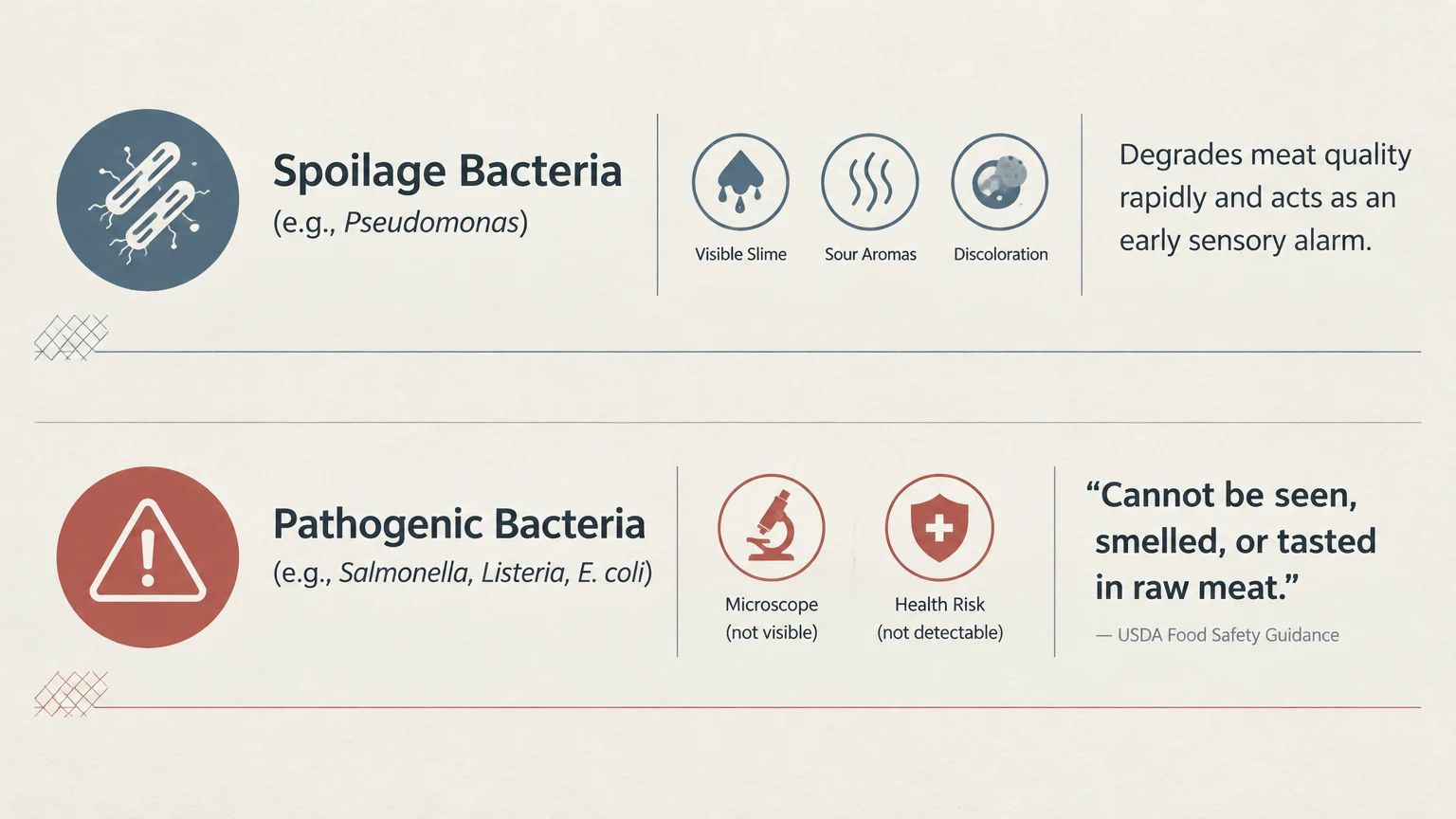
Two distinct categories of microorganisms affect meat over time: spoilage bacteria and pathogenic bacteria. Understanding the critical difference between these two groups helps you manage food safety effectively.
Spoilage bacteria, including common strains like Pseudomonas, cause deterioration that you can observe through sensory clues. They produce noticeable slime, sour aromas, and unsightly discoloration across the surface of the cut.
These spoilage organisms degrade quality rapidly; however, they rarely cause severe or life-threatening infections on their own. Instead, they act as an unmistakable alarm system warning you that decomposition has begun.
Pathogenic bacteria represent a far more insidious threat to your health. Microorganisms such as Salmonella, Listeria, and pathogenic Escherichia coli cause severe food poisoning.
According to safety experts at the USDA, pathogenic bacteria cannot be seen, smelled, or tasted in raw or cooked meat. A cut of beef can harbor millions of active pathogens while still appearing vibrant and smelling perfectly pleasant.
This biological reality means sensory inspection serves as your first defense, but temperature control provides your primary shield. You must combine vigilant observation with strict refrigeration habits to remain safe.
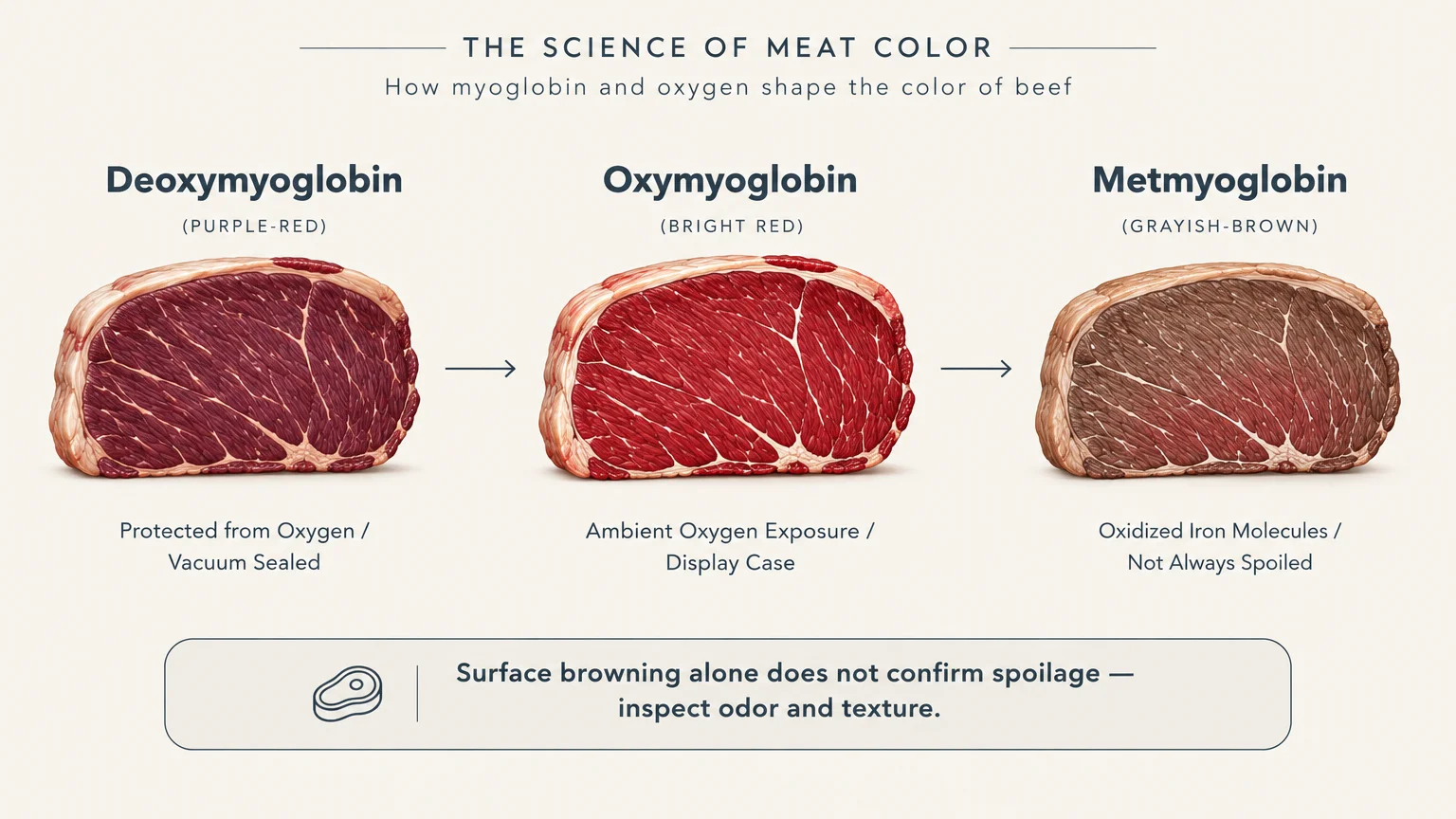
Meat color changes continuously due to a specialized muscle protein known as myoglobin. Myoglobin stores oxygen in mammalian muscle cells and dictates the shade of red you see in the butcher case.
When beef is completely fresh and shielded from oxygen, myoglobin displays a deep purplish-red hue. You frequently notice this darker shade when opening vacuum-sealed packages or inspecting interior layers of whole muscle.
Exposing beef to ambient oxygen transforms myoglobin into oxymyoglobin; this reaction creates the bright, cherry-red color associated with commercial supermarket displays. Oxygenation alters the pigment without indicating any bacterial growth.
Prolonged storage or low-oxygen environments eventually oxidize the iron molecules in the protein, creating metmyoglobin. Metmyoglobin turns meat tissue grayish-brown, a shift that often alarms consumers needlessly.
Surface browning alone does not confirm that beef has spoiled. You must evaluate the surface sheen, moisture levels, and odor alongside the pigment before deciding whether to discard the cut.
Key Considerations for Seniors
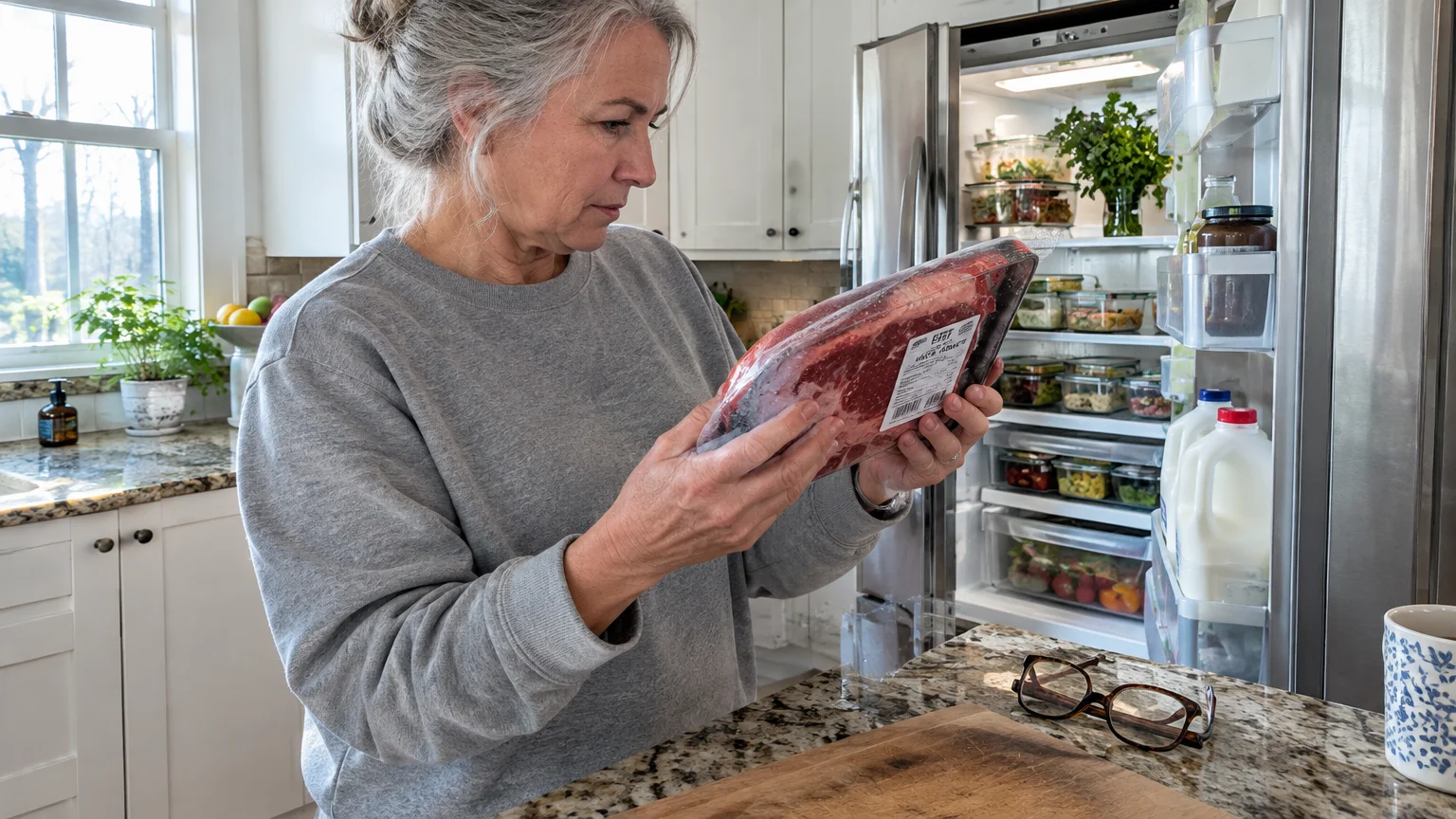
Aging alters human physiology in ways that heighten vulnerability to foodborne pathogens. As you cross your sixtieth year, your immune system undergoes an organic transition called immunosenescence.
Immunosenescence weakens your body’s white blood cell response against invading bacterial pathogens. A dose of bacteria that might cause mild discomfort in a younger adult can trigger severe systemic distress in an older individual.
Your digestive tract also experiences subtle changes that reduce your natural defenses. Aging stomachs frequently produce less gastric acid, a clinical condition known as hypochlorhydria.
Stomach acid provides an aggressive chemical barrier that destroys swallowed microorganisms before they reach your intestines. Lower acid concentrations allow harmful microbes from spoiled or tainted meat to survive and multiply downstream.
Your sensory faculties also change gradually over the decades, which can impact your culinary safety. Presbyosmia, the age-related decline in olfactory acuity, impairs your ability to detect faint sour or putrid odors.
If your sense of smell has diminished, you might miss the subtle chemical warnings of early spoilage. Relying strictly on your nose can lead to accidental ingestion of spoiled food.
Age-related changes in vision can complicate visual meat inspections as well. Diminished contrast sensitivity or cataracts make subtle surface sheens and grayish tinges harder to identify in typical kitchen lighting.
Older adults also process dehydration far less efficiently than younger demographics. When foodborne infections cause vomiting or diarrhea, older bodies lose essential fluids and electrolytes at dangerous rates.
Reduced kidney filtration rates amplify the systemic risks of severe dehydration. Preventing bacterial contamination altogether remains the safest strategy for maintaining independence and vitality at home.
Compensating for sensory shifts requires practical adjustments rather than anxiety. You can protect yourself by inspecting meat under direct task lighting and verifying temperatures with reliable digital equipment.
Benefits of Fresh Beef and Risks of Spoilage
Consuming properly handled, fresh beef provides extraordinary nutritional benefits for mature adults. Beef contains exceptionally bioavailable heme iron, which supports red blood cell production and prevents fatigue.
Fresh beef provides complete dietary protein rich in essential amino acids like leucine. Maintaining adequate leucine intake stimulates muscle protein synthesis, helping you combat age-related muscle loss, or sarcopenia.
High-quality beef also delivers substantial doses of zinc and vitamin B12. These micronutrients reinforce immune function, support cognitive health, and sustain optimal neurological performance as you age.
The risks of consuming spoiled or improperly handled beef, by contrast, are medically severe. Ingesting active bacteria can induce acute gastroenteritis characterized by intense abdominal cramping, nausea, and fever.
Certain bacterial strains produce toxic metabolic byproducts known as enterotoxins while growing on warm meat. Pathogens like Staphylococcus aureus release heat-stable toxins that survive boiling temperatures entirely.
Cooking spoiled meat does not neutralize these preformed toxins. Even if you cook tainted meat until it is well done, the heat-stable toxins can still trigger violent illness within hours.
Infection with Shiga toxin-producing E. coli poses a grave danger to older cardiovascular and renal systems. This pathogen can trigger hemolytic uremic syndrome, a destructive condition leading to acute kidney failure.
Hospitalization rates for foodborne illness climb sharply among adults aged 65 and older. Seeking medical guidance from organizations like the CDC highlights the critical importance of early prevention.
Unwarranted fear can also carry economic consequences when consumers discard perfectly wholesome meat. Throwing away good food out of confusion drains your monthly budget and inflates household grocery expenses.
Learning how to distinguish normal atmospheric browning from authentic decomposition strikes the perfect balance. You protect your digestive tract from acute distress while preserving your hard-earned financial resources.
What Health and Safety Authorities Recommend
Leading public health agencies emphasize that temperature control governs all aspects of meat safety. The FDA and the USDA establish precise parameters for handling raw animal proteins safely.
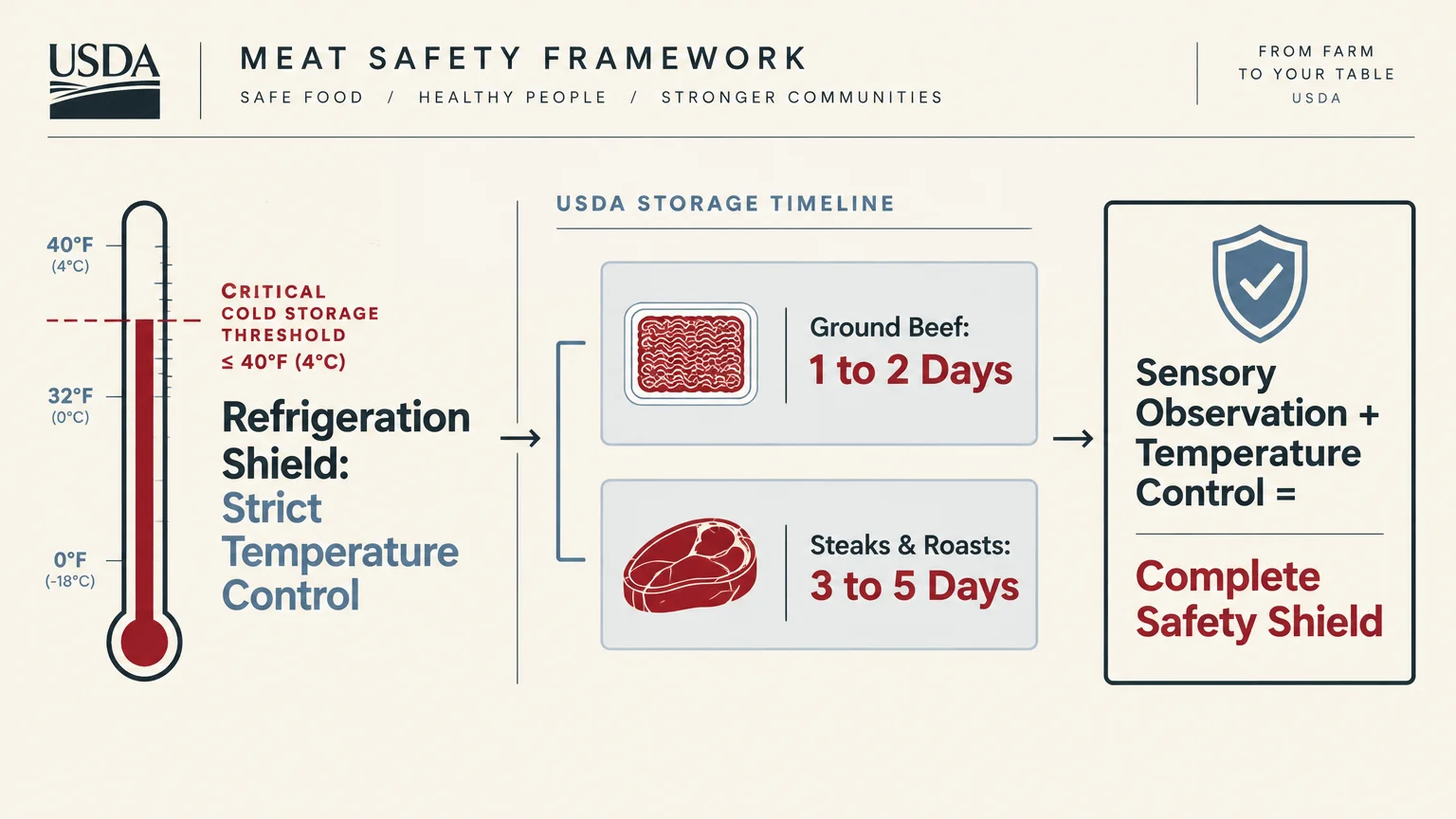
You must keep your household refrigerator set at 40°F (4.4°C) or colder at all times. Maintaining this low temperature inhibits bacterial replication and extends the shelf life of fresh proteins.
Freezers must maintain a constant operating temperature of 0°F (-17.8°C) or colder. Freezing halts microbial growth entirely, rendering meat safe from bacterial degradation indefinitely while it remains frozen.
Authorities enforce the critical two-hour rule for raw and cooked meat at room temperature. You must never leave beef sitting out on counters or dining tables for more than two hours.
When the ambient room temperature climbs above 90°F (32.2°C), that safety window shrinks to just one hour. Warm environments accelerate bacterial proliferation exponentially, turning minor contamination into a health hazard.
Date labeling regulations are evolving significantly to eliminate consumer confusion across grocery retail aisles. Federal law historically treated open date labeling as voluntary on almost all foods, excluding infant formula.
The USDA Food Safety and Inspection Service recommends using the phrase “Best if Used By” on packaging. This language communicates peak sensory quality rather than a rigid safety expiration deadline.
Federal agencies estimate that misunderstanding date labels drives roughly 20% of household food waste across the United States. This misunderstanding discards approximately 4.3 million tons of edible food and wastes $22 billion each year.
Regulatory frameworks are shifting rapidly to resolve this costly consumer dilemma. Effective July 1, 2026, California became the first state to ban consumer-facing “Sell By” dates under assembly bill AB 660.
The California legislation mandates standardized phrasing across retail packaging: “BEST if Used by” indicates culinary quality, while “USE by” designates safety thresholds. National brands are aligning packaging with these clear distinctions to maintain nationwide distribution.
At the federal level, lawmakers reintroduced the bipartisan Food Date Labeling Act in July 2025. This legislation aims to establish uniform dual-label standards across all states, with an FDA compliance target of January 1, 2028.
When cooking beef, health experts at the Mayo Clinic insist on utilizing a calibrated food thermometer. Visual cues like meat color never prove that meat has reached a pathogen-destroying temperature.
Ground beef requires a minimum internal cooking temperature of 160°F (71.1°C) to ensure safety. Grinding distributes surface bacteria throughout the meat, requiring thorough heat penetration through the entire burger or loaf.
Whole cuts like steaks and roasts require an internal temperature of 145°F (62.8°C). You must allow whole cuts to rest for at least three minutes after cooking before carving.
This mandatory rest period allows internal temperatures to remain elevated, neutralizing lingering pathogens while redistributing flavorful juices. Cooked beef leftovers must always reach an internal temperature of 165°F (73.9°C) when reheated.
Step-by-Step Practical Inspection Guide
Conducting a methodical physical inspection protects you from spoiled beef before preparation begins. Take your meat package to a well-lit counter and follow these reliable evaluation steps.
1. The Visual Test
Examine the overall hue and surface reflections of the beef under direct lighting. Fresh whole beef cuts generally exhibit a clean cherry-red, deep purple, or warm reddish-brown tone.
Look closely for dull grayish-green, faded brown, or overtly greenish discolorations across the exterior. Distinct green or yellow blotches indicate advanced microbial decomposition; discard any cut displaying these shades immediately.
Examine the beef for any strange iridescence or unnatural sheen across the cut surface. While minerals in muscle tissue occasionally create a harmless metallic glow, an oily rainbow sheen paired with dull color signals spoilage.
Inspect the packaging for abnormal swelling, puffiness, or trapped gas bubbles beneath the clear film. Gas production occurs when active colonies of spoilage bacteria ferment organic material inside sealed containers.
2. The Scent Test
Bring the cut near your nose and inhale gently to assess its volatile aromatic compounds. Fresh raw beef carries a very subtle, mild scent reminiscent of iron or clean mineral water.
Spoiled beef produces an unmistakable sour, pungent, or ammonia-like stench that repulses your senses. Decomposing proteins release sulfur compounds that smell strikingly like rotten eggs or unwashed gym gear.
A sickly sweet or stale vinegar aroma also serves as an explicit warning sign of bacterial breakdown. If any sharp or unpleasant odor greets your nose, trust your instincts and dispose of the meat.
3. The Touch and Texture Test
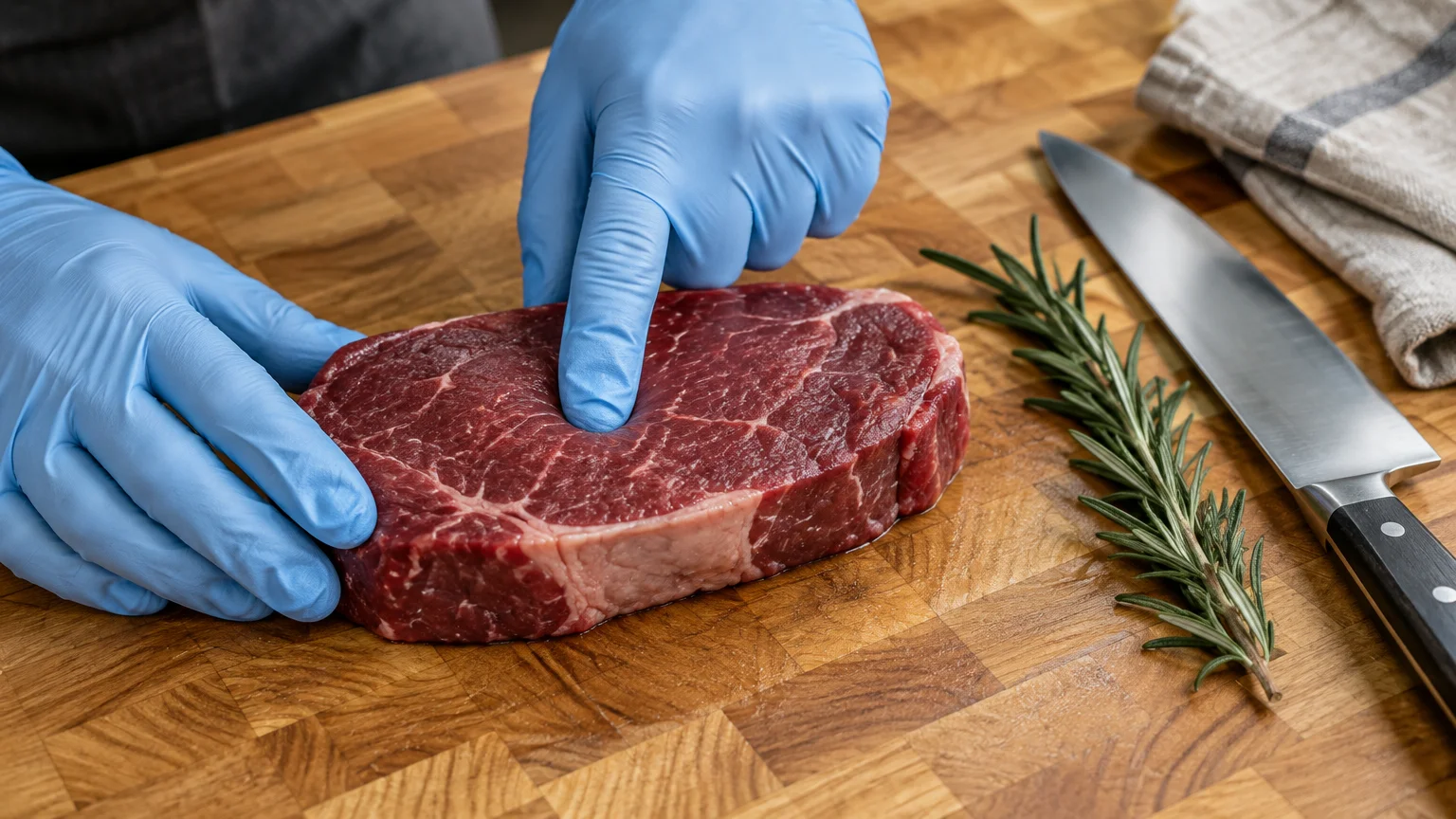
Wash your hands thoroughly and touch the surface of the raw cut with clean fingertips. Fresh beef feels firm, dense, and naturally moist without sliding excessively under direct pressure.
Spoiled beef develops a sticky, tacky, or slippery film over its exterior surface. This slimy coating consists of millions of concentrated bacterial cells colonizing the moisture layer of the muscle.
If the meat leaves an oily, mucus-like residue on your fingers that resists rinsing, spoilage has occurred. Discard slimy meat immediately and sanitize your sink, hands, and prep surfaces with hot soapy water.
4. The Storage Clock
Track your refrigeration timelines carefully using clear labels or waterproof markers on packaging. Raw ground beef and delicate variety meats like liver remain safe in your refrigerator for only 1 to 2 days.
Whole beef cuts, including steaks, roasts, and stew meat, stay safe in a chilled refrigerator for 3 to 5 days. Never leave raw cuts lingering beyond these established time limits without freezing them.
Cooked beef leftovers remain safe in the refrigerator for 3 to 4 days after preparation. Prepared beef broths, gravies, and thin sauces spoil much faster, requiring consumption within 1 to 2 days.
If you cannot cook raw cuts within their recommended windows, transfer them into your freezer promptly. Raw ground meat maintains peak quality in the freezer for 3 to 4 months.
Whole cuts like roasts and steaks preserve their peak flavor and texture in the freezer for 6 to 12 months. Food stored continuously at 0°F (-17.8°C) remains safe indefinitely according to official food preservation science.
5. Thawing Protocols
Never thaw frozen beef on your kitchen counter or in a basin of hot standing water. Room-temperature thawing allows the exterior surface to enter the bacterial danger zone long before the interior thaws.
Thaw frozen packages inside your refrigerator over twenty-four to forty-eight hours to keep temperatures safe throughout the process. Place thawing packages inside a rimmed tray on the lowest shelf to catch escaping juices.
For rapid thawing, submerge sealed leakproof packages in cold tap water, replacing the water every thirty minutes. Cook meat thawed under cold water immediately to prevent bacterial growth.
Frequently Asked Questions
Why is my ground beef bright red on the outside but gray inside?
This color variation represents normal chemistry rather than spoilage. The outer layer displays red because atmospheric oxygen interacts directly with surface myoglobin.
The interior of the ground beef package lacks access to oxygen, causing the pigments to turn grayish-brown. As long as the meat smells clean and feels firm without sliminess, internal browning is completely safe.
Can I wash raw beef with water or vinegar to remove bacteria?
You should never rinse or wash raw beef under your kitchen faucet before cooking. Washing raw meat does not destroy bacteria; instead, splashing water aerosolizes dangerous microbes across your counters, sinks, and utensils.
Washing raw meat dramatically increases cross-contamination risks for your entire household. Applying heat during proper cooking remains the only safe, scientifically proven method for eliminating pathogens.
Does cooking spoiled beef thoroughly make it safe to eat?
Cooking spoiled beef thoroughly will not make it safe for human consumption. While heat kills living bacteria, it fails to neutralize heat-resistant toxins already deposited in the tissue.
Inoculated toxins bypass thermal destruction and cause rapid gastrointestinal poisoning once ingested. You must discard any meat that exhibits clear signs of spoilage regardless of your planned cooking method.
How can I tell if cooked beef leftovers have gone bad?
Cooked beef leftovers that have spoiled develop a sour aroma, a dull whitish sheen, or a slick surface. Leftover meat stored past 4 days in the refrigerator carries heightened risks of Listeria proliferation.
Discard any cooked beef that has spent more than 4 days in your refrigerator. When reheating safe leftovers, use a thermometer to verify that the internal temperature reaches 165°F (73.9°C).
What causes a strange chemical smell when opening vacuum-sealed beef?
Vacuum-packaged beef occasionally releases a mild, tangy sulfur scent immediately upon opening the plastic pouch. This phenomenon, known as confinement odor, results from trapped gases and natural enzymatic reactions inside airtight packaging.
Rinse your hands, set the meat on a plate, and allow it to air out for twenty minutes. If the aroma dissipates and the meat smells neutral, it remains safe; persistent foul odors mean you must discard it.
How do “Best if Used By” dates differ from strict safety deadlines?
A “Best if Used By” date indicates when the manufacturer guarantees peak flavor, juiciness, and nutritional quality. It does not mark an automatic transition into toxic or dangerous food.
You can safely consume beef past this date if you stored it at 40°F (4.4°C) and it passes sensory checks. Conversely, a strict “Use By” date signals the deadline when you should cook, freeze, or discard the item.
Summary of Key Takeaways
Evaluating beef freshness requires a swift, multi-sensory approach combining visual inspection, aroma assessment, and tactile verification. Fresh beef displays a firm body, a clean mineral scent, and uniform coloration appropriate to its exposure to oxygen.
Spoiled beef announces itself through sour odors, sticky or slimy coatings, and dull greenish-brown discolorations. Remember that dangerous pathogens like Salmonella lack sensory warnings, making strict refrigeration at 40°F (4.4°C) mandatory.
Adhere faithfully to the two-hour rule and track your storage timelines using dates marked on your containers. Ground meat requires preparation within 2 days, while whole roasts and steaks hold safely for up to 5 days.
Always verify doneness using a digital probe thermometer rather than relying on color or cooking time alone. Ground beef must reach 160°F (71.1°C), and whole steaks must reach 145°F (62.8°C) followed by a 3-minute rest.
Mastering these straightforward kitchen rules protects your digestive health and preserves your vitality through every stage of life. When you encounter meat that fails your sensory checks or exceeds safe storage windows, remember the golden kitchen rule: when in doubt, throw it out.
This article is intended for informational and educational purposes only and is not a substitute for professional medical advice, diagnosis, or treatment. Always consult with a qualified healthcare provider regarding any health concerns or before making any decisions related to your health or treatment.