
Original Medicare coverage changes now require prior approval for several routine surgical and pain interventions. If your doctor recommends surgery or advanced nerve therapies, these federal rules directly affect your care schedule.
The federal government recently launched a pilot program known as WISeR across six states to monitor medical necessity. Understanding how these rules operate helps you avoid unexpected care delays and prevent billing surprises.
Knowing which treatments face extra administrative scrutiny empowers you to advocate for your health needs effectively. Take time to explore the seventeen procedures affected by these new Medicare restrictions.
Understanding the Basics of Medicare WISeR
The Centers for Medicare & Medicaid Services launched the Wasteful and Inappropriate Service Reduction Model to curb questionable healthcare spending. Federal regulators officially announced this demonstration project on June 27, 2025.
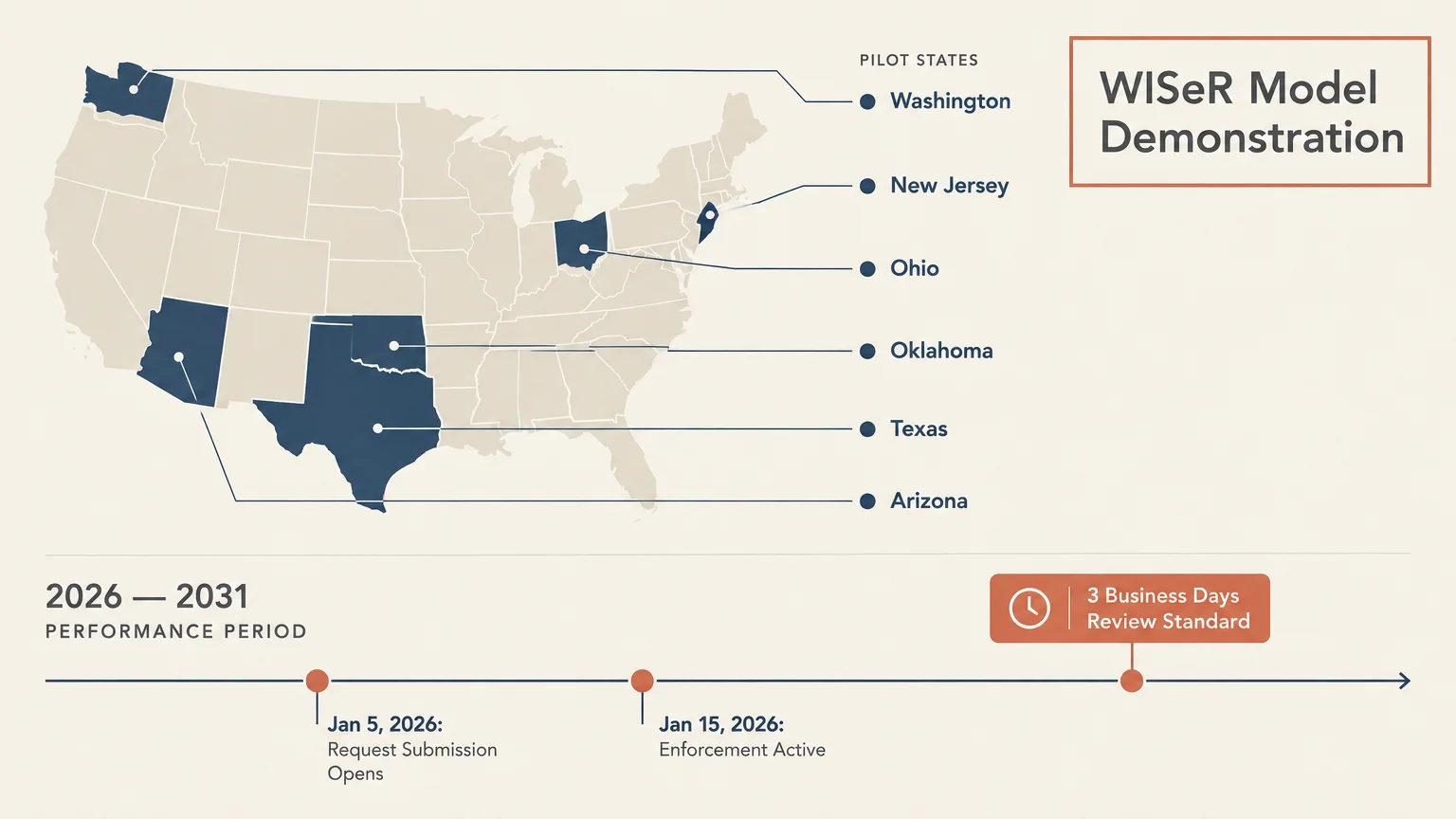
The WISeR model spans six performance years, running from January 1, 2026, through December 31, 2031. It targets services that historical billing patterns identify as vulnerable to clinical overuse or inappropriate billing.
This initiative applies strictly to Original Medicare Parts A and B, which covers approximately 35 million Americans. It does not apply to Medicare Advantage plans, which already manage independent prior authorization protocols.
The demonstration operates across six pilot states: Arizona, New Jersey, Ohio, Oklahoma, Texas, and Washington. If you receive care in these states, your doctors must navigate these new procedural hurdles.
Healthcare providers began submitting advance coverage requests on January 5, 2026. This mandate applies to selected medical services performed on or after January 15, 2026.
CMS partnered with private technology contractors, including Virtix Health, Genzeon, and Humata Health. These commercial vendors use artificial intelligence and machine learning algorithms alongside human clinicians to evaluate treatment requests.
CMS designed the system to deliver standard prior authorization determinations within 3 business days. Rapid turnarounds aim to prevent prolonged scheduling disruptions for seniors who require timely medical treatment.
Submitting advance requests remains technically voluntary for your treating physician. However, skipping prior submission routes the claim into mandatory pre-payment medical review, delaying payment and increasing denial risks.
Clinicians who maintain a consistent record of compliant billing can eventually earn a gold card exemption. This special status relieves high-performing doctors from submitting routine advance requests for selected procedures.
One controversial element involves vendor compensation structures. Participating technology firms receive a percentage of averted expenditures, earning financial rewards when Medicare avoids paying for questioned services.
Patient advocates argue that this financial arrangement creates an inherent conflict of interest. CMS maintains that oversight is necessary because wasteful healthcare accounts for up to 25% of national spending.
17 Medical Procedures Facing Medicare Restrictions
Federal officials selected specific interventions due to high utilization rates and questionable clinical necessity. You should review these seventeen procedures carefully if you manage chronic pain, spinal conditions, or nerve disorders.
1. Electrical Nerve Stimulators
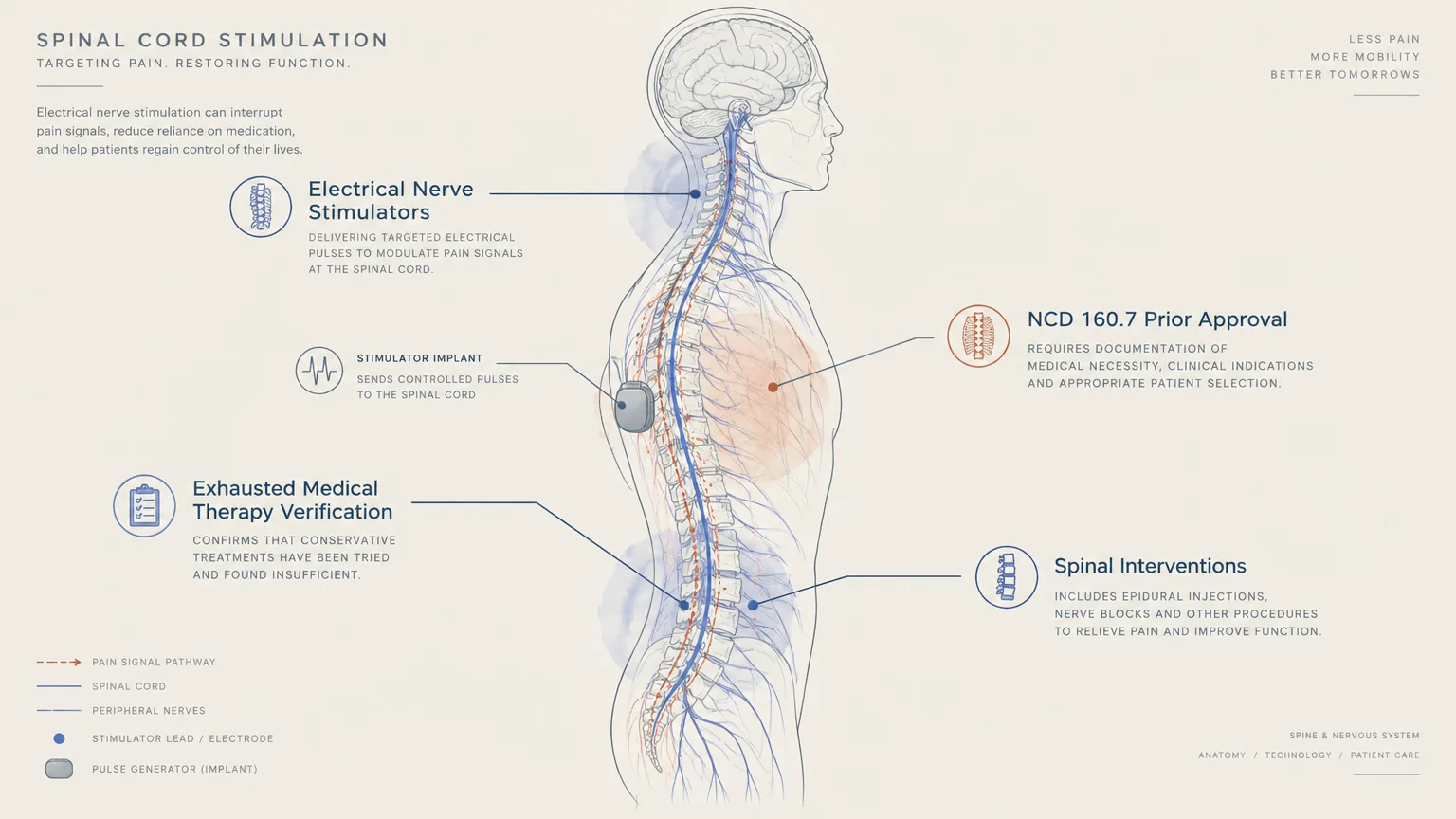
Surgeons implant electrical nerve stimulators to intercept chronic pain signals before they reach your brain. Medicare regulates these devices under National Coverage Determination 160.7 to verify genuine clinical necessity.
Your doctor must submit documentation proving that you exhausted comprehensive medical therapies without adequate pain relief. You must also complete a successful temporary trial stimulation before receiving a permanent implant.
Medicare reviewers examine your psychological clearance and physical exam records before approving device placement. Missing records or incomplete trial documentation will result in an immediate coverage denial.
2. Sacral Nerve Stimulation for Urinary Incontinence
Sacral nerve stimulation treats urge incontinence and non-obstructive urinary retention by stimulating pelvic nerves. Medicare outlines strict coverage criteria under National Coverage Determination 230.18.
Your medical chart must show that behavioral therapies, pelvic floor exercises, and medications failed to resolve your symptoms. Your physician must also record detailed voiding diaries during a preliminary test phase.
Medicare denies claims if your specialist skips conservative therapies before pursuing surgical implantation. You should verify that your medical record contains clear documentation of your past prescription trials.
3. Phrenic Nerve Stimulators
Phrenic nerve stimulators assist individuals with diaphragm paralysis or central sleep apnea by stimulating breathing muscles. These complex neurological devices fall under National Coverage Determination 160.19 guidelines.
Medicare requires your specialist to verify intact nerve function through comprehensive electrodiagnostic testing before surgery. Your clinical team must demonstrate that mechanical ventilation alternatives remain unsuitable for your lifestyle.
Reviewers carefully evaluate pulmonary function studies and diaphragm mobility tests. Thorough documentation protects you from surgical delays when seeking treatment for severe respiratory impairment.
4. Vagus Nerve Stimulation
Vagus nerve stimulation delivers electrical pulses to the brain to treat refractory epilepsy and treatment-resistant depression. Governed by National Coverage Determination 160.18, this procedure requires extensive clinical evidence.
Your medical team must prove that multiple standard medications failed to control your seizures or depressive episodes. Reviewers verify that less invasive psychiatric or medical options were fully explored first.
Because this procedure involves surgical implantation, Medicare closely inspects your neurological evaluations. Incomplete pharmacy histories or missed specialist consultations often lead to administrative delays.
5. Induced Lesions of Nerve Tracts and Nerve Ablation
Radiofrequency ablation interrupts persistent pain signals by applying targeted heat to sensory nerve fibers. Medicare evaluates these nerve lesioning procedures under National Coverage Determination 160.1.
Your pain physician must document positive responses to preliminary diagnostic nerve blocks before performing permanent ablation. You must demonstrate substantial temporary pain relief during diagnostic testing to qualify for coverage.
Medicare strictly enforces limits on the frequency of repeat nerve ablation procedures. Ensure your doctor records exact pain scores before and after each diagnostic injection.
6. Hypoglossal Nerve Stimulation for Obstructive Sleep Apnea
Hypoglossal nerve stimulators keep your upper airway open during sleep by stimulating tongue movement. Local Coverage Determinations strictly regulate coverage for this surgical sleep apnea alternative.
You must document that continuous positive airway pressure therapy proved clinically ineffective or completely intolerable. Your physician must also confirm that your body mass index remains within program limits.
Medicare requires a specialized drug-induced sleep endoscopy to verify your airway collapses in an acceptable pattern. Without these specific endoscopic recordings, Medicare will deny prior approval for the implant.
7. Epidural Steroid Injections for Pain Management
Physicians inject anti-inflammatory corticosteroids directly into the spinal space to relieve radiating nerve pain. Multiple Local Coverage Determinations outline strict administration criteria, though these rules exclude facet joint injections.
Medicare limits the annual frequency of these injections and requires objective evidence of spinal nerve compression. Your medical records must reflect comprehensive physical therapy trials before receiving advance approval.
Reviewers inspect imaging reports to confirm that your disc pathology aligns with your physical pain symptoms. Unfocused injections delivered without precise anatomical correlation face routine denial under WISeR screening.
8. Percutaneous Vertebral Augmentation
Procedures such as kyphoplasty and vertebroplasty stabilize painful spinal compression fractures using medical-grade bone cement. Local Coverage Determinations regulate these percutaneous interventions across participating jurisdictions.
Your physician must confirm that your spinal fracture resulted from osteoporosis or trauma and produces severe functional impairment. Medicare checks whether you completed an initial trial of non-surgical pain management.
Advanced imaging, such as an MRI or bone scan, must confirm the fracture remains acute or subacute. Treating healed or chronic fractures with cement augmentation triggers automatic coverage rejections.
9. Cervical Fusion Surgery
Cervical spinal fusion joins damaged neck vertebrae to address disc degeneration, cervical instability, or progressive nerve compression. Local Coverage Determinations establish extensive preoperative standards for these invasive neck surgeries.
Surgeons must provide advanced imaging studies showing clear nerve root or spinal cord compression. Your medical records must also reflect structured physical therapy and medical management lasting several months.
Medicare denies fusion requests if your primary complaint involves non-specific neck pain without objective neurological deficits. You must discuss diagnostic imaging details thoroughly with your spine surgeon.
10. Arthroscopic Lavage and Debridement for Knee Osteoarthritis
Arthroscopic debridement involves flushing out the knee joint to remove loose cartilage fragments and inflammatory tissue. National Coverage Determination 150.9 restricts Medicare reimbursement for this procedure when treating degenerative osteoarthritis.
Medicare rarely covers routine joint cleanouts unless your knee exhibits documented mechanical locking or acute meniscus tearing. Federal guidelines emphasize that arthroscopic surgery provides minimal long-term benefit for degenerative arthritis.
Your orthopedic surgeon must demonstrate that mechanical symptoms, rather than general arthritis wear, justify surgical intervention. Medicare directs patients toward weight management, physical therapy, and joint replacement instead.
11. Incontinence Control Devices
Surgeons implant prosthetic devices, such as artificial urinary sphincters, to restore bladder control after prostate surgery or pelvic trauma. National Coverage Determination 230.10 regulates coverage for these complex prosthetic implants.
Your urologist must demonstrate that your urinary leakage remains severe, chronic, and unresponsive to conservative management. Medicare requires comprehensive urodynamic testing to verify that your bladder muscle functions safely.
You must complete behavioral retraining and pharmacological management before pursuing surgical device placement. Missing physiological diagnostic data remains the leading cause of coverage delays for these devices.
12. Diagnosis and Treatment of Impotence
Medicare evaluates diagnostic testing and surgical penile prosthesis implantation under National Coverage Determination 230.4. These treatments address severe erectile dysfunction resulting from organic medical conditions.
Your physician must rule out psychological causes and verify that prescription medications proved ineffective or clinically unsafe. Detailed urological records must document irreversible physical disease before Medicare approves surgical intervention.
Medicare reviews your vascular and endocrine lab tests to verify an underlying physical diagnosis. Ensuring your physician provides comprehensive lab work prevents unexpected procedural denials.
13. Skin and Tissue Substitutes
Advanced biological tissue sheets protect complex chronic wounds and accelerate cellular healing in fragile tissue. Active Local Coverage Determinations in several jurisdictions place strict administrative checks on these advanced wound matrices.
Wound clinics must demonstrate that your ulcer failed to heal despite standard wound cleaning, dressing changes, and offloading. Detailed photographic evidence and precise dimensional measurements must accompany every coverage submission.
Reviewers reject requests if clinic notes lack regular documentation of wound contraction over time. You should confirm that your wound care provider logs weekly measurements consistently.
14. Bioengineered Skin Substitutes for Chronic Lower Extremity Wounds
Bioengineered skin products treat complex lower extremity wounds, particularly stubborn diabetic foot ulcers. Local Coverage Determination L35041 governs the clinical application of these advanced engineered grafts.
Your physician must confirm that standard wound care protocols were administered for at least 4 continuous weeks without adequate healing. Medicare scrutinizes vascular blood flow assessments to ensure your leg possesses adequate circulation to heal.
If your arterial blood supply remains severely restricted, Medicare denies advanced graft applications until vascular specialists restore blood flow. Comprehensive vascular documentation remains mandatory for claim approval.
15. Cellular and Tissue-Based Products for Lower Extremities
Cellular and tissue-based products treat chronic venous stasis ulcers and non-healing leg wounds that resist conventional therapies. Local Coverage Determination L36690 outlines specific documentation requirements for these lower extremity treatments.
Medicare mandates documented patient adherence to compression therapy regimens before approving advanced cellular products. Clinicians must record wound measurements weekly to prove that healing stalled under standard treatment protocols.
If clinic notes reveal irregular compression wrap usage, Medicare will reject the authorization request. You must demonstrate consistent compliance with basic wound protocols to qualify for advanced coverage.
16. Deep Brain Stimulation for Essential Tremor and Parkinson’s Disease
Deep brain stimulation delivers electrical impulses to targeted brain structures to control tremors and severe motor fluctuations. National Coverage Determination 160.24 sets clinical standards for patients with Parkinson’s disease and essential tremor.
CMS originally included deep brain stimulation on the initial list of seventeen targeted services. However, CMS delayed prior authorization requirements for this procedure in early 2026 until a future performance year.
Despite this administrative delay, your surgical team must continue meeting established Medicare clinical criteria. You must still demonstrate that prescription medications fail to provide adequate motor symptom control.
17. Percutaneous Image-Guided Lumbar Decompression
Percutaneous image-guided lumbar decompression relieves spinal stenosis by removing thickened ligament tissue through a miniature incision. National Coverage Determination 150.13 governs Medicare guidelines for this minimally invasive spine intervention.
A February 2026 KFF analysis confirmed that CMS delayed active prior authorization rollout for this procedure until a future performance year. Even with delayed enforcement, providers must continue meeting baseline medical necessity standards.
Your spine specialist must still document neurogenic claudication symptoms and confirm thickened ligaments using magnetic resonance imaging. Keeping thorough records ensures smooth billing once Medicare incorporates the procedure into WISeR.

Key Considerations for Seniors
As you age, your body experiences degenerative changes that make surgical recovery and pain management more complex. Navigating prior authorization requirements adds administrative complexity to your ongoing healthcare journey.
Delays in approving pain interventions can diminish your daily physical activity and lower your overall quality of life. Prolonged discomfort often accelerates muscle weakness and increases your risk of accidental falls.
You must balance the inconvenience of documentation requirements against the physical risks of premature surgery. Knowing your coverage status ahead of time shields you from unexpected out-of-pocket medical expenses.
Many older adults manage multiple chronic health conditions simultaneously, making coordinated clinical care essential. Clear communication between your primary care provider and your specialists ensures that prior authorization paperwork contains complete clinical histories.
Administrative processes can overwhelm family caregivers who assist you with medical appointments and insurance claims. Staying informed about coverage changes allows caregivers to track prior authorization requests and prevent costly scheduling cancellations.
You should maintain personal copies of all clinical records, surgical evaluations, and physical therapy discharge summaries. Having organized medical files empowers you to respond quickly if Medicare questions your treatment plan.
Collaborating with healthcare providers who understand Medicare coverage guidelines reduces administrative stress. Proactive coordination ensures that you receive necessary medical interventions without unnecessary delays.

Benefits and Potential Risks of the New Rules
Prior authorization programs aim to protect patients from clinically inappropriate or redundant medical procedures. CMS estimates that wasteful, low-value healthcare services account for up to 25% of total U.S. healthcare spending.
Requiring rigorous documentation encourages surgeons to recommend proven conservative therapies before attempting invasive operations. This careful oversight shields you from surgical complications, hospital infections, and unnecessary general anesthesia.
Inappropriate spinal surgeries and repetitive injections expose seniors to significant physical trauma with limited therapeutic return. Establishing strict necessity thresholds protects your physical well-being and preserves your mobility.
However, the new guidelines introduce significant clinical and financial risks for older patients. Waiting for approval can delay essential symptom relief and prolong physical disability.
The controversial compensation model creates another notable concern for patient advocacy organizations. Because private technology vendors receive a percentage of averted expenditures, critics worry that financial incentives might encourage improper claim denials.
Relying on artificial intelligence to screen medical requests also creates potential coverage challenges. Automated algorithms might overlook unique clinical nuances that an experienced examining physician would readily identify.
Seniors with complex medical histories may find their claims flagged simply because their symptoms present atypically. You must remain vigilant to ensure automated systems do not compromise your access to care.

What the Experts Say
Medical experts from organizations like the Mayo Clinic emphasize that conservative therapy should always precede elective spinal or joint surgery. Structured physical therapy, lifestyle changes, and non-opioid medications often resolve symptoms without invasive intervention.
Researchers at the National Institutes of Health highlight the importance of objective clinical criteria when evaluating nerve stimulators. Rigorous trials ensure that implanted electrical hardware delivers meaningful long-term relief for chronic pain patients.
Before the WISeR pilot, regional Medicare Administrative Contractors processed prior authorizations with an accuracy rate exceeding 98%. Physician organizations urge CMS to maintain that high accuracy standard as private artificial intelligence platforms review claims.
Public health leaders at the Centers for Disease Control and Prevention stress that clinical decisions must prioritize patient safety and functional mobility. Transparent guidelines help patients and physicians work collaboratively toward evidence-based care plans.
Medical associations caution that vendor incentives must never interfere with medically necessary treatments. Independent clinical judgment should remain the primary factor when determining whether a senior qualifies for surgical care.
Professional spine and pain societies continue monitoring the WISeR program to identify inappropriate claim rejections. Clinicians advocate for streamlined appeals to ensure vulnerable seniors receive timely medical interventions.

Practical Steps and Actionable Advice
You can take proactive steps to prevent coverage delays when scheduling specialized procedures. Preparing your medical records in advance helps your healthcare team navigate administrative requirements smoothly.
First, verify whether you receive medical treatment in Arizona, New Jersey, Ohio, Oklahoma, Texas, or Washington. If you reside outside these six pilot states, the WISeR program does not currently impact your Original Medicare coverage.
Ask your physician whether your planned treatment requires advance approval under current Medicare rules. Inquire whether your medical chart contains comprehensive notes documenting your completion of required conservative therapies.
Request copies of your imaging reports, physical therapy completion records, and medication histories. Having personal copies allows you to confirm that your provider submitted complete documentation to the review contractor.
Track the 3-day turnaround timeline closely after your physician submits a prior authorization request. Contact your doctor’s administrative office if you do not receive an update within 3 business days.
If Medicare denies your prior authorization request, do not panic. Work with your specialist immediately to submit an administrative appeal backed by detailed clinical rationale and supplemental medical records.
Consult with your primary care physician to explore alternative evidence-based treatments while your appeal progresses. Maintaining open communication with your clinical team protects your health and keeps your recovery on track.
Ask your doctor if they hold gold card status under the WISeR demonstration program. Providers with gold card exemptions can schedule approved procedures without submitting routine advance documentation.
Frequently Asked Questions About Medicare Coverage Changes
Does the WISeR model apply to private Medicare Advantage plans?
No, the WISeR demonstration applies exclusively to traditional fee-for-service Original Medicare Parts A and B. Medicare Advantage plans operate separate prior authorization rules governed by private insurance policies.
What happens if my physician skips prior authorization?
If your doctor performs a listed procedure without prior approval, the claim undergoes mandatory pre-payment medical review. This review delays insurance reimbursement and increases your provider’s risk of payment denial.
Can artificial intelligence deny my medical procedure on its own?
AI tools assist private contractors with initial screening, but human clinical reviewers must evaluate adverse coverage decisions. Federal rules require qualified medical professionals to oversee final claim denials.
How long do prior authorization decisions take under the WISeR model?
Medicare designed standard prior authorization determinations to take 3 business days. Prompt responses allow you and your surgical team to finalize treatment schedules without extended administrative waiting periods.
Why did CMS delay prior authorization for deep brain stimulation?
CMS delayed enforcement for deep brain stimulation in early 2026 to refine administrative procedures for high-complexity surgeries. Regulators wanted to prevent unintended treatment disruptions for vulnerable neurological patients.
What should I do if Medicare denies coverage for my scheduled surgery?
You have the right to file an administrative appeal through Medicare. Ask your surgeon to provide additional diagnostic records and submit an expedited redetermination request.
Summary and Moving Forward
Medicare coverage rules continue to evolve as federal regulators balance patient safety with fiscal responsibility. Staying informed about program updates allows you to plan medical interventions confidently.
Work closely with your doctors to ensure that every treatment request includes thorough clinical documentation. Proactive planning helps you navigate these Medicare restrictions while securing the high-quality care you deserve.
Take an active role in managing your healthcare records and discussing conservative treatment options with your specialists. Knowledge and preparation remain your most effective tools for maintaining health and mobility throughout retirement.
This article is intended for informational and educational purposes only and is not a substitute for professional medical advice, diagnosis, or treatment. Always consult with a qualified healthcare provider regarding any health concerns or before making any decisions related to your health or treatment.