
Navigating healthcare costs can feel overwhelming, but asking the right billing questions protects your physical well-being and your wallet. Direct conversations with your physician prevent unexpected medical bills and clarify your insurance benefits.
When you talk to doctor about medicare, you take active control of your care. Clear communication ensures you receive essential treatments without facing surprise out-of-pocket expenses.
Asking pointed questions about medicare coverage transforms clinical visits into collaborative, cost-effective partnerships. You deserve transparent care that honors both your health needs and your financial boundaries.
Understanding Medicare Basics and Care Costs
Medicare provides health insurance for American adults aged sixty-five and older, alongside younger individuals with specific disabilities. It consists of multiple parts that fund distinct healthcare settings and clinical services.
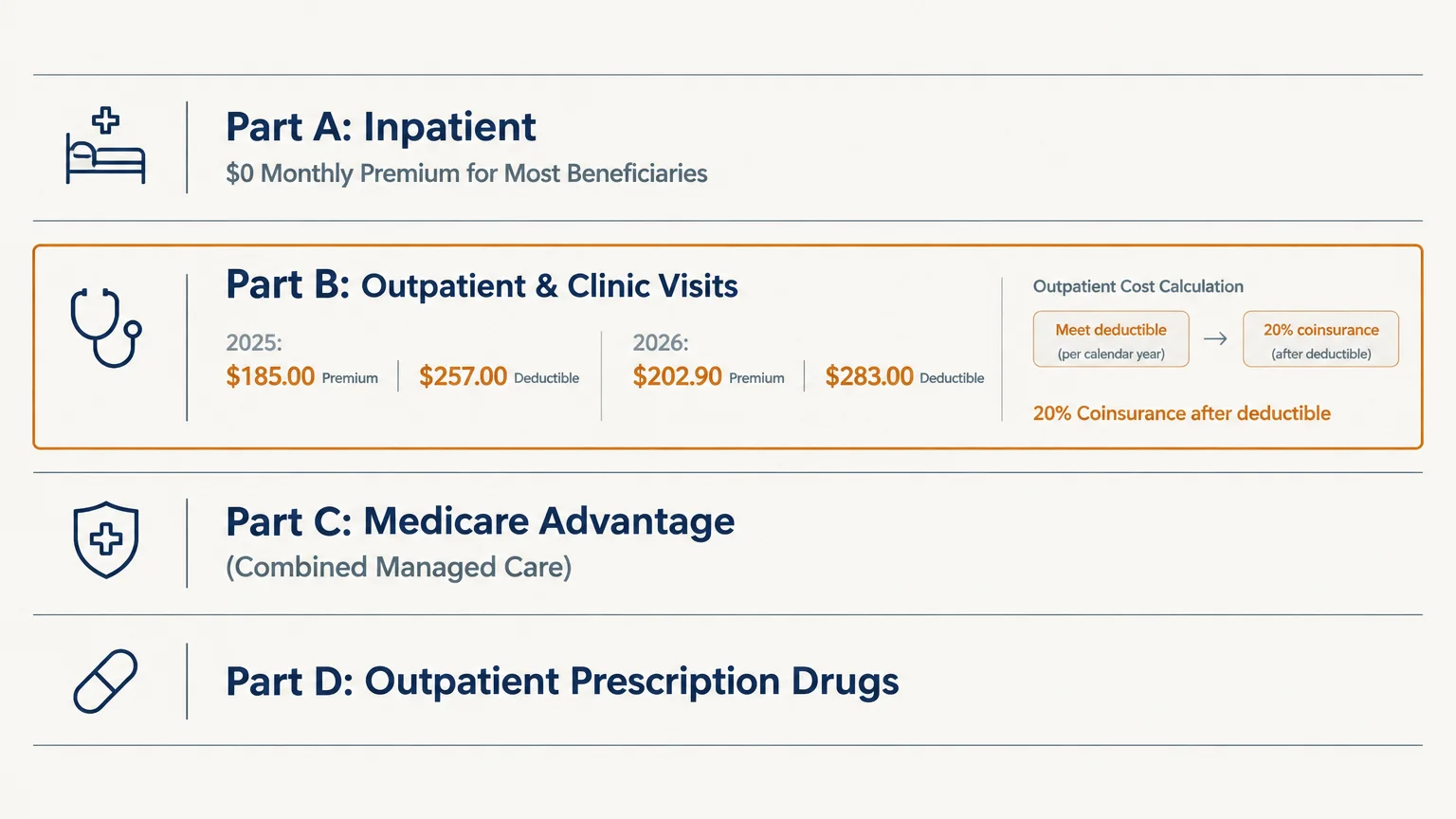
Part A covers inpatient hospital stays, skilled nursing facility care, and hospice support. Most beneficiaries pay zero monthly premiums for Part A after contributing payroll taxes throughout their working careers.
Part B finances outpatient medical care, doctor visits, preventative screenings, and durable medical equipment. In 2025, the standard monthly Part B premium is $185.00 with an annual deductible of $257.00.
For 2026, the standard Part B premium rises to $202.90, while the annual deductible increases to $283.00. Once you meet this deductible, you generally pay a twenty percent coinsurance for covered outpatient services.
Part D provides outpatient prescription drug benefits through approved private plans. These policies help pay for essential medications that you administer at home.
Medicare Advantage, or Part C, combines these coverage categories into private managed care arrangements. These plans often feature specialized provider networks and separate administrative rules.
Understanding these structural distinctions empowers you to identify which medicare covered services apply to your medical appointments. Financial surprises decrease when you recognize how billing codes interact with your benefits.

Key Considerations for Older Adults
Aging changes how you interact with the modern medical system. Chronic conditions such as hypertension, diabetes, and osteoarthritis often demand concurrent treatments and regular clinical monitoring.
Managing multiple prescriptions and specialist referrals increases the likelihood of billing confusion. When providers order routine diagnostic screenings, administrative classifications can shift without your immediate knowledge.
Fixed retirement incomes make budgeting for surprise medical bills stressful and precarious. Even modest diagnostic copayments accumulate quickly across several monthly clinic appointments.
Physical fatigue or complex medical jargon can also complicate conversations in the examination room. Bring an organized advocate or personal notebook to track important clinical billing decisions.
Establishing transparent financial dialogues with your physician ensures continuity of care. You protect your health when cost considerations never delay life-saving clinical interventions.

Benefits and Potential Financial Risks
Engaging in direct medicare coverage questions yields clear personal and financial benefits. Transparent communication helps you avoid unexpected bills and identifies cost-saving clinical alternatives.
Collaborative discussions also foster mutual trust between you and your healthcare team. When doctors recognize your financial boundaries, they can tailor therapies to your specific circumstances.
Conversely, avoiding financial discussions exposes you to severe billing pitfalls. Medical providers do not automatically calculate your out-of-pocket liabilities when ordering advanced laboratory tests.
Out-of-network specialist referrals can generate substantial out-of-pocket charges. If your provider orders services outside your plan parameters, you may bear the full financial burden.
Diagnostic ambiguities also create billing traps during routine preventative screenings. Proactive dialogue mitigates these exposures before external laboratories process your samples.
What Health Authorities and Clinical Evidence Say
Leading clinical institutions emphasize open patient-physician communication to optimize health outcomes. The National Institutes of Health highlights shared decision-making as a pillar of effective chronic disease management.
According to researchers at the Mayo Clinic, financial stress can negatively affect patient adherence to prescribed treatments. Transparent cost discussions improve patient compliance and long-term vitality.
Public health experts from the Centers for Disease Control and Prevention stress the protective role of timely clinical screenings. Clarifying coverage guidelines ensures you access recommended screenings without delay.
Healthcare economists report that unexpected medical bills frequently cause treatment abandonment among seniors. Patients who establish billing boundaries with clinicians report higher satisfaction and better clinical outcomes.
Regulatory agencies continue revising Medicare policies to shield older adults from unmanageable healthcare costs. Staying informed about current federal protections reinforces your medical and financial autonomy.

8 Practical Questions to Ask Your Doctor About Medicare Coverage
You can protect your finances by asking specific medicare doctor questions during your appointments. Use the following eight questions to guide your upcoming clinical conversations.
1. Do You Accept Medicare Assignment as a Participating Provider?
You must first determine your physician’s exact contractual status with the federal Medicare program. Doctors fall into three distinct categories: participating, non-participating, or opted out.
Participating doctors accept assignment; they agree to take the Medicare-approved amount as payment in full. You pay only your standard twenty percent coinsurance once your Part B deductible is satisfied.
Non-participating doctors accept Medicare but choose not to take assignment on every service. Federal law limits what non-participating providers can bill above the Medicare-approved rate to a fifteen percent limiting charge.
Doctors who opt out of Medicare do not bill the program under any circumstances. These providers require you to sign private contracts, leaving you entirely responsible for total charges.
2. Is This Visit an Annual Wellness Visit or a Diagnostic Physical?
Many beneficiaries assume Medicare covers comprehensive annual head-to-toe physical examinations. In reality, Original Medicare excludes routine annual physicals from standard outpatient benefits.
Medicare covers a one-time Welcome to Medicare visit during your first twelve months in Part B. It also covers an Annual Wellness Visit once every twelve months at zero copayment and zero deductible.
The Annual Wellness Visit focuses exclusively on health risk assessments, cognitive evaluations, and preventative care plans. It does not encompass hands-on physical exams or treatments for acute medical complaints.
If you discuss new physical symptoms or chronic ailments during this appointment, split-billing rules apply. Your physician must submit a separate problem-focused billing code for that clinical evaluation.
This separate code triggers standard Part B cost-sharing, including your twenty percent coinsurance and unmet deductible. Clarify appointment boundaries with your doctor before raising new medical concerns.
3. Will I Need to Sign an Advance Beneficiary Notice of Noncoverage?
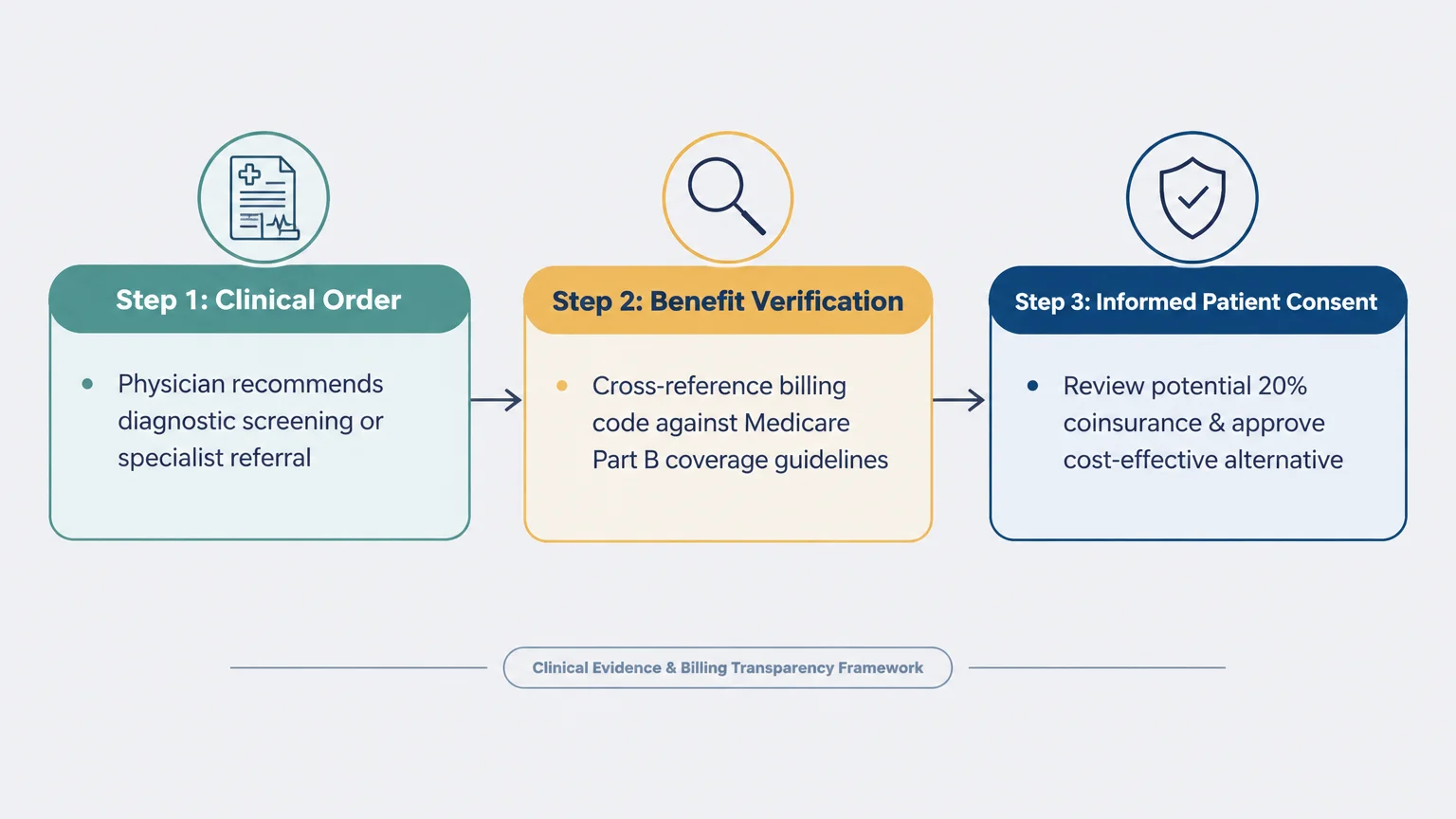
When your physician orders clinical tests that Medicare might reject, specific consumer safeguards apply. Providers must deliver an Advance Beneficiary Notice of Noncoverage, known formally as Form CMS-R-131.
Doctors utilize this written notice under Original Medicare when services appear medically unnecessary or exceed statutory frequency limits. The form details the specific test, estimated cost, and clinical rationale.
Reviewing this document allows you to decide whether to proceed with the proposed diagnostic intervention. You retain the freedom to accept or decline the test based on expected costs.
If your provider fails to deliver an Advance Beneficiary Notice and Medicare denies coverage, the doctor cannot bill you. Ask your doctor directly if any recommended services carry denial risks.
Keep in mind that Advance Beneficiary Notices apply exclusively to Original Medicare rather than Medicare Advantage. Knowing your plan format ensures you receive proper advance billing warnings.
4. How Will This Prescription Impact My Part D Out-of-Pocket Cap?
Prescription drug coverage underwent transformative enhancements due to landmark federal healthcare legislation. The traditional coverage gap, long known as the donut hole, no longer exists for Medicare beneficiaries.
In 2025, annual out-of-pocket spending for covered Part D prescription medications was capped at $2,000. In 2026, the statutory out-of-pocket limit indexes to $2,100 per calendar year.
Once your covered prescription expenses reach this annual ceiling, your plan pays one hundred percent of medication costs. Ask your doctor whether newly prescribed drugs appear on your plan’s formulary.
If a prescribed medication falls on an expensive tier, ask about generic equivalents. Clinicians can frequently substitute bioequivalent medications to keep your personal expenses well below annual caps.
5. Are My Recommended Vaccines and Insulin Covered at Fixed Rates?
Federal statutes establish aggressive cost-sharing caps for essential daily treatments such as insulin. Covered insulin products cannot exceed $35 per monthly supply under both Part D and Part B pump programs.
If your doctor adjusts your diabetes regimen, confirm that your specific insulin brand retains this $35 cap. Your physician can verify that your delivery mechanism aligns with statutory protections.
Vaccine affordability has also expanded dramatically under current federal Medicare guidelines. Adult vaccines recommended by the Advisory Committee on Immunization Practices carry zero out-of-pocket cost-sharing for beneficiaries.
This full coverage applies to preventative inoculations for shingles, respiratory syncytial virus, pneumonia, flu, and COVID-19. You owe no deductible or copayment when receiving these vital immunizations.
6. Does This Referral or Diagnostic Test Require Prior Authorization?
Administrative approvals vary significantly depending on whether you hold Original Medicare or Medicare Advantage. Original Medicare rarely requires prior authorization for specialist visits, imaging, or standard outpatient procedures.
In contrast, Medicare Advantage plans frequently mandate advance clinical approvals before scheduling complex services. If your clinician orders magnetic resonance imaging or surgical consultations, pre-approval may be legally compulsory.
Skipping required prior authorization can leave you liable for total procedural charges. Ask your physician’s administrative staff to confirm authorization before attending specialist appointments.
Furthermore, inquire whether referred specialists operate within your specific managed care network. Visiting out-of-network physicians under HMO or PPO arrangements often triggers substantial personal expenses.
7. How Do We Handle Services Excluded by Original Medicare?
Original Medicare legislation strictly excludes several routine personal healthcare categories from standard Part A and Part B coverage. These statutory exclusions include routine dental cleanings, dentures, routine vision care, eyeglasses, and hearing aids.
Eyeglass benefits apply only following corrective cataract surgery involving an intraocular lens implant. Routine hearing screenings and amplification devices also remain excluded under traditional fee-for-service coverage.
When your primary doctor recommends dental work, vision checkups, or audiologist visits, discuss payment strategies candidly. Ask whether community programs, supplemental riders, or Medicare Advantage benefits offset these out-of-pocket expenses.
Some Medicare Advantage policies offer limited allowances for dental fixtures, eyewear frames, and digital hearing aids. Your physician can direct you to contracted providers who honor those supplemental benefits.
8. Can We Route My Laboratory and Diagnostic Testing to Lower-Cost Sites?
Where your doctor sends your bloodwork and diagnostic imaging profoundly influences your final out-of-pocket expenses. Hospital-owned outpatient laboratories frequently assess facility fees in addition to standard professional diagnostic charges.
Independent clinical laboratories and freestanding imaging centers often bill significantly less for identical diagnostic evaluations. Ask your physician to send routine orders to freestanding, participating community facilities.
Doing so reduces your standard twenty percent Part B coinsurance burden substantially. A minor adjustment in diagnostic routing can save hundreds of dollars across multiple annual test panels.
Confirm that the selected testing facility participates with your specific insurance structure. Verifying network standing in advance protects you from unexpected independent laboratory invoices.
Frequently Asked Questions About Medicare Doctor Visits
Can My Doctor Charge Me More Than the Medicare-Approved Rate?
Participating doctors cannot charge more than the Medicare-approved amount for covered outpatient services. Non-participating doctors can assess an additional charge, but federal law caps this limiting charge at fifteen percent.
Opted-out doctors can set independent rates because they operate outside the federal system entirely. You must sign a private agreement acknowledging personal responsibility before receiving care from opted-out providers.
Why Did I Receive a Bill for My Free Annual Wellness Visit?
You likely incurred separate charges due to Medicare’s split-billing regulations during your appointment. If you addressed new complaints or managed chronic illnesses, the physician billed a separate diagnostic evaluation code.
That secondary code triggers your standard twenty percent Part B coinsurance and annual deductible. To keep wellness visits free, address ongoing or new conditions during dedicated follow-up appointments.
Does Medicare Part B Cover Routine Physical Examinations?
Original Medicare does not cover routine annual physical exams under any circumstances. It covers only the initial Welcome to Medicare visit and subsequent Annual Wellness Visits.
Some Medicare Advantage plans offer supplemental routine physicals as an additional plan benefit. Check your plan’s summary of coverage to confirm whether routine head-to-toe physicals are included.
What Should I Do If Medicare Denies Coverage for an Ordered Test?
If you did not sign an Advance Beneficiary Notice, your provider cannot bill you for the denied service. Review your Medicare Summary Notice to determine the official reason for the coverage denial.
You maintain the legal right to appeal any formal coverage denial through Medicare’s administrative process. Your physician can supply supportive documentation proving the medical necessity of the ordered intervention.
How Can I Find Out If My Prescribed Drug Is on My Plan Formulary?
You can consult your plan’s comprehensive formulary document online or call customer service directly. Your doctor’s office can also check electronic prescribing platforms to review real-time drug tier placements.
If your medication lacks coverage, your physician can request a formal coverage exception from your plan. Alternatively, ask your doctor to prescribe a therapeutic equivalent situated on a lower cost-sharing tier.
Building a Confident Healthcare Strategy
Speaking openly with your medical team about insurance coverage bridges the gap between clinical wellness and financial security. Asking clear questions empowers you to receive outstanding healthcare without enduring surprise medical expenses.
Take time before every clinical appointment to review your insurance tier, deductibles, and network restrictions. Bringing a written list of financial inquiries ensures that no vital billing detail escapes your attention.
Your healthcare journey belongs to you, and informed advocacy remains your greatest asset. Partnering closely with your physician protects your physical vitality and secures your hard-earned peace of mind.
Medical and Financial Disclaimer
This article is intended for informational and educational purposes only and is not a substitute for professional medical advice, diagnosis, or treatment. Always consult with a qualified healthcare provider regarding any health concerns or before making any decisions related to your health or treatment.