You can safely enjoy rich, flavorful cheese even if your body struggles to digest dairy. Giving up cheese is rarely necessary because natural aging and traditional cheesemaking remove virtually all the milk sugar that causes digestive distress.
As we age, our bodies produce less lactase enzyme, making digestive comfort a top priority. Discovering reliable cheese for lactose intolerance allows you to protect your bone strength while enjoying your favorite meals.
Explore eleven delicious, low lactose cheese options that deliver essential calcium and rich culinary flavor without triggering uncomfortable stomach symptoms.

Understanding Dairy Intolerance and Cheesemaking Basics
Lactose is the natural disaccharide sugar found in mammalian milk. Digestion requires the enzyme lactase, which splits lactose into glucose and galactose in your small intestine. According to research published in The Lancet Gastroenterology & Hepatology, roughly 68 percent of the global adult population experiences lactose malabsorption. When lactase levels decline with age, undigested lactose travels into the colon; here, resident bacteria ferment it, creating hydrogen gas, abdominal cramps, bloating, and diarrhea.
Traditional cheesemaking naturally removes almost all lactose through mechanical separation and bacterial fermentation. When cheesemakers add bacterial cultures and rennet to warm milk, it separates into solid curds and liquid whey. Because lactose is water-soluble, the vast majority drains away with the liquid whey. The residual lactose trapped within the curds is consumed by lactic acid bacteria over time. Cheeses aged for sixty days or longer naturally become virtually lactose-free, creating safe options for sensitive digestive systems.

11 Delicious Cheese Types for Lactose Intolerance
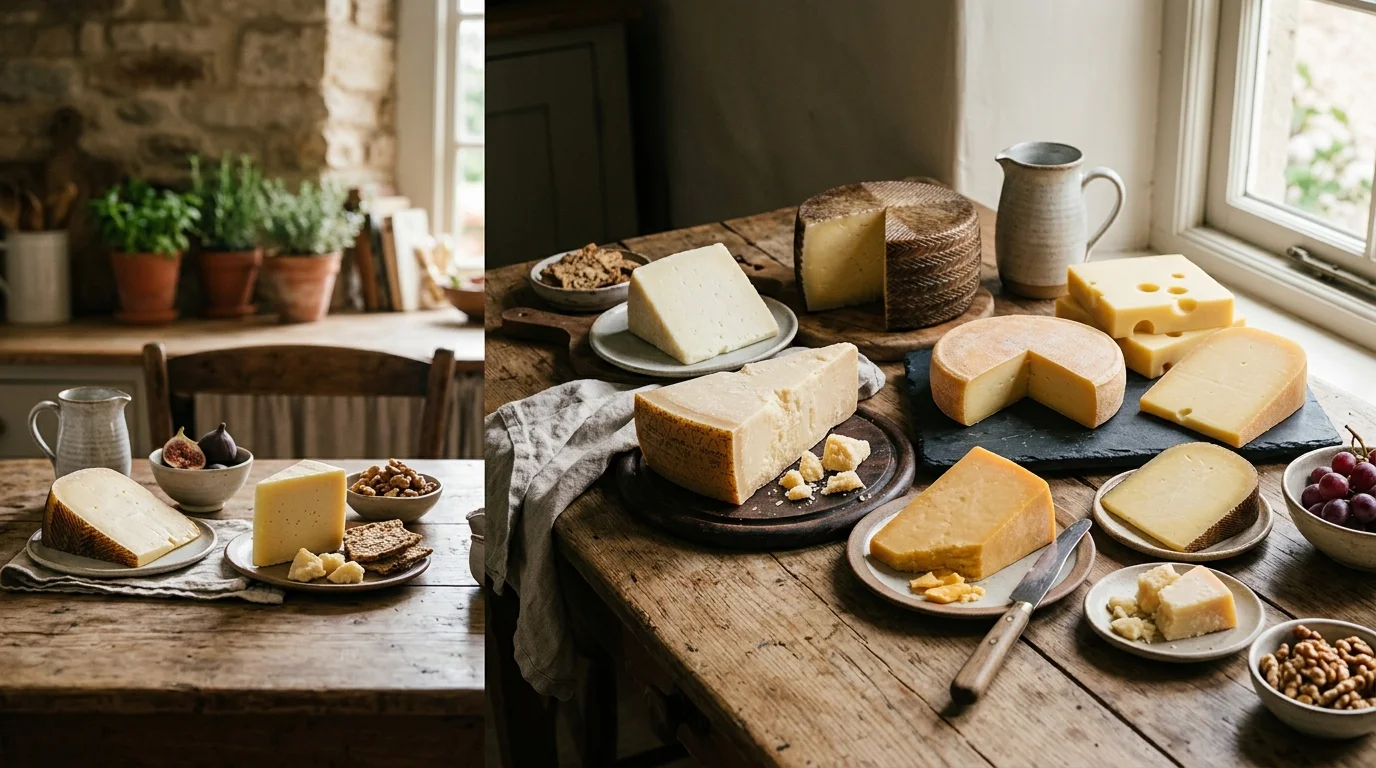
Choosing aged, hard, or cultured cheeses lets you savor delicious dairy without discomfort. Here are eleven outstanding low lactose cheese options that offer exceptional flavor, calcium, and safety.
1. Parmigiano-Reggiano (Authentic Parmesan)
Parmigiano-Reggiano is the premier standard of lactose free cheese. Authentic Italian Parmesan matures between twelve and thirty-six months under strict production controls. During this extensive aging period, beneficial lactic acid bacteria metabolize all residual sugars, yielding a lactose content below 0.01 to 0.1 grams per 100 grams. This dense cheese provides bioavailable calcium, zinc, and muscle-supporting protein. You can grate it over roasted vegetables, whole grains, or soups without gastrointestinal worry.
2. Aged Cheddar
Aged cheddar is a dependable, flavorful cheese for lactose intolerance. While mild, young cheddars retain moisture and trace sugars, mature and vintage varieties aged for twelve months or longer contain less than 0.1 grams of lactose per 100 grams. Extended aging creates a sharp flavor and crumbly texture. Enjoy aged cheddar with crisp apple slices or melt it over lean proteins for a satisfying, stomach-friendly meal.
3. Swiss and Emmental
Swiss cheese and Emmental are famous for their nutty profile and distinctive interior holes. These eyes develop when the starter culture Propionibacterium freudenreichii consumes lactic acid and releases harmless carbon dioxide. This unique fermentation reduces lactose to less than 0.1 grams per 100 grams. Swiss cheese also contains less sodium than many aged cheeses, making it an excellent heart-healthy selection for older adults.
4. Gruyère
Gruyère is a dense alpine cheese from Switzerland, typically aged between five and eighteen months. Cheesemakers press the curds heavily to expel whey, and cellar aging eliminates remaining carbohydrates. This process leaves Gruyère with zero to less than 0.1 grams of lactose per 100 grams. Its savory, earthy depth melts beautifully into baked dishes, vegetable gratins, and morning omelets without digestive consequences.
5. Pecorino Romano
Pecorino Romano is a hard Italian cheese made entirely from sheep milk and cured for five to eight months. Sheep milk contains a distinct fatty acid profile that many older adults digest easily. Heavy curd pressing and extended aging reduce its lactose concentration below 0.1 grams per 100 grams. Because it possesses a bold, savory bite, a light grating delivers robust flavor across Mediterranean dishes.
6. Manchego
Manchego is a renowned Spanish cheese crafted from whole sheep milk in the La Mancha region. Aged from three to twelve months, this firm cheese features a rich, buttery taste and less than 0.1 grams of lactose per serving. Manchego pairs wonderfully with fresh figs, raw walnuts, and sliced pears, making it an elegant, gut-friendly addition to your afternoon snack routine.
7. Aged Gouda
Dutch Gouda utilizes a traditional curd-washing technique that drains away substantial milk sugars prior to pressing. While young Gouda contains modest lactose, aged Gouda matured for twelve to twenty-four months drops below 0.1 grams of lactose per 100 grams. Characterized by crunchy calcium lactate crystals and sweet caramel undertones, aged Gouda provides a luxurious tasting experience that avoids stomach upset.
8. Provolone Piccante
When selecting provolone for dairy sensitivity, choose aged Provolone Piccante rather than younger Dolce varieties. Aged for several months to over a year, Provolone Piccante contains less than 0.5 grams of lactose per 100 grams. Its zesty, piquant flavor enhances roasted vegetable platters, warm grain bowls, and lean poultry dishes without triggering intestinal irritation.
9. Brie
Although soft and creamy, traditional Brie is remarkably low in milk sugar. Surface mold cultures like Penicillium camemberti quickly digest the remaining lactose in the curd as the cheese ripens. A standard thirty-gram serving contains just 0.1 to 0.5 grams of lactose (under 1.0 gram per 100 grams). Pair a warm slice of Brie with fresh berries for a gentle, luxurious treat.
10. Camembert
Camembert is another French bloomy-rind cheese produced through active surface mold fermentation. Live cultures on its white rind break down proteins and consume lactose sugars from exterior to interior. Consequently, Camembert contains less than 0.5 grams of lactose per serving. Its earthy, complex aroma and smooth consistency make it an enjoyable, digestion-safe appetizer for health-conscious hosts.
11. Monterey Jack and Muenster
Monterey Jack and American Muenster are semi-soft cheeses offering smooth texture and reliable melting properties. Cheesemakers wash and press the curds during processing, eliminating liquid whey and keeping lactose levels between zero and 0.2 grams per serving. Both varieties melt cleanly across baked casseroles, frittatas, and vegetable bakes without disturbing sensitive digestive systems.

Key Dietary Considerations for Older Adults
Nutritional needs shift considerably past age sixty. Natural declines in stomach acid production, digestive enzyme output, and intestinal motility make nutrient absorption more challenging. Meanwhile, older bodies require consistent high-quality protein to prevent age-related muscle wasting (sarcopenia) and steady calcium to preserve bone mineral density. Completely eliminating dairy out of digestive anxiety can unintentionally elevate your risk of osteoporosis and physical frailty.
Integrating low lactose cheese varieties restores vital micronutrients without causing gastrointestinal distress. Aged cheeses supply bioavailable calcium alongside essential amino acids like leucine, which directly stimulates muscle protein maintenance. By selecting hard, naturally aged cheeses, you strengthen your skeletal framework and preserve functional independence while protecting your everyday digestive wellness.
Furthermore, cheese provides essential phosphorus, zinc, and vitamin B12, which support cognitive vitality and immune defense. Choosing aged options lets you meet daily nutrient targets through compact, nutrient-dense portions that are easy to chew and enjoy.

Health Benefits and Potential Risks of Low Lactose Cheese
A balanced perspective ensures you maximize the health benefits of low lactose cheeses while avoiding common dietary pitfalls. Aged cheeses deliver highly bioavailable calcium that is absorbed more efficiently than plant-based calcium sources. Additionally, bacterial fermentation produces bioactive peptides and short-chain fatty acids that support vascular elasticity and strengthen gut mucosal integrity.
Conversely, older adults must monitor the sodium and saturated fat content inherent in aged dairy. High sodium intake can elevate blood pressure and burden kidney function; therefore, individuals managing hypertension should select lower-sodium options like Swiss cheese or limit portions to one ounce daily. It is equally crucial to distinguish between lactose intolerance and a true milk protein allergy. If you have an immune allergy to casein or whey, you must avoid all dairy cheeses, as aging does not remove milk proteins.
Pairing your cheese with whole grains, legumes, and fresh produce balances saturated fat intake with soluble fiber, optimizing your lipid profile while promoting lasting satiety.

What Medical Experts and Research Say
Leading medical institutions confirm that individuals with lactose intolerance do not need to avoid dairy entirely. According to clinical consensus from the National Institutes of Health, most lactose-intolerant adults can safely digest up to 12 grams of lactose in a single sitting—especially when consumed alongside other solid foods—without developing symptoms. Because aged cheeses contain under one gram of lactose per serving, they sit well below this clinical threshold.
Specialists at the Mayo Clinic explain that maintaining tolerable dairy foods in your diet supports long-term bone density and microbiome health. The European Food Safety Authority also affirms that cheeses containing under 0.1 grams of lactose per 100 grams are virtually non-reactive. Medical experts agree that choosing naturally aged cheeses prevents nutritional deficiencies while preserving your culinary quality of life.
Studies consistently demonstrate that eliminating entire food groups increases the risk of micronutrient deficiencies; thus, incorporating low lactose dairy remains the preferred medical strategy for lifelong wellness.

Practical Steps for Shopping and Meal Planning
Smart shopping and dining practices help you enjoy dairy intolerance cheese options with complete confidence. Use these actionable guidelines to optimize your weekly meal planning:
First, examine the Nutrition Facts panel for carbohydrate and sugar levels. Under US Food and Drug Administration regulation 21 CFR 101.9, products containing less than 0.5 grams of sugar per serving are rounded down to zero grams. Since lactose is milk’s sole sugar, a zero-gram sugar label indicates the cheese is virtually lactose-free.
Second, buy whole blocks of aged cheese and grate them yourself. Pre-shredded packaged cheeses frequently incorporate anti-caking starches and blended younger cheeses with higher residual sugar. Whole blocks of authentic Parmigiano-Reggiano, vintage cheddar, or Manchego offer superior purity, flavor, and digestive safety.
Third, combine your cheese with high-fiber foods to slow digestion. Pairing aged Gouda with sliced raw apples or eating Swiss cheese on seeded whole-grain toast delays gastric emptying and promotes smooth digestion. When dining out at restaurants, keep over-the-counter lactase enzyme tablets available for uncertain menu items.
Frequently Asked Questions About Cheese and Lactose Intolerance
How can I identify low lactose cheese at the grocery store?
Check the Nutrition Facts panel for total sugars. If the panel reads zero grams of sugar per serving, the cheese contains less than 0.5 grams of lactose. Look for hard varieties aged sixty days or longer, as aging naturally consumes milk sugars.
What is the difference between lactose intolerance and a dairy allergy?
Lactose intolerance is an enzyme deficiency causing digestive discomfort when consuming milk sugar. A dairy allergy is an immune reaction to milk proteins like casein, causing hives, swelling, or breathing difficulty. Low lactose cheeses are safe for intolerance, but unsafe for allergies.
Can I safely eat fresh cheeses like mozzarella or ricotta?
Fresh, unaged cheeses retain high moisture and contain two to six grams of lactose per serving. While whole-milk mozzarella has modest amounts, ricotta and cottage cheese often cause digestive distress unless you choose certified lactose-free brands or use lactase enzyme supplements.
Does goat or sheep cheese contain less lactose than cow cheese?
Fresh goat and sheep milk contain similar lactose levels to cow milk. However, aged sheep cheeses like Manchego and Pecorino Romano are aged extensively, which removes the lactose. Their distinct fatty acid structures may also feel gentler on older digestive systems.
Do vegan cheeses provide the same health benefits as aged dairy cheese?
Vegan cheeses are completely lactose-free because they derive from plant oils, nuts, or starches. However, they generally lack the bioavailable calcium, high-grade protein, and vitamin B12 found in real dairy cheese. If using vegan cheese, select calcium-fortified brands to protect your bones.
Embracing Nutritious Cheese in Your Daily Diet
Lactose intolerance does not require giving up the rich flavors and nutritional benefits of real cheese. By understanding how traditional aging and whey separation naturally eliminate milk sugar, you can confidently incorporate hard, aged cheeses like Parmigiano-Reggiano, vintage cheddar, and Swiss into your everyday meals.
These low lactose cheese varieties protect your bone density, support vital muscle mass, and bring genuine culinary pleasure to your table. Check nutrition labels for zero sugar, savor nutrient-dense portions, and enjoy your favorite meals with total digestive confidence.
This article is intended for informational and educational purposes only and is not a substitute for professional medical advice, diagnosis, or treatment. Always consult with a qualified healthcare provider regarding any health concerns or before making any decisions related to your health or treatment.