
Reviewing your Medicare medical supplies coverage today protects your retirement savings from unexpected equipment bills. The right verification steps ensure you receive vital healthcare devices without paying exorbitant out-of-pocket costs.
Navigating federal insurance rules often feels overwhelming for older adults and family caregivers. Small documentation mistakes can leave you responsible for thousands of dollars in medical hardware expenses.
You can avoid costly claim denials by understanding how Medicare categorizes durable medical equipment and home supplies. Here is everything you must check to safeguard your physical health and personal finances.
Understanding Durable Medical Equipment and Supply Rules
Original Medicare Part B covers medically necessary outpatient supplies and durable equipment. You must understand specific federal criteria before ordering hardware for your home.
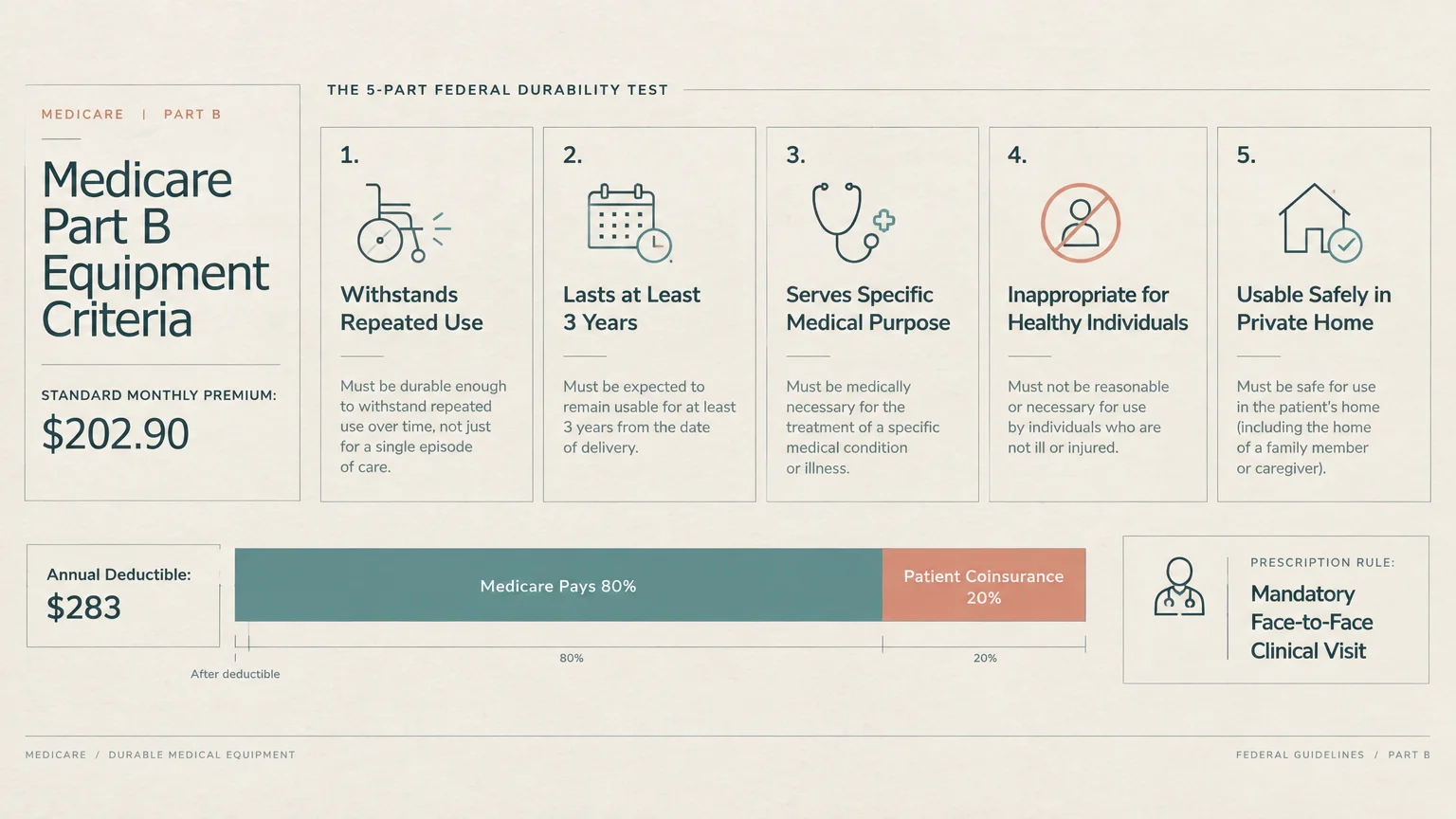
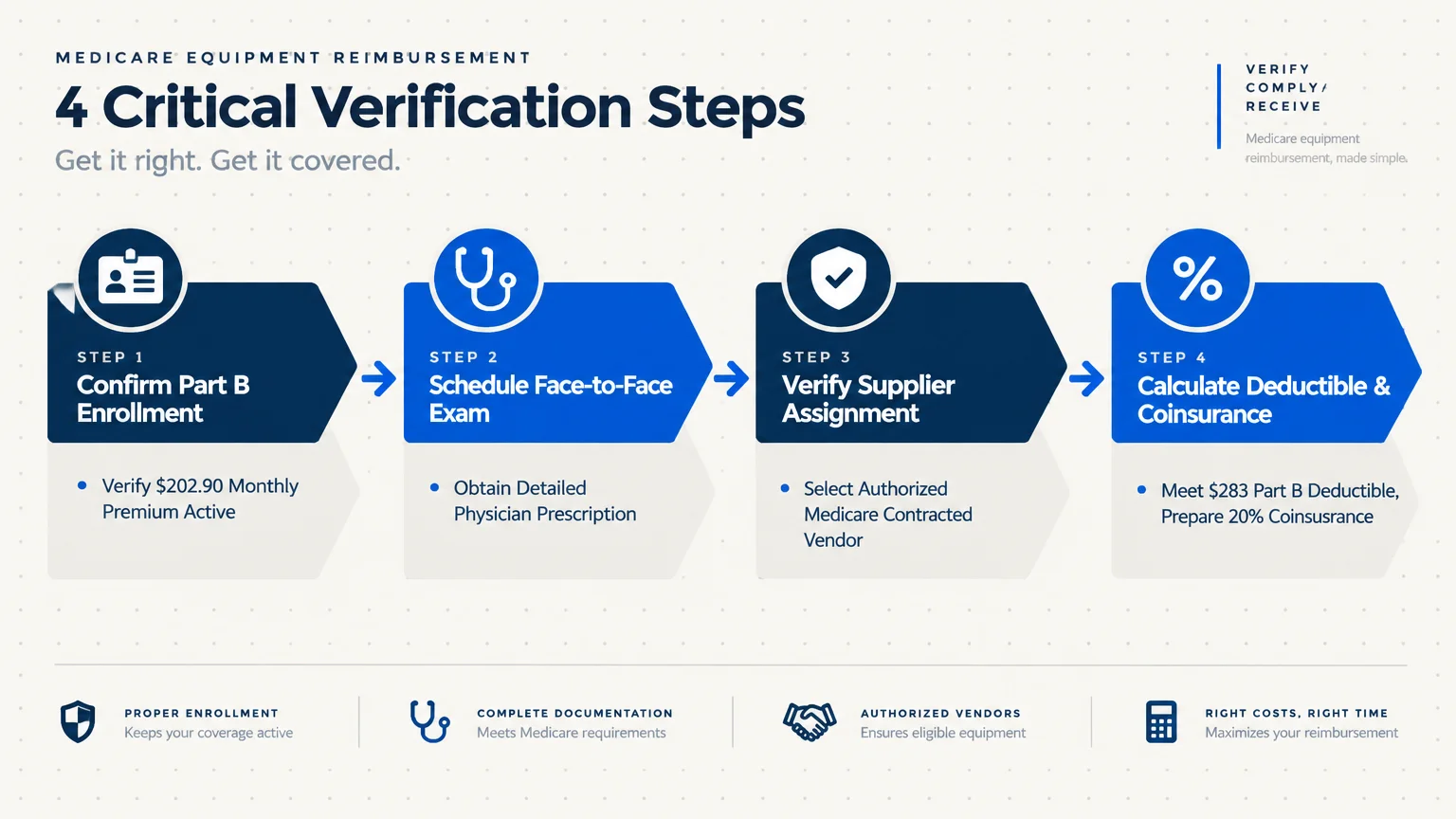
Enrollees must maintain active enrollment in Part B, which carries a standard monthly premium of $202.90. This outpatient coverage forms the legal foundation for acquiring approved assistive devices.
The government defines durable medical equipment through a strict five-part test. To qualify for payment, an item must withstand repeated use and last at least three years.
The equipment must also serve a recognized medical purpose for an illness or injury. Furthermore, healthy individuals would find no medical use for the item in daily life.
Medicare mandates that covered equipment must function safely inside your private living space. You cannot receive coverage for items designed exclusively for outdoor recreation or general comfort.
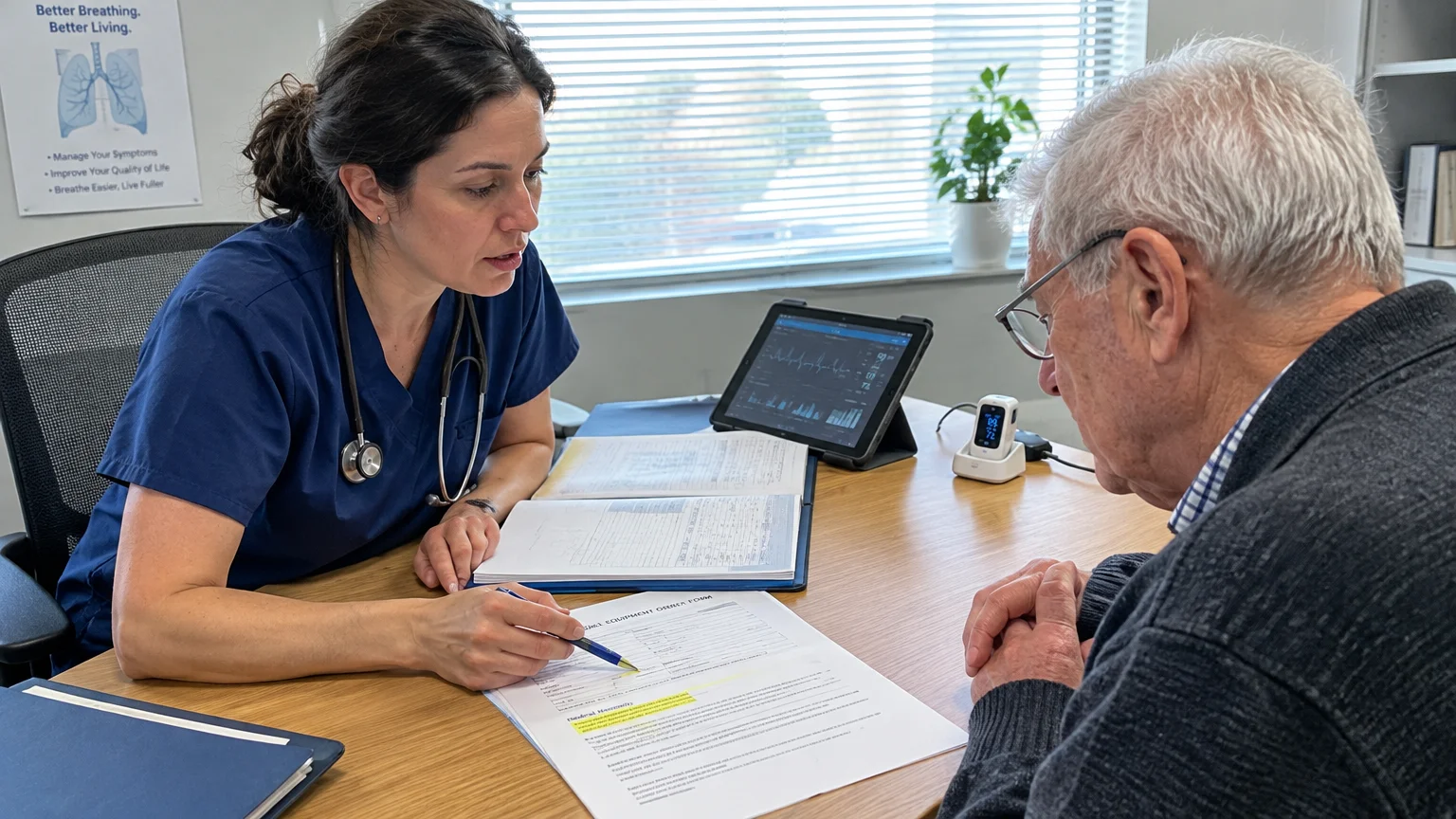
Your prescribing doctor must conduct an in-person medical examination before issuing your equipment prescription. Medicare will reject claims without documentation proving this face-to-face clinical visit occurred.
Financial rules dictate that you first meet the annual Medicare Part B deductible of $283. After meeting this deductible, you pay a standard 20 percent coinsurance of the Medicare-approved amount.
Medicare covers the remaining 80 percent of the approved equipment fee. However, this cost-sharing split only applies when you purchase from an authorized supplier.
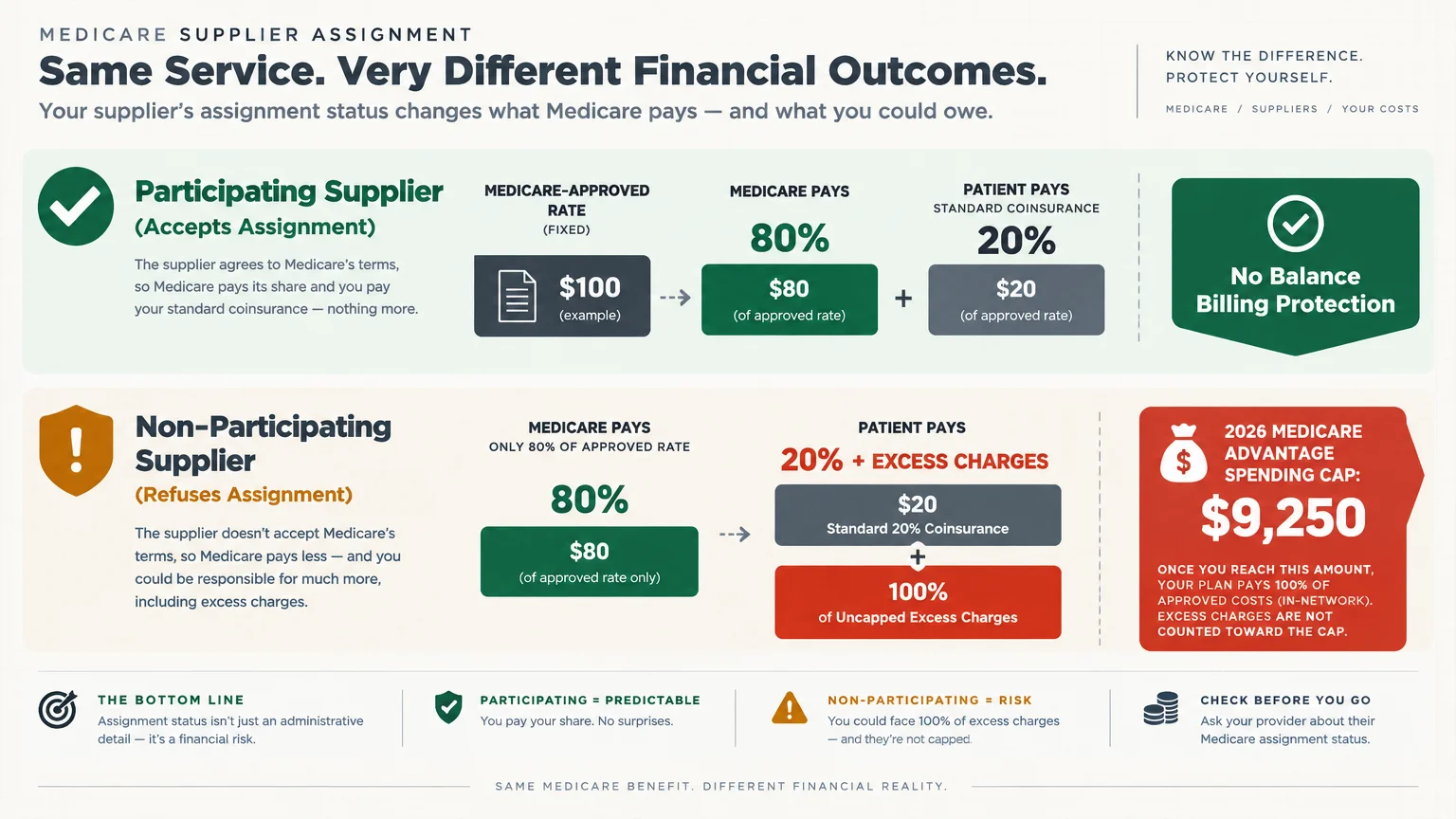
You must verify that your equipment vendor actively accepts Medicare assignment. Suppliers accepting assignment agree to accept the Medicare-approved price as complete payment, preventing unexpected balance billing.
If a supplier refuses assignment, they may charge amounts far above the Medicare-approved rate. In that scenario, you must pay the excess charges entirely out of pocket.
Key Medicare Coverage Considerations for Older Adults
As your body ages, managing chronic conditions and preventing mobility loss become daily priorities. Having the right medical gear at home preserves your personal independence and reduces nursing facility admissions.
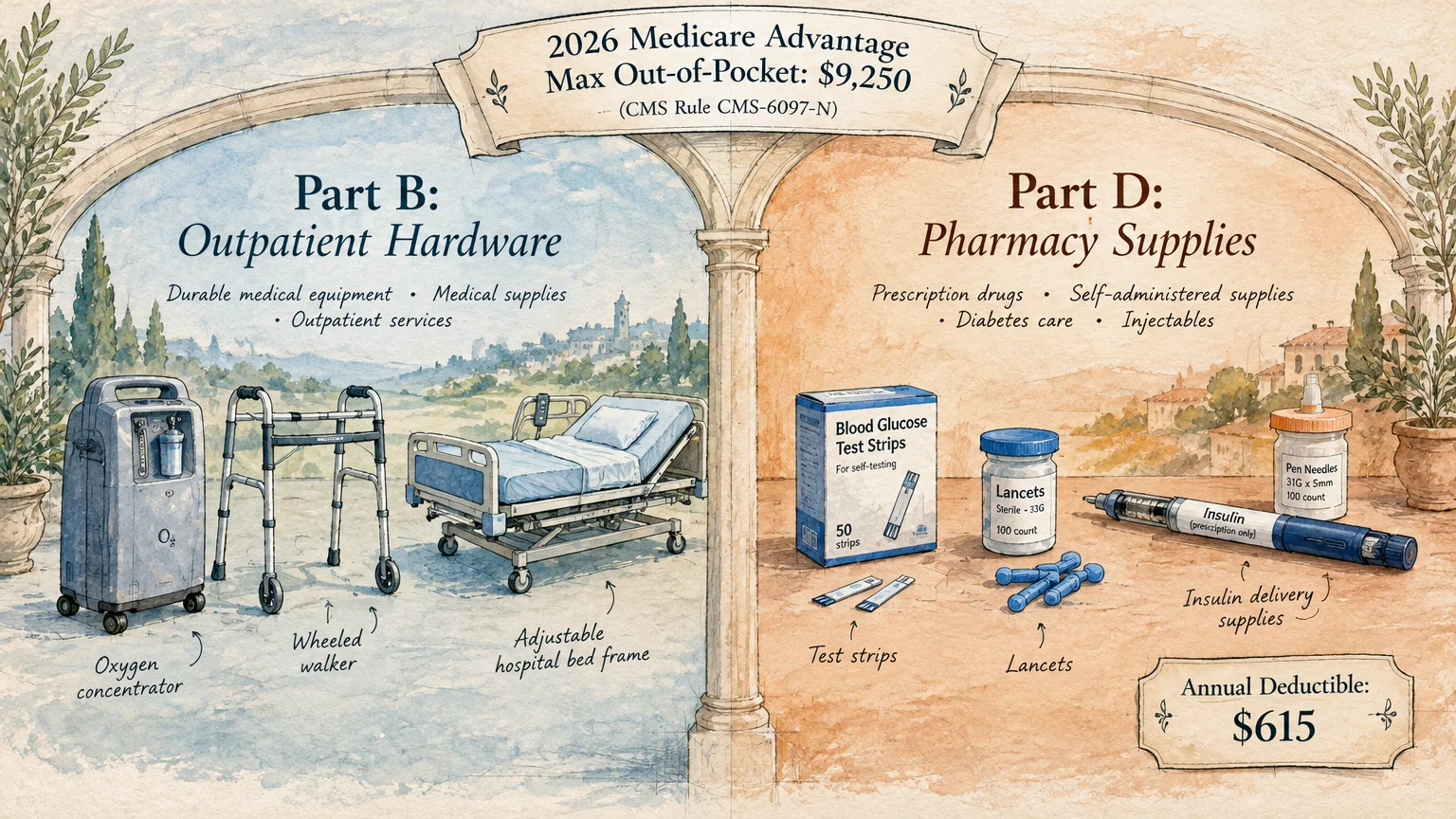
Yet navigating the split between Medicare Part B and Medicare Part D confuses many retirees. While Part B covers physical machines, Part D covers self-administered disposable prescription items.
Part D plans feature their own annual financial guidelines, including a maximum annual deductible of $615. Understanding this structural boundary helps you anticipate pharmacy counter bills for daily administration items.
If you choose a private Medicare Advantage plan, you face distinct operational rules. These private plans must match Original Medicare benefits, but they establish their own network copayments and coinsurance rates.
In 2026, the maximum out-of-pocket spending limit for in-network services under Medicare Advantage reaches $9,250. You should check your specific plan summary to calculate your potential hardware copayments.
Regulatory standards also demand careful attention from older adults this year. Under CMS rule CMS-6097-N, Medicare expanded the Master List of equipment requiring formal prior authorization.
This regulatory expansion means your doctor must submit detailed medical records before you receive high-cost supplies. Without this advance authorization, your insurance carrier will refuse payment for the equipment.
Effective April 13, 2026, this expanded authorization policy applies directly to power mobility devices and select custom orthotics. You must allow sufficient processing time before expecting equipment delivery.
You may have heard about federal fraud enforcement actions affecting the medical supply industry. In February 2026, the Centers for Medicare & Medicaid Services launched a six-month nationwide enrollment pause for new equipment vendors.
This administrative pause targets fraudulent new commercial entities and does not cut your benefit access. You can still order all necessary medical items through established, Medicare-enrolled suppliers without interruption.
10 Medical Supplies Retirees Should Check Coverage For
1. Continuous Glucose Monitors and Testing Supplies
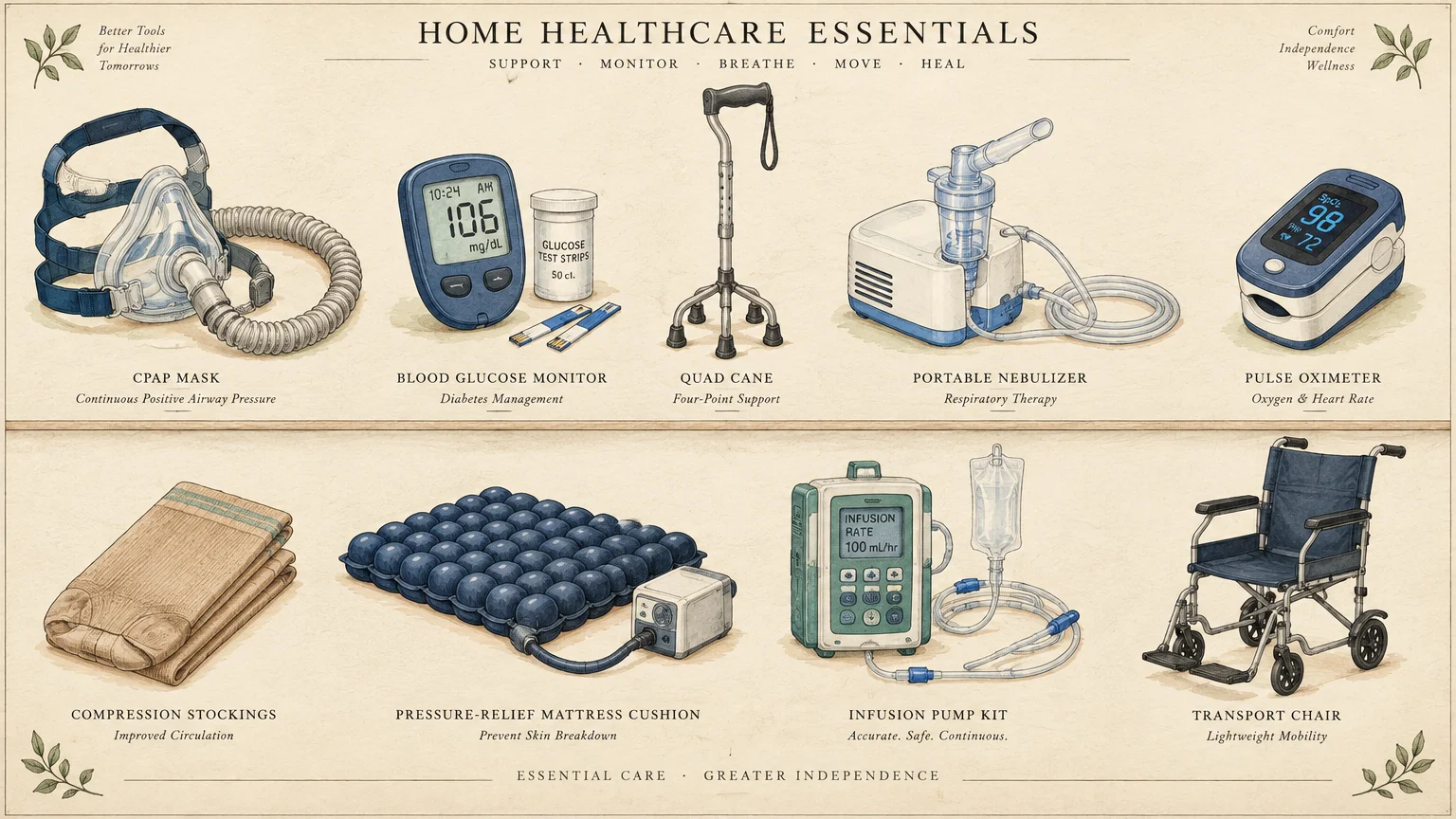
Frequent blood sugar checks protect older adults living with diabetes from dangerous glycemic swings. Medicare Part B covers traditional blood glucose monitors, lancets, and diagnostic test strips.
Part B also covers modern Continuous Glucose Monitors and their replacement sensor components. To qualify for a continuous monitor, your doctor must verify that you require regular insulin adjustments.
You must pay your $283 annual Part B deductible before coverage begins. After meeting your deductible, your standard coinsurance responsibility remains 20 percent of the Medicare-approved total.
Your medical records must show that you receive ongoing diabetes education and check your levels regularly. Without clinical progress notes confirming frequent monitoring, Medicare can deny ongoing coverage for replacement sensors.
Avoid buying test strips from non-contracted pharmacies or online discount storefronts. Medicare will not reimburse cash purchases made outside its designated accredited medical supply network.
2. External Insulin Pumps and Infusion Accessories
Traditional durable insulin pumps deliver continuous subcutaneous medication to stabilize blood glucose levels. Medicare classifies these mechanical pumps and the insulin used inside them as Part B medical benefits.
Federal regulations cap your out-of-pocket insulin costs at $35 per monthly supply under both Part B and Part D. This strict $35 cap applies even if you have not met your annual deductible.
Maintaining continuous equipment coverage requires strict adherence to clinical follow-up rules. You must visit your treating physician for an evaluation at least once every three months.
If you skip your quarterly evaluation, Medicare suspends coverage for your monthly pump supplies. Reinstating coverage requires a new clinical visit and updated medical orders.
Note that disposable patch pumps and standard injection pens fall under Medicare Part D instead. In addition, Part D covers standard daily administration items like alcohol swabs, gauze, and disposable needles.
3. Walkers and Upright Rollators
Maintaining stability while walking significantly reduces your risk of devastating hip fractures and head trauma. Medicare Part B covers basic folding walkers, wheeled walkers, and heavy-duty four-wheeled rollators.
The equipment must satisfy the federal three-year durability mandate to qualify for reimbursement. Your doctor must explicitly state in your medical record that balance deficits impair your home mobility.
You pay 20 percent of the negotiated equipment charge once you meet the $283 annual deductible. The medical equipment supplier must submit the claim directly to Medicare on your behalf.
Check that the equipment order includes necessary safety accessories like glide brakes and padded seating. Adding accessories later without separate medical documentation often results in direct out-of-pocket charges.
Make certain you do not purchase a rollator out-of-pocket at a retail pharmacy expecting reimbursement. Medicare strictly prohibits retroactive payments for durable items purchased without prior medical certification.
4. Manual Wheelchairs and Power Mobility Devices
When walking devices no longer provide adequate safety, manual wheelchairs and power mobility devices restore mobility. Medicare covers manual wheelchairs if you possess sufficient upper-body strength to propel yourself safely indoors.
If physical limitations prevent you from operating a manual chair, Medicare covers motorized wheelchairs and scooters. However, obtaining a power mobility device requires navigating strict bureaucratic review procedures.
Your medical provider must conduct a comprehensive, face-to-face mobility evaluation before writing the equipment order. Power devices fall under expanded prior authorization rules, requiring insurer approval before delivery.
Under rule CMS-6097-N, expanded prior authorization mandates detailed clinical proof before equipment disbursement. Your physician must submit formal testing demonstrating why a standard walker or manual chair fails to meet your needs.
Medicare will deny power mobility coverage if you only require the device for community excursions. The clinical documentation must prove that you cannot complete daily living activities inside your home.
5. Continuous Positive Airway Pressure Devices
Obstructive sleep apnea deprives your brain of oxygen and stresses your cardiovascular system during sleep. Medicare covers Continuous Positive Airway Pressure machines, breathing masks, and replacement tubing as durable medical equipment.
To establish coverage, you must complete an official clinical sleep study supervised by a licensed physician. Medicare then initiates a three-month initial trial period to monitor your nightly machine usage.
You must demonstrate compliance by utilizing the device for at least four hours per night during 70 percent of days. Your doctor must document this compliance data before Medicare approves long-term equipment rental payments.
Medicare typically rents the breathing apparatus for thirteen continuous months before transferring ownership to you. During this rental phase, you remain responsible for the monthly 20 percent coinsurance amount.
Furthermore, Medicare provides replacement schedules for filters, tubing, and mask cushions. You must order replacement supplies through an enrolled vendor to maintain clean, hygienic breathing therapy at home.
6. Home Oxygen Therapy Equipment
Chronic obstructive pulmonary disease and advanced heart failure can severely lower your bloodstream oxygen levels. Medicare Part B covers oxygen concentrators, portable gas tanks, and related delivery accessories for home use.
Your physician must submit laboratory arterial blood gas readings or pulse oximetry results verifying severe hypoxemia. The testing must occur while you remain in a stable, chronic state rather than during an acute hospitalization.
Medicare pays for oxygen equipment through a structured 36-month continuous rental contract. After 36 months of rental payments, the equipment supplier must continue servicing your unit for up to five full years.
The supplier must provide maintenance, repairs, and replacement accessories throughout this entire five-year operating period. You pay no additional rental charges once the initial 36-month payment cycle concludes.
If your medical need persists after five years, a new 36-month rental cycle begins with updated equipment. Your doctor must re-certify your ongoing medical necessity before starting that new equipment cycle.
7. Adjustable Hospital Beds
Severe spinal arthritis, circulatory compromise, and neuromuscular disorders often make resting in standard beds impossible. Medicare covers home hospital beds when positioning your body requires elevation adjustments that flat mattresses cannot achieve.
Your doctor’s clinical documentation must describe specific medical needs, such as alleviating cardiac congestion or managing respiratory distress. Notes must also explain why elevating your head and limbs using standard wedge pillows proved ineffective.
Part B covers manual hospital beds and semi-electric models that adjust your head and feet automatically. However, Medicare considers fully electric beds that adjust total mattress height an uncovered personal convenience item.
You will pay 20 percent of the approved equipment charge after satisfying your annual Part B deductible. Ensure your supplier delivers an approved therapeutic mattress along with the bed frame.
Side rails also require distinct medical justification in your physician’s clinical notes. Medicare covers side rails only when balance deficits or cognitive concerns create significant roll-out falls.
8. Canes and Crutches
Single-point canes, quad-base canes, and forearm crutches offer targeted assistance during injury rehabilitation or progressive gait instability. Medicare Part B covers these mobility aids when prescribed to improve your ambulatory safety.
Although these simple items cost significantly less than motorized hardware, official Medicare guidelines still apply. You must obtain a written clinical prescription from an enrolled healthcare professional before procuring the item.
Purchasing a cane from an unapproved corner drugstore eliminates your opportunity for Medicare reimbursement. The retailer must maintain an active Medicare supplier billing agreement to process your standard 20 percent coinsurance.
Take time to verify that the cane grip height and weight capacity match your body dimensions. An improperly fitted mobility cane increases your fall probability rather than protecting your balance.
If your condition deteriorates, your physical therapist can recommend stepping up to a broad-based quad cane. Medicare will cover the replacement model if your physician documents your heightened fall risk.
9. Patient Lifts and Transfer Equipment
Transferring between a hospital bed and a wheelchair presents serious physical injury risks for frail retirees and family caregivers. Medicare Part B covers mechanical patient lifts designed to safely hoist individuals with severe mobility impairments.
Coverage criteria require your physician to confirm that you cannot transfer independently without mechanical lifting support. The clinical record must prove that multiple caregivers cannot safely move you without mechanical assistance.
Part B covers standard hydraulic and manual mechanical lifts under standard 20 percent coinsurance guidelines. However, Medicare strictly excludes coverage for motorized ceiling tracks and electric wall-mounted lifting units.
Medicare considers permanent structural tracks home modifications rather than durable medical equipment. You must cover structural installation expenses entirely out-of-pocket or seek local non-profit community assistance.
Inspect your lift sling fabric regularly for frayed stitching or damaged attachment loops. Medicare covers replacement transfer slings when normal wear and tear reduces patient safety during daily transfers.
10. Braces, Orthotics, and Enteral Nutrition Supplies
Rigid spinal orthotics, stabilizing knee braces, and enteral feeding tube supplies fall under the federal durable equipment umbrella. These vital medical supplies stabilize injured skeletal joints and provide essential sustenance when swallowing becomes impossible.
Medicare requires custom braces to feature rigid structural components that restrict bodily movement to qualify for coverage. Elastic knee sleeves and fabric compression wraps lack the necessary rigidity and remain completely uncovered.
Enteral nutrition coverage requires documentation that your digestive tract cannot absorb standard food due to structural disease. Medicare covers the infusion pump, feeding bags, connecting tubing, and medically formulated nutritional liquid.
Keep in mind that orthotic braces remain subject to expanded prior authorization rules under CMS-6097-N. Your orthotist must submit precise anatomical measurements and medical notes before fitting the device.
In addition, your doctor must verify that you require long-term enteral nutrition therapy. Regular clinical reviews confirm that the prescribed formula volume meets your ongoing caloric and metabolic demands.
Benefits and Potential Out-of-Pocket Traps
Utilizing Medicare coverage for your medical equipment saves you thousands of dollars throughout retirement. Receiving proper assistive hardware at home keeps you safe, independent, and out of institutional healthcare facilities.
In 2026, the Part D annual out-of-pocket prescription cap protects you at $2,100. Once your medication and pharmacy supply payments reach $2,100, you pay zero dollars for covered drugs.
Furthermore, the statutory $35 monthly cap on insulin safeguards your household budget against catastrophic inflation. These critical legislative protections allow retirees with chronic medical illnesses to maintain stable financial security.
If you carry a supplemental Medigap policy, it generally pays your remaining 20 percent Part B coinsurance. This secondary coverage shields your personal savings from equipment copayments and rental shares.
Despite these significant benefits, dangerous financial traps can quickly jeopardize your retirement savings. The most frequent trap occurs when seniors purchase equipment from retail vendors who do not accept Medicare assignment.
Non-participating suppliers can charge balance fees that exceed the established Medicare reimbursement rate by substantial margins. You remain personally responsible for settling all excess charges out of your own bank account.
Another serious pitfall involves ordering equipment before your doctor completes the required written documentation. Medicare will not pay claims retroactively if paperwork dates do not precede your equipment delivery date.
Beware of unsolicited telephone solicitations from fraudulent telemarketing supply companies offering free braces. Accepting unsolicited medical shipments can expose you to identity theft and compromise your future Medicare benefits.
What Health Authorities and Clinical Research Recommend
Leading medical institutions emphasize that prompt access to assistive equipment dramatically improves senior longevity. Clinical research from the National Institutes of Health confirms that mobility aids decrease traumatic falls by significant margins.
Preventing accidental falls preserves physical autonomy and eliminates the need for emergency surgical hospitalizations. Geriatric specialists urge retirees to request professional mobility assessments at the earliest signs of walking instability.
Experts at the Mayo Clinic stress the importance of ongoing clinical monitoring when utilizing specialized home devices. Regular checkups ensure that continuous positive airway pressure units and insulin delivery systems function within therapeutic parameters.
Neglecting device maintenance or missing required clinical appointments can cause acute health decompensation. The Centers for Disease Control and Prevention highlights that proper equipment hygiene prevents severe respiratory and skin infections.
Health economists advise seniors to review insurance benefit summaries annually during standard enrollment windows. Proactive policy management prevents unexpected coverage interruptions when your physical health requirements evolve.
Research shows that patients who actively engage with their equipment suppliers experience higher therapeutic compliance rates. Building strong relationships with accredited local vendors helps you receive prompt repair services whenever hardware malfunctions.
Actionable Steps to Secure Your Medical Equipment Coverage
Securing complete insurance coverage requires proactive coordination between you, your physician, and your medical equipment vendor. Following an orderly checklist prevents costly bureaucratic delays and protects your retirement finances.
First, schedule a comprehensive in-person consultation with your primary healthcare provider. Discuss your physical limitations openly and ensure your doctor records every functional deficit directly in your medical chart.
Second, confirm that your treating doctor actively participates in the Medicare program. If your physician opted out of Medicare billing, the program will automatically reject all resulting equipment claims.
Third, ask your doctor to issue a detailed written order before you order any equipment. Ensure the clinical order outlines your exact diagnosis, functional limitations, and required hardware specifications.
Fourth, select a durable medical equipment supplier that accepts Medicare assignment for all covered items. Always request written confirmation that the vendor accepts the Medicare-approved amount as payment in full.
Fifth, track all necessary follow-up clinical appointments required to maintain your active insurance authorization. For example, continuous insulin pump therapy mandates an in-person medical evaluation at least once every three months.
Sixth, verify prior authorization requirements before taking physical possession of high-value equipment. Confirm that your supplier received official insurance carrier approval under rule CMS-6097-N prior to scheduling home delivery.
Seventh, retain paper copies of all equipment prescriptions, supplier agreements, and clinical progress notes. Having organized physical documentation allows you to file prompt appeals if an insurance carrier erroneously denies coverage.
Frequently Asked Questions About Medicare Medical Supplies
What is the main difference between Part B and Part D diabetic supplies?
Medicare Part B covers durable diagnostic hardware, including glucose meters, test strips, lancets, and continuous glucose monitors. Part B also covers external mechanical insulin pumps and the liquid insulin loaded into those pumps.
Conversely, Medicare Part D covers disposable administration items, including pen needles, syringes, gauze, and alcohol prep swabs. Part D also covers self-administered injectable insulin pens, medication vials, and disposable patch pump units.
How much do I pay out of pocket for durable medical equipment?
You must first pay the annual Medicare Part B deductible of $283 out of pocket. Once you meet this deductible, you pay 20 percent of the Medicare-approved amount for covered supplies.
If you carry a supplemental Medigap policy, that policy typically pays your remaining 20 percent coinsurance share. If you enroll in Medicare Advantage, you pay the specific copayment dictated by your plan network.
Does Medicare cover bathroom safety items like shower chairs or grab bars?
Original Medicare Part B does not cover shower chairs, bathtub transfer benches, or wall-mounted grab bars. The federal government classifies these bathroom safety items as personal convenience equipment rather than medical necessities.
However, certain private Medicare Advantage plans offer supplemental home safety benefits that cover bathroom modifications. You must check your specific plan summary of benefits to determine whether bathroom equipment coverage exists.
What happens if my medical equipment supplier does not accept assignment?
Suppliers that refuse assignment can charge you fees that substantially exceed the standard Medicare-approved payment schedule. In addition, you may have to pay the complete equipment purchase cost upfront at the counter.
You must then submit individual reimbursement claims directly to Medicare to recover a portion of your expense. Always select suppliers that accept assignment to protect yourself from predatory balance billing.
How does the recent supplier enrollment moratorium affect my equipment access?
The six-month enrollment pause initiated by CMS in February 2026 only prevents new companies from enrolling. The temporary moratorium targets fraudulent business applications and does not cancel or reduce your existing Medicare benefits.
You can continue ordering all prescribed medical supplies and durable equipment through established, accredited suppliers. Your existing coverage remains fully intact, and established healthcare vendors continue processing equipment orders without interruption.
Taking Control of Your Medical Equipment Benefits
Managing your healthcare needs in retirement requires vigilance, preparation, and an understanding of federal insurance regulations. Reviewing your medical supplies coverage ahead of time ensures you maintain optimal physical health without financial strain.
When you partner with Medicare-enrolled physicians and accredited suppliers, you unlock vital assistive technology at minimal cost. Take proactive ownership of your healthcare documentation today to protect your ongoing independence and retirement security.
This article is intended for informational and educational purposes only and is not a substitute for professional medical advice, diagnosis, or treatment. Always consult with a qualified healthcare provider regarding any health concerns or before making any decisions related to your health or treatment.