Did you ever consider that the secret to preserving your memory and mental sharpness might actually begin inside your ears? When we think about aging and scheduling our annual checkups, we usually focus on the obvious physical markers like cholesterol levels, high blood pressure, and joint pain. Yet, a rapidly growing body of scientific evidence reveals a profound, deeply intertwined connection between your sensory health and your cognitive longevity. The daily medical choices you make today regarding seemingly isolated physical changes can dramatically alter the trajectory of your brain health tomorrow.
As you navigate the complexities of getting older, the landscape of preventive care 60+ requires a fundamental shift in perspective. Gone are the days when senior wellness simply meant a quick listen to your heart and a tap on the knee. Today, advanced medical science urges us to view the human body as a fully integrated network. An uncorrected vulnerability in one system often triggers a devastating cascade of effects in another. By understanding how physical decline fuels cognitive decline, you can transform your routine doctor visits from passive appointments into powerful, proactive interventions.
To truly appreciate why certain health checks are non-negotiable for seniors, we must first dive into the fascinating biology of how our bodies age. We need to examine what happens to our sensory organs over time, how the brain structural network compensates for these changes, and why intervening early is the most effective strategy you have against cognitive decline.
Understanding Age-Related Sensory Degradation
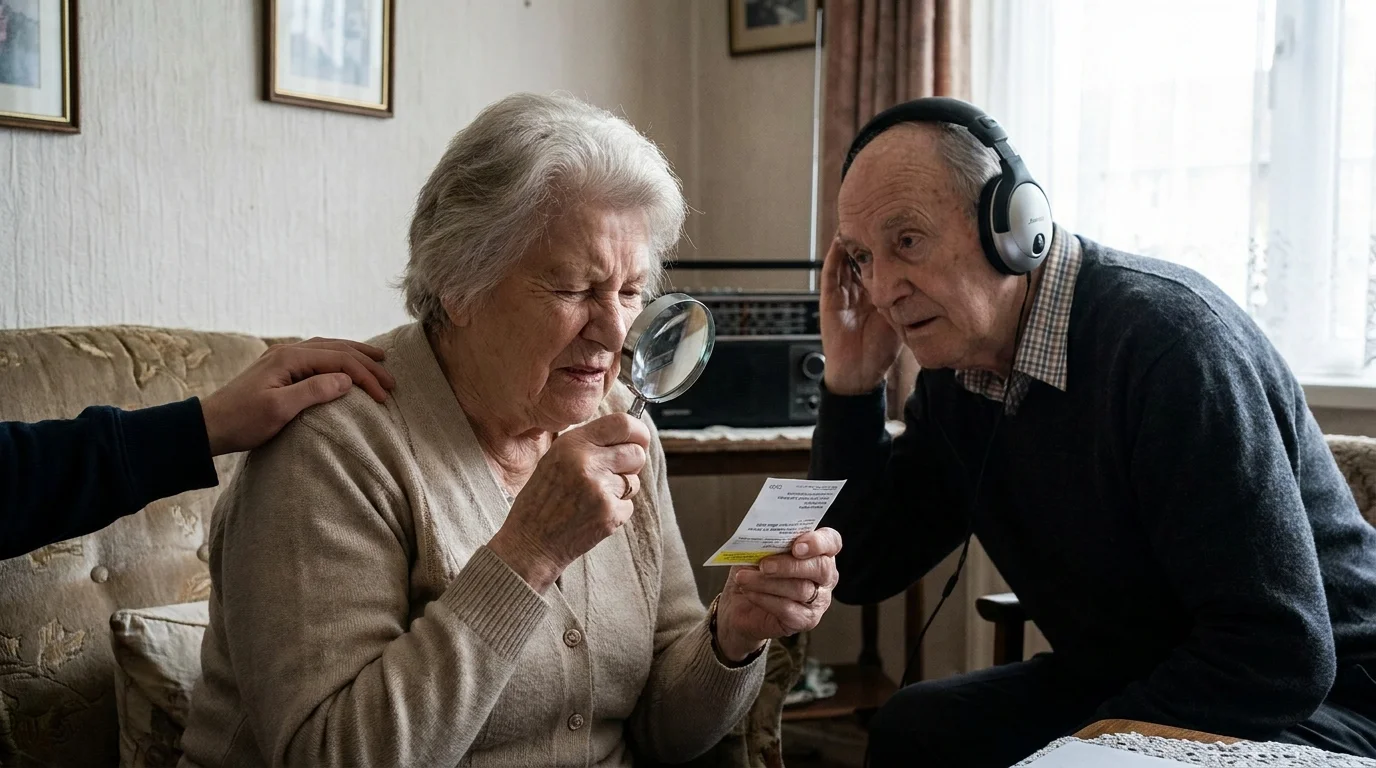
Let us focus on one of the most common, yet frequently ignored, signs of aging: hearing loss. Medical professionals refer to age-related hearing loss as presbycusis. This condition rarely occurs overnight; rather, it creeps up on you over the course of decades. Inside your inner ear lies the cochlea, a snail-shaped structure lined with thousands of microscopic hair cells. These delicate cells act as biological microphones, translating environmental sound waves into electrical signals that travel along the auditory nerve to your brain.
Over a lifetime of exposure to lawnmowers, loud concerts, sirens, and simply the passage of time, these hair cells become damaged or die off completely. Because humans cannot regenerate these auditory hair cells, the loss is permanent. You might first notice that high-pitched sounds disappear, making it difficult to distinguish consonants in speech. A grandchild’s voice might sound muffled, or a bustling restaurant might turn into a frustrating wall of indistinguishable noise. You can think of this process like listening to your favorite radio station as you slowly drive out of range; the signal grows fainter, and the static grows louder.
For generations, doctors viewed this auditory decline as an isolated nuisance—a mechanical failure of the ear that required speaking a little louder. We now know that dismissing sensory loss as a simple inconvenience is a dangerous oversight. The World Health Organization reports that over 400 million people worldwide suffer from disabling hearing loss, yet millions delay seeking treatment. This delay allows a mechanical problem in the ear to manifest as a neurological crisis in the brain.
Understanding the Mechanisms of Cognitive Decline
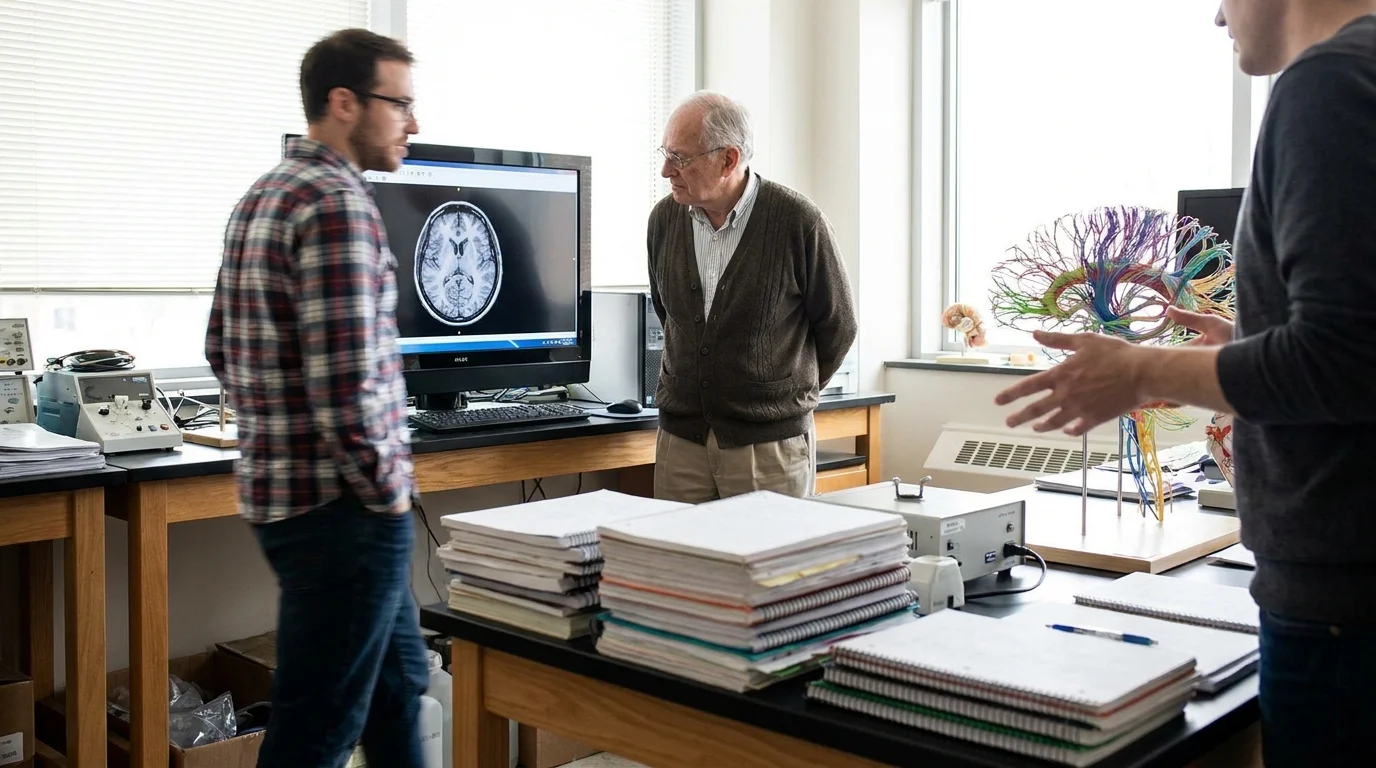
To see how a quiet ear harms a healthy brain, you need to understand the basic mechanics of cognitive decline. Your brain is a dynamic, energy-hungry organ. It thrives on a principle known as neuroplasticity—the ability of neural networks to reorganize, adapt, and forge new connections throughout your life. When you learn a new skill, engage in stimulating conversation, or navigate a complex physical environment, you force your brain to build and strengthen these pathways.
However, as we age, the brain undergoes natural structural changes. The volume of gray matter gradually decreases, the blood vessels supplying the brain become less efficient, and the speed at which neurons communicate can slow down. While some degree of memory slowing is a normal part of aging, pathological cognitive decline—such as Alzheimer’s disease and other forms of dementia—involves a radical acceleration of this process. Toxic proteins like amyloid plaques and tau tangles accumulate, destroying synaptic connections and starving brain cells of the energy they need to survive.
Scientists evaluate cognitive decline by looking at memory retention, problem-solving abilities, spatial awareness, and language processing. Think of your brain like a bustling metropolitan city. Normal aging is akin to closing a few minor side streets; traffic simply reroutes, and the city continues to function smoothly. Accelerated cognitive decline is like a major earthquake destroying the primary highways. The city becomes isolated, communication breaks down, and essential supplies stop flowing.

The Surprising Connection Between Sensory Loss and Cognitive Longevity
For decades, researchers noticed a statistical correlation: seniors with hearing and vision loss seemed to develop dementia at significantly higher rates than their peers with healthy senses. But correlation does not equal causation. It took advanced neuroimaging and long-term longitudinal studies to finally uncover the biological mechanisms linking the ear, the eye, and the brain. The discovery was revolutionary. The connection rests on three primary pillars: social isolation, brain atrophy, and cognitive load.
The Devastating Impact of Social Isolation
Human beings are profoundly social creatures. Our brains evolved to thrive on complex interpersonal communication. When sensory loss makes conversation difficult, an insidious psychological shift occurs. If every dinner party turns into an exhausting effort to decode muffled voices, the natural human response is withdrawal. You might start declining invitations, avoiding telephone calls, and shrinking your social circle to avoid embarrassment.
This self-imposed isolation is pure poison for the aging brain. Chronic loneliness deprives the neural networks of their most vital exercise: real-time, unpredictable human interaction. Studies consistently show that isolated seniors experience a much faster rate of cognitive decline. Without the constant stimulation of engaging with others, the brain’s “highways” fall into disrepair due to lack of use.
Brain Atrophy and Structural Changes
The brain operates on a ruthless “use it or lose it” economy. The auditory cortex is the region of the brain responsible for processing sound. When the ear stops sending robust, high-quality signals to this region, the brain literally begins to shrink. Advanced MRI scans demonstrate accelerated atrophy in the auditory cortex of seniors with untreated hearing loss.
Even more alarming, this shrinking does not stop at the auditory cortex. The atrophy spreads to adjacent regions of the brain, including the hippocampus—the very epicenter of memory consolidation and spatial navigation. Because the brain functions as an interconnected web, tissue loss in one region compromises the structural integrity of the entire network.
The Heavy Burden of Cognitive Load
The most compelling mechanism linking sensory health to dementia is the theory of cognitive load. Imagine trying to read a blurry document while simultaneously memorizing a list of groceries. The effort required to decipher the text consumes the mental energy you need to memorize the list. Your brain is a limited-resource environment.
When you have compromised hearing or vision, your brain must work overtime simply to process raw sensory input. It borrows processing power from the frontal lobe—the area responsible for short-term memory, decision-making, and complex thought. This means your brain is working so incredibly hard just to decode the words someone is saying that it has no energy left to store what was actually said. Over years and decades, this constant, draining cognitive load exhaust the brain, accelerating cellular aging and significantly increasing your risk of dementia.

What This Means for Your Preventive Health Strategy
Understanding this intricate biological web should profoundly change how you view your health checks. The medical community now recognizes that maintaining physical health is the most effective known defense against cognitive decline. You cannot separate the brain from the body that carries it. Your cardiovascular system pumps the oxygen your brain needs to function. Your sensory organs provide the data your brain needs to stay active. Your metabolic system regulates the fuel your brain burns to survive.
Therefore, treating a hearing deficit is not just about making the television louder; it is a vital neurological intervention. Managing blood sugar is not just about avoiding diabetes; it is about protecting the delicate micro-vessels deep inside your brain tissue. This holistic realization empowers you to take charge of your aging process. By carefully monitoring your systemic health through targeted health checks for seniors, you provide your brain with the absolute best environment to thrive well into your later decades.

Proactive Measures You Can Take: The 6 Essential Health Checks
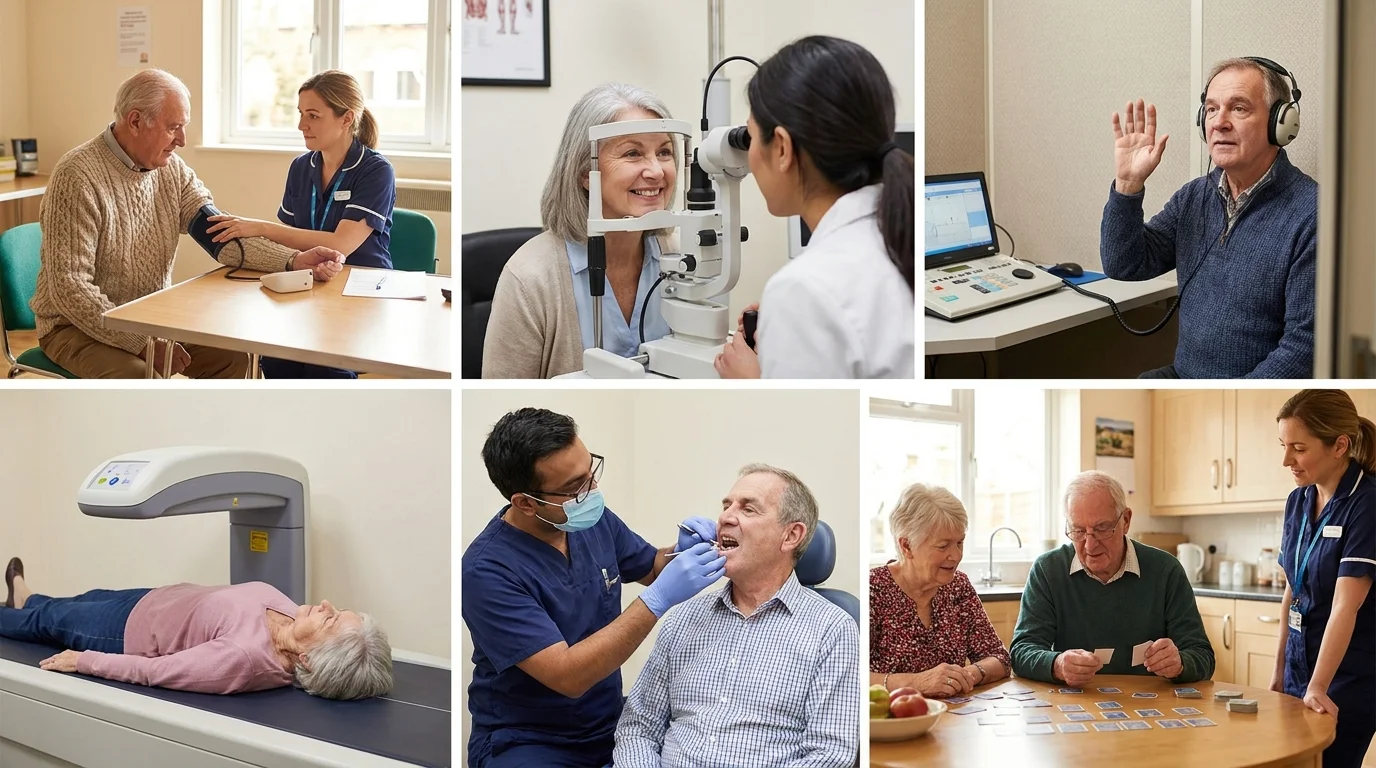
Knowledge without action is merely trivia. Now that you understand the science of how bodily systems impact cognitive longevity, it is time to build your defense strategy. Routine doctor visits should no longer be passive events where you simply wait for a physician to find a problem. Instead, you must actively schedule and demand the specific evaluations that safeguard your independence. Here are the six comprehensive health checks every senior should complete this year.
1. The Comprehensive Audiological Evaluation
Given the massive neurological implications of sensory deprivation, an annual hearing test is perhaps the most underrated preventive measure available to you. Do not settle for the basic “raise your hand when you hear the beep” screening that takes two minutes in a general practitioner’s office. You need a comprehensive audiological evaluation performed by a licensed audiologist.
This deep-dive examination takes place in a soundproof booth and measures your exact hearing thresholds across a wide spectrum of frequencies. The audiologist will test your speech recognition in both quiet and noisy environments, which perfectly mimics the real-world situations where cognitive load occurs. They will also examine the physical health of your ear canal and eardrum. If the audiologist detects a deficit, modern hearing aids can drastically reduce your cognitive load. Today’s devices are microscopic computers that filter background noise, connect via Bluetooth to your phone, and seamlessly restore the high-frequency sounds your brain is desperately missing.
2. The Baseline Cognitive Screening
Many seniors avoid cognitive screenings out of fear, but establishing a baseline is critical for effective preventive care 60+. You cannot track what you do not measure. A baseline cognitive assessment is a standardized, non-invasive evaluation that tests your memory, language skills, visual-spatial processing, and executive function. Common tools include the Montreal Cognitive Assessment (MoCA) or the Mini-Mental State Examination (MMSE).
Taking this test when you feel completely healthy provides your medical team with a personal benchmark. If you experience memory issues three years from now, your doctor can compare your new scores against your healthy baseline, easily distinguishing between normal aging and a developing pathology. Furthermore, early detection of slight cognitive changes allows you to implement aggressive lifestyle interventions—such as diet changes, aerobic exercise regimens, and brain-training therapies—when they are most effective.
3. Cardiovascular and Blood Pressure Monitoring
Vascular dementia is the second most common form of dementia, caused directly by reduced blood flow to the brain. Your brain represents only about two percent of your total body weight, yet it consumes twenty percent of your blood supply. Every single heartbeat forces a massive surge of oxygenated blood through a delicate network of cerebral arteries and microscopic capillaries.
Chronic high blood pressure acts like a pressure washer on these fragile vessels, causing micro-tears, inflammation, and eventual blockages. Over time, this microscopic damage accumulates as “white matter lesions” in the brain, disrupting the communication pathways between neurons. Regular cardiovascular screenings are essential. You should check your blood pressure regularly—aiming for guidelines generally around 120/80 mmHg—and schedule an annual electrocardiogram (EKG) to check for arrhythmias like atrial fibrillation, which exponentially increases stroke risk.
4. The Comprehensive Dilated Eye Exam
Just as hearing loss isolates the brain, vision loss dramatically shrinks your world and reduces crucial environmental stimulation. However, an annual comprehensive dilated eye exam accomplishes far more than just updating your prescription glasses. Your eye is the only place in the human body where a doctor can directly observe your bare blood vessels and a portion of your central nervous system—the optic nerve—without making an incision.
During this exam, an optometrist or ophthalmologist uses special eye drops to widen your pupil, allowing them a brilliant, illuminated view of your retina. This allows them to detect early signs of age-related macular degeneration, glaucoma, and cataracts long before you notice any vision changes. More importantly, the doctor can spot systemic health issues like diabetic retinopathy and hypertension simply by looking at the blood vessels in the back of your eye. Protecting your vision keeps you mobile, prevents debilitating falls, and ensures a constant stream of visual data to keep your neural pathways active.
5. The Advanced Metabolic Blood Panel
The standard complete blood count (CBC) is a great starting point, but proactive senior wellness requires a deeper look under the metabolic hood. You should request an advanced metabolic panel that specifically targets biomarkers known to influence aging and brain health. First, evaluate your Hemoglobin A1c (HbA1c). This test measures your average blood sugar levels over the past three months. Chronic insulin resistance starves the brain of glucose, a dynamic so severe that many scientists now refer to Alzheimer’s disease as “Type 3 Diabetes.”
Next, ask your doctor to check your Vitamin B12 and Vitamin D levels. A severe B12 deficiency can perfectly mimic the symptoms of advanced dementia, causing memory loss, confusion, and peripheral neuropathy. Fortunately, this is completely reversible with simple supplementation. Finally, a comprehensive lipid panel will measure your LDL, HDL, and triglycerides, allowing your doctor to calculate your risk for atherosclerosis, ensuring that the blood vessels supplying your brain remain clear and flexible.
6. The Dual-Energy X-ray Absorptiometry (DEXA) Bone Scan
While bone health might seem disconnected from cognitive function, the indirect link is undeniable. Osteoporosis—a condition where bones become brittle and fragile—is a silent disease that dramatically increases your risk of fractures. For an older adult, a severe hip fracture is a catastrophic event. The resulting immobility leads to rapid muscle atrophy, severe cardiovascular deconditioning, and profound social isolation.
The psychological trauma and physical limitation of a major fracture rapidly accelerate cognitive decline. A DEXA scan is a painless, low-dose X-ray that precisely measures the mineral density of your bones, usually at the hip and spine. By identifying osteopenia or osteoporosis early, you can intervene with weight-bearing exercises, calcium and vitamin D supplementation, and specific medications to rebuild bone density. Keeping your structural frame strong guarantees that you can continue moving, exercising, and interacting with the world.

The Future of Research in Aging and Cognition
The landscape of geriatric medicine is evolving at a breathtaking pace. Scientists at elite institutions, including the National Institutes of Health and the Alzheimer’s Association, are continuously unraveling the complexities of the aging brain. Current research focuses heavily on identifying early blood-based biomarkers for dementia. In the near future, a simple blood draw might accurately predict amyloid plaque accumulation years before memory symptoms emerge, allowing for preventative medical therapies.
Additionally, researchers are exploring the profound possibilities of neurogenesis—the brain’s ability to grow entirely new neurons even in old age. Clinical trials are investigating how specific exercise protocols, dietary changes, and even artificial intelligence-driven auditory training programs can stimulate this growth. We are rapidly moving toward an era of personalized preventative care, where your doctor will use a combination of your genetic profile, your sensory baseline, and your metabolic data to build a custom roadmap for your cognitive longevity.
Frequently Asked Questions About Senior Wellness
Do I really need a hearing test if I feel like my hearing is fine?
Yes, absolutely. Age-related hearing loss occurs so slowly that your brain naturally compensates for the missing sounds over time. You often do not realize what you are missing until you are tested. Because untreated hearing loss dramatically increases cognitive load and the risk of dementia, getting a baseline audiological exam is just as crucial as checking your blood pressure. Early detection allows for subtle interventions before irreversible brain atrophy begins.
What actually happens during a baseline cognitive screening?
A cognitive screening is not an intelligence test, nor is it a diagnostic tool for immediate institutionalization. It is a simple, conversational exam that usually takes about ten to fifteen minutes. The examiner will ask you to remember a short list of words, draw a clock face showing a specific time, identify pictures of animals, and perform basic mental math. It is completely painless and provides a critical mathematical snapshot of your current brain function for future reference.
How often should I see my doctor for preventive care 60+?
While the traditional recommendation was a single annual physical, proactive senior wellness often requires more frequent touchpoints. You should have a comprehensive primary care review at least once a year. However, specialists like your optometrist and audiologist should also be seen annually. If you are actively managing conditions like hypertension, diabetes, or early osteopenia, you should expect to see your primary physician every three to six months to track the efficacy of your interventions.
Are these specialized senior wellness checks covered by insurance?
In most developed healthcare systems, including Medicare in the United States, an annual wellness visit is fully covered. Essential diagnostics like cardiovascular blood work, DEXA bone scans for at-risk individuals, and diabetic eye exams are broadly covered. Hearing tests are often covered if ordered by a physician due to a suspected medical issue, though coverage for hearing aids varies wildly. Always consult your specific insurance provider to maximize your preventive care benefits.
Can lifestyle changes really replace the need for these medical exams?
No. While excellent nutrition, daily aerobic exercise, and rigorous social engagement are the foundations of healthy aging, they cannot replace clinical diagnostics. You cannot “feel” your bone density dropping, nor can you “sense” your hemoglobin A1c creeping into the pre-diabetic range. Lifestyle changes and clinical health checks work synergistically. The health checks provide the data; your lifestyle choices are the medicine that improves that data.
Empower Your Future Through Preventive Care
Aging is an inevitable privilege, but how you age is largely within your control. The science is undeniably clear: the mind and the body are not separate entities operating in isolation. Your ears, your eyes, your heart, and your bones are the essential infrastructure that supports your brilliant, complex brain. By shifting your mindset from reactive symptom management to aggressive, proactive monitoring, you reclaim your agency over the aging process.
Make this the year you stop guessing about your health. Schedule the audiological exam. Demand the advanced metabolic panel. Check your bone density and embrace the baseline cognitive screening. By completing these six essential health checks, you are not merely looking for illness—you are actively investing in your vitality, your independence, and your cognitive longevity for decades to come.
Disclaimer: This article is for informational purposes only and is not a substitute for professional medical advice, diagnosis, or treatment. Always seek the advice of your physician or other qualified health provider with any questions you may have regarding a medical condition.