Spotting the difference between a normal memory lapse and a serious cognitive issue allows you to protect your brain health and secure early treatment if needed. You will learn how to identify five specific cognitive shifts that signal more than just ordinary aging, empowering you to make informed medical decisions for yourself or an aging loved one. As we age, our brains naturally slow down, causing minor hiccups like forgetting a name or misplacing keys. However, when certain patterns disrupt daily life, they demand professional attention. Understanding these subtle distinctions removes the fear of the unknown and provides a clear roadmap for addressing memory changes proactively.
Understanding the Basics of Brain Aging
To recognize abnormal cognitive changes, you must first understand what constitutes healthy, typical brain aging. As you grow older, certain physiological changes occur within your brain. The overall volume of the brain slowly shrinks, blood flow can subtly decrease, and communication between neurons may lose some of its youthful speed. These structural and functional shifts naturally affect your cognitive processing speed and your ability to multitask. You might find it takes slightly longer to learn a complex new skill, or you might occasionally struggle to recall a specific word during a fast-paced conversation. Medical professionals often refer to these minor delays as age-associated memory impairment, and they represent a normal part of the human life cycle.
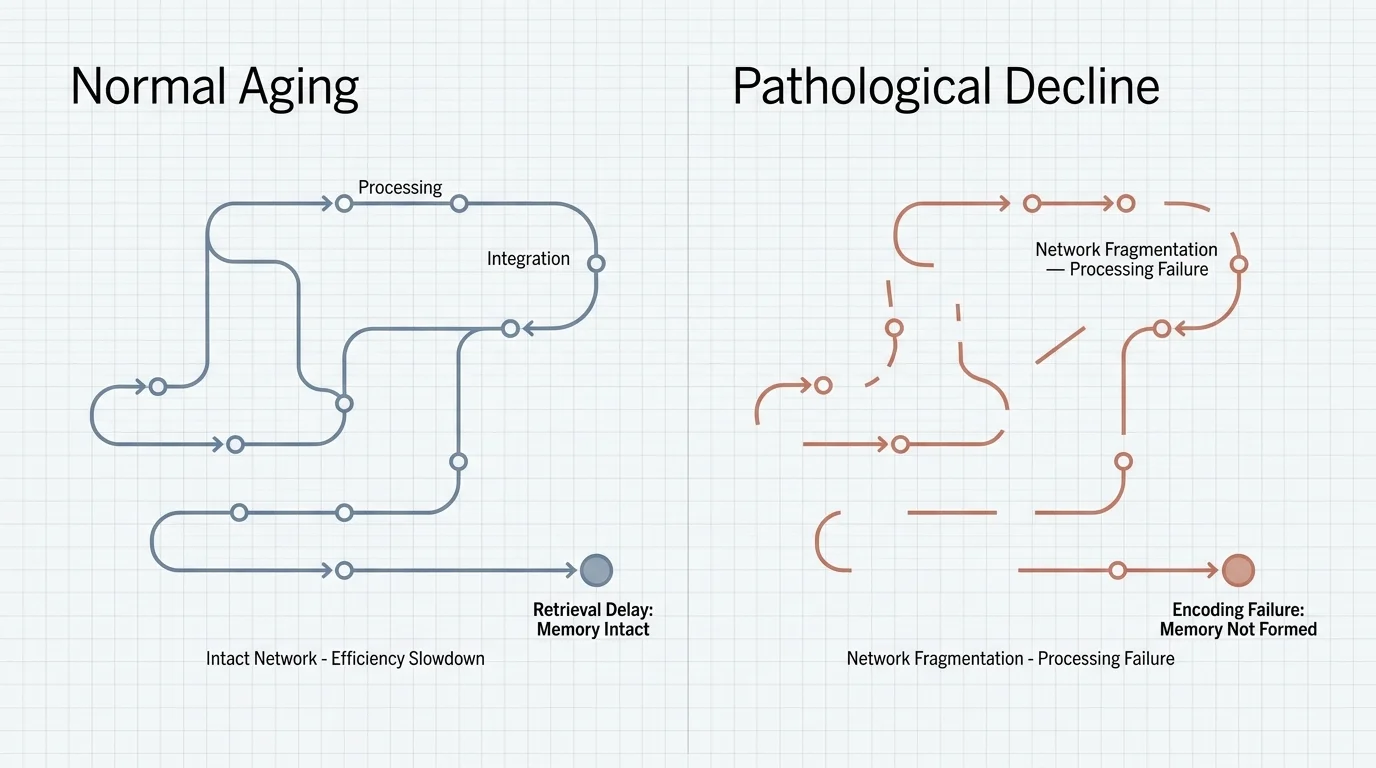
Normal forgetfulness rarely disrupts your daily independence or your ability to safely navigate your environment. For example, a healthy older adult might briefly forget why they walked into a room or momentarily blank on a neighbor’s name, only to remember it a few minutes later. This happens because the brain’s retrieval mechanisms simply take longer to access the stored information. The memories themselves remain intact and secure within the neural networks; the filing system just operates at a slightly reduced speed. You remain capable of managing your finances, driving familiar routes, and maintaining your personal hygiene without any external assistance.
In stark contrast, pathological cognitive decline—such as mild cognitive impairment or the early stages of dementia—involves a fundamental breakdown in how the brain encodes, stores, and retrieves information. Rather than a temporary delay in recall, the information often fails to register entirely. The individual loses the ability to form new short-term memories, leading to repetitive questions and severe disorientation. Distinguishing between a benign processing delay and a progressive neurological condition requires careful observation of behavior over time. Recognizing the threshold where normal forgetfulness transitions into a functional deficit serves as the critical first step in preserving your long-term cognitive health.

Key Considerations for Seniors: The Five Subtle Changes
Observing an older adult’s behavior through the specific lens of aging reveals distinct patterns that separate harmless memory blips from alarming cognitive shifts. Seniors face unique environmental and physical challenges, making it necessary to evaluate memory changes in the context of their daily routines. The following five cognitive changes stand out as primary indicators that a professional medical evaluation is warranted.
Change 1: Losing Track of Dates, Seasons, and the Passage of Time
It is perfectly normal for anyone, regardless of age, to momentarily forget the exact day of the week, especially during retirement when the rigid structure of a standard workweek disappears. A healthy senior will typically realize their mistake quickly or check a calendar to orient themselves. However, a subtle yet significant cognitive change occurs when an individual loses track of the broader passage of time. This includes forgetting the current season, the current year, or the general timeframe of important upcoming events.
This level of disorientation points to a malfunction in the brain’s temporal processing centers. You might notice a loved one dressing for summer weather during a freezing winter day, completely unaware of the environmental reality outside their window. They might also struggle to comprehend when something is happening if it is not occurring immediately in the present moment. This profound disconnect from the timeline of life frequently leads to missed medical appointments, forgotten birthdays, and intense confusion regarding daily schedules.
Change 2: Struggling with Spatial Relationships and Visual Processing
Vision changes are a well-known hallmark of aging, and many seniors require corrective lenses or cataract surgery to maintain clear eyesight. But cognitive visual decline involves how the brain interprets the images sent by the eyes, not just the physical clarity of the eyes themselves. A person experiencing pathological cognitive changes may develop sudden difficulties with spatial awareness and depth perception. They might struggle to determine color contrast, making it difficult to distinguish a dark rug from a black floor, which greatly increases the risk of catastrophic falls.
This deficit in visual processing frequently manifests during driving. An individual might suddenly find it challenging to judge the distance between their car and the vehicle ahead of them, or they might struggle to navigate previously familiar intersections. Furthermore, they may pass by a mirror and fail to recognize their own reflection, believing a stranger has entered their home. When the brain loses its ability to correctly process and interpret the physical environment, it creates significant safety hazards that extend far beyond normal age-related vision impairment.
Change 3: Communication Breakdowns and Severe Vocabulary Loss
Experiencing the “tip-of-the-tongue” phenomenon—where you know a word but cannot immediately summon it—is a universal human experience that gently increases with age. A concerning cognitive shift, however, involves frequent and severe communication breakdowns. An individual facing abnormal cognitive decline will frequently stop dead in the middle of a sentence, completely losing their train of thought with no idea how to continue. They may resort to repeating the same stories or questions endlessly within a single conversation, unable to retain the answers provided just moments prior.
Additionally, you might notice profound vocabulary loss where the person invents unusual descriptions for everyday objects. Instead of asking for a “watch,” they might demand the “hand clock.” Rather than looking for their “wallet,” they might search for their “money book.” This condition, known as aphasia, indicates that the brain’s language centers are sustaining damage. The inability to articulate thoughts and comprehend the speech of others leads to deep social withdrawal, as the individual becomes frustrated and embarrassed by their inability to participate in normal conversation.
Change 4: Misplacing Items and the Inability to Retrace Steps
Everyone misplaces their car keys or television remote from time to time. When a healthy adult loses an item, they utilize a logical cognitive process to retrace their steps, thinking back to where they last had the object and systematically searching their environment until it is found. A key indicator of abnormal cognitive decline is the complete inability to perform this retracing process. Once an item is out of sight, it effectively ceases to exist in the person’s short-term memory.
Furthermore, individuals experiencing abnormal changes will frequently place items in bizarre, nonsensical locations. You might discover car keys in the refrigerator, a smartphone in the sugar bowl, or dirty laundry hidden inside the oven. Because they lack the cognitive capacity to understand how the item arrived in such a strange place, they frequently become suspicious and accuse family members or caregivers of stealing from them. This paranoia and delusion stem directly from the brain’s inability to connect their own past actions with their current reality.
Change 5: Uncharacteristic Lapses in Judgment and Decision-Making
Making an occasional poor decision is a normal part of life. However, a consistent pattern of severe, uncharacteristic lapses in judgment signals a decline in the brain’s executive functioning—the complex mental skills managed by the prefrontal cortex. This often first appears in the realm of financial management. A senior who was historically meticulous with their budgeting might suddenly begin giving away large sums of money to telemarketers, falling victim to obvious internet scams, or failing to pay their essential utility bills for months at a time.
Decreased judgment also heavily impacts personal grooming and physical hygiene. An individual might completely stop bathing, wearing the exact same soiled clothing for weeks without recognizing the need to wash. They might fail to care for a beloved pet or ignore obvious medical emergencies. Because executive function governs our ability to analyze consequences and make rational choices, its decline strips an individual of their ability to safely manage an independent household.
Benefits and Potential Risks of Early Detection
Addressing subtle cognitive changes immediately rather than waiting for a crisis provides profound benefits for both the individual and their support system. The most crucial advantage of early detection is the opportunity to identify and treat reversible causes of memory loss. Many conditions mimic the symptoms of dementia perfectly, including severe vitamin B12 deficiencies, dangerous urinary tract infections, thyroid gland disorders, and chronic sleep apnea. When a physician diagnoses and treats these underlying physical ailments, the terrifying cognitive symptoms often completely disappear, fully restoring the person’s memory and independence.
Even when the diagnosis reveals a progressive, irreversible condition like Alzheimer’s disease, early detection offers powerful therapeutic benefits. Securing a diagnosis in the initial stages grants you access to specialized medications and treatments designed to slow the progression of symptoms. It also allows you to participate in cutting-edge clinical trials. Crucially, early identification provides a window of opportunity where the individual remains cognitively competent enough to legally document their future financial wishes, assign power of attorney, and make their own choices regarding long-term care preferences.
Conversely, the risks associated with ignoring or hiding these subtle cognitive changes are immense and potentially life-threatening. Without intervention, an individual may wander away from home and become lost, suffer severe injuries from a preventable fall, or accidentally start a fire due to an unattended stove. The financial risks are equally catastrophic, as untreated seniors frequently fall prey to predatory scammers who drain their life savings. Finally, delaying a diagnosis places an unbearable emotional and physical burden on family members, who are suddenly thrust into overwhelming caregiving roles during a sudden medical crisis without any prior planning or support.

What the Leading Health Experts Say
Major medical institutions uniformly agree that proactive monitoring and lifestyle interventions play a massive role in preserving cognitive function. The National Institute on Aging strongly advocates for seniors to undergo regular cognitive assessments during their annual Medicare wellness visits. They emphasize that establishing a healthy baseline when you feel perfectly fine provides your doctor with invaluable comparative data if subtle changes begin occurring in the future. Their researchers consistently highlight that what benefits the heart directly benefits the brain, urging older adults to strictly manage their blood pressure, cholesterol, and blood sugar levels to prevent vascular damage to delicate brain tissue.
The Mayo Clinic reinforces this connection by recommending targeted lifestyle modifications to build cognitive reserve. Their experts suggest that lifelong learning—such as taking up a new language, mastering a complex musical instrument, or engaging in demanding puzzles—forces the brain to build new neural pathways, making it more resilient against age-related decay. They also champion the adoption of the Mediterranean diet, noting that high intakes of leafy greens, berries, whole grains, and healthy fats from olive oil and fish provide critical neuroprotective benefits that slow cognitive decline.
From a global public health perspective, the World Health Organization identifies physical inactivity as a leading modifiable risk factor for dementia worldwide. They urge older adults to engage in at least 150 minutes of moderate-intensity aerobic exercise each week. Physical exertion increases blood flow to the hippocampus—the brain region responsible for memory formation—while stimulating the release of growth factors that protect existing brain cells. The Centers for Disease Control and Prevention mirrors these global guidelines, actively promoting their Healthy Brain Initiative to educate communities on how adequate sleep, social engagement, and physical activity collectively serve as a powerful shield against cognitive deterioration.

Practical Steps and Actionable Advice
If you recognize any of the five subtle cognitive changes in yourself or a loved one, taking immediate, organized action is essential. You do not need to wait for symptoms to become severe before seeking help. Start by scheduling a comprehensive medical evaluation with a primary care physician or a geriatric specialist. When booking the appointment, explicitly state that the visit is to address memory and cognitive concerns so they allocate sufficient time for proper testing. Bring all prescription bottles, over-the-counter medications, and daily supplements to this appointment, as polypharmacy—the simultaneous use of multiple drugs—frequently causes harmful interactions that manifest as acute confusion and memory loss.
Prepare for the doctor’s visit by keeping a detailed symptom journal. Over the course of two to three weeks, write down specific instances of memory lapses, disorientation, or poor judgment. Include the date, the time of day, the specific behavior observed, and what the person was doing just prior to the event. This concrete documentation provides the physician with a clear, objective picture of the problem, preventing the patient from successfully masking their symptoms during a brief fifteen-minute office visit. Bringing a trusted family member or close friend to the appointment ensures that someone is there to advocate for the patient, take detailed notes, and provide an honest assessment of the situation.
Simultaneously, you must proactively secure your home environment to mitigate immediate safety risks. Walk through the residence and remove obvious tripping hazards like loose throw rugs and cluttered electrical cords. Ensure that the home is brilliantly lit, particularly in hallways and bathrooms, to assist with spatial processing difficulties. If you notice signs of severe financial mismanagement, consider setting up automated bill payments or quietly monitoring bank accounts for unusual activity to prevent total financial ruin while waiting for a formal medical diagnosis.
Finally, focus entirely on optimizing daily lifestyle habits to support brain health. Establish a strict daily routine, as predictable schedules drastically reduce anxiety and confusion for individuals experiencing cognitive decline. Prioritize high-quality sleep by maintaining a cool, dark bedroom and treating any underlying sleep apnea, as the brain relies on deep sleep cycles to clear out toxic proteins associated with Alzheimer’s disease. Encourage daily physical movement, whether it is a brisk walk through the neighborhood, water aerobics, or simple chair exercises, to guarantee a steady supply of oxygen-rich blood flows directly to the brain.
Frequently Asked Questions
What is the exact difference between mild cognitive impairment and dementia?
Mild cognitive impairment represents an intermediate stage between the expected cognitive decline of normal aging and the more serious decline of dementia. Individuals with mild cognitive impairment experience noticeable memory and thinking problems that register on clinical tests, but these issues do not prevent them from carrying out everyday activities independently. They can still drive, pay bills, and manage their own lives. Dementia, however, is a broader term indicating that the cognitive decline has become severe enough to completely disrupt daily life and steal an individual’s independence, requiring reliance on caregivers for survival.
Can everyday stress or a lack of sleep mimic the signs of severe cognitive decline?
Yes, chronic stress, anxiety, deep depression, and severe sleep deprivation can absolutely mimic the symptoms of dementia. When your brain is overwhelmed by cortisol—the primary stress hormone—or exhausted from a lack of restorative sleep, its ability to focus, encode new memories, and process information plummets drastically. This condition is sometimes referred to as pseudodementia. Fortunately, once the underlying emotional distress is managed through therapy or the sleep deficit is corrected, cognitive function typically returns to its normal, healthy baseline.
How does untreated hearing loss relate to a person’s cognitive health?
Untreated hearing loss is now recognized as one of the most significant risk factors for developing cognitive decline. The primary theory, known as cognitive load, suggests that when you struggle to hear, your brain must redirect massive amounts of energy and resources away from memory encoding just to process the garbled sound. Furthermore, individuals with severe hearing loss often withdraw from social situations due to embarrassment, leading to profound isolation. This lack of social and intellectual stimulation accelerates brain atrophy. Getting fitted for hearing aids can significantly reduce this risk.
Is it a sign of dementia if I constantly walk into a room and forget why I am there?
No, this highly common phenomenon—often playfully called the “doorway effect”—is usually completely normal. It occurs due to the way our brains compartmentalize environments. When you walk through a doorway into a new room, your brain registers a physical boundary and frequently resets its short-term memory cache to prepare for the new environment, occasionally dumping the information about why you entered in the first place. Unless this is accompanied by other severe symptoms like getting lost in your own home, it is generally just a harmless quirk of human psychology.
Are there medications available that can cure cognitive decline?
Currently, there is no absolute cure for progressive neurodegenerative diseases like Alzheimer’s. However, there are several FDA-approved medications designed to temporarily improve symptoms by increasing the concentration of chemical messengers in the brain. More recently, newer classes of drugs targeting the underlying biology of Alzheimer’s—specifically aiming to remove amyloid plaques from the brain—have shown promise in modestly slowing the progression of the disease in its earliest stages. This underscores the vital importance of seeking a medical evaluation at the very first sign of subtle cognitive changes.
Moving Forward With Confidence
Navigating memory changes as you age does not have to be an experience rooted in fear and anxiety. By learning to differentiate between the harmless forgetfulness of normal aging and the subtle, disruptive markers of cognitive decline, you take absolute control over your health trajectory. Recognizing shifts in time perception, spatial awareness, language usage, item retrieval, and judgment empowers you to act swiftly. Early intervention unlocks the door to reversible treatments, highly beneficial lifestyle modifications, and comprehensive future planning.
Your brain is an incredibly resilient organ, and proactive care yields measurable benefits at any age. Maintain open, honest communication with your family and your medical providers, and never hesitate to ask questions if something feels amiss. By staying educated and vigilant, you ensure that you or your loved ones can age with dignity, safety, and the highest possible quality of life.
This article is intended for informational and educational purposes only and is not a substitute for professional medical advice, diagnosis, or treatment. Always consult with a qualified healthcare provider regarding any health concerns or before making any decisions related to your health or treatment.